


The Wilderness Resort in Wisconsin Dells partners with Moment Factory to develop a new world-class visitor attraction, Aquavia Lumina
by Martin Palicki
On October 11, 2024, the Wilderness Resort in Wisconsin Dells, Wisconsin, opened Aquavia Lumina, An Enchanted Night Walk through a Canyon of Wonders. The walk-through attraction is the 21st Lumina Enchanted Night Walk created by Moment Factory, and the second permanent installation of the series in the United States, following Astra Lumina (2022) at Anakeesta in Gatlinburg, Tennessee (another Astra Lumina has traveled around the United States and is currently presented as a permanent installation in Australia).

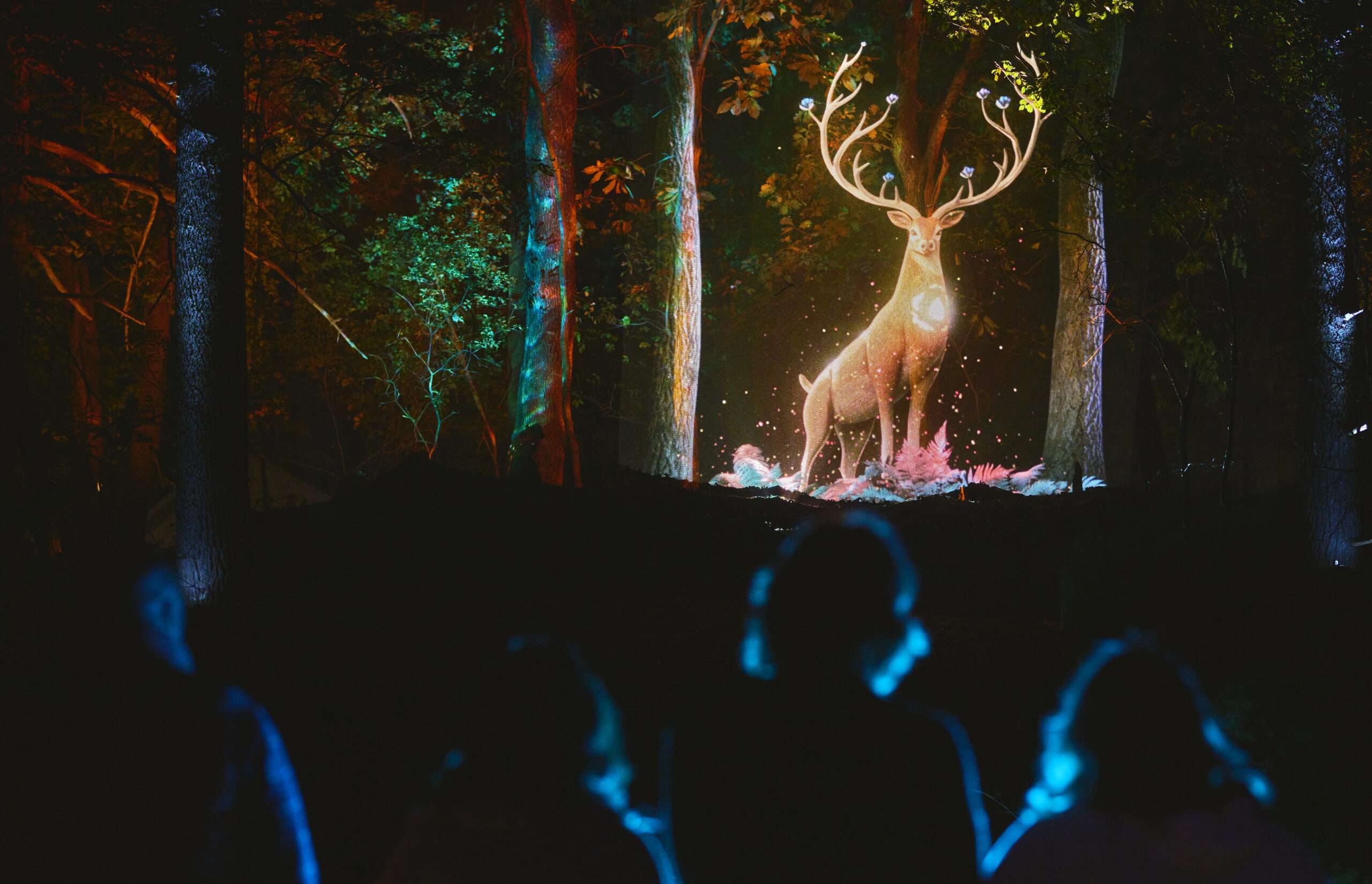
The attraction takes about one hour to experience. Visitors first encounter a guide in the form of a spirit animal deer who helps them search for “The Source” of water, an element critical for the success of the Wisconsin Dells – the self-proclaimed waterpark capital of the world.
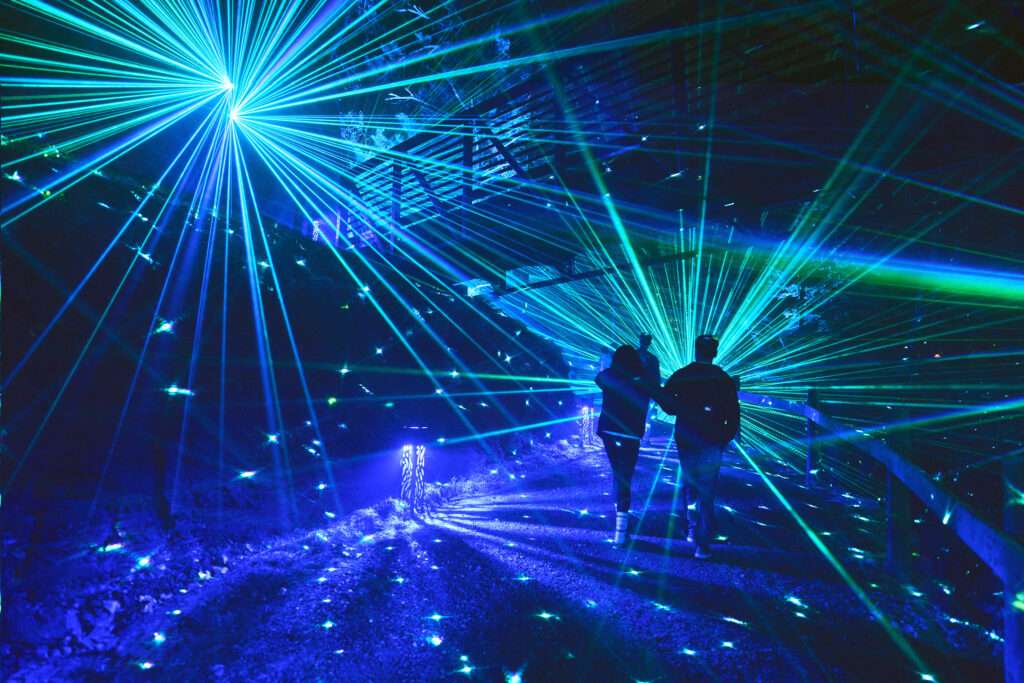
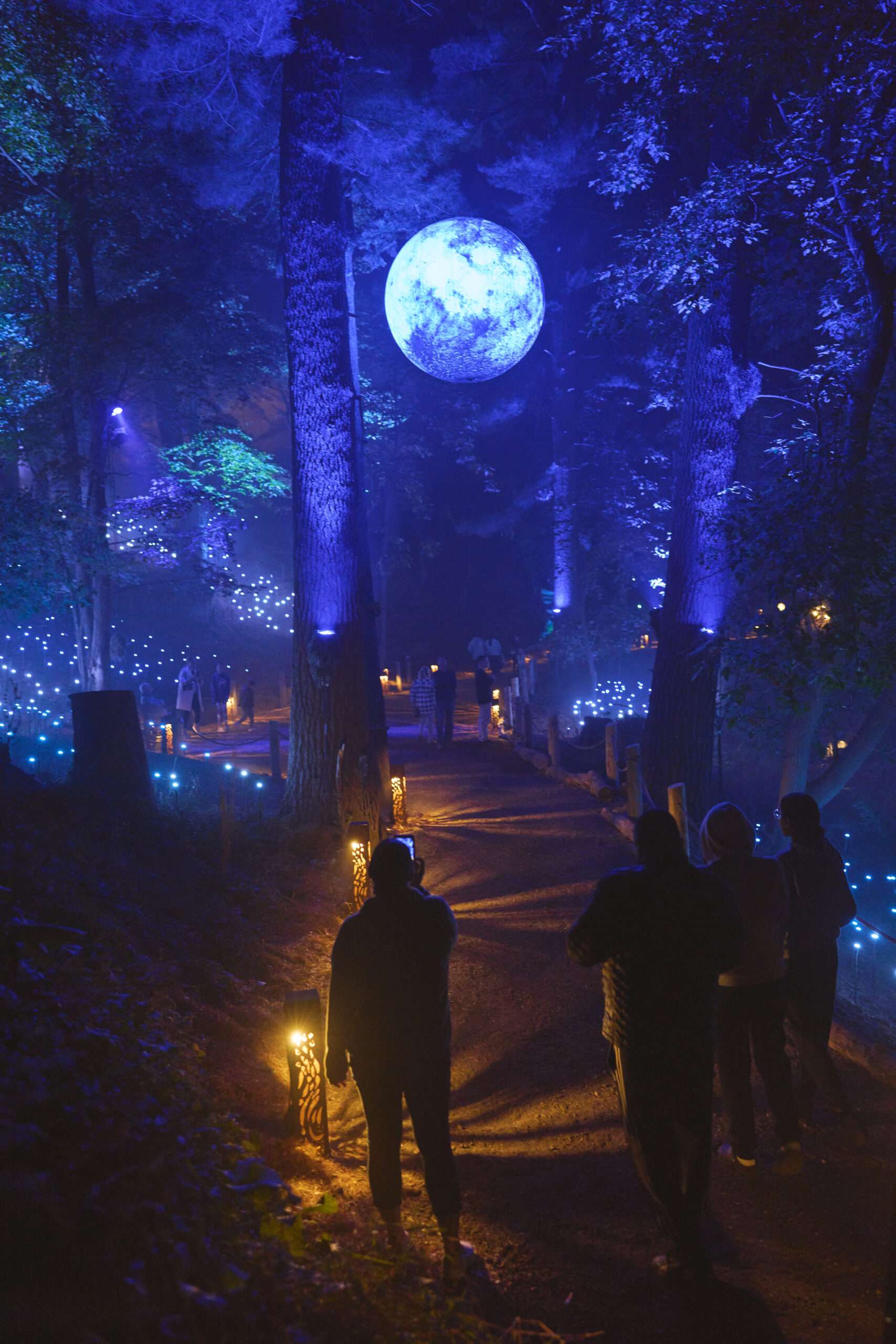
As with all the Lumina Enchanted Night Walks, lighting, special effects, projection and a custom soundtrack create the unique environment guests explore. The attraction’s location in and around a small natural canyon on the property makes it special. The Wilderness Resort and Moment Factory both sought to highlight nature’s beauty, and in doing so opened up a portion of the resort previously inaccessible to guests. “Aquavia Lumina provides Wilderness another signature attraction that separates us from other area resorts,” says Wilderness Resort Assistant General Manager Brandon Schindler. “However, it is open to the public and not just our resort guests. We feel Aquavia Lumina is so special and so unique to this area that it needs to be shared with anyone who wants to experience its magic.” •

The vision behind Aquavia Lumina
Mathieu Grainger, Producer at Moment Factory – the company behind the concept and design of Aquavia Lumina – helped realize the immersive Night Walk experience at The Wilderness Hotel & Golf Resort, a 600-acre Wisconsin Dells integrated family-friendly property that features eight waterparks. We asked him about the attraction’s development and comparison to other events the company produces.
How did your partnership with Wilderness come together to create Aquavia Lumina?
The first talk with Wilderness happened in 2021 as they were looking to diversify the types of attractions they offer at their resorts. They had a visionary approach to things and a clear path forward. They really got to know us at Moment Factory and our Lumina Enchanted Night Walks, visiting our installations in North America. By the time we were ready to confirm the project, we had a good relationship, clear expectations and a shared vision.
After we had started on Aquavia Lumina, they asked us to also help develop the Kaleidoscope Kavern at Wilderness at the Smokies in Tennessee (an immersive multimedia lazy river attraction). Our teams worked on both projects simultaneously, with Kaleidoscope Kavern opening in 2024.
What was the inspiration for the Aquavia Lumina story?
The site and location of the resort itself was our inspiration. When we started designing the experience, we had two possible locations but were inspired by exploring the small canyon located between buildings of the resort that had been previously inaccessible to guests.

into. The landscape is a key feature of the Wisconsin Dells area and the attraction allows guests to enjoy it from a different
perspective. The successful development and deployment of the experience was the result of a powerful collaboration between the Wilderness Resort and Moment Factory. “We discovered Moment Factory at IAAPA Expo in Orlando a few years ago,” explains Schindler. “We took interest in their Lumina projects, visited and explored a number of them, and ultimately decided to make use of their talents and the natural beauty of our canyon here in Wisconsin Dells with our own signature Lumina Night Walk.
It made sense to develop a theme around water considering the waterpark centric nature of Wilderness Resort, being in the waterpark capital of the world, and in a location that was literally carved out of water. Additionally, the owner, Tim Gantz, shared with the team how central water was to him. So it was just clear that the story had to revolve around water. Also there are deer living everywhere in the Wisconsin Dells, so the notion of using the deer as our guide and water as “The Source” made so much sense to the creative team.
How does your team prepare for a new project in an area you are unfamiliar with?
The first steps are an initiation process where we get to know the client and business, starting with an onsite visit. We develop recommendations and then bring a team in to visit the area and get to know the local people. We want to get a good sense of what the community is about. We continue to visit during different times of year to understand different traffic and guest patterns.
We can typically create a Lumina in 12-16 months, but this took a bit longer because of the complexities of working in the canyon. We had to get approval to be in the canyon from both the Wisconsin Department of Natural Resources and the Village of Lake Delton, while planning for potential flooding situations.

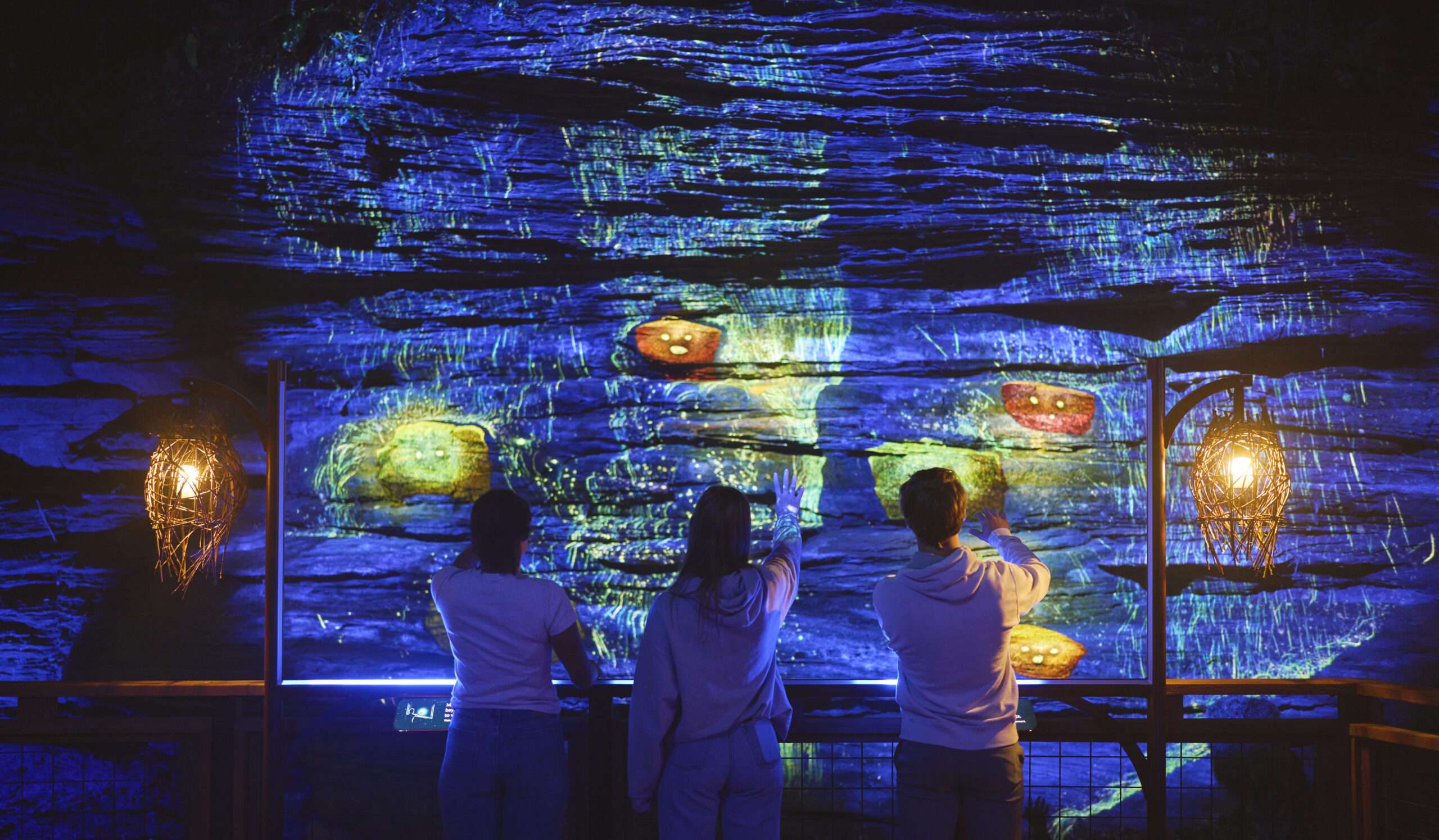
Below: The natural, textured walls of the canyon provide an interesting surface for projection mapping. Several media-based scenes throughout the walk help set the narrative arc and provide context for the many LED lighting, laser and sound scenes visitors encounter along the path.
Please share some of the unique challenges and opportunities of this particular installation.
We knew from the beginning that the canyon would dictate the path, and that to make the experience long enough we needed to encompass the length of the canyon from top to bottom. As soon as we decided the storyworld would be about searching for “The Source,” a legendary spring said to transform nature with the magic of water, it only made sense that the path should lead upstream. We were aware that the upper level of the path would allow guests to see down into the show scenes in the canyon. We planted more greenery that will grow and help obscure that over time, but we actually wanted little peek-a-boo moments where guests could get glimpses of what was to come.
Secondly, we had to exercise caution concerning power distribution and keeping everything safe and dry. We kept all control nodes out of the canyon to minimize loss if there were a major flood. The site really is unique – even hanging lighting and moving equipment up and down the canyon was challenging, especially since seamless multimedia integration is always a priority for us. But the result is spectacular and really makes you appreciate the natural beauty that has always been there. The show is owned by the Wilderness Resort, but in many ways it really belongs to the community, Lake Delton and the Dells area.
This installation seems to broaden the range of possible locations for Night Walk attractions.
Yes. The Aquavia Lumina canyon proved that we can explore less typical outdoor spaces. In recent years we have expanded our Night Walk offering to urban parks and botanical gardens. As an example, Light Cycles, an experience that transforms existing outdoor locations into nighttime immersive art destinations, has come to life in Australia, the USA, Italy, the U.K., Japan – in the country’s oldest botanical garden, the Kyoto Botanical Garden – and most recently in Chile’s capital city, Santiago. In addition to conservatories and greenhouses we also are looking at ski resorts and other large hotel and leisure facilities.
At the heart of it all we are always looking for the most beautiful natural canvas. It has always been about highlighting nature – she tends to be the star of our show – and is what differentiates our portfolio. In contrast to indoor experiences where you often have to create everything, we use sound, light and story to accentuate nature and elicit emotion in our guests. We can do that anywhere that is naturally beautiful. •