



Smart Monkeys and the Smithsonian re-invent lighting control
LiCA quickly grew into something that can be generalized to the wider museum community, and the source code is available on request
by Judith Rubin
“When multiple systems become impractical to maintain, LiCA can step in as the big overseer,” said Alexander Cooper, Head of Exhibit Technology for the National Portrait Gallery in Washington, D.C.
Cooper led the internal team that set out to design a new, comprehensive system to unify architectural lighting control across diverse venues. What emerged was LiCA – the Smithsonian’s Lighting Control Application – a bespoke software system, co-developed in partnership with the Smithsonian Institution by Smart Monkeys Inc. (SMI). Its rollout on the Smithsonian museum campus has begun, and this breakthrough platform has the potential to transform control for museums and other venues throughout the industry.
The LiCA system was first delivered in 2023 to the Donald W. Reynolds Center for American Art and Portraiture and then in 2024 to the Renwick Gallery, with plans for the National Postal Museum next. Over the months following the initial implementation, SMI and Smithsonian staff conducted extensive testing. About 20 internal testers across different staff roles were given access, ensuring the system worked equally well for technicians, curators, and administrative operators. Feedback loops helped refine features in real time. That iterative process has become central to LiCA’s identity.
“We knew from the start this was going to evolve,” said Cooper. “What we didn’t expect was how quickly it would grow into something that could be generalized to the wider museum community.”
The LiCA source code is available upon request, and that availability promises to influence a much wider community of operators and integrators. LiCA’s granularity, user-first interface, and IT-friendly architecture make it adaptable not only for museums but also with potential application for theme parks, science centers, heritage sites, and beyond.
A museum’s challenge

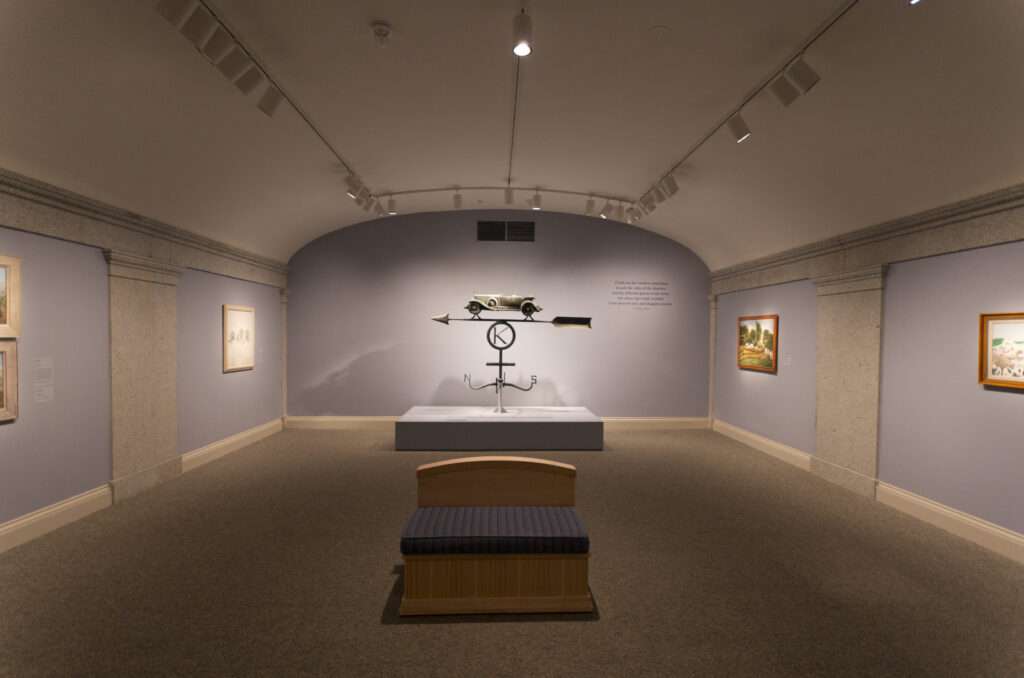
effect of lighting on priceless pieces of art. LiCA allows exhibit directors to implement brightness limits to protect art. Credit: Russ, CC BY 2.0 https://creativecommons.org/licenses/by/2.0, via Wikimedia Commons
As lighting and media fixtures have rapidly grown ever more intelligent and complex, finding the right infrastructure to control them in unique and specialized environments has been a challenge. Smithsonian museums occupy some of the nation’s most iconic buildings. Some are very new and some quite old, and all are held to high standards in terms of educational mission, guest experience, operational efficiency, presentation and conservation.
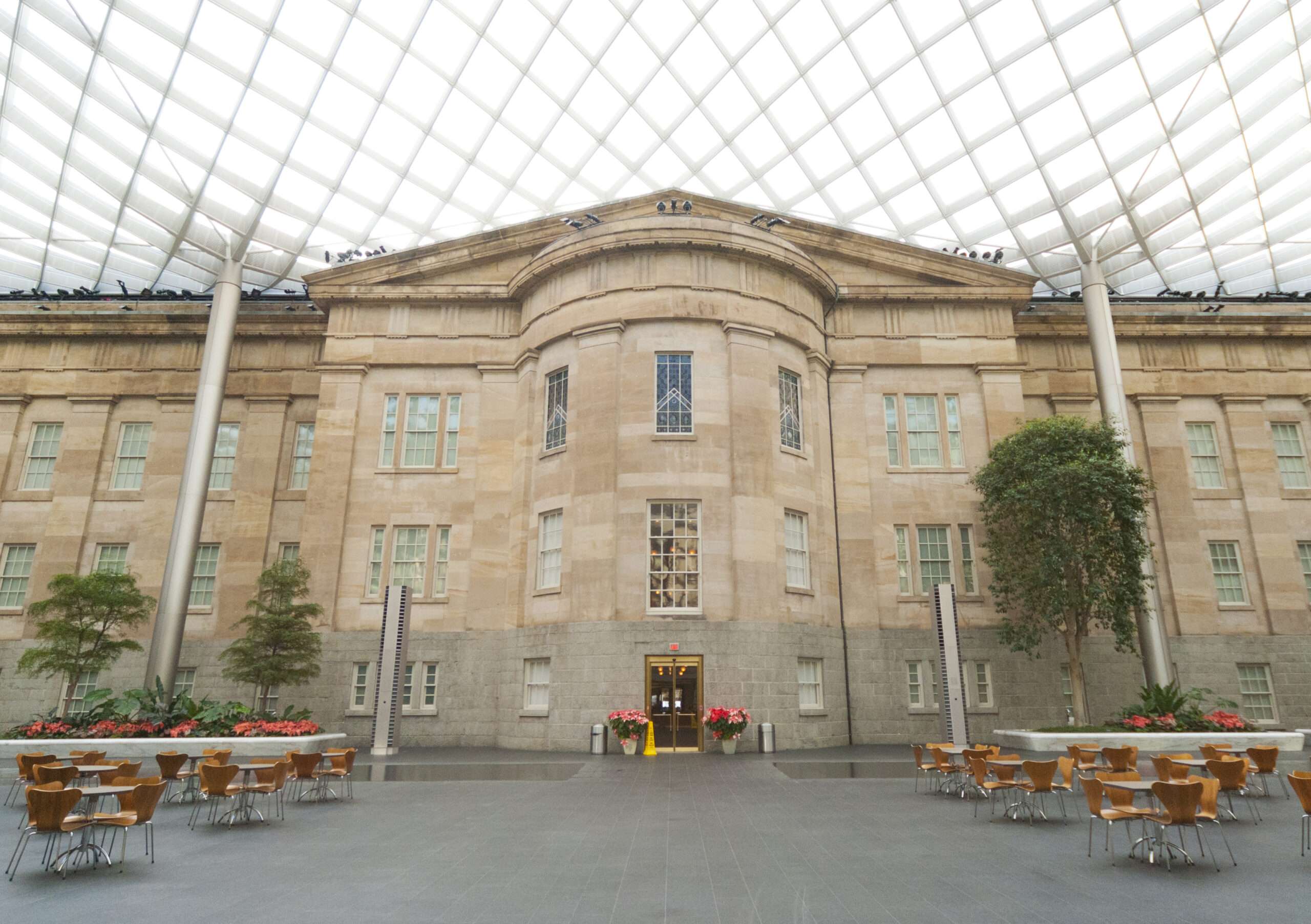
The spark for creating LiCA began during a 2017 renovation at The Reynolds Center. This 1836 structure, which originally housed the US Patent Office, is home to the National Portrait Gallery and the Smithsonian American Art Museum. The building has walls several feet thick, making it a poor candidatefor retrofit wiring. As museum staff sought to implement wireless intelligent fixtures, they faced the challenge of how to manage nearly 15,000 endpoints of varying protocols, from cutting-edge Bluetooth nodes to more traditional DMX-controlled devices.
“We had to go far into the bleeding edge of wireless lighting to get the type of granular control that we needed, and there weren’t really any control systems on the market at that time that could accommodate the quantity of these intelligent fixtures and the broad range we use,” said Cooper. “So we embarked on a process to develop our own control solution.”
Cooper has been with the Smithsonian for nearly 25 years. His background combines lighting design with daily museum operations. “We needed and wanted a single system with one steering wheel,” he said. “Our group was steeped in all the different control protocols and types, and familiar with the architectural concepts that underpin control systems. And we knew that this was a system that would serve many different types of users. We just had to dream up a way that we could, under the hood, do all of these very complex things and then focus on the look and feel of what it’s like in the cockpit.”
The stakes went beyond exhibition aesthetics. Smithsonian venues double as rental halls for events, with rapid turnovers and varying requirements. Conservation teams needed precise control over light exposure for sensitive artifacts. Operators wanted simple, reliable access to set states without deep technical knowledge. The Smithsonian’s own IT department required enterprise-level security and compliance. No single commercial solution could check all those boxes. It became clear that a bespoke system was needed.
Internal + external team


Cooper and his colleagues assembled a detailed proposal, outlining both architectural and operational requirements. The request went out as a public request for proposal (RFP). In 2020, Smart Monkeys Inc. was awarded the contract.
SMI was an ideal match, as a provider that has brought significant innovation in control systems design to the worldwide attractions industry, with a portfolio including many projects of large scope. Founded in 2008, the company is probably best known for ISAAC, a platform used widely in theme parks, museums, airports and a range of other venues to centralize media and show control. The LiCA project represented a new kind of partnership for them, and they welcomed the opportunity to apply their expertise to a single client’s specific needs.
“It was one of the first times we were asked to develop a full custom software solution for a single client,” said Zach Strauss, Platform Specialist at SMI. Some of the company’s high- profile projects include Sphere, Warner Bros. World Abu Dhabi, The Shed and the Academy Museum of Motion Pictures. SMI control systems run complex media environments at a growing number of airports including LAX, Newark and Houston. “We were able to take lessons from ISAAC and show control, but apply them in a completely new, tailored way, specific to the Smithsonian’s needs,” said Strauss.
“A museum is a lot like a rental hall in a convention center,” said Cooper. “It has very specific needs in the artifact spaces, but much of it is rented out for traveling exhibits, special events, auditoriums, all kinds of different spaces. The more complex it gets, the simpler the interface would need to be. We wanted LiCA to be like this Swiss Army chainsaw of protocols that could just talk to everything, but be so easy that somebody who is a program manager or special events person can use it. We didn’t want it to be tied to wall stations. We wanted it to be easy to implement and available to all Smithsonian users, so we thought about cloud-based hosting. And knowing that other Smithsonian buildings faced the same problems, we were thinking campus wide.”
The Smithsonian’s LiCA Project Team represents a cross-section of internal expertise: Alexander Cooper (Head of Exhibit Technology, National Portrait Gallery), Scott Rosenfeld (Lighting Designer Smithsonian American Art Museum), Kyle Andreas (Lighting Projects Manager) and Grant Lazer (Exhibit IT Programming Specialist).
The SMI external team for LiCA includes Mitchell Schuh (Chief Technology Officer), Zach Strauss (Platform Specialist), David Rouchet (Director of Product Development), Ryan Moore (Front End Developer) and Zach Thomson (UX/UI).
Granularity and flexibility


An intuitive user interface allows LiCA users granular control over lighting systems throughout the museum campus. Credit: Smithsonian Institution
At the heart of LiCA is the concept of granularity – the ability to zoom from macro to micro control within the same interface.
“Say you have 120,000 square feet of exhibit space, and you want to look at the entire floor as a whole, to have everything go to the opening state,” said Cooper. “A LiCA user should be able to do that very simply. If a more advanced user wants to get very granular and zoom in, it’s similar to a map interface that lets you zoom in all the way down to the level of a tree or a pebble. You can do that – for instance, if you want a single fixture or a single display device to change its intensity or its color. Many control systems require you to commit to one level of granularity. We wanted a system that wouldn’t require that.”
From a technical standpoint, LiCA’s strength is its ability to talk to multiple protocols – Bluetooth Low Energy, DMX, Modbus, and others – while presenting the user with a unified, map-based interface. Strauss said: “In most control systems, you’re dealing with device IDs and command lines. With LiCA, you’re looking at a floorplan. You click on a gallery, adjust a slider, and the system handles the rest.”
A Smithsonian training video illustrates this in action. In one example, a staff member overrides a gallery setting directly on the map. Within seconds, the room shifts, and the system logs the change. Later, it resets automatically to baseline. This kind of usability is what makes LiCA adaptable to diverse environments.
Crucially, LiCA is not intended to replace every other system. “You don’t have to throw the baby out with the bathwater,” Cooper said. “If an existing venue doesn’t need it, we don’t impose it. But when multiple systems become impractical to maintain, LiCA can step in as the big overseer.”
Bridging IT and creative
One of LiCA’s significant characteristics is the ability to bridge the worlds of enterprise IT and creative operations. The system runs virtually from the Smithsonian’s data center, hosted on redundant servers in full compliance with security standards. Updates and patches are handled like any other IT-managed application, avoiding the pitfalls of proprietary hardware boxes that fall out of date. For operators, this translates into reliability, and for IT staff, it means integration into familiar workflows.
LiCA ties directly into Smithsonian’s central authentication system, so user permissions are managed the same way as email accounts or network logins. This ensures security while reducing friction between departments. “It’s highly fault-tolerant,” Cooper explained. “We can lose entire servers and the system keeps running.” There is also the purity of only dealing with the user interface and not the physical platform. “If you have enterprise hardware, you can virtualize LiCA and never really see it or touch it,” said Cooper. “It’s all in the data center.”
That doesn’t rule out smaller and more basic configurations, as Cooper pointed out. “Clients who don’t have that data center infrastructure can implement LiCA on a PC. In any case, it’s very lightweight. You’re not required to buy some box that you can never open or touch or patch as so many other control systems require.”
How LiCA is being used now

LiCA was designed not just for experts but for everyone who needs to touch the system. That philosophy is most evident in its interface. Users interact with a map of their building, selecting zones or galleries and applying changes without worrying about underlying protocols.
Permissions are tailored to job roles. A lighting designer may have access to advanced fixture programming, while a janitorial staff member can simply set a gallery to “work lights” for two hours. When their shift ends, the system resets automatically.
This user-first ethos extends to design. Cooper described how LiCA exchanges data with CAD software, eliminating the need to duplicate layouts – and how the simple interface streamlines both access and process. “It lets us design in real space. I can walk into a room with a tablet, make adjustments, and see the results instantly. I can sit down from anywhere in the world, log in, see what is happening in my museum, look at live feeds from video, and make changes to museum states. I can look at detailed data that tells me what the building has been doing and how people are moving around it. It’s all right there in front of me.”
For conservation staff, LiCA offers a vital tool. By connecting sensor data to lighting attributes, the system can adapt dynamically, lowering light levels when galleries are empty, adjusting for sunlight during the day, and ultimately extending artifact life spans. As implemented at the Smithsonian, “Artifacts in those rooms now experience about 25 percent less exposure than before,” Cooper said.
Also important is the ability to change things on the fly. Whether adapting to a visiting exhibition, a rental event, or an unexpected technical hiccup, operators can make immediate changes without disruption.
A tool for the industry
LiCA was developed with the intent to share its source code openly – to allow museums, integrators, and cultural venues worldwide to adopt and adapt it to their own needs.
“The idea is not to give everyone a finished turnkey system,” Cooper said. “It’s more like a blueprint. You’ll still need an integrator to implement it properly. But it means the industry can build on a shared foundation. I think anyone in the museum world will find LiCA interesting because it is built with museum users in mind. More broadly, anybody who faces a challenge of integrating dissimilar things in an architectural space – anything from a theater to a hotel – would find it an interesting management tool. It’s an overseer of other control systems that simplifies user access; it puts the user first and adds simplicity to the control topology.”
For smaller institutions, it could mean access to enterprise- level control without prohibitive costs. For integrators, it can be a basis for creating tailored solutions. For the attractions sector as a whole, it is a valuable contribution to the technology ecosystem.
Traveling exhibitions could leverage LiCA’s cloud-based flexibility. Heritage sites and science centers could use its granularity to balance conservation with public access. Theme parks and multi-building attractions could adapt its IT- friendly design to centralize operations across large campuses.
Going bespoke
For SMI, which at this writing is still on the LiCA team as the system continues to be refined, the project marks a turning point. “Most of the stories about us in recent years have focused on ISAAC,” said David Rouchet. “LiCA is different – it is fully custom software, designed for one client but with lessons that can be generalized.”
“It paved the way for us internally,” said Strauss. “We learned how to apply our processes to bespoke software and realized there’s a real demand for it. It’s not just about hardware anymore. It’s about making systems that people can actually use.”
This kind of specialized product development offers a way to bring owners and operators closer to their spaces. As co-founder Stephan Villet observed, “There are still times when you need something completely bespoke. It has the huge benefit to clients of engaging them more deeply in realizing their environment.”
Smart Monkeys Inc. company members will be in Orlando attending the IAAPA Expo. For more information or to set up a meeting, email info@smart-monkeys.com. Visit the SMI website at www.smart-monkeys.com. •
Capturing the wave: custom software at Kelly Slater’s Surf Ranch

At first glance, a surf company in California might seem worlds away from the Smithsonian. Yet the two projects share a crucial thread: the need for custom software to make technology an integrated part of the experience.
Kelly Slater’s Surf Ranch is a unique, branded surf hospitality venue located in California’s Central Valley. Each visit is curated: small groups of surfers are scheduled throughout the day, with every ride tracked, recorded, and analyzed. The wave is powered by a patented hydrofoil system that generates perfectly consistent swells, dialed in based on the guests’ skill levels. Between waves, guests relax and review their footage on high-definition displays. The entire site blends the precision of a high-performance sports facility with the relaxed atmosphere of a luxury retreat.
In partnership with Electrosonic, Smart Monkeys, Inc. (SMI) developed a system to control cameras along the 700-meter wave basin and deliver a seamless, digital video capture. Off-the-shelf solutions weren’t practical – the basin was too long, the wave too dynamic. Instead, SMI created a map-based interface that tells cameras where to focus as the wave moves.
Each high-speed camera ties into a synchronized control backbone. Operators can draw zones on a map, and the cameras automatically track surfers as they ride. From the control room, they can view a live map of the basin and can override any part of the sequence while the system continues recording from all angles. They can fine-tune the system easily and modify it for special situations.
The system does more than capture video. It tags surfers, organizes clips, and allows coaches to annotate frames with feedback. Guests leave not only with memories but with digital records of their progress that they can review and share. Coaches can compare sessions over time, turning a day at the Surf Ranch into a structured learning experience.
As LiCA does for the Smithsonian, the Surf Ranch system hides its technical complexity behind an intuitive interface that maximizes the engagement of operators and guests alike. “We take the technology and put a layer over it that operators can understand,” explained Mitch Schuh. “They don’t need to know camera zoom factors. They just see the map and tell it what they want.”
For SMI’s Stephan Villet, the connection is clear. “Off-the-shelf products can’t always keep up with unique challenges. Bespoke is what makes the impossible practical.”