


Jora Vision expands its competitive socializing portfolio
interview by Martin Palicki
Competitive socializing has quickly evolved from a niche concept into an increasingly important segment of the location based entertainment (LBE) industry. By combining familiar games with food and beverage, engaging environments and technology, operators are creating destinations that encourage guests to stay longer, socialize more and return often.
While many of the earliest concepts emerged in the U.K., the trend has expanded across mainland Europe, creating opportunities for operators looking to offer experiences that appeal to families during the day and adults in the evening. At the same time, technology is becoming less about flashy features and more about removing friction, enhancing gameplay and encouraging interaction between guests.
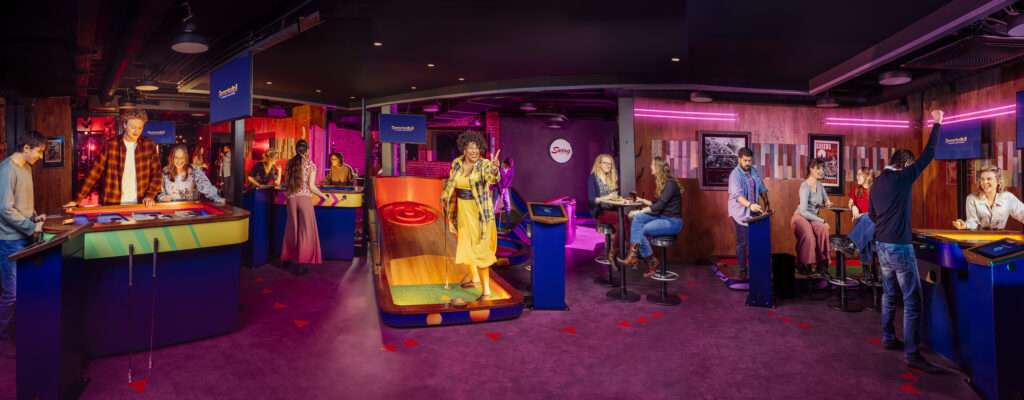
Jora Vision entered this space with RemarkaBall, its interactive mini golf system that combines traditional putting with automated scoring, skill games and cooperative gameplay. Since launching in 2022, the product has expanded across Europe and into the Middle East, while the company has continued to develop its approach to competitive socializing with the introduction of TripleShot Pool.
RemarkaBall evolved in part from the company’s decades of design work for indoor mini golf courses as well as its 2009 Thea Awarded work on The Forgotten Mine course at Molenheide in Belgium.

Jora Vision

Jora Vision
For Jora Vision CEO Jan Maarten de Raad, the development of these products represents more than an expansion of the company’s portfolio. It is an opportunity to apply the company’s experience in themed entertainment and attraction design to products that can be developed, tested and refined across multiple locations.
“Developing products like RemarkaBall allow us to implement and refine these new technologies, incorporating skills we developed from decades creating dark rides and attractions,” says de Raad. “It’s exciting to now see RemarkaBall being followed up by TripleShot Pool. Both demonstrate how contemporary design, technology and gameplay merge into a single integrated experience.”
That product strategy is becoming an increasingly important part of Jora Vision’s business alongside its bespoke project work. RemarkaBall has found applications in FECs, bars and restaurants, while TripleShot Pool offers another format for operators looking to maximize their available space and appeal to social groups.
“The products are a response to what we see happening in the market,” de Raad says. “We want to provide operators with the best tools available to meet their customers’ needs.”
For Anthony Nelemans, Head of Product for Jora Vision and RemarkaBall, the opportunity is ultimately about using technology to make familiar games more social rather than simply making them more technologically advanced. He spoke with InPark about RemarkaBall’s growth in Europe, the evolution of competitive socializing and how Jora Vision sees the category developing.
RemarkaBall launched in 2022. How has the rollout progressed over the past few years?
Anthony Nelemans: Jora Vision had already designed several themed mini golf attractions before launching RemarkaBall, so we understood both the operational side of mini golf and what makes it enjoyable for guests. Around the same time, we began seeing the emergence of competitive socializing.
The trend really gained momentum after COVID because people wanted opportunities to reconnect. We saw successful standalone concepts in the U.K. centered on mini golf, shuffleboard and upscale bowling, but we also recognized that mainland Europe presents different challenges, starting with smaller footprints. As such, operators need attractions that deliver a strong return in a more compact space.
That thinking shaped RemarkaBall from the beginning. We developed a product designed to balance footprint, investment level and guest capacity without sacrificing the experience.
Our first installation opened in France in 2022 and generated significant attention. Since then we’ve expanded throughout France, Switzerland and Belgium, and we’re now seeing rapid growth in the Netherlands and Germany as the market continues to mature.
Why has Europe become such a strong market for competitive socializing?
We’re seeing the same pattern that first developed in the U.K. Guests, especially younger adults, are looking for experiences that let them spend time together rather than simply going out for drinks. Games create a natural icebreaker. Instead of everyone looking at their phones, they immediately have something to interact around. The activity sparks conversation, laughter and friendly competition.
What’s interesting is that technology isn’t really the attraction. The technology works best when guests forget it’s there. It removes friction by automatically keeping score, organizing gameplay and handling the mechanics, allowing people to focus on enjoying time together. That’s ultimately what competitive socializing is about. Technology supports the experience, but the real product is the social interaction.
How does RemarkaBall use technology differently than a traditional interactive mini golf course?
Automatic scoring is the foundation because it removes one of the biggest interruptions during play. Once that foundation is in place, technology can create much richer interactions. We’ve designed several gameplay variations that encourage guests to interact with each other rather than simply taking turns putting.
For example, one of our skill holes presents trivia questions that players answer by putting through different tunnels. Success depends not only on putting ability but also on knowing the right answer. We also have collaborative challenges where members of the group influence each other’s gameplay. Those moments create conversation and laughter because guests are actively participating in each other’s experience rather than simply waiting for their turn.
We always ask ourselves how technology can make the game more social, not just more digital.
France has become your largest market so far. What has driven that success?
France adopted competitive socializing earlier than some neighboring countries, and our first installation there helped demonstrate what interactive mini golf could become. Today we have four locations operating in France, with two more under construction.
Germany is now beginning to experience similar growth, particularly in cities such as Berlin, Hamburg and Munich, where operators are investing in new multi-activity entertainment concepts. The Netherlands is following a similar path. Over the past year we’ve seen tremendous momentum there, including multiple projects with Hollywood Entertainment Center. It’s exciting because we’re watching the trend continue to spread across Europe.
Where do you see the greatest opportunities for future growth?
Germany remains one of our biggest opportunities simply because of the size of the market and the number of entertainment projects now entering development.
The United States is another important focus. Competitive socializing is already well established there, but we believe there’s still significant room for growth as operators continue looking for new ways to differentiate their venues.
Competitive socializing has become one of the hottest trends in location based entertainment. Where do you see it heading over the next several years?
The first generation of competitive socializing venues was often built around a single activity, whether that was mini golf, shuffleboard or bowling. That worked well in large markets like London, where there’s a huge population and strong tourism.
For many markets, though, I think the future lies in multi-activity entertainment centers that combine several experiences under one roof. Guests have more reasons to visit, and they have more reasons to return because they can enjoy something different each time.
The next step is making those activities feel like one connected experience instead of separate attractions sharing the same building. Today you might have mini golf from one supplier, bowling from another and shuffleboard from someone else. They’re all enjoyable, but they operate independently. I think there’s an opportunity to connect them through a shared digital ecosystem, where guests have one profile, one leaderboard and one ongoing experience that continues from one activity to the next. That’s very much the direction we’re exploring at Jora Vision.
RemarkaBall is offered as a white-label product. Why was that important?
Every venue has its own identity, so we wanted operators to be able to make RemarkaBall their own. The gameplay itself remains consistent because those games have been thoroughly tested, but the visual design can be customized to match each property’s brand. Colors, finishes, graphics and environmental theming can all be adapted to fit the overall experience.
Because Jora Vision is fundamentally a design company, we often help clients think beyond the attraction itself. We look at how the game integrates into the surrounding environment, from lighting and media to the overall guest journey.
We’re also beginning to integrate venue-wide audiovisual effects. If someone scores a hole-in-one, for example, the lighting, audio and digital signage can all respond instantly, turning an individual achievement into a shared moment that everyone notices. Those small moments create energy inside the venue and encourage guests to celebrate together.
How important is theming to the success of these venues?
It’s extremely important because people aren’t just coming to play a game anymore. They’re choosing places where they want to spend an evening with friends.
Older family entertainment centers were often designed around the attraction itself. Today’s social gaming venues are destinations. Guests come for the atmosphere as much as the activities.
That’s where our background in themed entertainment becomes valuable. We understand how design influences guest behavior and how environments encourage people to stay longer, order another drink or share photos on social media.
For one of our current projects with Hollywood Entertainment Center in the Netherlands, we’re designing much more than the mini golf course. The environment itself is part of the attraction, with large-format graphics, integrated lighting and immersive décor that creates memorable photo opportunities throughout the venue.
You’ve recently introduced TripleShot Pool. What inspired the development of a second product?
As RemarkaBall expanded, we began studying how guests moved through different venues and how operators used their available space. One challenge we consistently found was that many social gaming attractions require dedicated bays where a single group occupies one area for an extended period. That works well, but it also limits guest capacity. We wanted to create a more compact attraction with a carousel-style flow, allowing guests to move from one table to the next while maintaining a premium experience.
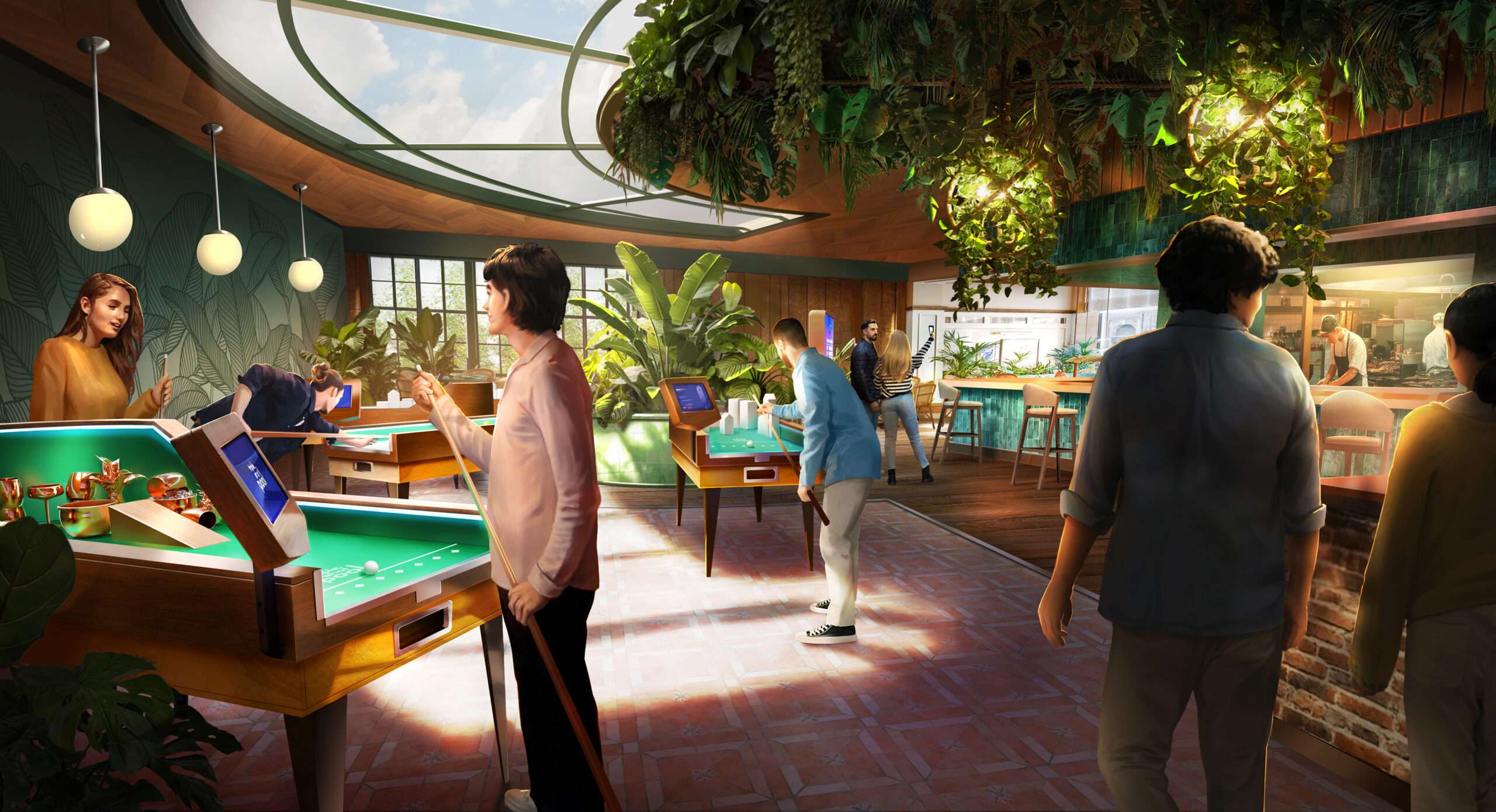
TripleShot Pool delivers that. It requires a much smaller footprint than mini golf, offers a lower investment for operators and offers a comparable guest experience. It also complements RemarkaBall without competing with it.
How does TripleShot Pool differ from traditional billiards?
It’s inspired by cue sports, but it’s really its own game. Players use a cue, but every table presents a different challenge with multiple scoring opportunities. On each table there’s an easy shot, a medium challenge and a much more difficult trick shot. That creates an interesting balance because players decide how much risk they want to take. Someone with little experience can still play competitively, while more experienced players can challenge themselves with higher-value shots. Technology also supports tournament play, automated scoring and personalized features.
One feature we’re especially excited about is TrickShot Playback. When someone successfully completes the most difficult shot, the system captures and replays their reaction. It’s a simple feature, but it creates moments that people naturally want to share.
Who is TripleShot Pool designed for?
RemarkaBall appeals to a broad audience. During the day we see families, birthday parties and younger guests. In the evenings the audience shifts toward young adults, corporate events and social groups.
TripleShot Pool was designed specifically with that evening audience in mind. It fits naturally into corporate outings, team-building events and adult social experiences while still remaining accessible to players of all skill levels.
How do these products fit into Jora Vision’s long-term strategy?
At Jora Vision we’ve always been interested in designing experiences rather than simply designing attractions. That philosophy comes directly from our work in themed entertainment, where every creative decision is made with the guest experience in mind.
When we looked at competitive socializing, we saw an opportunity to apply that same thinking. Rather than simply adding technology to traditional games, we wanted to rethink how those games could encourage interaction, conversation and memorable shared experiences. RemarkaBall was the first step. TripleShot Pool expands that vision, and we’re already exploring additional concepts that can work together as part of a connected entertainment ecosystem. •