


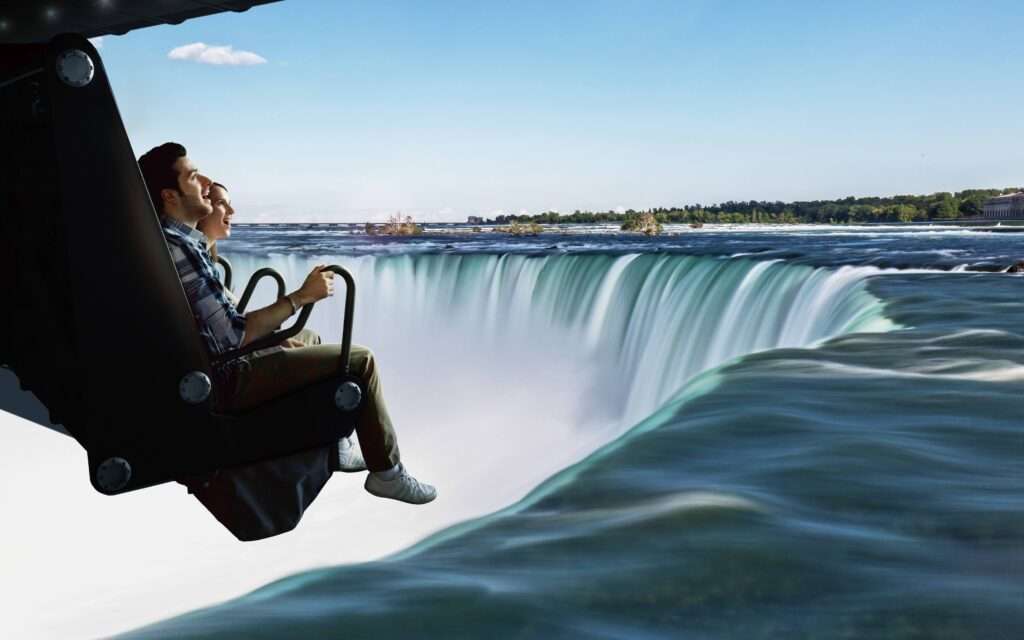
Brogent Technologies delivered the flying theater experience Niagara Takes Flight at Table Rock Centre in 2025. A year later, Niagara Parks’ Missy Sauer and Brogent’s Stefan Rothaug discuss the creative and technical decisions behind its first-year success.
by Becci Knowles
Niagara Takes Flight offers a way to reveal more of the region than visitors can discover from the ground or during a single visit. The flight covers approximately 56 kilometers along the Niagara River, taking guests over rapids, gorges, forests and historic sites across different seasons and times of day.
With a full year of operation behind them, Sauer, director of attractions and retail at Niagara Parks, and Rothaug, head of marketing and sales at Brogent Technologies, reflect on the project’s delivery, the response from guests and how performance has compared with expectations.
What did you want Niagara Takes Flight to add to the visitor experience?
Missy Sauer: Niagara Takes Flight was replacing an older attraction called Niagara’s Fury. It was about 17 years old, the technology was outdated and we knew we needed to do something new, while retaining some of what guests loved about that experience.
A lot of our visitors think of Niagara as Niagara Falls – the waterfall – not the immense park that we oversee here. Many of our international guests only come here once in a lifetime. How do we show them what winter in Niagara looks like if they’re here in the spring, or what summer looks like if they’re here in the winter?
The attraction is about 30 minutes long in total and there are four distinctive areas that guests flow through before entering the actual flying theater. The journey begins with the marquee, which is a replica of the Rainbow Bridge and creates that initial wow moment. Guests then move through a geological chronology of Niagara, followed by the Ancestors Room and its indigenous storytelling. From there, they enter the Waterfall Room, where James Cameron takes guests through the last 100 years of Niagara’s history. They then move into the Transport Through Time room, where the storytelling continues and we prepare them for their flight, before finally entering the flying theater.
What can the flying theater show guests that they cannot experience from the ground?
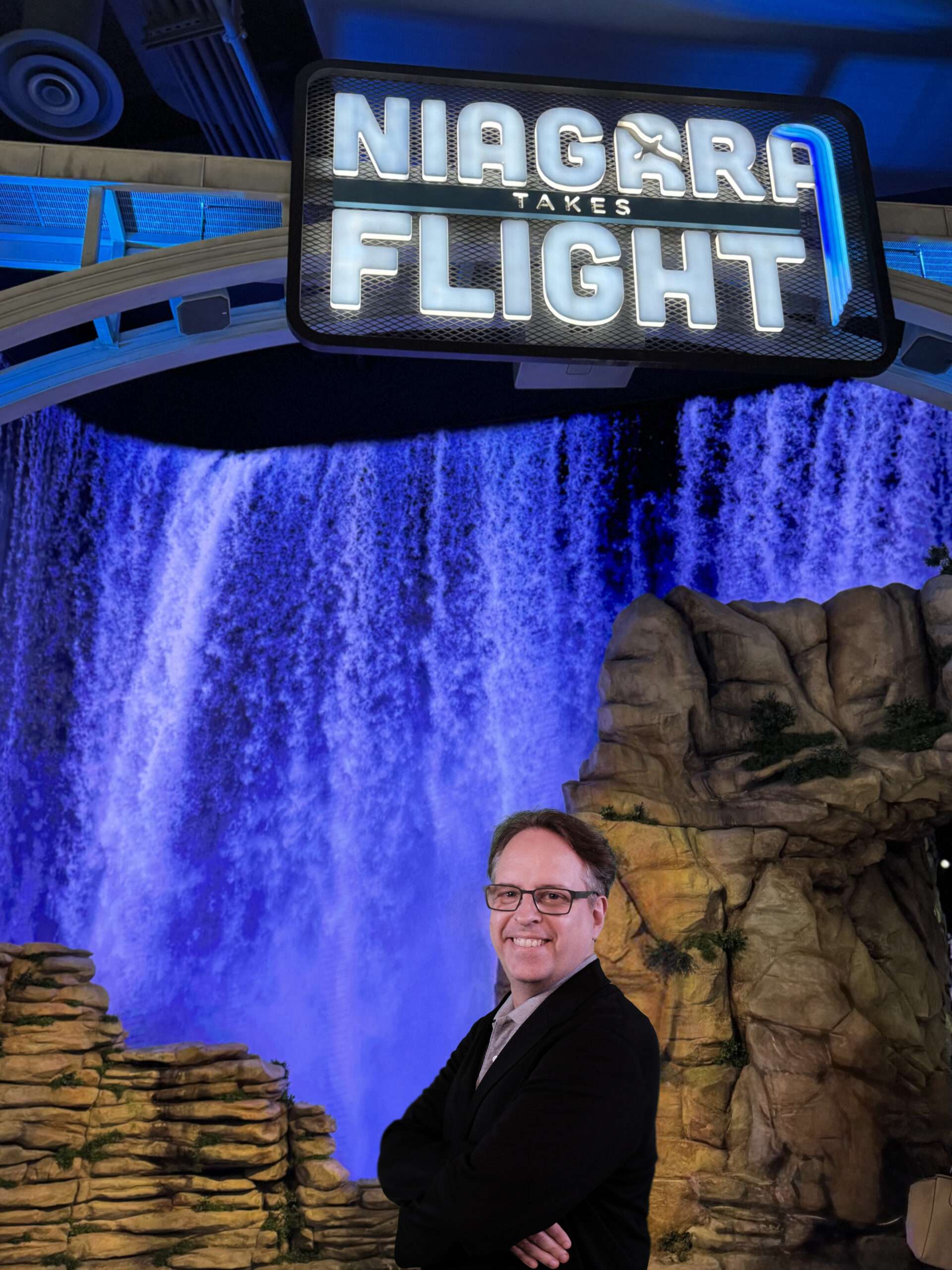
Stefan Rothaug: One of the most striking moments comes when guests fly directly over the Falls, looking down as the water rushes beneath them toward the edge before plunging below. It is a perspective that no ground-level viewing point can provide. Through the combination of spherical-screen imagery, the suspended gondola, synchronized motion, wind, and mist, guests feel as though they are truly flying over the Falls, giving them a visceral sense of its height, scale, and power.
Ultimately, we hope that when guests step outside the theater and stand in front of the real Falls again, they see them differently, carrying with them the memory of having flown over the Falls and a deeper understanding of the place they have just experienced.
How did you bring the creative and technical teams together?
Rothaug: Our long-time partner and Creative Director, Rick Rothschild, played a key role in shaping the content and its overall creative direction. FORREC also played an important role in the attraction design, including the development of the preshow environment and guest journey leading into the flight. Additionally, Rio Mitchell directed the attraction’s three pre-show media experiences.
Indigenous artist Sara General contributed original artwork to the attraction, while Niagara Parks’ Indigenous Advisory Panel helped guide the storytelling and design.
The result is a truly integrated attraction, where the technology, physical environment, content, and cultural storytelling work together as one continuous journey. Rather than experiencing a series of individual elements, guests are guided seamlessly from the preshow into the flight, with every component contributing to the story and emotional impact of Niagara Takes Flight.
What made Brogent the right partner for Niagara Parks?
Sauer: What was really important to us was that we chose a company that understood what Niagara Parks is. We are the stewards of this incredible natural place. We have a responsibility to protect and preserve it while also creating meaningful experiences for our guests. That responsibility influenced how we approached the attraction and why it was so important that the experience feel authentic to Niagara.
Brogent understood that the technology needed to support the story and the destination rather than overpower it. They were very adaptable, and they listened.
How did you decide which stories to tell?
Sauer: The pre-show spaces are part of the attraction; they’re not queuing areas. It was important that these stories were told from the Indigenous perspective. We worked closely with our Indigenous partners and working group, with Niagara Parks providing the space for those stories rather than interpreting them ourselves.
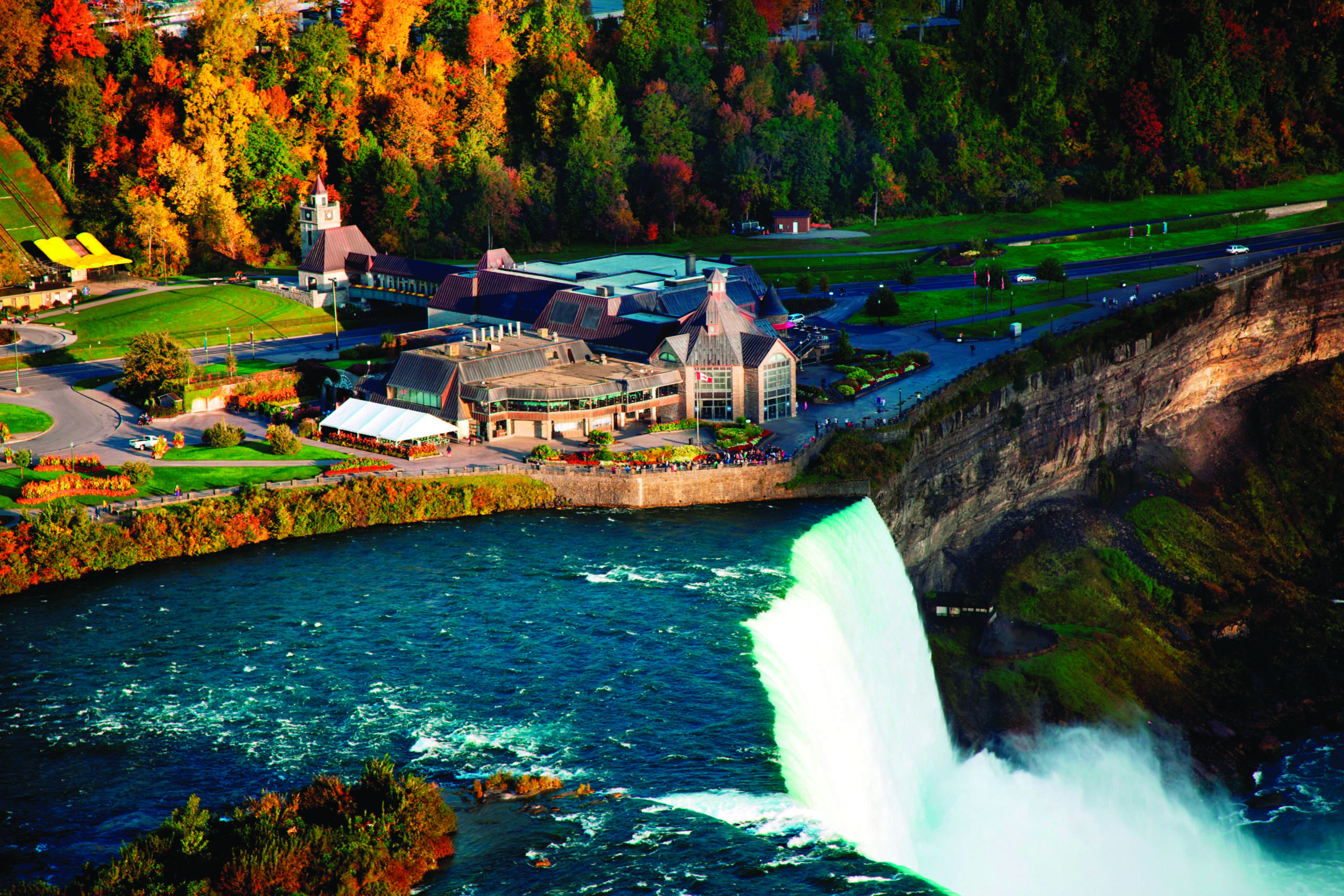
How did Niagara Parks help bring the project to life?
Sauer: One of the things that made this project possible on such an ambitious timeline was the incredible range of resources we have within Niagara Parks. We have our own police service, road crews and teams across the organization who could help us navigate permits, road closures, filming locations and all of the logistics that came with a project of this scale.
But what was really special was the sense of pride and community that developed around it. We reached out to our employees, their families and members of the local community to participate as extras in exchange for passes to our attractions, and people genuinely wanted to be involved.
That brought a wonderful human element to the film. The people you see in many of those scenes aren’t simply extras; they’re our employees, their families and people from the community who have a connection to Niagara and wanted to be part of telling its story.
From the time we started to the time we opened was about a year, which is almost unheard of for a project of this scale. At one point, the team asked, “Do you really think you can get 400 people here?” We were confident we could, because we knew how much people love Niagara Falls and wanted to be part of this project. They showed up and are thrilled when trying to find themselves on the screen!
How did you work with the filmmakers, and which scenes presented particular challenges?
Rothaug: For Niagara Takes Flight, this required close collaboration between Creative Director Rick Rothschild, Director Mike Quigley, lead drone pilot Gabriel Kocher, and Brogent’s content production and technical teams.
The team paid particular attention to how the footage created visual cues for movement. For example, travelling through a gorge uses the surrounding rock walls to establish speed and distance, while wider landscapes allow guests to appreciate the sense of height and scale. One of the more challenging sequences was the flight through the Niagara Parks Power Station, where large equipment and confined spaces required careful consideration of scale, movement, and lighting to maintain both realism and guest comfort.
Importantly, the process did not end with filming. The team repeatedly reviewed the footage on the spherical screen and recalibrated the experience, with some sequences requiring additional filming when they did not translate as expected.
At Fort Erie, the challenge was very different. The battle reenactment involved more than 100 participants, requiring careful aerial planning to capture both the scale of the event and the details needed to tell the story clearly. The team had to choreograph the flight paths and camera movements so that guests could understand the action and geography of the scene.
How did you choreograph the motion and effects?
Rothaug: A good example is the opening sequence, which begins in an underground base. Rick Rothschild and Brogent’s content production team refined this scene dozens of times, using visuals, water mist, and echoing water sounds to establish a sense of depth and stillness before the flight begins. The experience then shifts dramatically as the gondola launches out of the cave. The timing had to be carefully calibrated so that the movement matched the exact moment the visuals break through the opening. When the two align, guests feel as though they are physically being launched from underground into the sky.
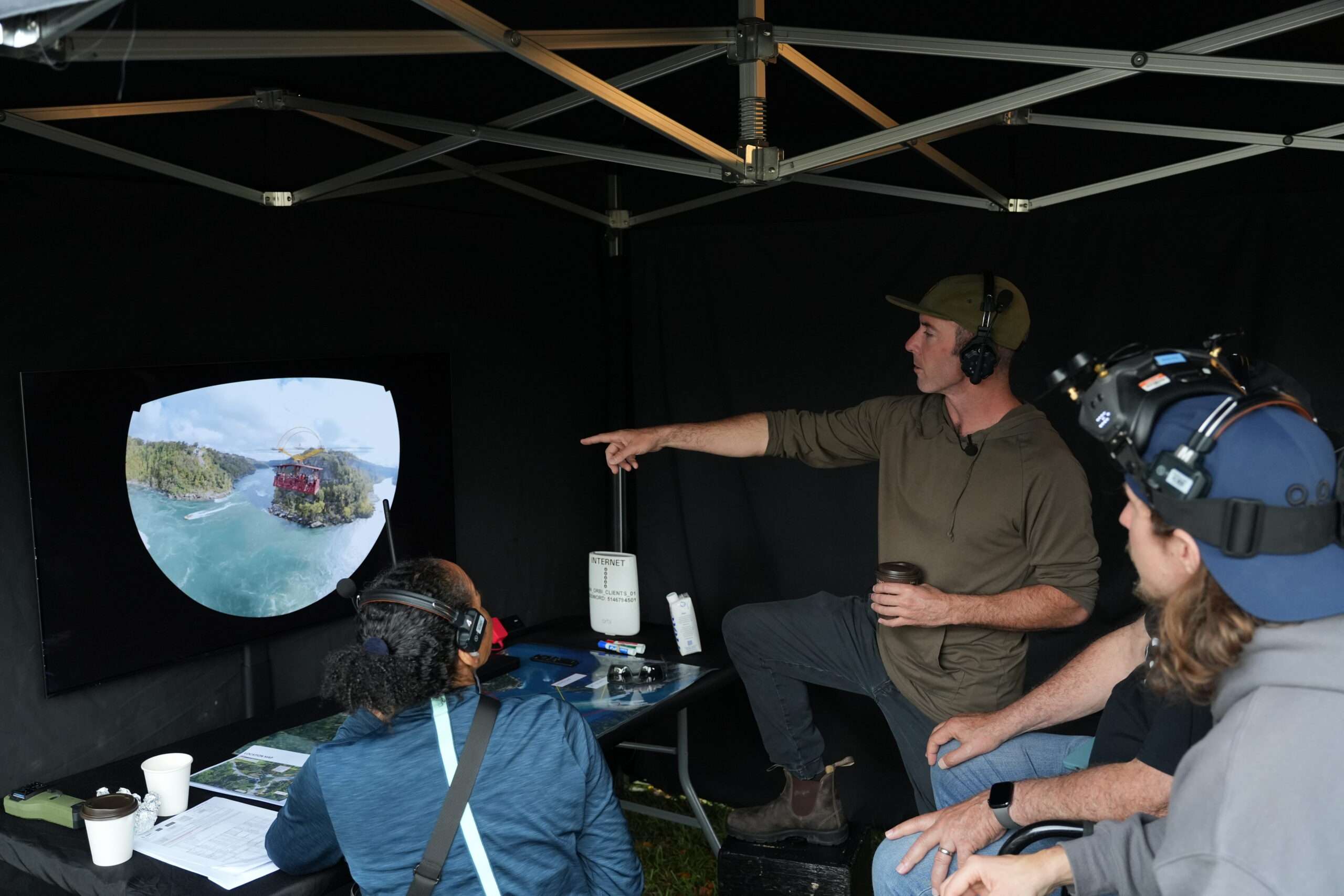
The same principle applies as the journey approaches the Falls, where water sounds, wind, and mist gradually intensify as the visuals draw closer. At other moments, we deliberately hold back and let the landscape speak for itself.
How does scent contribute to the experience?
Sauer: Scent plays an important role throughout the film in bringing the different environments to life. There’s a water scent, which we call the sweet smell of Niagara, and a floral scent in the rose garden scene. The rose garden wasn’t one of my favorite scenes initially, but as we refined it and added the scent, it completely changed the experience for me. It quickly became one of my favorites. In the Christmas scene, we use fresh pine. In the battle reenactment scene, we bring in the scent of gun powder.
Is there a particular guest reaction that has stayed with you?
Rothaug: One of the most valuable things we have learned from watching guests is how much anticipation contributes to the experience. The journey begins the moment they enter the attraction. The grand entry makes a strong first impression, and as guests move through the preshow spaces, you can see their curiosity build as they begin to wonder what is waiting for them.
The elevator room is particularly effective in building that anticipation. By the time guests step through and face the final reveal, you can sense that everyone is ready for something to happen. Then, as the seating platform rotates and the ride begins, there is often a collective “wow” across the room. That moment has stayed with us because it happens almost instinctively. You can see the surprise on people’s faces before they even begin the flight.
What does this project tell us about the possibilities for flying theaters in other locations?
Rothaug: Niagara Takes Flight demonstrates that flying theater experiences can be adapted to a much wider range of locations and project requirements than people might initially expect. We had to work within the tight constraints of the existing building, carefully planning every detail, from structural reinforcements to the precise layout and installation of complex equipment.
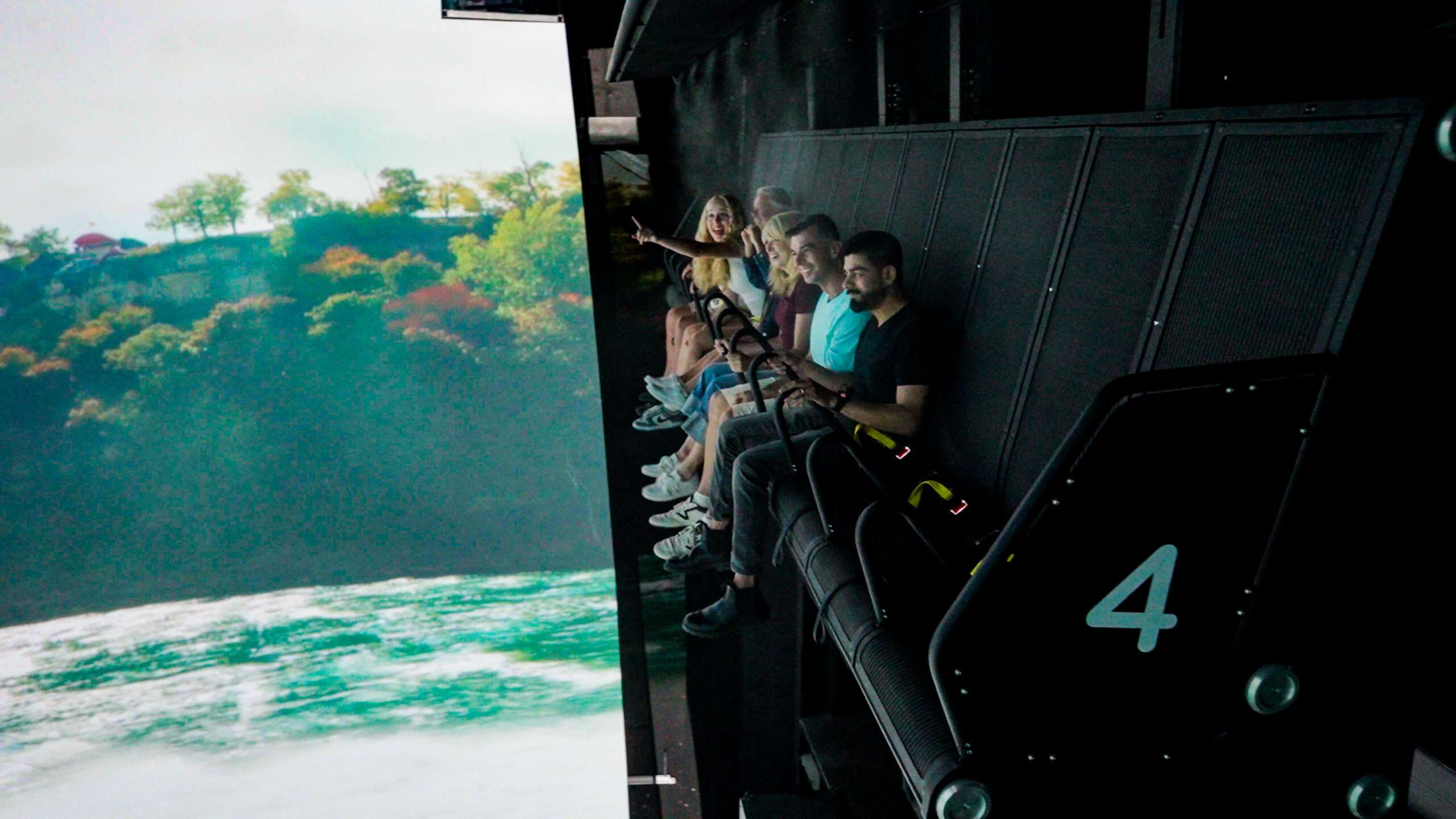
The technology provides a flexible platform that can be shaped around the identity of each destination, whether that means showcasing a natural landmark, telling a region’s history, or introducing audiences to its culture and heritage.
How has the first year compared with your expectations?
Sauer: We thought success would mean serving around 300,000 guests. The capacity of the ride is 240 guests an hour, and in our first year we saw more than 450,000 guests. We far surpassed our hopes for how many people would come.
We try to use every hour of every day to maximize the number of guests who can experience the attraction. Right now, we’re sitting at a 4.7 Google rating, which we’re really happy about – but we think it’s closer to a five!
We achieved our goals. It’s a financially successful operation, and the guests are very happy with what they’re seeing.
It’s not the type of attraction you only need to experience once. Every time you see it, you’ll see something different. The manager told me there’s someone with a season pass who has ridden more than 60 times, and they say they notice something different every time they go through. •