


Dream Garden was founded in 2009 in Wenzhou, China, and has delivered indoor playgrounds and FECs across Europe, Asia, Australia, the Middle East and Latin America. Its recent international portfolio includes a multi-attraction FEC in Hetauda, Nepal; a themed playground at Belamionix Mall in Bosnia and Herzegovina; Happy Panda in Osorno, Chile; Alturas Mall in Guatemala; Cosmic Planet in Indonesia; and KIDDO in Caracas, Venezuela.
by Becci Knowles
An empty commercial space can look deceptively simple: little more than four walls, a ceiling and a floor. Turning that empty box into a successful family entertainment center, however, is complex. Business strategy, customer demographics, attraction mix, circulation, safety, engineering, theming, manufacturing, logistics and installation are just a few pieces of the puzzle. And when the empty box is thousands of miles from the company designing it, the complexity increases further.
For Dream Garden Amusement, which has delivered more than 100 indoor playground and FEC projects across international markets, that challenge is central to the process.
From its base in Wenzhou, China, the company works with operators to translate an initial brief into a finished entertainment venue, adapting the approach to the building, the market and the people who will ultimately use the space.
Start with the brief

Founder and CEO
The process begins with understanding the operator’s objectives rather than immediately selecting equipment, says Dream Garden founder and CEO Stefan Zhang. “We first look at the site dimensions, ceiling height, target age groups, expected capacity, project budget, local market and the type of experience the operator wants to create.”
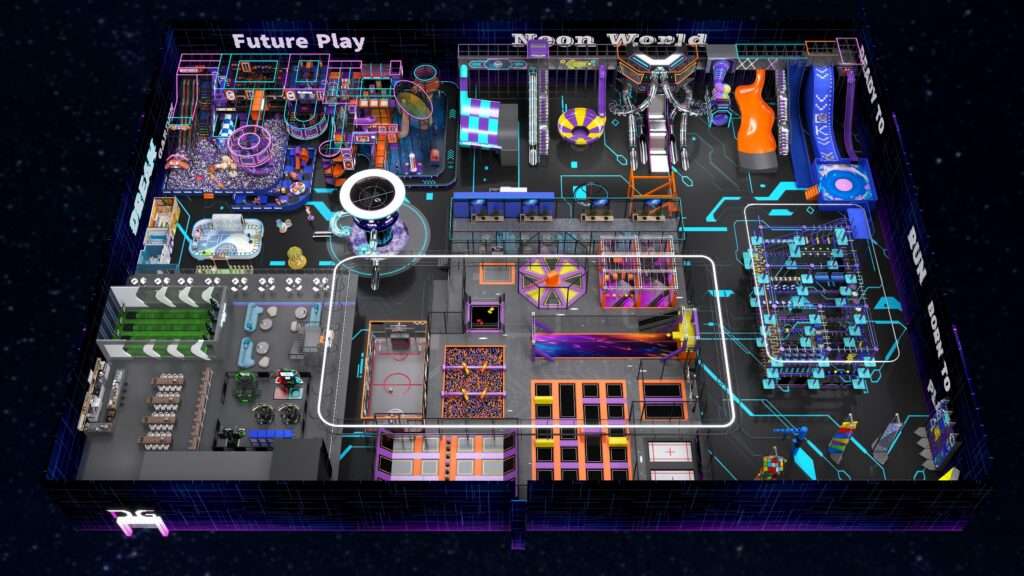
From there, the design process develops around three overlapping considerations: business, operations and creativity. The business requirements include budget, target customers, capacity and commercial objectives. Operational considerations include entrances, circulation, supervision, staff access, maintenance and safety. The creative side encompasses the theme, color palette, visual identity and overall play experience.
The approach reflects a fundamental challenge in FEC development: maximizing the number of attractions is not necessarily the same as maximizing the value of the space. “We do not believe that a good FEC is created simply by fitting as much equipment as possible into the available space,” says Zhang. “The layout needs to feel natural, provide clear movement between different activity zones and offer different levels of challenge.” The finished venue, he says, must balance play value, visual impact, safety, operations and commercial objectives.
Design for the building
The building itself can have as much influence on the final concept as the operator’s brief. In a shopping mall, for example, an indoor playground needs to function as an attraction while also contributing to the larger environment around it. For shopping-mall projects, the design must also accommodate columns, fire routes, ceiling restrictions and existing building services. At Belamionix Mall in Zenica, Bosnia and Herzegovina, Dream Garden designed a nature-inspired children’s playground that combines multi-level soft play, slides, climbing, ball play and separate zones for different age groups. The project was designed to have a strong presence within the mall while providing families with another reason to spend time there.
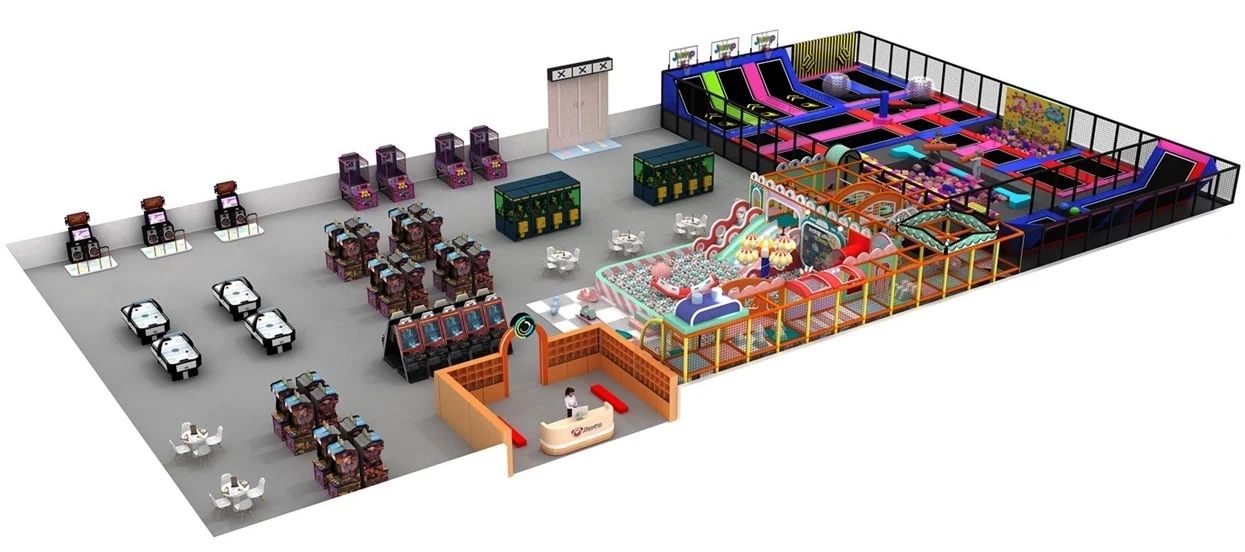
Standalone FECs offer greater freedom in zoning, allowing operators to combine elements such as soft play, active play, trampolines, climbing, interactive games, party rooms and other attractions. Smaller commercial venues can present the opposite challenge, requiring a variety of experiences within a much more constrained footprint. That is why, according to Zhang, Dream Garden does not apply a standard formula to every project.“Each market brings different demands,” he says. “While some operators prioritize theming and visual identity, others focus more closely on capacity, active play or operational efficiency.” The differences are not limited to customer preferences. Building conditions, climate, investment levels and the way a venue will actually operate can all influence the design.
Visualize the experience before production
Once the overall concept has been developed, visualization becomes an important part of communicating the proposed experience to the client. At Alturas Mall in Guatemala, Dream Garden used 3D visualization and video presentations for a fully themed children’s playground incorporating multi-level soft play, slides, ball pits, climbing and obstacle activities. For the client, the visual material provided a way to understand how the finished venue would look and operate before manufacturing began. It also gave the operator promotional material that could be used before opening.
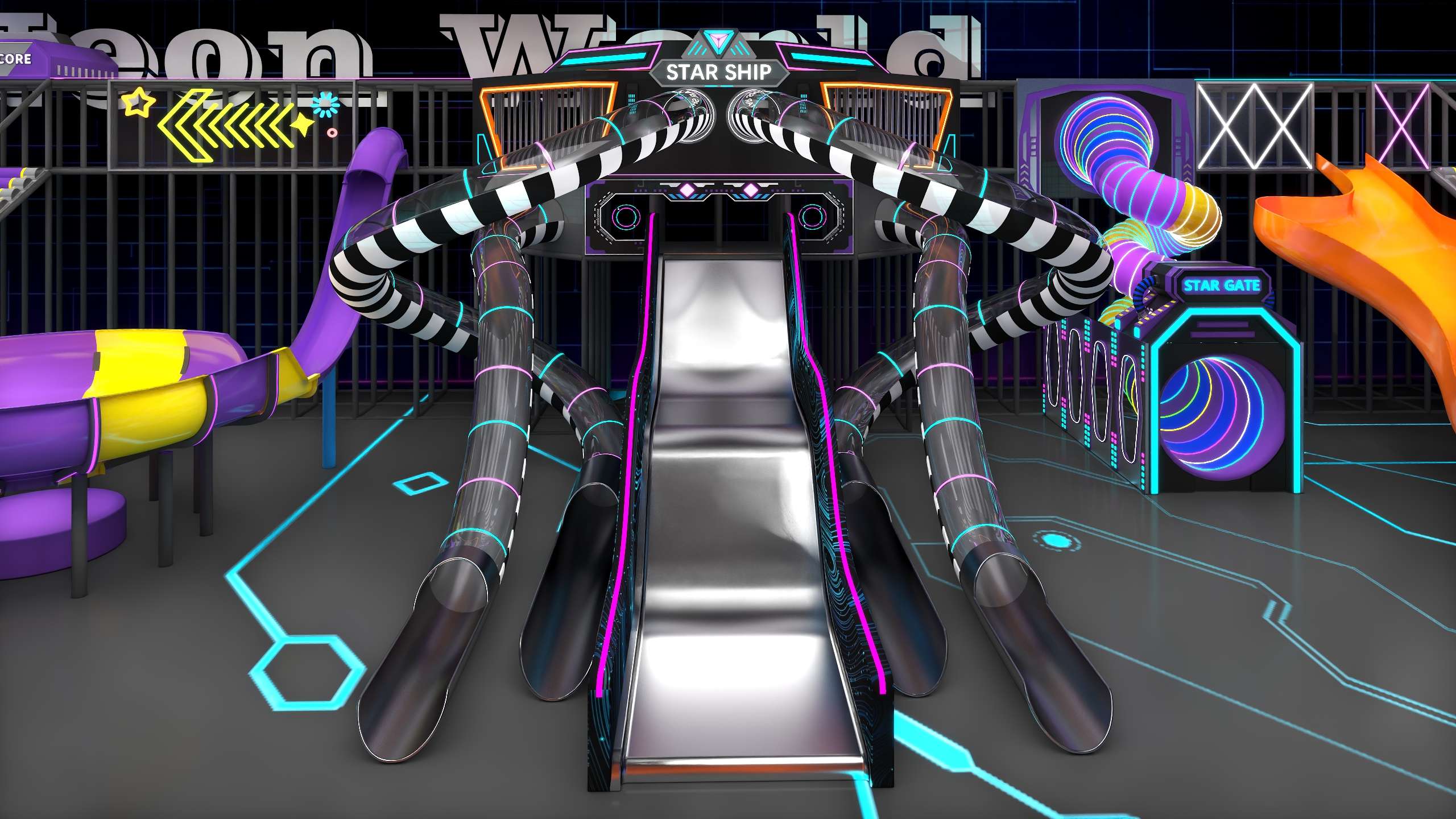
Once a concept is approved, a rendering must be translated into something that can actually be manufactured, transported and assembled. Detailed design and engineering plans establish structural dimensions, safety clearances, materials, colors, play elements, technical connections and installation requirements. “We also pay close attention to materials, connection methods, structural stability and the safety standards required for the destination market,” says Zhang. This includes compliance with applicable international and local safety standards.
The engineering team then turns the concept into production drawings and separates the project into manufacturing packages. These can include structural systems, platforms, steel components, slides, netting, soft-play elements, decorative panels and customized components. “A rendering may look simple, but the final product still needs to be manufactured, transported, installed and maintained efficiently,” Zhang says.
That connection between design and production becomes particularly important when projects are highly customized. Because Dream Garden manages design, engineering and manufacturing within the same organization, its teams can communicate directly when adjustments are needed. “Quality control takes place throughout production rather than only at the end,” says Zhang. “For customized FEC projects, one incorrect dimension can create significant problems later during installation, so our objective is to solve as many potential issues as possible inside the factory.”
Test the project before it travels
“Trial assembly is one of the most important steps in our delivery process for larger customised projects,” says Zhang. A 3D model can establish how the project is intended to fit together. Trial assembly provides an opportunity to verify that the physical components actually do so.
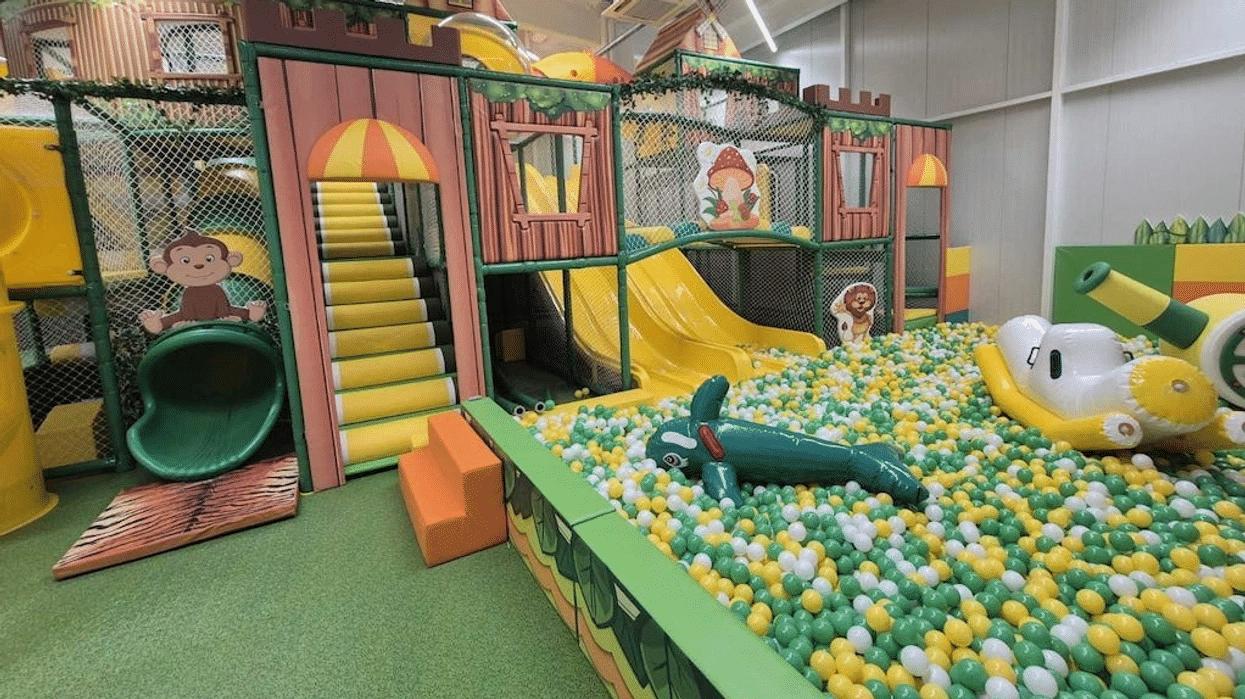
“A 3D model can show how a project should work, but physical trial assembly allows us to confirm how the structure actually fits together,” says Zhang. During the process, the team can check connection points, platform heights, safety clearances, slide positions, access routes and the relationship between different attractions. “It also helps us identify practical installation issues that may not be obvious during the design stage,” says Zhang. If an adjustment is necessary, it can be made at the factory rather than after the components have traveled to another country.
The process can also influence what happens after the equipment arrives on site. Components can be labeled and packed according to installation sequence, giving installers and local project teams a clearer roadmap. For international projects, that preparation can be particularly valuable. Site changes, transportation delays and additional travel can quickly add cost and complexity to a project.
Manage the international installation
Installation planning begins well before the first container arrives at its destination. Technical drawings are prepared, components are organized and labeled, and structural and technical sections are identified according to the installation sequence. Depending on the project, Dream Garden may send its own installation team or work with the client’s local installers while providing technical supervision and guidance. The distinction can be important for international projects because local teams may have different construction practices, languages and methods of working. “Communication is critical,” says Zhang. Drawings, labeled components, videos and direct technical communication are used to establish a common understanding of how the project should be assembled.
The site itself introduces another set of variables. Floor levels, ceiling structures, electrical systems, access routes and fire-safety requirements can all affect installation. “The most successful international projects are usually those where the client, local contractor and our technical team communicate early and solve site issues before they become installation problems,” Zhang says. For projects in existing commercial buildings, that early coordination can be particularly important. The attraction must ultimately work with the building rather than being designed as an isolated system. Dream Garden remains involved through installation, adjustment, inspection and final handover.
One process, different markets
The importance of that flexibility becomes apparent across Dream Garden’s international portfolio. In Hetauda, Nepal, the brief called for a broad, multi-attraction FEC intended to serve children, teenagers and families. The venue combines trampoline activities, foam pits and interactive play with soft play, slides, ball pits, climbing, arcade games and VR.
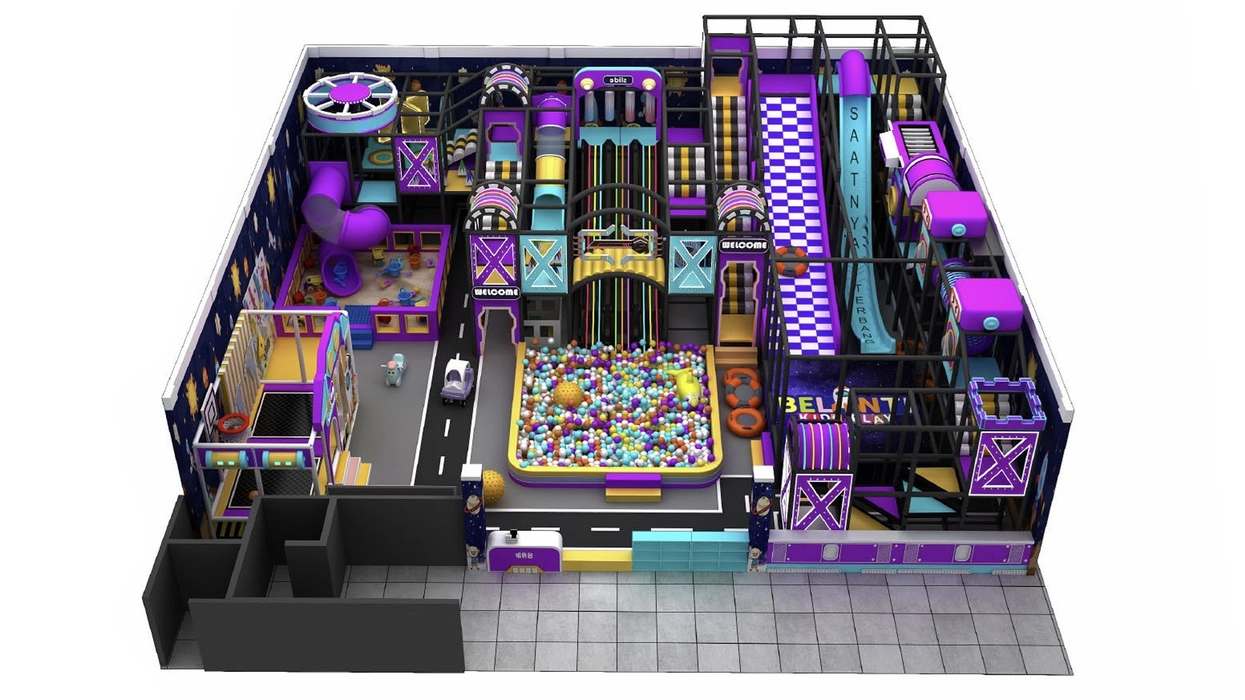
Cosmic Planet in Indonesia presented a different challenge. At 350 square meters, the indoor playground uses a space theme, a purple color palette and LED lighting to create an immersive environment within a relatively compact footprint. Slides, tunnels, ball pits and climbing activities provide a mix of imaginative and physical play.
At Belamionix Mall, meanwhile, the focus was on visibility within a shopping center and creating an attraction that would become part of the larger family visit.
The Happy Panda project in Osorno, Chile, demonstrates another variation. The multi-zone indoor entertainment center was designed for both children and adults and combines multi-level soft play, ball pits, slides, obstacle and climbing activities and interactive zones under the Happy Panda brand. Here, the challenge was not simply determining which attractions could fit into the available space. The venue needed to accommodate daily family visits, multiple age groups, birthday parties and group activities while maintaining circulation, capacity, safety and a consistent visual identity. “The challenge was not simply to fit more attractions into the venue,” Zhang says. “The project needed to work as a complete entertainment system serving different visitor groups and different types of use.”
That idea of designing the venue as a system rather than as a collection of individual attractions also influenced the zoning. Active areas, climbing, slides and challenge activities were organized alongside social spaces to help the different functions operate together without unnecessary congestion. “The project demonstrates an important principle for us: a successful FEC should not feel like a collection of individual products,” says Zhang. “It should feel like one coherent entertainment environment.”
Beyond the equipment
For an operator developing an FEC, the equipment is only one component of the project. The finished venue represents the intersection of the operator’s commercial objectives, the characteristics of the building, the expectations of its customers and the practical realities of design, engineering, manufacturing, logistics and installation. That makes coordination particularly important when different companies are responsible for each stage of the process.
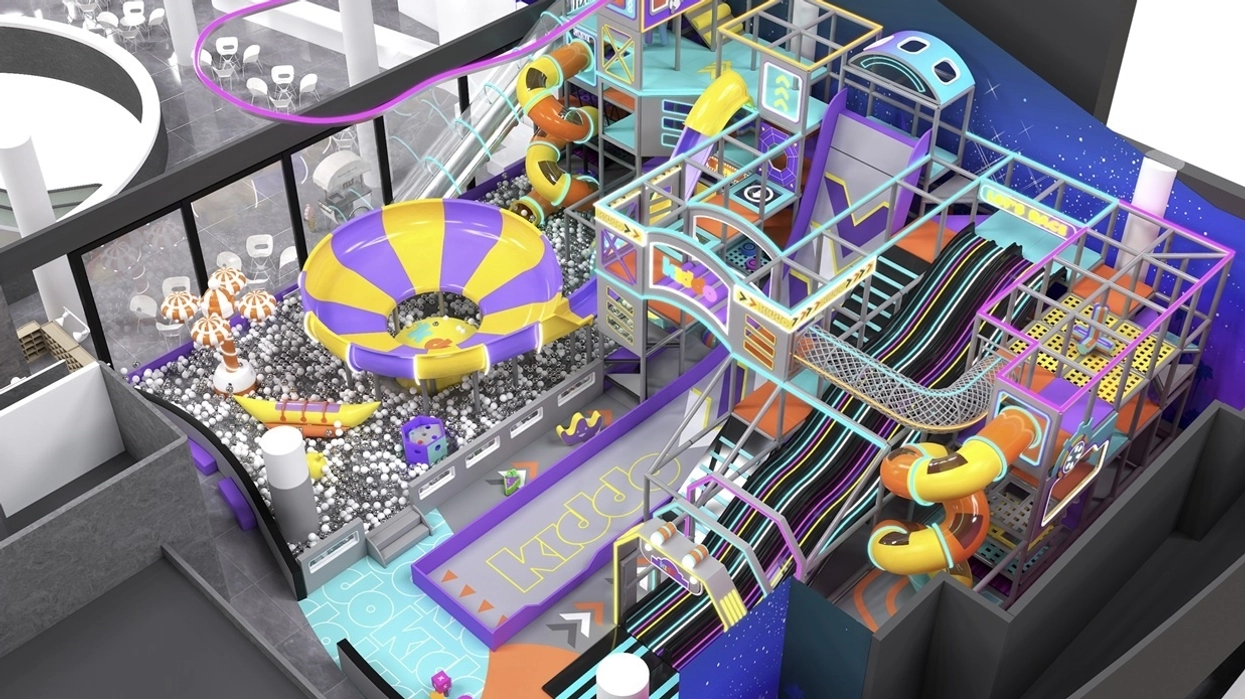
An integrated approach can connect concept design with engineering, manufacturing and installation. Trial assembly, coordinated packing and technical support can then extend that connection through the later stages of the project. “The main advantage of Dream Garden’s turnkey approach is that these stages are connected within one workflow,” says Zhang.
For the company, the objective is to take responsibility for the progression from an empty commercial space to an operating attraction rather than simply supplying individual pieces of equipment. “For us, turnkey delivery means taking responsibility for the complete journey from an empty commercial space to a functioning family entertainment venue,” Zhang says.
The projects in Dream Garden’s portfolio vary considerably in size, location, attraction mix and visual treatment. What connects them is the effort to resolve the relationship between the venue, its attractions and the people who will use them before the project reaches the site.
The initial brief informs the concept. Engineering turns that concept into manufacturable components. Factory checks test the physical structure. Coordinated packing and technical communication prepare it for installation.
For an international FEC project, those steps are not simply stages in a manufacturing process. They are the means of making sure the experience envisioned by the operator can survive the journey from a digital rendering to a functioning venue.
The empty box is no longer empty. It has become a place designed around how people move, play, gather and return. Ultimately, that is the challenge of delivering an FEC across international markets: turning the space itself into an experience. •