


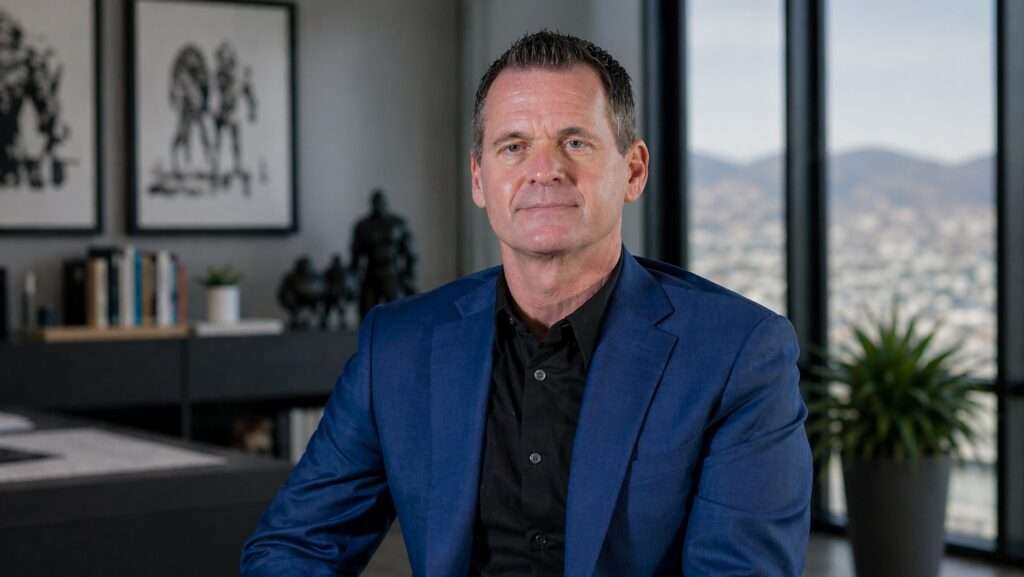
After launching FGR8 in late 2024, Chuck Fawcett is now announcing a significant evolution in focus: offering executive-level owner’s representation services for animatronics, designed to help developers, operators, and creative teams deliver complex character-driven experiences.
Rather than returning to the market as a traditional vendor, Fawcett has repositioned FGR8 as an independent advisory platform, built on more than three decades of experience designing, engineering, and delivering animatronics at the highest level.
Experience that sees what others miss
For more than 35 years, Fawcett has been responsible for advanced animatronic characters, collaborating with leading global operators including Disney, Universal, and Warner Bros., providing a complete understanding of how animatronics are delivered, from early creative intent through engineering, fabrication, and long-term operation.
“I’ve spent my entire career inside the system, designing, engineering, building, and delivering,” Fawcett says. “When you’ve seen enough projects go right and wrong, you start to recognize the patterns and realize that most of the problems are predictable.”
The problem most projects don’t see coming
“What’s happening now is convergence,” Fawcett says. “Animatronics, media, AI, robotics – these tools are coming together, creating both new opportunities and new complexity.”
Animatronics prove difficult in the execution of attractions and experiences, not because of the technology itself, but because of how it is defined, scoped, and delivered.
Scope definitions are often unclear, creative ambition exceeds what can be engineered and maintained, vendor selection is driven by familiarity rather than capability, and budgets and schedules are built on assumptions that fail under real-world conditions.
The result is a pattern seen across projects: redesign, delay, compromise, and in some cases, abandonment altogether.
“In most cases, the failure isn’t in fabrication,” Fawcett says. “It’s upstream. It’s in how the work is defined, packaged, and procured.”
A deliberate shift to the owner side
That realization led to a fundamental question: where is the highest and best use of this experience?
Through conversations with developers, operators, and creative leaders working on major destination projects, a consistent gap emerged. As expectations for immersive, IP-based experiences rise, many organizations lack independent, executive-level expertise in animatronics at the decision-making level.
Fawcett is now offering his services as an Owner’s Representative and Executive Consultant for animatronics, working directly with owners and project teams to help define scope, guide procurement, evaluate vendors, and oversee delivery.
The focus is not on building the product himself, as he has done throughout his career, but on ensuring the right product gets built by the right team from the start.
“What I’m doing now is helping teams avoid problems before they become expensive,” he says. “If you align creative ambition with what’s actually achievable, you protect the entire project.”
For developers and operators, the challenge is no longer just what can be imagined, but how to execute it successfully at scale.
“There’s a tendency to swing between extremes, either overcommitting to technology or avoiding it altogether,” Fawcett says. “The real opportunity is in understanding how to use these tools intelligently.”
Supporting both sides of the equation
While the primary focus is advising owners and developers, Fawcett also sees an opportunity to use his experience to strengthen the broader ecosystem.
In parallel with owner-side advisory work, he actively works with animatronics vendors, designers, and specialty shops to help identify capability gaps, strengthen internal resources, and better align their work with the evolving demands of the industry.
“If the industry is going to move forward, everyone has to get better together,” he says. “That includes the people designing it, the people building it, and the people delivering it.”