


Elevating human creativity with an AI-infused ecosystem, DreamLab Immersive is a bold new studio for the next era
by Judith Rubin and Martin Palicki
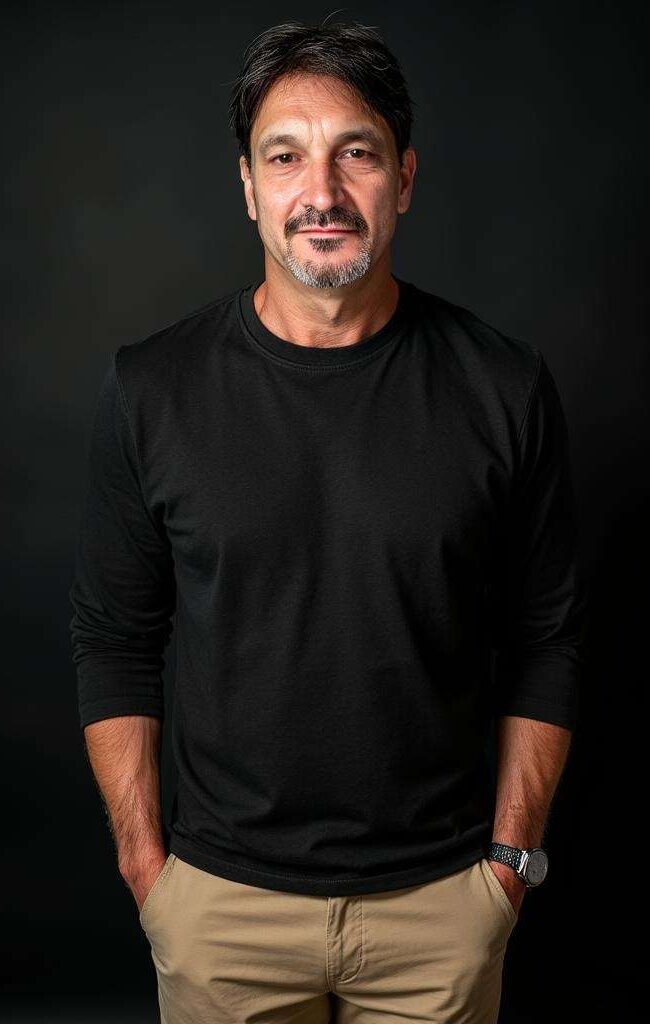
The former DE-ZYN Studios has a new identity as DreamLab Immersive, representing a re-engineered creative vision built for the context engineering era. “Custom generative tools have the power to amplify human imagination and the guest experience,” says founder John Miceli, who has spent decades at the intersection of media creation, technology and storytelling. “The shift is less about adopting new tools and more about redefining how new creative production processes and pipeline design can benefit. These new horizons will connect imagination and innovation with how people learn, explore, react and feel.”
Continuity and collaboration
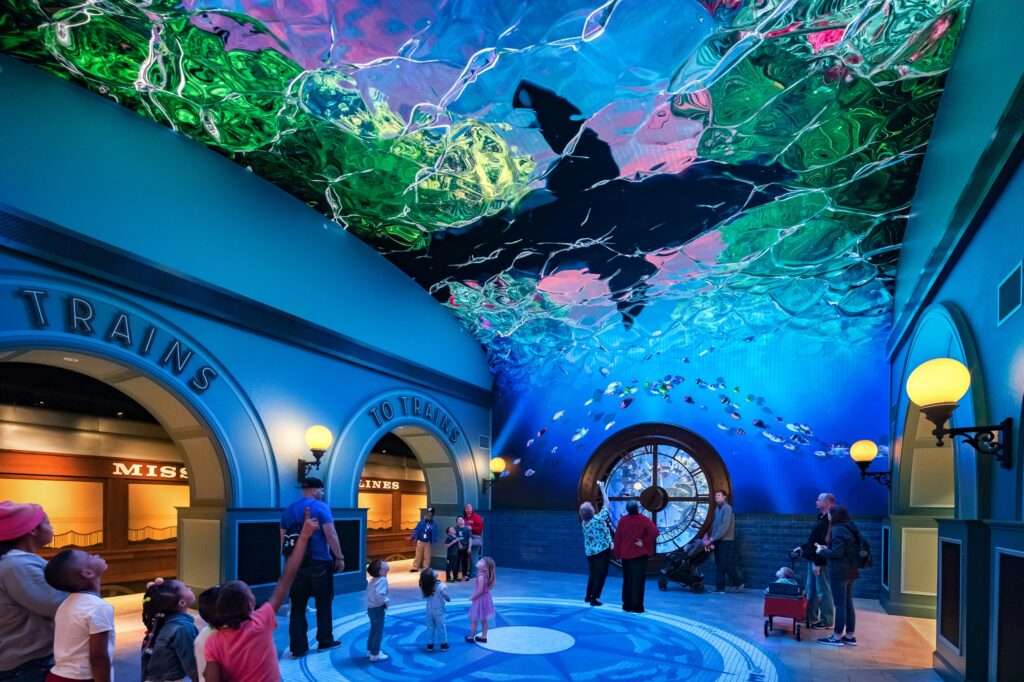
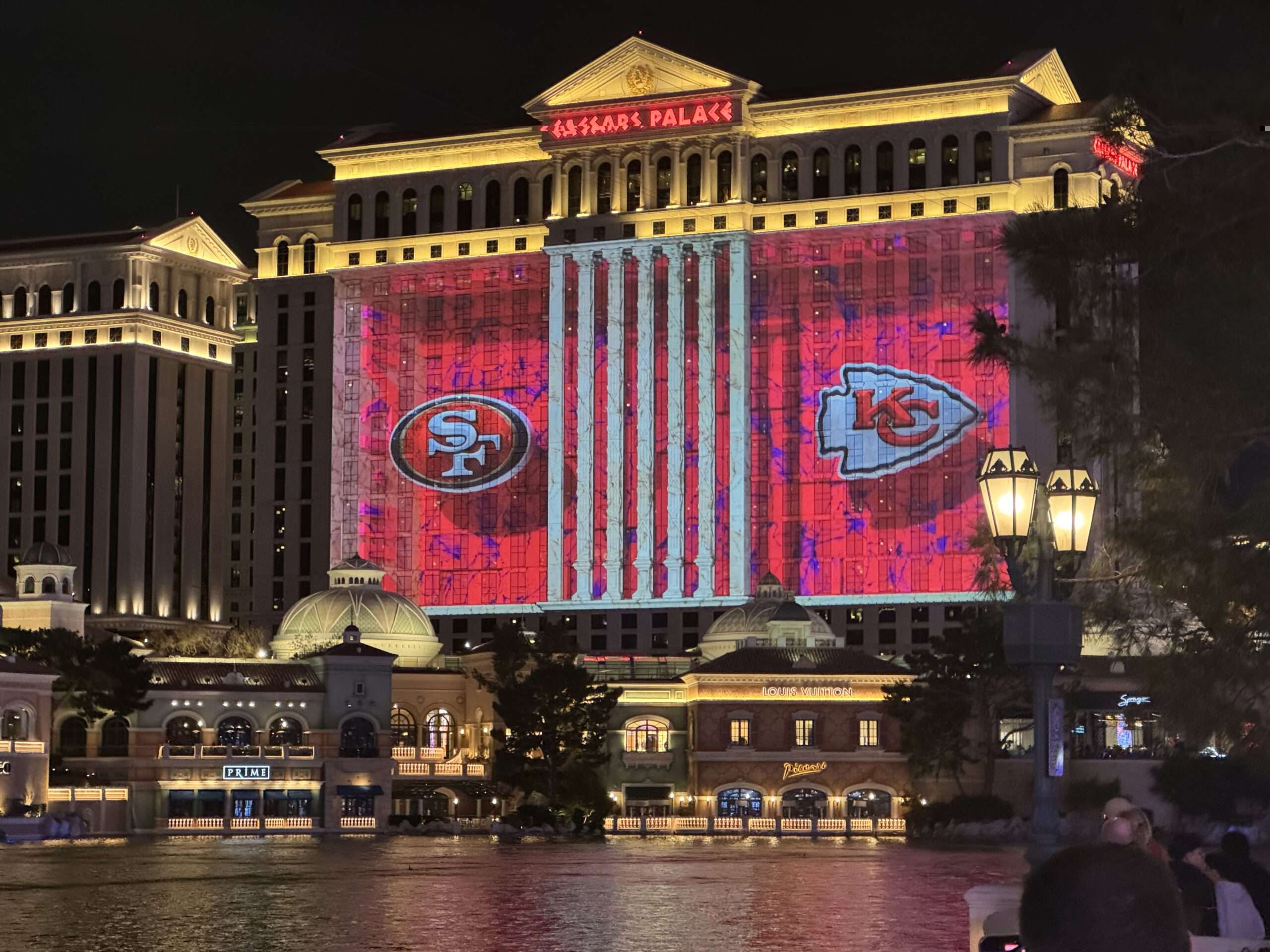
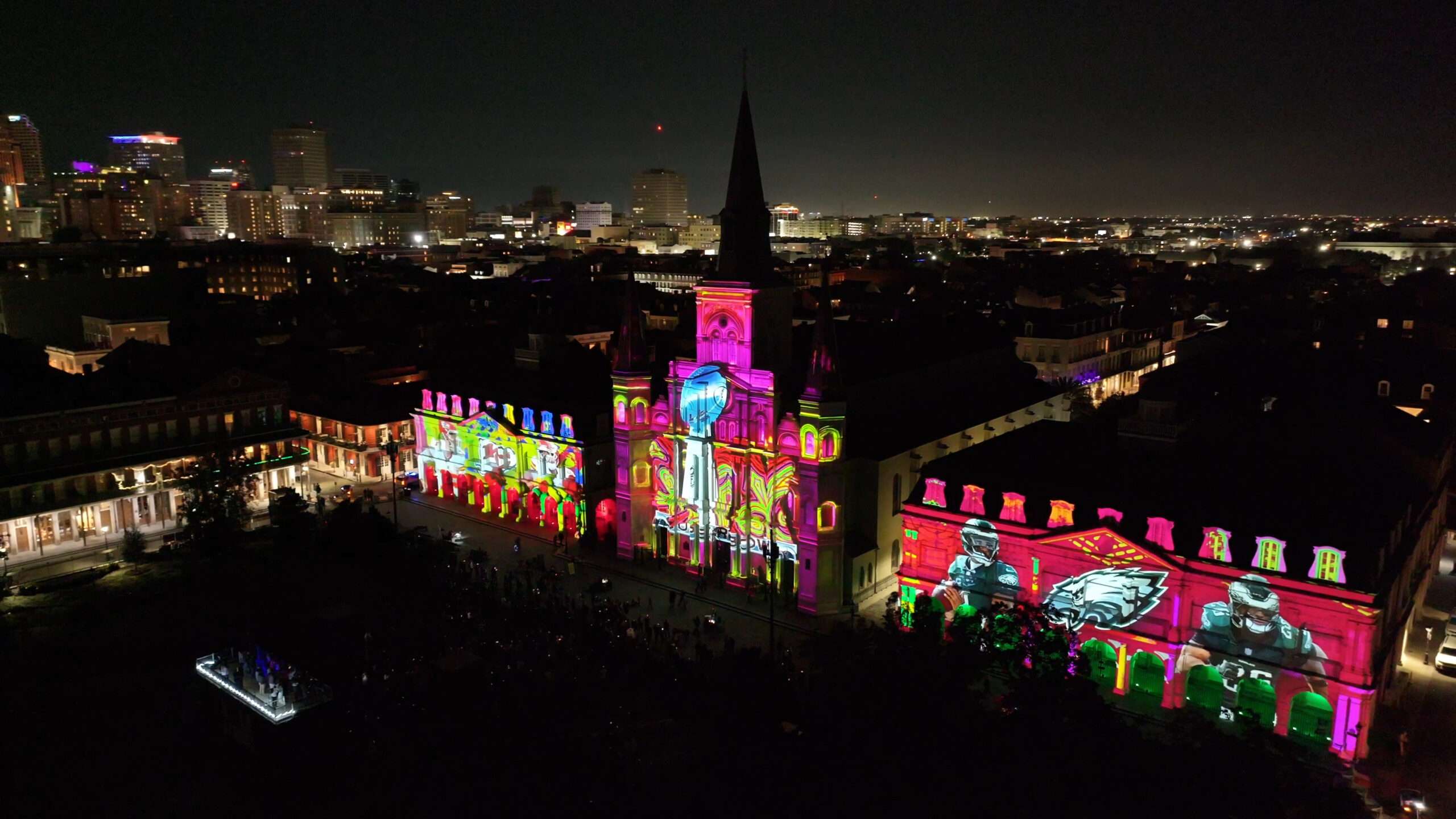
DreamLab Immersive represents continuity as much as transformation. Miceli’s career has been defined by reinvention and leadership, from pioneering sound design work on feature films such as The Crow (1994), and seminal attractions at Universal Studios parks in the 1990s, to large-scale immersive media installations for nearly 20 years with Technomedia, to founding DE-ZYN Studios in 2019, with several projects earning Thea Awards and Brass Ring honors. Some notable recent projects include the St. Louis Aquarium, NFL Superbowl Projection (2024 Las Vegas; 2025 New Orleans), Grand Hall Experience 2.0 (St. Louis), The Tonight Show (flexible configuration digital video building blocks) and Talladega Motor Speedway Big Bill’s Open-Air Social Club.
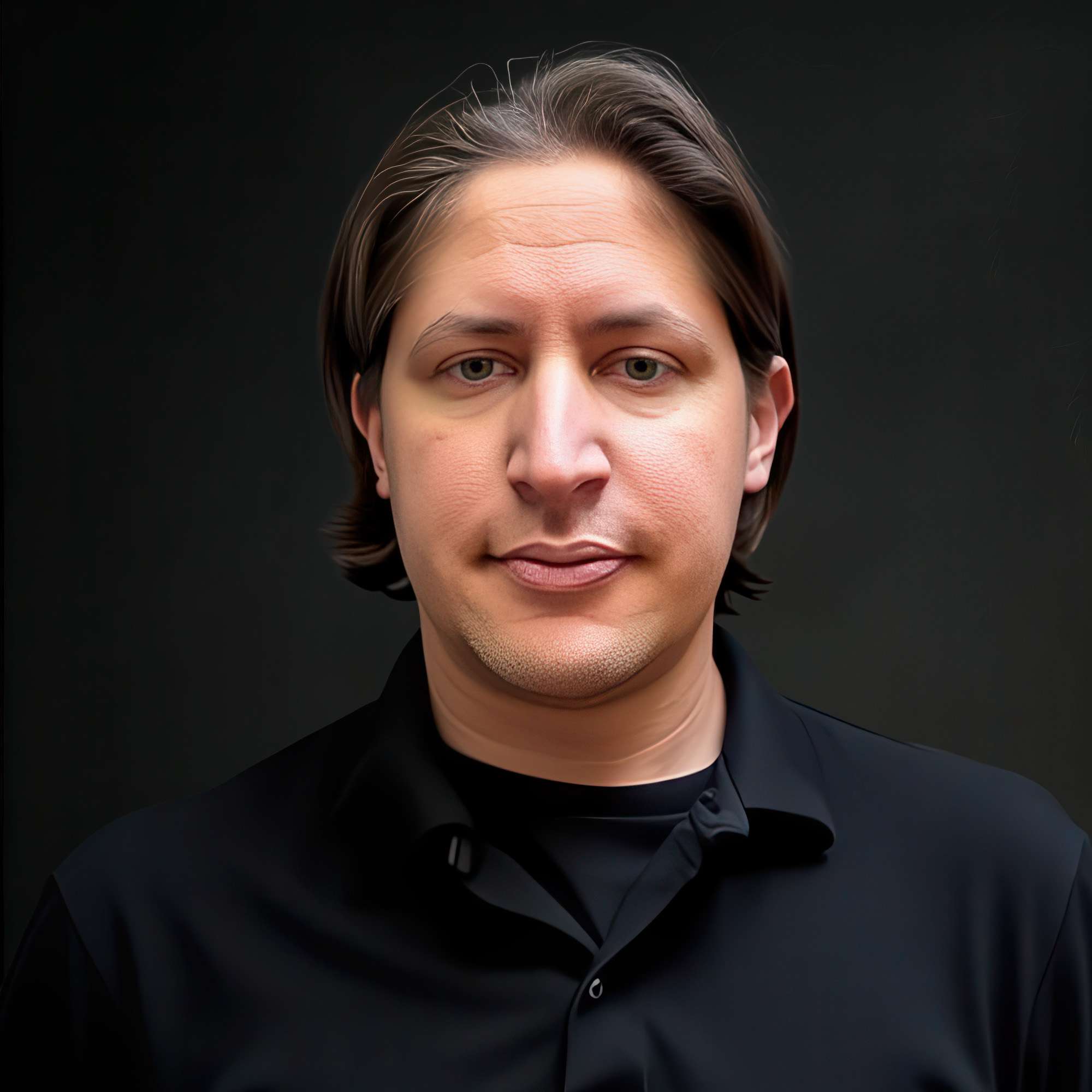
“Our focus on elevated guest experience carries our legacy forward,” says Miceli. “We have combined artistry and engineering into a unified creative process designed to elevate what’s possible.” Leading that vision is a team of veteran industry innovators who bring more than 75 years of experience spanning design, media and technology integration: Miceli; Nathaniel Ruhlman, formerly of Dorian Orange; and Phil Berard, whom Miceli calls “the undisputed technical genius behind all of Technomedia’s most advanced visual achievements.”

Founder/Chief Art Director
Founder/Chief Innovation Officer

Marketing/Business
Development Executive
DreamLab’s model is firmly planted in collaboration with some of the industry’s best and brightest. “We are partnering with world class design firms, architects, technical AV integrators, owners and other creative specialists,” says Ruhlman. “Competitors of the past are now partners of today and tomorrow. We all bring unique talents to the table and are having the time of our lives collaborating. Incorporating generative tools like neural networking models, joined with diffusion-based AI provides extreme clarity – fully preserving details when we accelerate rendering and upscaling into our traditional production pipeline. We can leverage its tremendous potential while maintaining control and creativity. The landscape is constantly evolving and staying ahead of it is the only way to not fall behind.”
A human-inspired, AI-first philosophy
Miceli describes DreamLab’s approach as “Human- Centered, AI-Enhanced.” It’s a philosophy rooted in balance: embracing the efficiencies of artificial and synthetic intelligence to evolve both the attraction process and the resulting guest experience. “While keeping creativity, emotion, and storytelling firmly in human hands, we can create scenarios that have the ability to be non-repetitive, informative and artfully unique in real time,” says Miceli. Deeper emotional connection is a significant benefit. “Generative engine-based experiences can communicate and respond to the input or actions of the guests, creating a more personal connection.”
“DreamLab isn’t just about exciting tools that inspire,” says Miceli. “Technology is never an end in itself. It’s about elevating our creative thought process to inspire broader dreaming, and seeing those ideas come to life.”
Creative freedom
Miceli likens DreamLab’s AI leap to the shift from analog to digital, not just in technical terms but in the concerns it has raised. He recalled how early in his career prior to Soundelux in the early 1990s, when producing soundtracks for film, theme parks and LBEs, editing meant physically slicing and splicing magnetic tape. “When sound tools and then Pro Tools came along, a lot of people said the industry was doomed and that anyone could do our jobs at home in their underwear. What in fact happened is that the industry expanded dramatically in the 1990s, and ProTools became a worldwide standard. Similarly, the right application of AI frees the creator. The work will speak for itself.”
That same philosophy drives DreamLab’s new model. “Generative processes are giving people more time to think creatively,” says Berard. The partners cited examples of artificial and synthetic intelligence assisting with tasks that once consumed entire days – such as rendering, upscaling, color correction, data wrangling, and document generation – compressing timelines that previously stretched for weeks. Says Berard, “The company’s proprietary rendering process can output ultra-high- resolution files up to 8K now (16K in 2026) in minutes rather than hours. Ultimately, intelligence-assisted design tools accelerate complex technical setups, freeing artists and programmers to focus on the interactivity and the emotional core of storytelling and art.”
New collaborative opportunities
Perhaps the most profound shift is how DreamLab’s ecosystem is designed to broaden collaboration. “In the past, only trained animators could put their hands on the actual work being created,” says Tracy Balsz, DreamLab’s Marketing Director. “Now, writers, visionaries, and designers who might not have the technical background can contribute to the process by mastering prompt engineering skills. They can be part of the creative process rather than handing things off and hoping the intricate details of the direction are properly embraced.”
This expanded collaboration has already shaped several of DreamLab’s current projects. In Jacksonville, Florida, the company is producing a large-scale projection mapping show that will illuminate the city’s downtown performing arts center and fountain as part of a major riverfront redevelopment. The first show for this nightly experience tells the story of Jacksonville’s rich history and renewal, its culture, art, sports, and expansive music history. To achieve the authentic visual style the client wanted, Dreamlab used its pipeline to fill gaps in historical imagery, generating period-perfect, authentically researched visuals that were then transformed into moving video sequences. “It allowed us to tell a more complete story that represents the storytelling visually and emotionally,” Miceli says. “Without the added hand of these collaborative technologies, that level of curated design would have taken months.”
DreamLab’s ecosystem also makes it possible for remote teams and outside creatives to participate through shared portals and interfaces accessing the creative pipeline. “We are building an environment where anyone on a project, in-house and other partners – from concept artists to clients – can collaborate dynamically within the same digital workspace,” says Miceli.
New tools, familiar values
Despite the advanced technology, DreamLab’s ethos remains deeply rooted in human creativity. “It’s never about sitting by the pool and typing a few words to see what comes back,” Miceli says. “It’s about how far we can push creative thought and emotional storytelling embracing our invisible teammates, our agents to reach further.”
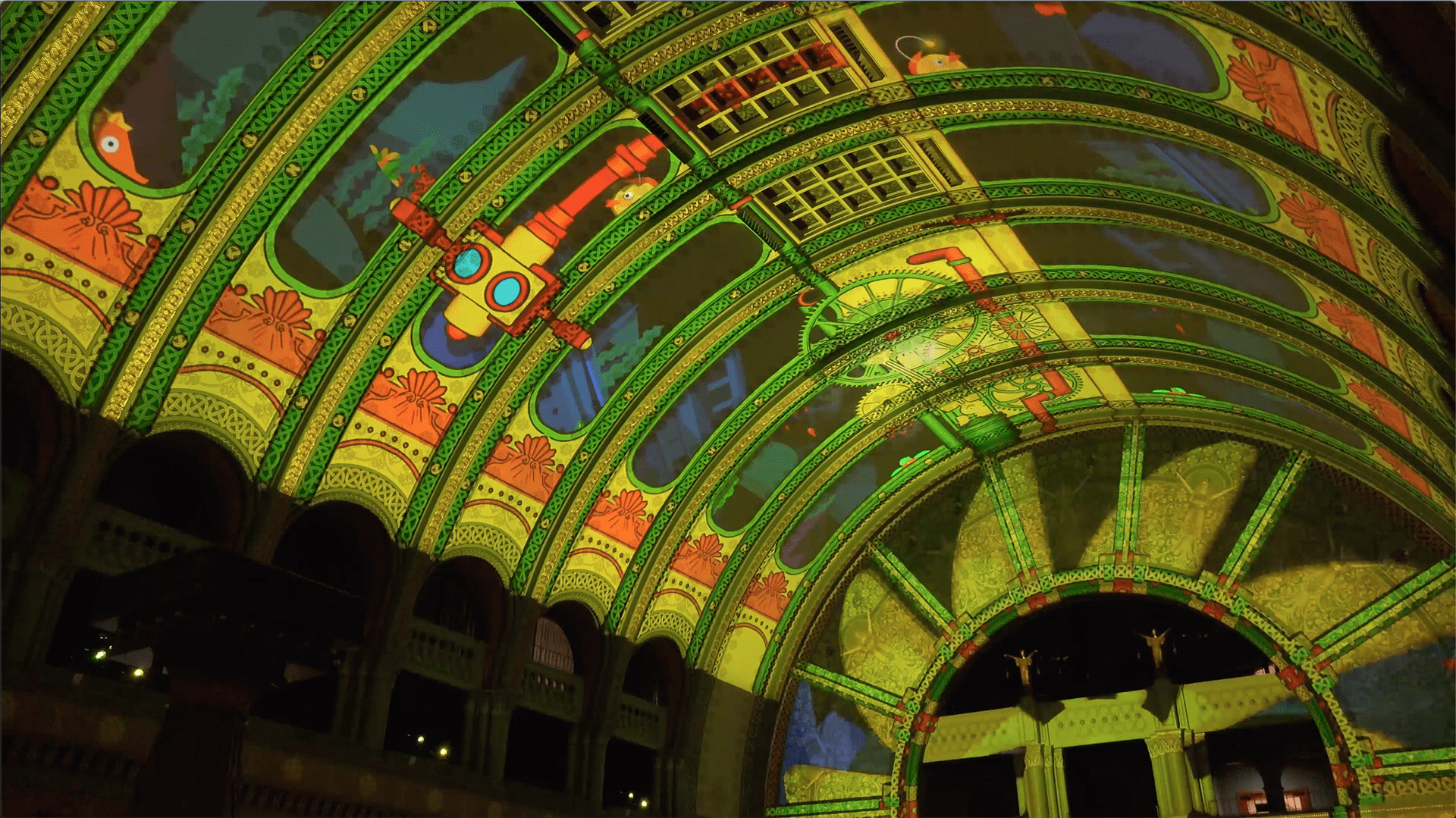
He points to another past milestone for comparison – his team’s work on Terminator 2: 3D for Universal Studios in the mid-1990s, where Soundelux integrated the first of its kind DSP audio processing technology to support a thousand-track mix – an achievement that would have been unthinkable just a few years earlier. “We’re similar minds, the same core people with a widely expanded team, but with tools that expand our resources without limit,” he says. “Now we can dream bigger and achieve inspiring results with greater freedom.”
Projects with purpose
DreamLab’s current project slate demonstrates how the company’s culture, philosophy and ecosystem workflow scales across disciplines. In addition to the Jacksonville Riverfront project, the team is developing The Hub in Springfield, Illinois – a transport and community center that will use immersive media and interactivity to transform a civic space into a flexible event and storytelling venue. The design includes a massive, transparent visual ceiling delivering immersive experiential programming. An interactive wall is designed as a central hub for all that visitors can experience in Springfield, a collaborative venture across the city with the intention to expand the stay to multiple days through awareness and connectivity. The Hub connects visitors to local culture, businesses, and attractions in real time using AI to communicate and act as a personal concierge.
The company is also collaborating with the Tennessee Aquarium on new immersive exhibits that complement live animal habitats without overshadowing them. “We’re finding ways to bring digital storytelling and interactivity into the experience in a way that feels natural and fun,” Berard explains. “The goal isn’t to compete with the life around you, it’s to enhance the sense of wonder and engagement.”
DreamLab’s client list continues to grow, with upcoming projects including museum installations, retail experiences, immersive dining, zoos and aquariums, corporate art installations and of course, theme park attractions. “We’ve always looked at technology as a storytelling partner,” Ruhlman says. “Our new generative intelligence-forward experience design just makes that partnership more inspiring, exploratory, timely, alive and expressive for guests.”
Transforming innovation into human connection
DreamLab’s innovations and potential applications go beyond entertainment. Miceli’s team is exploring ways to bring its unique immersive interactive experiences to education, elder-care environments and real time human life interaction – spaces where immersive experiences can have the power to improve emotional engagement and well-being.
Miceli notes that guest expectations are evolving as well. “Most of us now live a good portion of our lives digitally,” he says. “Younger generations expect everything to move, to respond, to know them and to bring immediate gratification. Embracing generative intelligence in our designs allows us to reach for that reality – experiences that are personalized, adaptive, and alive.”
These applications reflect the broader philosophy that AI, when used thoughtfully, expands humanity’s reach rather than replaces it. “The mind is the foundation, the dream is the goal,” says Miceli. “Technology must serve the process, the creator and the soul of the story. That’s what it means to be Human-Inspired, Human-Driven, Human-Centered, AI-Enhanced. Every breakthrough we’ve had – from digital sound to LED media to kinetic interactive systems – has started with a human dream. Our opportunities today allow us to innovate in more collaborative ways to bring those dreams to life, and that’s what Dreamlab Immersive is all about.” •

Martin Palicki (martin@inparkmagazine.com) founded InPark Magazine in 2004, combining years of experience working in themed entertainment with a passion for writing and design.