


A pioneering study conducted by Breda University of Applied Sciences (BUas) and Joint Projects, supported by CELTH (Centre of Expertise Leisure, Tourism & Hospitality), reveals critical shortcomings in how leisure attractions serve visitors with hearing impairments – and presents practical solutions.
Titled “Experiential inclusion: How a visitor attraction experience can easily be made or broken for people with hearing impairments,” the research delivers a vital message: even when physical accessibility is in place, the actual experience of a visit can be significantly diminished for people with disabilities.
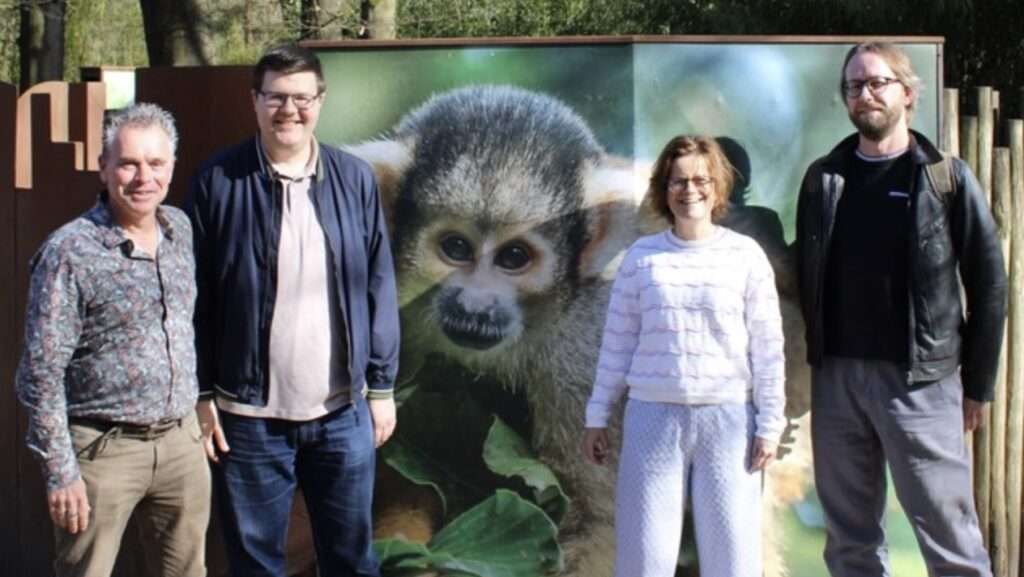
Karin Stiksma, Leisure Inclusion Scientist and CEO of Joint Projects, noticed through several studies that accessibility at visitor attractions is often addressed in terms of operational and technical fixes of the attractions’ infrastructure. Hardly ever was accessibility approached from an experiential point of view. She therefore approached Breda University of Applied Sciences to team up for experience research amongst people with specific limitations. This resulted in a research team consisting of Wim Strijbosch (BUas), Karin Stiksma (Joint Projects), Marco van Leeuwen (BUas) and Peter Horsten (BUas).
“It appears that there is still little attention for the group of visitors with challenges on the auditory spectrum, partly because of the invisibility of their disability. We therefore decided to focus this research project on people with different capabilities on the auditory spectrum. The lessons learned from this project can then be applied to experience research to other spectra,” explains Karin Stiksma from Joint Projects.
“This project aimed to develop a measurement tool to assess the inclusivity of experiences for people with varying challenges and capabilities on the auditory spectrum. In doing so, we performed an in-depth exploration of scientific literature and findings from previous projects by Joint Projects. Based on this, we developed an initial conceptual model that focuses on sensory perception, emotion, cognition, and effort in relation to hearing and fatigue. Within, this model a visitor attraction is seen as an ‘experienscape’ with four key elements: content, medium, context, and individual,” says Breda University of Applied Sciences project lead Wim Strijbosch.
Inclusion as economic opportunity
According to WHO data, over 1.5 million Dutch citizens experience hearing difficulties, a number expected to grow due to demographic and environmental factors. The implications for the leisure industry are significant: a more inclusive experience equals a broader audience and stronger emotional connection.
“Inclusion is not only a moral imperative; it’s also an economic opportunity,” adds Karin Stiksma. “Our research shows that simple, evidence-based changes can bridge the gap by bringing simple yet significant improvements.”
Co-Creative approach with impact
Launched as part of CELTH’s “Leisure for a Better World” grant, the study combined academic expertise with close collaboration from people with hearing impairments to develop a practical and inclusive approach. Their input, gathered through in-depth interviews, was central in shaping a new measurement tool designed to capture the full visitor experience, including emotions, thoughts, fatigue, and sensory perceptions, for both hearing and hard-of-hearing guests.
The tool was calibrated through field research at the Apenheul Zoo’s gorilla feeding presentation, where both survey data and bodily measures (like skin conductance) were used to compare real-time emotional engagement between guests with and without hearing disabilities.
Key findings: different, often tiring experience
Using a combination of a model-based questionnaire, bodily measures of emotion and post-experience interviews, highlighted several differences in the experience between visitors with varying auditory capabilities. Research data consistently indicates that the gorilla feeding presentation offers a less optimal experience for individuals with auditory challenges compared to those without.
The findings paint the following picture:
- Visitors with hearing impairments reported lower engagement, higher listening effort, and more fatigue.
- Their attention was more often focused on navigating communication barriers than enjoying the content.
- Small but meaningful adaptations like not turning away when speaking, using subtitles, and enhancing visual cues can significantly improve the experience.
- Most importantly, inclusive and universal design is not just beneficial to people with specific needs but benefits everyone.
- Clear communication is key – information about available accessibility features could reduce uncertainty, mitigate anticipated frustration and negative expectations and improve the overall experience.
“People don’t come to attractions to be reminded of their limitations. They come to enjoy, learn, and connect. The right design choices can either include or exclude someone from that core experience,” concludes Wim Strijbosch.
What’s next
The measurement tool is now ready to be deployed by leisure organizations seeking to audit and improve inclusivity in their attractions. The team encourages others to adopt similar co-creative methods, whether working with people with hearing impairments, mobility challenges, or neurodivergence.
The full research report, methodology, and recommendations are now available. Organizations interested in improving their inclusive design practices can request access via the contacts below.
The research results were presented on August 25, 2025, at the World Leisure Congress 2025 by Karin Stiksma and Wim Strijbosch.
For more information, interviews, or access to the full report, contact:
- Wim Strijbosch – Breda University of Applied Sciences – strijbosch.w@buas.nl
- Karin Stiksma – Joint Projects – karin@jointprojects.nl