

CIRQUE DU SOLEIL’ S FIRST PERMANENT EUROPEAN RESIDENCY MARKS A NEW CREATIVE CHAPTER, INTRODUCING ACROMAGIC – AN ILLUSION-DRIVEN PERFORMANCE STYLE WHERE EPSON’S PROJECTION BECOMES CENTRAL TO THE EXPERIENCE.
by Becci Knowles
Co-produced with Live Nation Germany, ALIZÉ – Cirque du Soleil’s first permanent resident production in Europe – premiered at Berlin’s Theater am Potsdamer Platz in November 2025. As Official Projector Partner of Cirque du Soleil Entertainment Group, Epson America worked closely with Cirque du Soleil’s creative and technical teams to implement a projection system capable of sustaining illusion at scale, night after night.
Billed as “a journey into the invisible,” Cirque du Soleil ALIZÉ introduces a new performance style called “Acromagic” – a fusion of its signature acrobatics with Magie Nouvelle (New Magic), an artistic movement that has spent more than 20 years reimagining magic as poetic expression rather than illusionary trickery. It is a form that depends on uncertainty: on making audiences question what they are seeing, where reality ends, and where imagination begins.
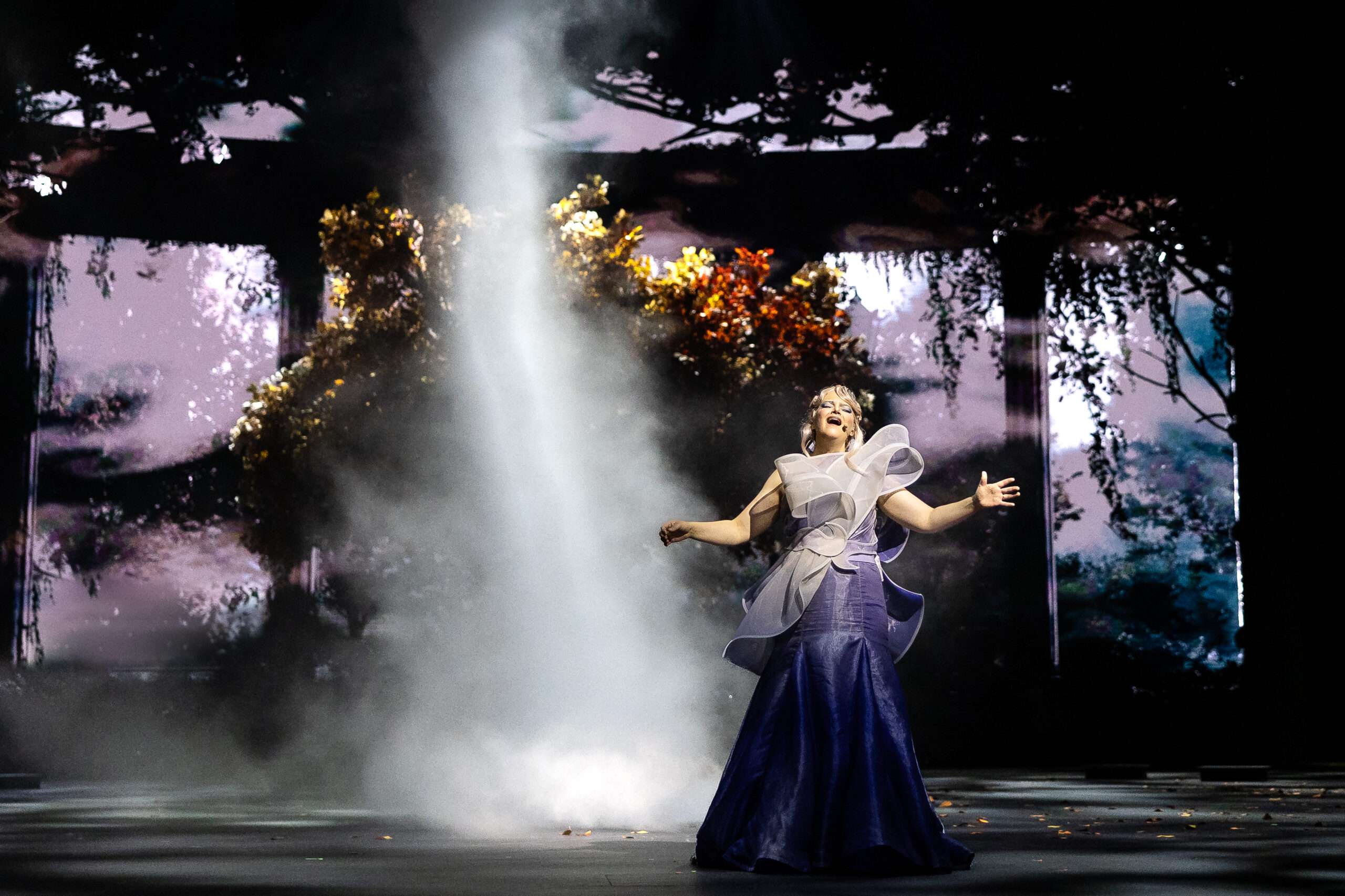

Projection mapping integrates with live effects in the tornado sequence, maintaining alignment and visual clarity even as lighting, haze, and movement intensify around the performer.
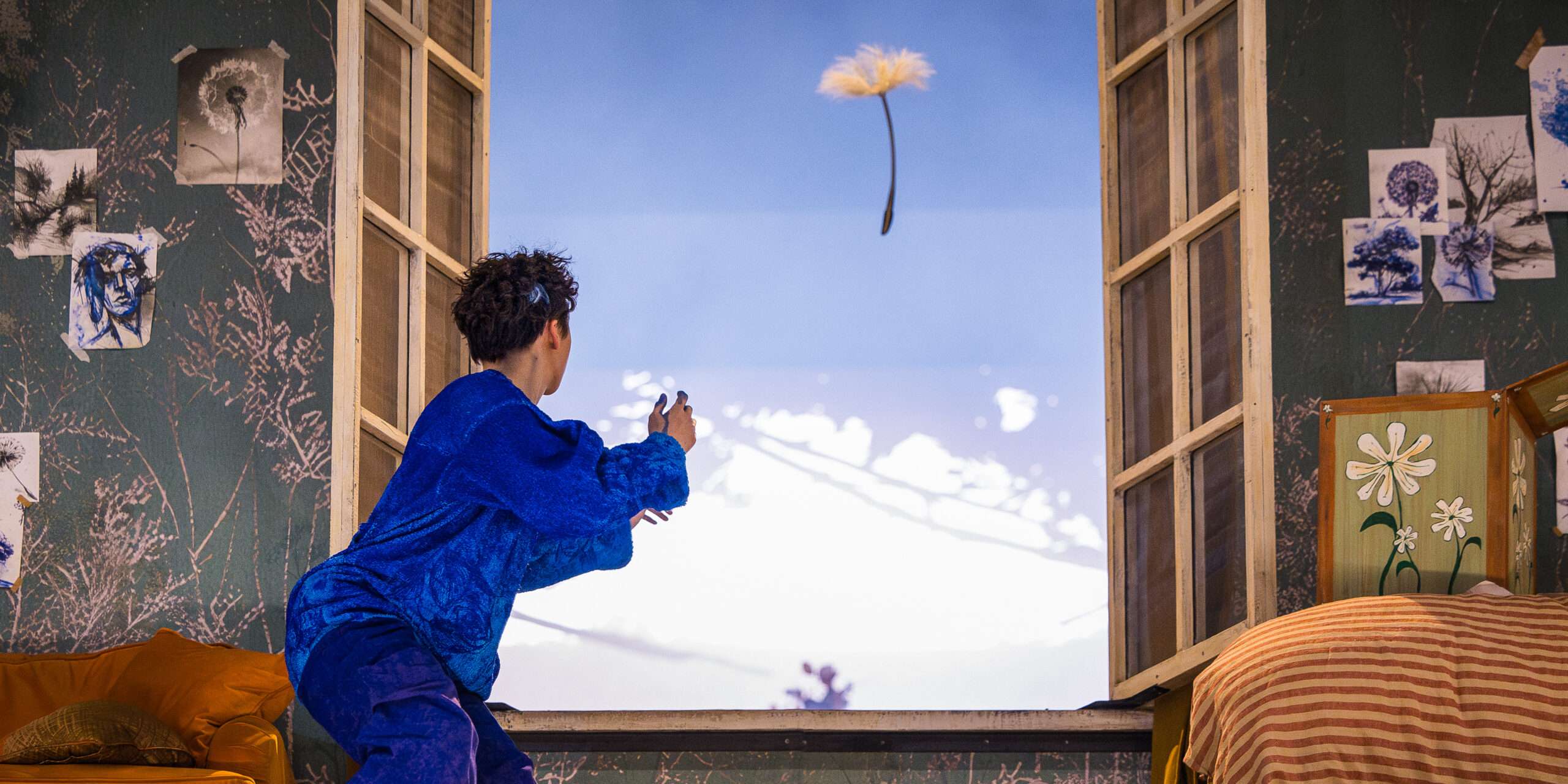
The bedroom sequence that sets the tone for ALIZÉ. What first appearsto be a projected animation gradually reveals a live performer within it, blurring the boundary between physical set and illusion through precisely mapped Epson projection.
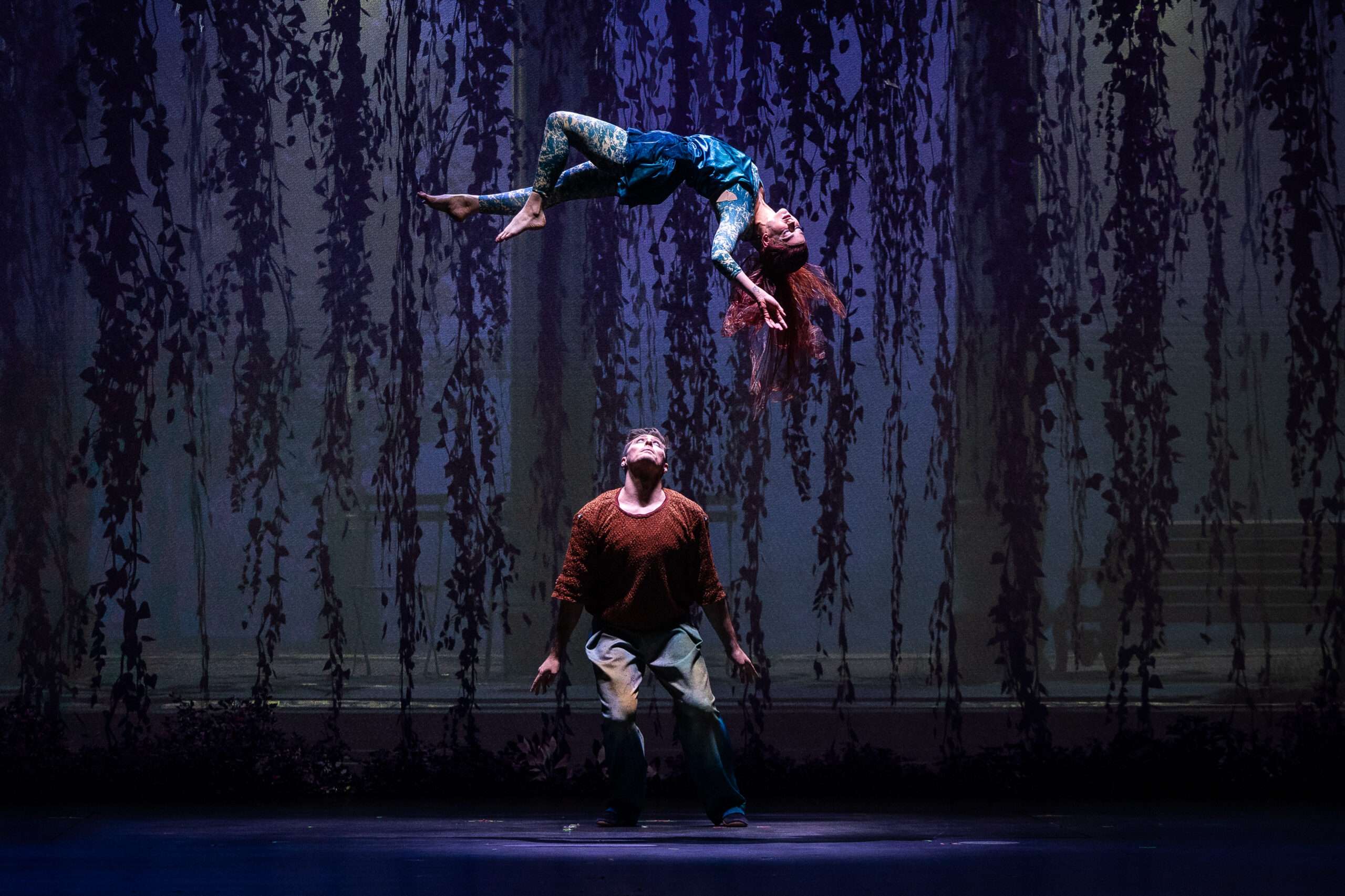
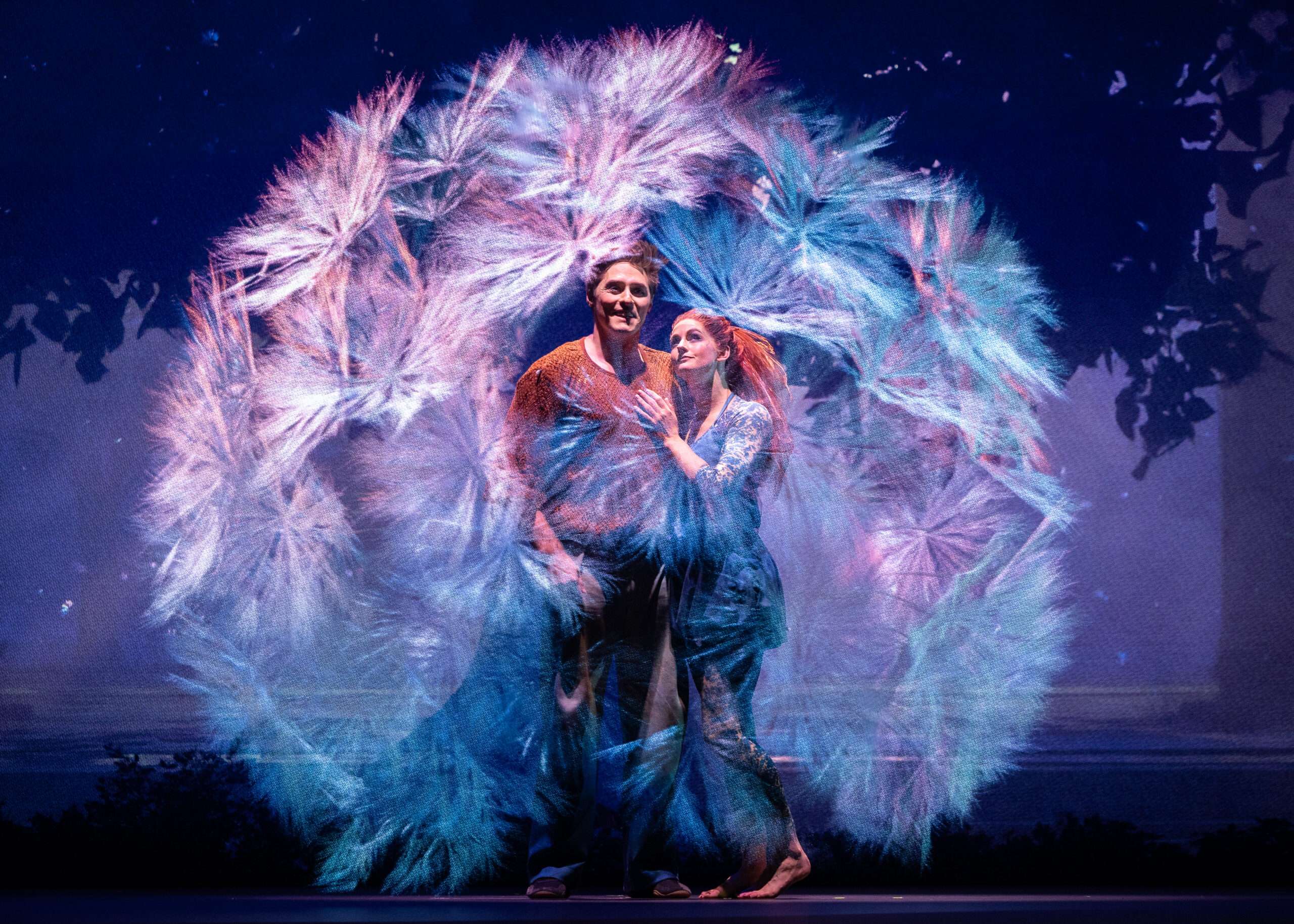
Hanging vines of projected light create a layered environment that feels spatially present around the performers. In ALIZÉ, projection enhances intimacy rather than spectacle.
During the contortion act, described by Lead System Manager John Thurston as the moment when audiences “sit forward in their seats,” projected volutes gather and expand around the performer, transforming quiet detail into immersive illusion.
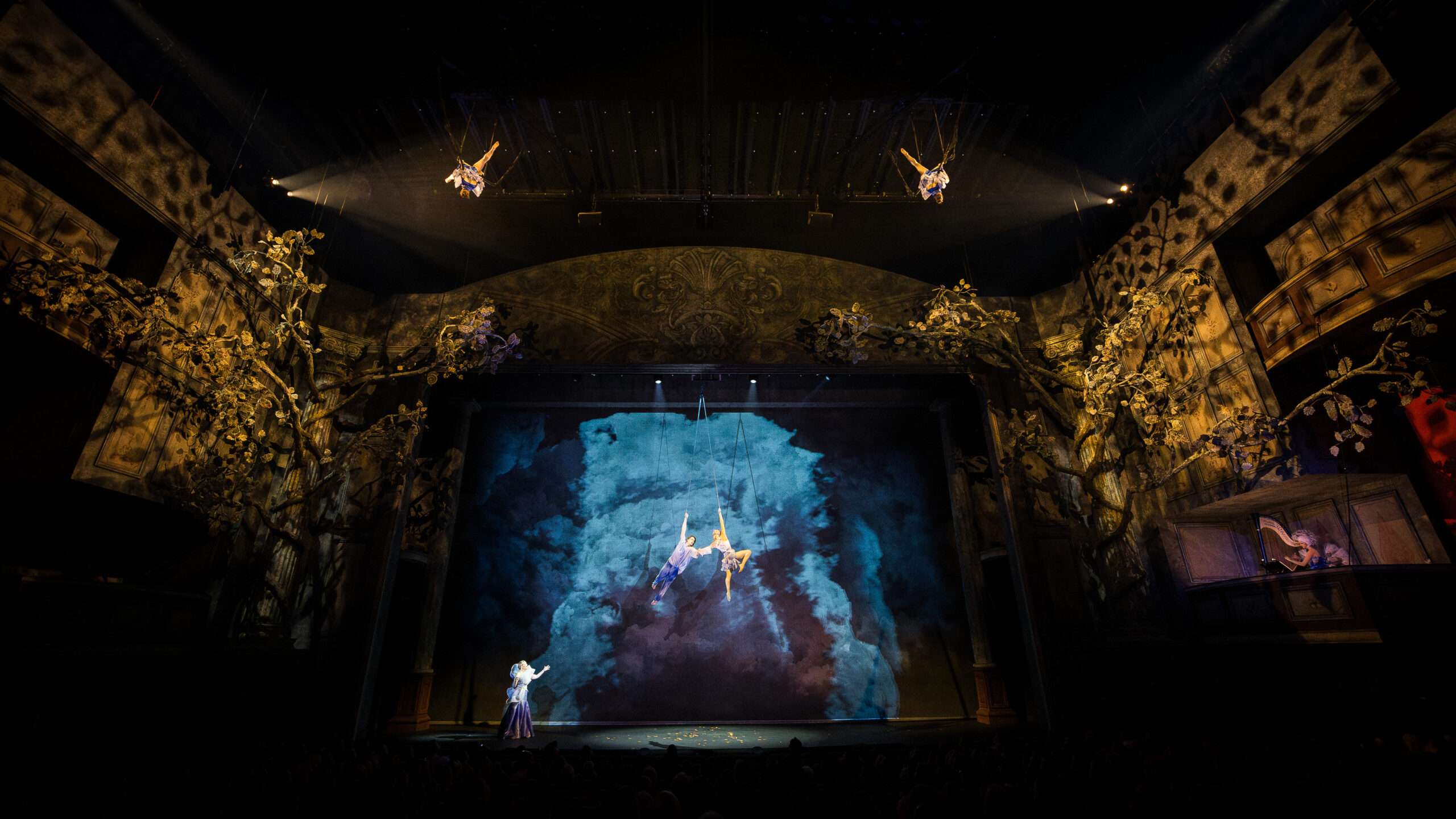
Projection and aerial choreography remain precisely aligned, creating the impression that performers are moving within the image itself rather than in front of it.
For example, in one sequence, a bedroom appears at height onstage, rendered in such a way that it initially looks like a 3D animation rather than a physical set. A figure lies motionless on a bed. Only when his arm drops does it become clear the performer is physically present. Even then, the distinction between projected environment and physical objects remains unclear. The bed, the surrounding furniture, and the space itself seem to exist somewhere between physical structure and projection. It becomes difficult to determine what is real and what is not.
Elsewhere, suspended high above the audience, a high wire walker balances in stillness as fireflies drift around him, marking a path that seems to exist alongside his movement rather than on any visible surface. The effect is subtle but disorienting. Projection does not frame the act; it shapes the space the performer occupies, which again makes it difficult to separate the physical environment from the illusion. Moments such as these (and there are many) capture the essence of Acromagic, where projection and reality coexist without clear boundaries.
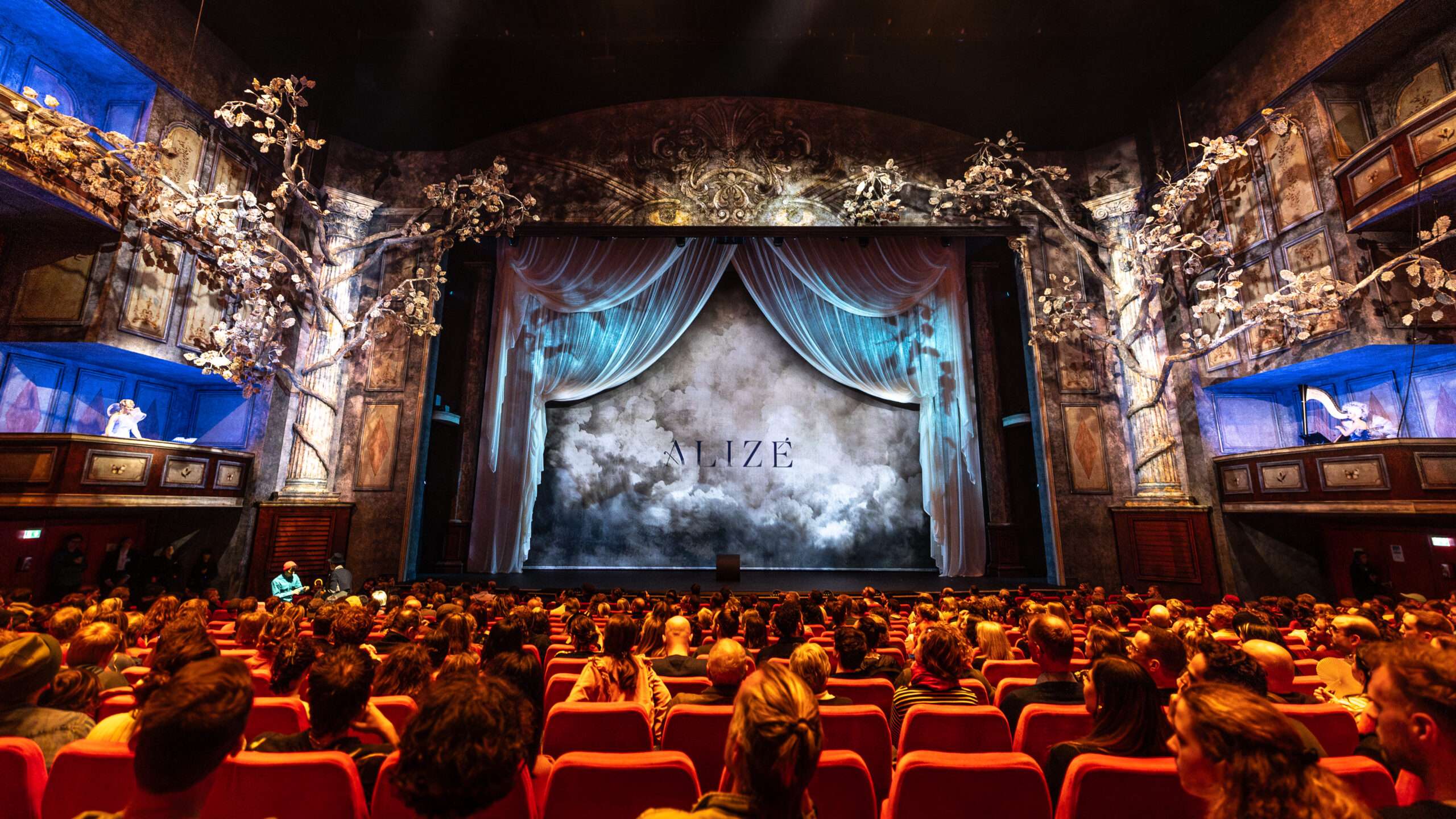
The auditorium itself feels animated long before the first acrobatic moment unfolds. Fireflies drift across the walls, the environment subtly breathes, and the boundary between stage and auditorium begins to soften. With a performer playing the harp on each balcony, stage right and stage left, there is an immediate sense that the venue has been tuned like an instrument. The walls, the architecture, and the space around the audience all feel active, as projection shifts across surfaces in ways that make the room feel alive rather than static.
To support that vision, Theater am Potsdamer Platz has been extensively redesigned and transformed to meet the unique requirements of a complex permanent production. Over the course of just three months, a team of 60 technicians reconfigured the space. The resident cast features 43 artists from 21 countries, supported by approximately 40 technicians operating systems above the audience, below the stage, and throughout the theater.
The Theater am Potsdamer Platz is relatively compact compared to Cirque du Soleil’s purpose-built residency venues, with seating rising steeply toward balconies and technical infrastructure integrated tightly into the architecture.
Scenic elements, automation systems, lighting, and projection equipment occupy nearly every available space, extending vertically into the grid and below the stage. Rather than relying on a single scenic focal point, the production uses projection to extend and transform physical set pieces, allowing environments to appear, dissolve, and reconfigure without visible mechanical change.


Jason Meyer, Director of Product Management at Epson America, describes the project as something Cirque du Soleil had been moving toward for some time. “When Cirque du Soleil described their aspirations for storytelling, we knew projection was the only technology capable of bringing it to life.” The concept Cirque du Soleil brought to Epson wasn’t a general wish list. It was specific, visual, and ambitious. Meyer recalls sitting with the show’s technical leadership early in the process. “It was similar to a pitch, beautifully rendered technical concepts that simply blew us away in their scope and ambition. It was truly exciting.”
The show’s defining visual language is inseparable from projection, not as a scenic overlay, but as a core mechanism of the magic. That is where Epson enters the story: not as a supplier in the traditional sense, but as a technology partner providing the brightness, consistency, and creative flexibility required to make Cirque du Soleil ALIZÉ’s constant “is it real or not?” experience land.
When Meyer explains the technical concept behind Cirque du Soleil ALIZÉ, he does not present projection as just another production ingredient. Instead, he describes it as the core technology that helps everything come together. Eight overlapping Epson EB-PU2220B large venue laser projectors, each delivering 20,000 lumens, form the central visual canvas. In total, approximately 20 Epson laser projectors are deployed throughout the theater. These projectors are positioned within the grid, technical galleries, and front of house positions, covering scenic elements, architectural surfaces, and performance areas. Their output extends across stage floors, vertical scenic structures, and atmospheric effects, allowing projection to exist within the same spatial environment as performers and physical scenery.
Brightness, Meyer emphasizes, is not a technical indulgence. It is a creative requirement. “The role of projection is both hugely ambitious yet incredibly nuanced. Cirque du Soleil uses color to drive emotion, demanding hues that need to be incredibly precise, consistent, and bright. At the same time, ALIZÉ is a journey into the invisible. This is where projection becomes the perfect medium: it provides a level of subtlety and can disappear entirely, leaving the audience in awe.”
In an entertainment landscape increasingly dominated by LED, both Cirque du Soleil and Epson are clear about projection’s continuing relevance.
“LED is amazing. It can do incredible things,” Meyer says. “But it can’t do what projection does.” Specifically, projection allows light to exist across dimensional surfaces rather than within a defined screen. “You can’t bend light with LED screens around three-dimensional surfaces very easily, not with quality,” he explains. “And you can’t create a hologram in the middle of a stage, for example a tree blowing in the wind. There are things that only projection can do.”
Subtlety as strategy
One of Cirque du Soleil ALIZÉ’s most powerful creative choices is subtlety. Rather than foregrounding technology, the production allows projection to seep into the experience gradually. “The subtlety with which the projection is used in the beginning – you almost don’t notice it’s there,” says John Thurston, Lead System Manager for ALIZÉ.
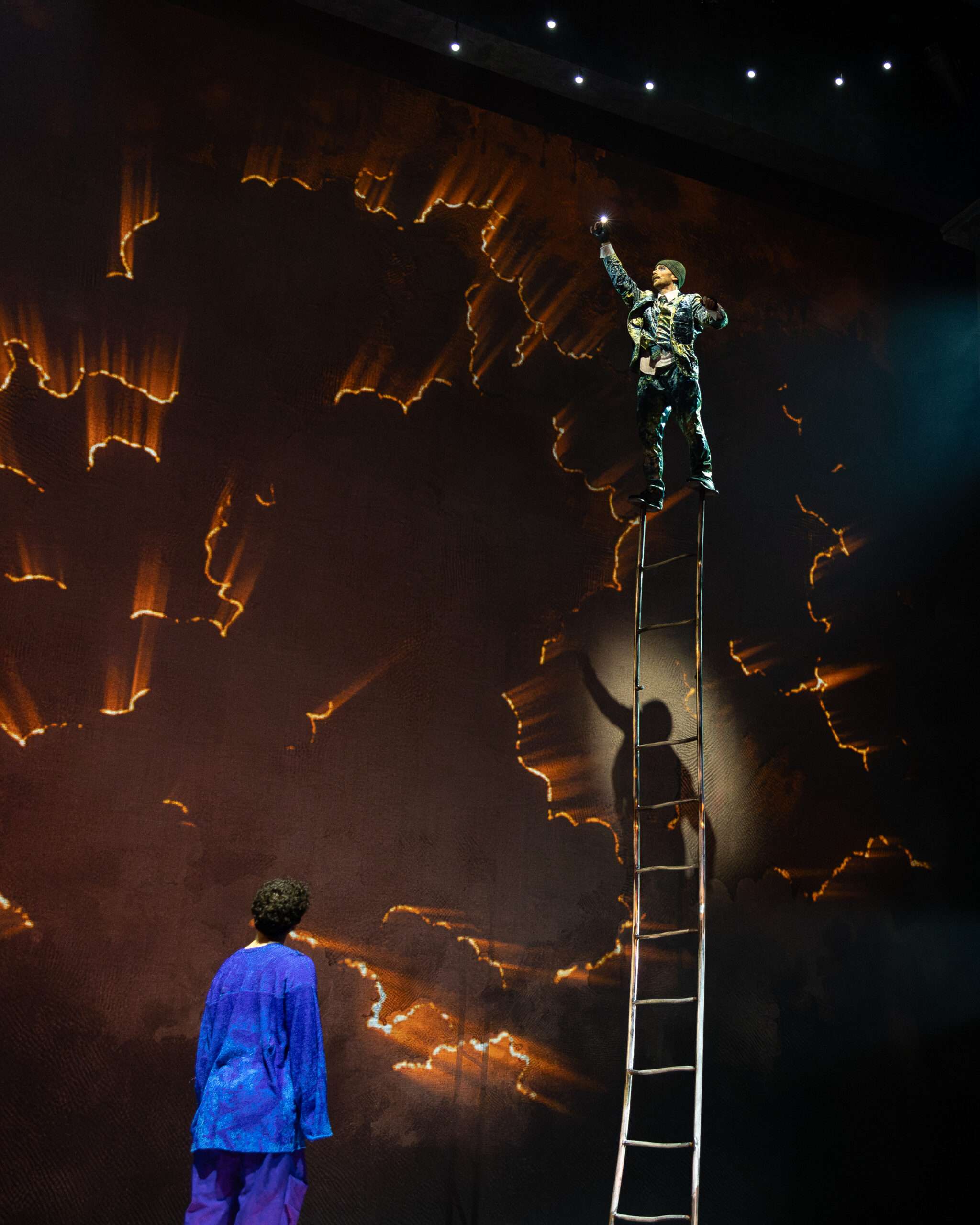
That understatement lays the groundwork for the show’s central tension: the constant uncertainty between what is real and what is not. This becomes especially apparent during the contortion sequence. From a mass of drifting projected clouds, the volutes emerge and appear to dissolve back into them as they move. Projection fragments their silhouettes and reshapes the surrounding space, creating the impression that their bodies exist somewhere between physical presence and illusion.
“There could be something real, which you question if it’s not real,” Thurston explains. “There could be something unreal that you question if it is real.” From the audience, that ambiguity becomes physical. Attention drifts from stage to ceiling, from walls back to performers, and then outward again. “That’s exactly the aim,” Thurston says. “I don’t think they use the same tactic twice. The idea is to keep you on your toes.”
A brush for a painter
Thurston, a veteran lighting and show designer, describes the creative goal in familiar terms. “When you’re using technology creatively,” he says, “you want to lose the fact that it’s a piece of technology. It just wants to become a brush for a painter. It’s a tool for an artist. And you want the tool to disappear and the art to come out.” That philosophy carries through into how the system is built. Projection systems remain permanently installed throughout the theater, positioned in the grid, front of house, and technical galleries.
Performers and scenic elements move through precisely mapped projection zones while tracking and calibration systems ensure projected imagery remains correctly aligned. This allows projection to maintain spatial accuracy even as performers move through complex choreography, preserving both illusion and performer safety.
For example, the tightrope performer has learned the act in coordination with lighting and projection cues that define what he can see and how he moves through the space. Projection and lighting must remain perfectly aligned, night after night. Even small inconsistencies could disrupt his spatial reference points, affecting both the illusion and the safety of the performance. Maintaining that consistency requires projection systems capable of delivering stable brightness, color, and alignment across every performance.
Projection in Cirque du Soleil ALIZÉ does not exist in isolation. It is interlocked with lighting, audio, automation, scenic elements, and most critically, high level acrobatics where safety is non-negotiable. Thurston describes lighting and projection as “weapons of mass distraction” if mishandled. Used correctly, they support illusion without exposing its mechanisms.
Reliability as a creative requirement
As a permanent resident production, Cirque du Soleil ALIZÉ demands absolute consistency. Epson’s laser-based systems were selected specifically for live entertainment environments, designed to run at full brightness for thousands of hours. “The equipment we provided is built to run hard,” Meyer says. “That’s what these environments demand.”
For Thurston, reliability directly affects the people who live with the show night after night. “If you spend less time on maintenance, that value goes back into the show,” he explains. “It goes back into the team.” Once a production transitions from creation to operation, stability becomes essential. “The operations team’s job is hard enough as it is,” Thurston says. “Anything they don’t have to worry about is worth its weight in gold.”
Perhaps the most telling aspect of the collaboration is how Thurston describes Epson’s role. “This is not a sponsorship between Cirque du Soleil and Epson,” he says. “It’s a partnership.” From the outset, Epson positioned itself as a creative ally.
“They came in saying, ‘We want to know what you’re trying to do. We want to understand the thought process behind it,’” Thurston recalls. “We weren’t just a client. It wasn’t just a project.” That proximity, he believes, shows in the result. “The quality of the show that was delivered is in no small part because of Epson and their care for us.”
Ultimately, Cirque du Soleil ALIZÉ does not ask audiences to admire technology. It asks them to doubt their senses. If you leave the theater thinking you have understood one or two moments, the show has done its job. If you try to assemble the whole puzzle, you quickly realize you cannot. “If you try and add them all up and figure out the total game plan,” Thurston says, “you just tie yourself in a knot.”
That knot, the lingering uncertainty between what was real and what was illusion, is the show’s visual signature.
And it is made possible by projection that is bright enough, subtle enough, and reliable enough to disappear entirely.
As the performance concludes, the illusion gives way to something more human. The technical crew emerge alongside performers for the final bow, acknowledging the coordination required to sustain the production. It is a rare moment where the invisible becomes visible, revealing the scale of collaboration behind the illusion. •

