
PGAV DESTINATIONS AT 60 AND THE FUTURE OF GUEST EXPERIENCE DESIGN
by Wendy Grant
As PGAV Destinations marks its 60th anniversary, a new generation of leadership is looking forward. The firm currently has more than 80 active projects globally, spanning attractions, cultural destinations, branded experiences, and tourism developments. John Kasman, one of the new Principals with 32 years of experience at PGAV Destinations, says, “Our roots have always been in destination design and guest experience, but the definition of destination is expanding. Brand destinations, cruise developments, cultural attractions are all drawing lessons from themed entertainment. That’s exciting because we’ve always worked across multiple destination types, and now our expertise in these markets is expanding even faster.”
Founded in 1965, PGAV Destinations has evolved alongside the themed entertainment industry itself, beginning with early master planning and design work for Busch Gardens parks, then expanding through the 1980s into collaborations with SeaWorld, Universal Studios, and major zoological institutions. By the 1990s and 2000s, the firm was helping shape a more narrative-driven era of destination design, from international projects like PortAventura in Spain to innovative experiential environments such as SeaWorld Orlando’s Discovery Cove and Georgia Aquarium, then the world’s largest aquarium.
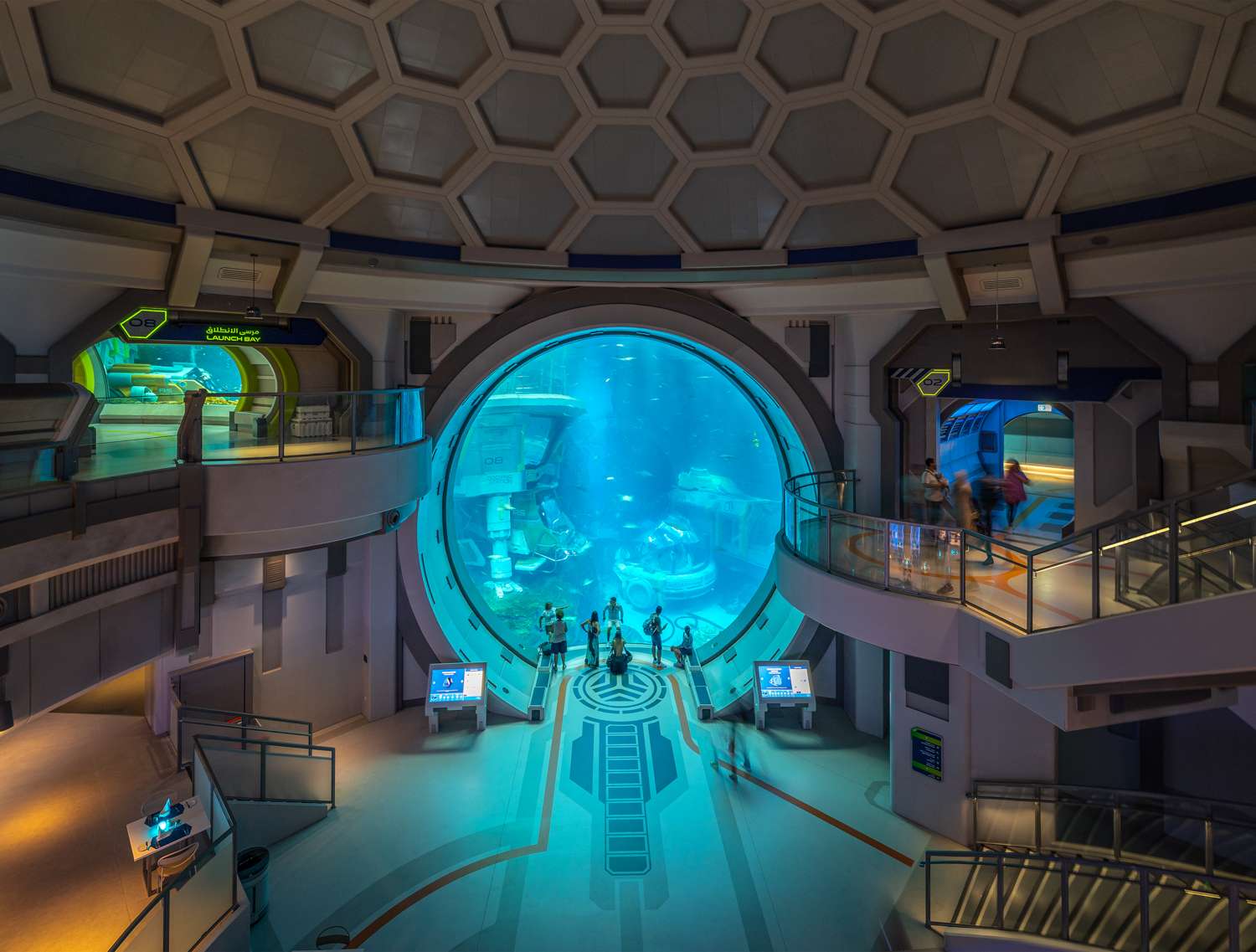
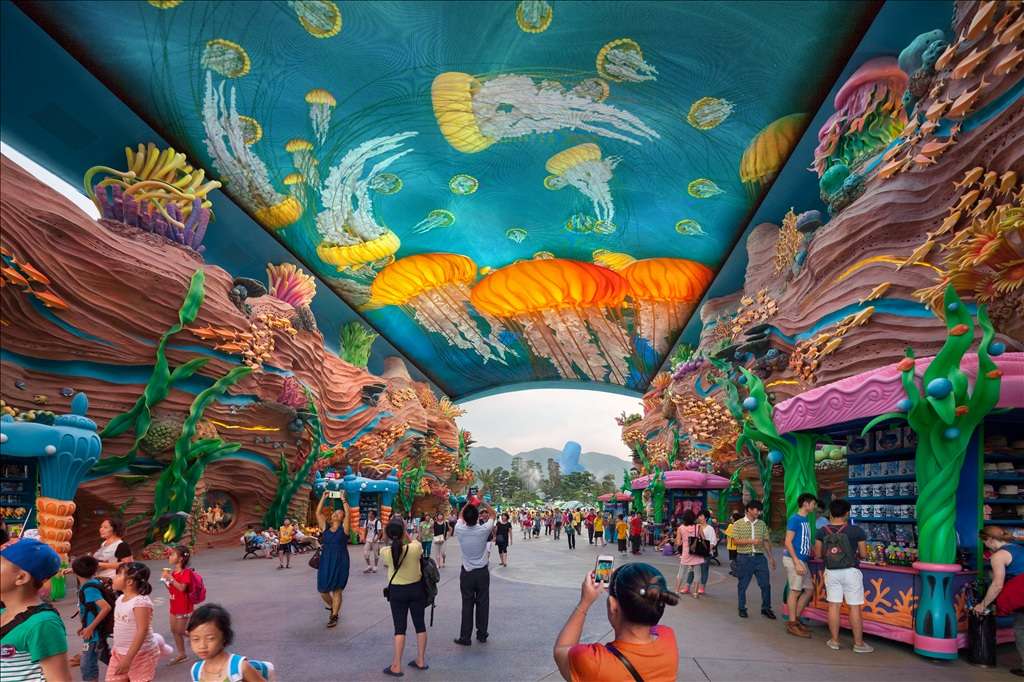
In the 2010s, PGAV broadened its scope further into museums, cultural heritage destinations, and brand-driven experiences, including projects such as the Space Shuttle Atlantis exhibit at Kennedy Space Center Visitor Complex, master planning for The Biltmore Estate, and the design of Chimelong Ocean Kingdom in China. More recent projects, like the world’s largest indoor marine life theme park, SeaWorld Yas Island, Abu Dhabi, reflect the themed entertainment industry’s increasing focus on global tourism and hybrid destination models.
For PGAV Destinations, that history serves as a foundation for what comes next. As the firm looks forward to a future shaped by expanding experiential markets, new technologies that will enhance shared guest experiences, and deeper cultural storytelling, PGAV Destinations’ intentional leadership continuity, deep understanding of their clients and visitors, and passion for the industry positions the firm to help create the next generation of destinations.


Howard

Kasman


Internal succession as strategic strength
Last year, Ashley Edelbrock, Emily Howard, John Kasman, Diane Lochner, and Tom Marschner became Principals with PGAV Destinations. This ownership expansion was intentional. Each Principal is an active practitioner who has contributed to PGAV’s success for years.
“This is really only the third generation of leadership in 60 years,” Kasman says. “All of us have been here a long time, working together across themed entertainment, zoos, aquariums, and other destination types.”
That continuity extends beyond the leadership team. Many of PGAV Destinations’ 140 core team members have been with the organization for decades, reflecting a deliberate emphasis on cultivating talent internally.
Tom Marschner sees that generational depth as one of the firm’s greatest strengths. He says, “It’s incredibly special to have people with 40 years of experience working alongside those with just a couple and seeing how much they learn from each other. It’s exciting to think about the amazing projects this team will continue to create around the world.”
Kasman adds, “We support our team members’ growth through professional development within their disciplines, such as architecture, exhibit design, and graphics. And we also help them gain the leadership skills and expertise they need to serve clients expertly.”
PGAV’s in-house development programs include presentation skills workshops, mentorship initiatives, and the PGAV GO program, which provides funding for employees to seek certifications, attend professional events, and to gain industry insights.
That investment, Kasman notes, directly benefits clients. “Sixty years of cultivating talent adds depth to what we bring to projects. That investment matters.”
Diane Lochner agrees. “Growth at PGAV isn’t only about expanding markets or services – it’s about expanding our people: their confidence, their expertise, and their influence in shaping meaningful guest experiences,” she says.
Designing a strategy
That strong foundation of PGAV Destinations’ work frequently extends from early master planning and design through construction oversight and execution. Kasman says, “That means we’re integrating all the elements that shape the experience, including storytelling, ride design, media, lighting design, and special effects. We’re thinking strategically early on, and we also have boots on the ground during construction.”
In addition to offering a balance of creativity and execution, PGAV applies deep strategic thinking to each project. “Understanding how a project will help a client reach business goals, operational goals, and revenue goals is a key part of the design process, no matter the size of the project,” Kasman notes.
“We focus not only on great creative design but on serving our clients by really learning their business. That strategic level of partnership is one of our differentiators,” Kasman says.
In-depth insights
Equally central to PGAV’s methodology is a deep understanding of the client’s clients. “We work to understand the guest experience at a very deep level,” Kasman says. “It’s a priority for us.”
That’s why PGAV conducts extensive visitor research. For the past 10 years, PGAV’s Voice of the Visitor report has explored visitor motivations and industry trends. Additional reports, like Transformation, have explored visitor avatars, like Zen Chasers and Escape Voyagers. Destinology, a bi-weekly publication that reaches more than 40,000 subscribers, offers articles on topics ranging from complying with accessibility regulations to navigating changes in federal funding for cultural institutions to rebranding for zoos and aquariums.
And rather than holding these insights and reports as proprietary information, PGAV makes them available to everyone. “We absolutely love sharing that knowledge,” Kasman says. “It’s better for the industry, better for our clients, and it helps us do our work more effectively. It’s a big part of who we are.”
Ashley Edelbrock says, “Our promise at PGAV is to be a thoughtful partner who is guest-focused, brand-based, and business-centric. We make it our business to know our clients’ business, while also being out-of-the-box thinkers who know what it takes to get difficult jobs done. We like to take complex challenges and turn them into opportunities uniquely positioned within the market.”
Recent projects reflect industry evolution
Kasman highlights hybrid projects, like cruise-linked destinations, as emblematic of the industry’s increasing convergence across entertainment, tourism, and hospitality sectors.
One example is Celebration Key, Carnival Cruise Line’s new private destination on Grand Bahama, where PGAV led master planning, guest experience strategy, and thematic design. Structured around distinct themed zones serving families, adults, and mixed audiences, Celebration Key combines large-scale water attractions, retail, hospitality, and culturally rooted storytelling into a single cruise-linked destination designed to accommodate multiple ships simultaneously.

The project opened in July 2025 and won the World Waterpark Association’s Leading Edge Award. Kasman notes, “It’s a mix of waterpark, themed entertainment, and tourism infrastructure. That blending of sectors is happening everywhere, and we helped lead the effort.”
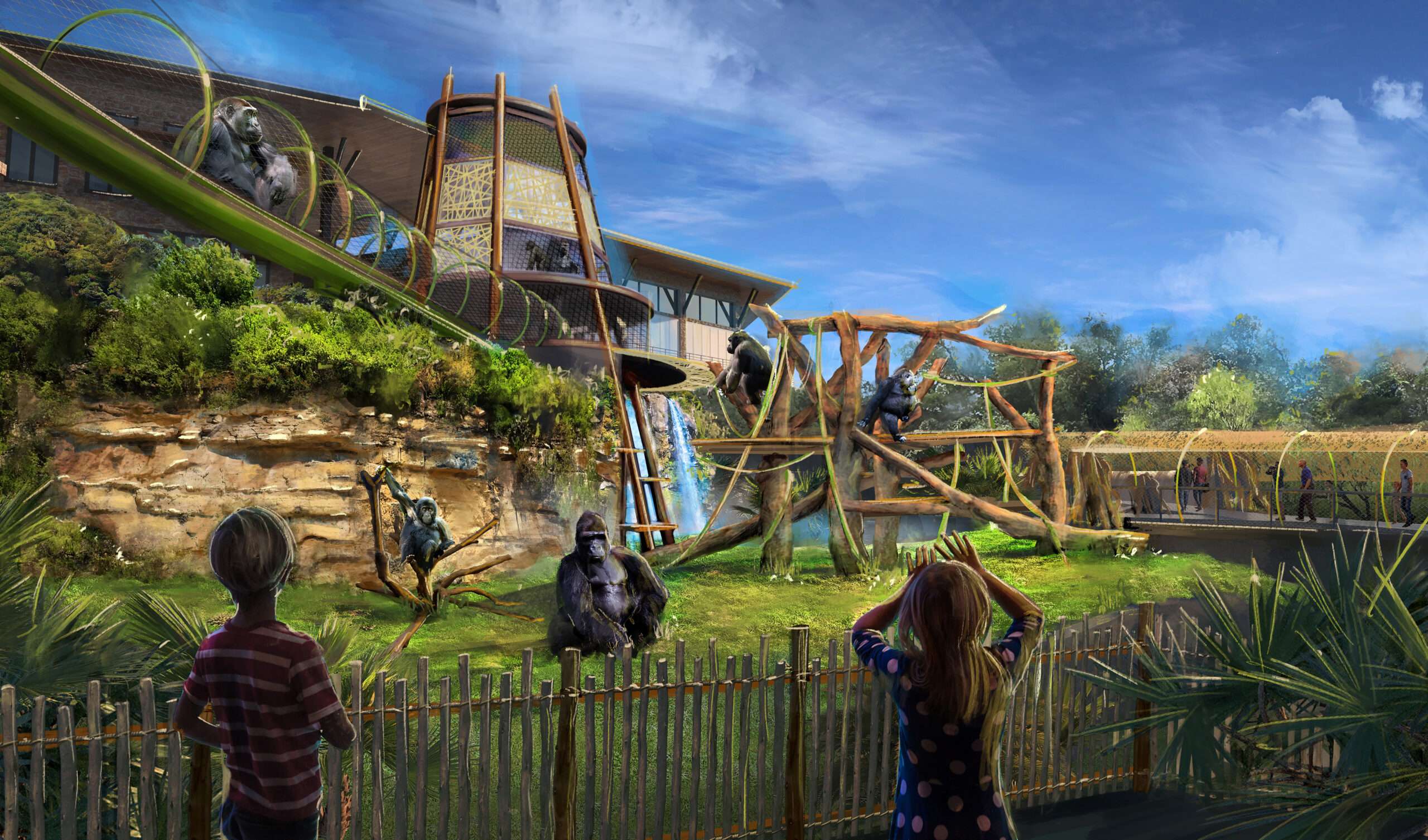
A fusion of innovative habitat design, guest experience strategy, storytelling, and operational thinking can be seen at Congo Falls at the San Antonio Zoo, which was developed as part of a broader campus master plan with PGAV and opened in December 2025. “Attractions are linking more directly to events, programming, and revenue opportunities. That melding is part of where the industry is headed,” Kasman says.
Built within a former quarry, the new gorilla habitat integrates animal wellbeing, immersive guest viewing, and event programming anchored by The Ralston event center that overlooks the habitat. Visitors encounter Congo Falls through layered vantage points, from below-grade views through vegetation to elevated trails mimicking gorilla pathways. The design prioritizes environmental complexity for the animals while simultaneously creating a dynamic guest journey, illustrating how modern zoological destinations increasingly balance conservation, entertainment, and revenue-generating uses such as events and hospitality.
Emily Howard sees their work on Celebration Key and the San Antonio Zoo as representing two particular strengths of PGAV: experiential tourism and natural environments. She notes, “We have been building on the momentum of experiential tourism by immersing people into destinations through media, themed environments, interactions, and the like. Additionally, appreciating and being part of nature in a meaningful way will never go away.
“We design natural environments for all species, thinking deeply about how to provide spaces to disconnect from busy lives, connect with the world around us, and just take a breath. We create opportunities to help people make lasting memories,” says Howard.
Technology, culture, and shared experiences
Continuing to look ahead, Kasman sees technology uniting rather than isolating visitors. “We’re just at the beginning of how tech can allow guests to impact their environment,” he says. “What excites me is how it can encourage shared experiences.”
For instance, advances in AI-driven language translation, real-time interaction, and adaptive storytelling may help visitors from different cultures experience destinations together seamlessly. Kasman says, “It’s wonderful to imagine people sharing experiences even when they don’t speak the same language, and technology making that effortless rather than operationally complicated.”
PGAV’s work increasingly spans North America, Europe, the Middle East, and Asia, and Kasman is seeing cultural storytelling as a growing industry trend. “We’re seeing destinations celebrate the culture they’re in more intentionally,” Kasman says. “Intellectual property [IP] will always matter, but cultural expression is becoming a bigger part of destination design.
“I don’t think the world is getting smaller – I think it’s getting more connected,” he continues. “I love seeing regions invest in celebrating their culture and sharing that through tourism.”
Curiosity, collaboration, and passion
This global connectivity reinforces Kasman’s positive outlook. “There’s definitely optimism – for the industry and for PGAV’s future,” he says.
Kasman says that the words that characterize PGAV’s culture are curiosity, collaboration, and passion. Those qualities, he believes, translate directly into stronger projects.
“When you have curiosity and you keep pushing yourself to learn more, it helps in strategy, it helps in design, it helps in everything,” he says. That means staying curious about clients’ businesses, emerging technologies, cultural contexts, and the evolving expectations of guests.
Collaboration, he says, is equally foundational. PGAV intentionally fosters a highly collaborative environment, because complex destination projects demand integrated thinking. “We’ve always encouraged teams to work closely together, not just with each other but with our consultants and clients. That collaboration improves how we execute projects,” explains Kasman.
Passion is tied closely to storytelling. Kasman says the firm’s work, whether rooted in IP, culture, conservation, or place-based narrative, naturally invites deeper engagement. He shares, “When you dive into the story behind a project and you’re passionate about it, when you fall in love with what you’re doing, the project only gets better.” That passion, he believes, ultimately shapes the guest experience as much as design does.
Sixty years forward
As experiential destinations evolve, becoming more multidisciplinary, culturally rooted, technologically connected, and strategically driven, firms that are able to combine creative design, research, operational insight, and execution expertise could shape the next chapter of themed entertainment on a global scale.
For PGAV Destinations, its 60th anniversary marks continuity more than change, with internally cultivated leadership, deep institutional knowledge, a sustained focus on understanding both guests and clients, and passion for the projects they take on. And at PGAV, that legacy serves as a springboard for what’s next: PGAV is expanding its international practice with a physical presence in Abu Dhabi to better serve clients, responding to accelerating investment in themed entertainment, cultural institutions, and experience-led tourism in markets such as the Middle East and Asia.
“We’re proud of where we’ve been,” Kasman says, “but even more excited about where the industry – and our work – are heading.” •