
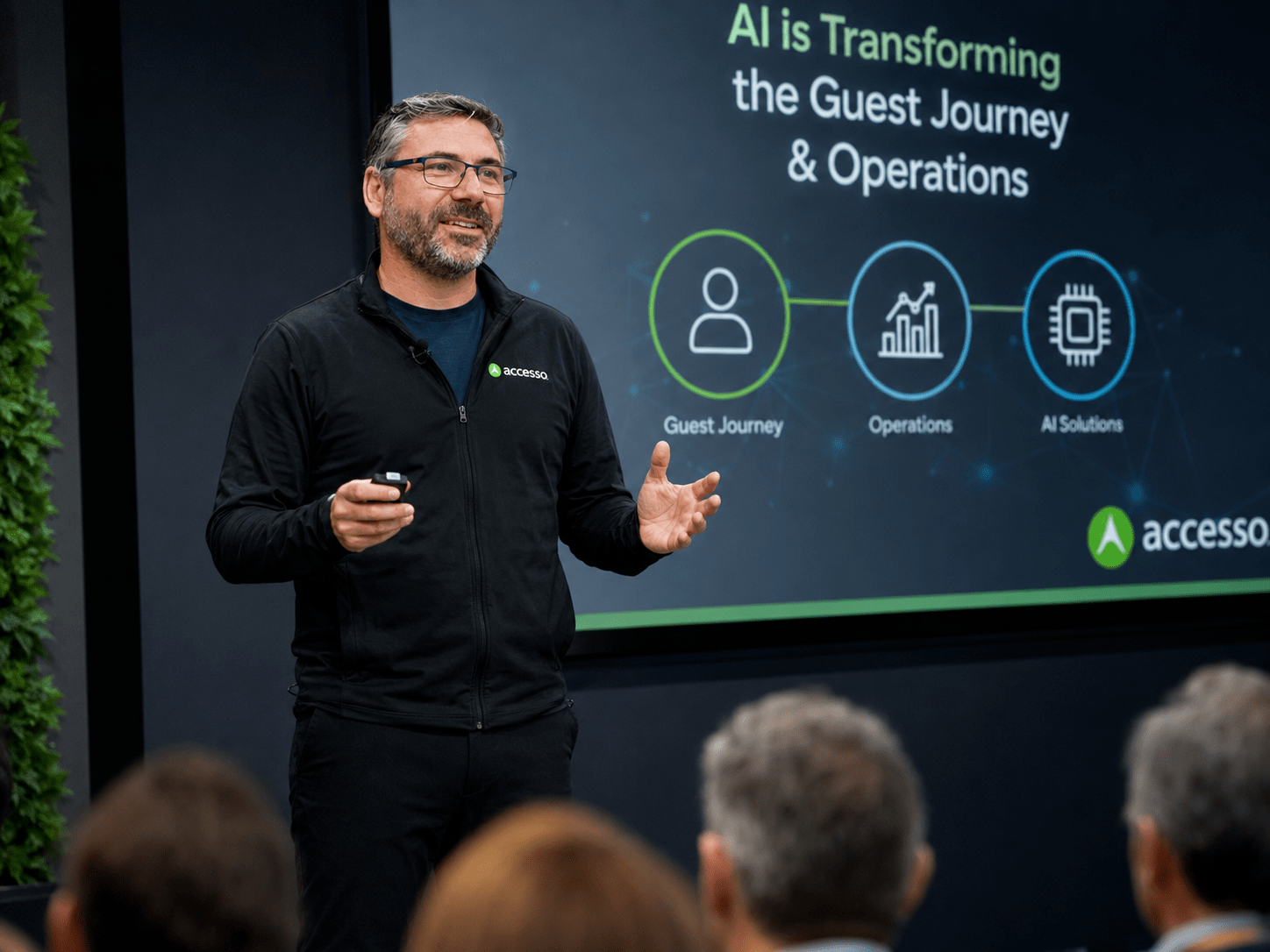
accesso’s Lee Cowie on AI, data and the future of attractions technology
interview by Martin Palicki
Mention the word technology to most attractions professionals and they’ll likely think of AV hardware, ride controls or safety systems working behind the scenes. But technology supports far more than the attractions themselves. Increasingly, it shapes the entire guest journey, beginning long before visitors arrive at the front gate. Guests now discover destinations, plan itineraries, purchase tickets and manage their day from the comfort of their couch. According to accesso’s new CEO Lee Cowie, even that experience is changing.

accesso
Under Cowie’s leadership, accesso is evolving beyond its roots as a ticketing provider to become what he describes as “a technology partner focused on connecting every touchpoint of the guest journey, from discovery and ticket purchase to food and beverage, retail, virtual queuing and post-visit engagement.”
Cowie brings an unusual perspective to that vision. Having led technology teams on both the operator side at Merlin Entertainments and the vendor side, he understands the daily realities facing attraction operators, particularly the challenge of turning vast amounts of guest data into meaningful decisions.
InPark spoke with Cowie about the future of guest experience technology, the promise and pitfalls of AI, and why he believes the industry’s greatest opportunity lies in using technology to help people create even more memorable guest experiences.
Thank you for talking with me and congratulations on your new role. accesso is historically thought of as a ticketing company. Is changing that perception one of your biggest challenges?
Lee Cowie: It’s probably our biggest branding challenge. We’re incredibly proud of our ticketing heritage. It’s still a core part of who we are. But I don’t think selling tickets is the biggest challenge operators face anymore. Today’s challenge is creating exceptional guest experiences that encourage people to return. That’s why I prefer to think of accesso as a guest experience partner rather than simply a ticketing company.
Yes, we sell tickets. But we also help operators manage food and beverage, retail, virtual queuing, mobile engagement, personalized offers and now, business intelligence. Those capabilities become much more valuable when they’re connected.
Imagine a guest walking past a major attraction. Because the platform understands their profile and knows the current wait time, it can offer a personalized Fast Track upgrade at exactly the right moment. Or it can recommend dining options, merchandise or future visits based on what that guest has done throughout the day. Those kinds of experiences aren’t possible when every system operates independently. Our goal is to connect the entire guest journey so operators can make better decisions while guests simply enjoy a smoother, more personalized experience.
You’ve seen the industry from both the operator and vendor sides. What perspective has that given you as CEO of accesso?
The biggest thing is empathy. I’ve spent years in an operator’s shoes, and I know how difficult it is to run an attraction. It’s a capital-intensive business with constant competition for people’s time and attention. Every investment decision matters, and technology is often competing with the next ride, exhibit or attraction.
That experience shapes how I think about our role as a technology partner. Operators don’t want disconnected systems. They want intuitive tools that reduce friction, work together seamlessly and help them deliver a better guest experience. That’s what we have built and continue to refine at accesso: an ecosystem of capabilities that helps attractions succeed.
After Merlin you spent some time outside the attractions industry before joining accesso. What brought you back?
I’ve bounced between the operator and vendor sides throughout my career, so the move itself wasn’t unusual. What attracted me back was the industry itself.
Working with attractions is incredibly rewarding because you can actually see the impact of what you’ve built. We support more than 1,100 venues around the world, and when I walk through one of those gates, I know we’ve helped make that guest experience possible.
If I’m being completely honest, though, the original reason I joined Merlin was because it instantly made me the coolest dad in the playground. Before that, my kids never really understood what I did. Working in attractions changed that, and coming back to the industry was an easy decision.
What operational challenge frustrated you most during your time on the operator side?
Data. Or more accurately, the inability to use it effectively. Attractions generate enormous amounts of information about how guests behave, where they spend money, which experiences they choose and what they ignore. The problem is that the data lives in dozens of different systems that were never designed to communicate with one another. You end up investing heavily in analysts and data warehouses just to produce reports that don’t always lead to meaningful decisions.
That frustration heavily influenced our recent acquisition of Dexibit, which we rebranded accesso Intelligence. My goal was to solve the problem I’d experienced firsthand as an operator: making data accessible, understandable and useful without requiring a massive analytics team.
We’ve been talking about “big data” for more than a decade. Are you saying that big data wasn’t useful prior to AI?
AI certainly helps, but I think the bigger breakthrough is organizing the data before AI ever touches it. The challenge has never been collecting information. It’s been normalizing it. Different systems describe the same products in different ways, store information differently and don’t share common standards. The platforms we acquired and turned into accesso Intelligence help solve that problem.
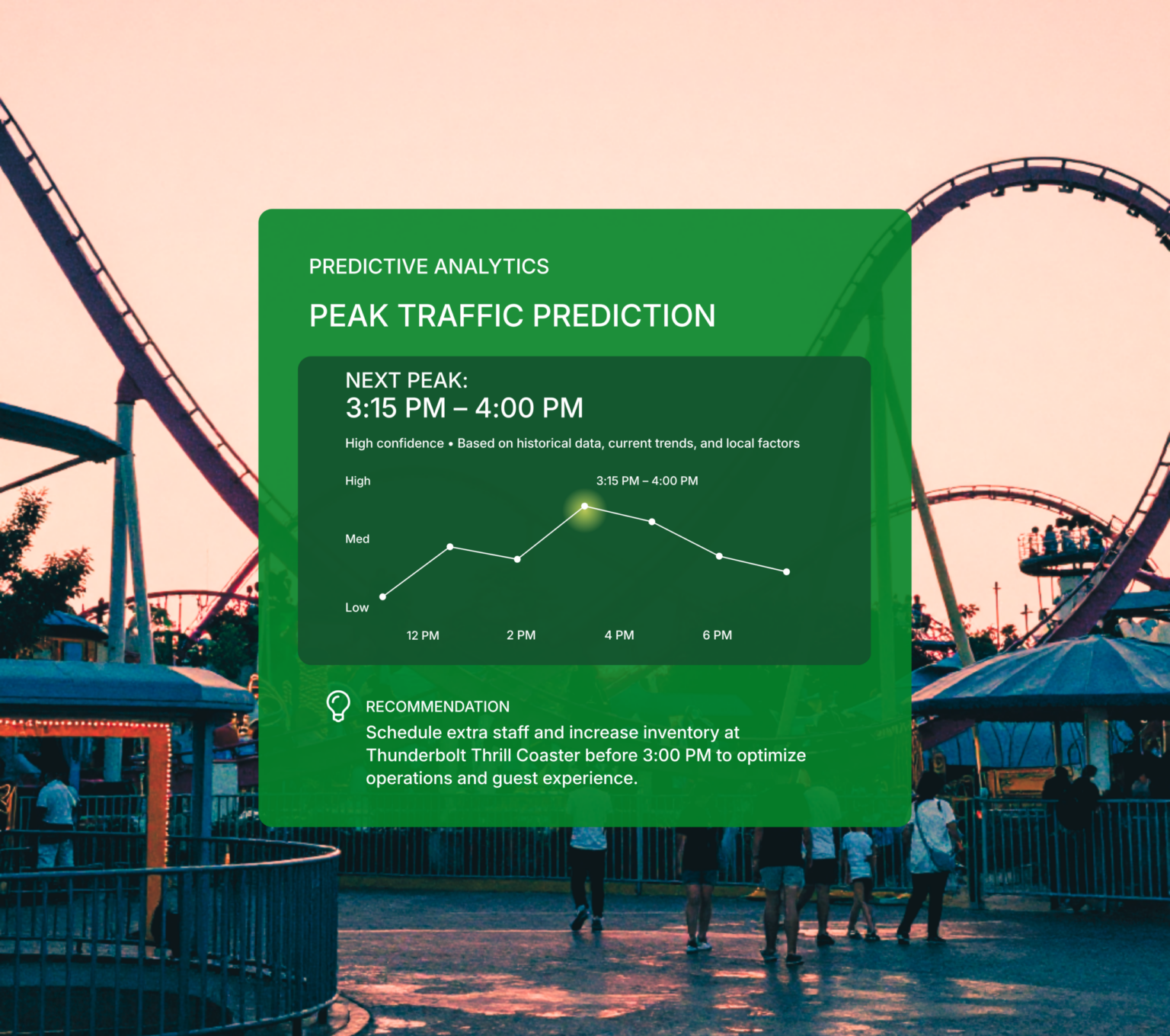
Once the data is connected, AI becomes incredibly powerful because you can simply ask questions in natural language instead of building reports. You can ask why attendance changed, predict staffing needs or identify purchasing patterns that would have been nearly impossible to uncover before.
In a public post you wrote to your team, you described the attractions industry as reaching an “inflection point.” That’s a bold statement. Why is this different from previous waves of technology?
I compare AI to the Industrial Revolution. The steam engine fundamentally changed industry, but it took decades because only a handful of organizations could afford the machinery. Today, virtually anyone with a laptop and an internet connection has access to AI tools. That democratization means innovation is happening at an unprecedented pace. As such, operators will have a much smaller window to get up to speed.
Historically, attractions have been slower to adopt new technology, and for understandable reasons. Capital typically goes toward new rides and experiences because that’s what brings guests back. But technology has increasingly become part of the guest experience itself. As competition for people’s time and spending increases, operators can’t afford to ignore tools that improve efficiency, personalization and decision-making. The pace of change is simply too fast.
What are some practical examples of AI you’re already seeing in attractions?
AI becomes transformative when it’s grounded in context and real operational data. For example, we’ve seen operators use AI to detect fraudulent activity by comparing register transactions with employee schedules and cash-out patterns. We’ve seen it forecast attendance weeks in advance, allowing managers to optimize staffing before busy periods arrive.

One operator combined attendance data with census information and realized they were underserving a significant demographic in their local community because they didn’t offer Kosher food options. That’s an insight that directly changes the business.
Those are the kinds of decisions AI should be helping operators make. It’s about connecting information that already exists and uncovering opportunities people couldn’t easily see before.
One topic you discussed in your post is agentic AI. What does that actually mean for attraction operators?
We’ve already experienced several major shifts in how people buy tickets. We first moved from the ticket window to desktop websites. Then we shifted to mobile. Along the way, online travel agencies and third-party marketplaces became increasingly important. Agentic AI is simply the next iteration. People are now asking questions to AI platforms instead of traditional search engines. Increasingly, those conversations won’t end with recommendations. They’ll end with bookings.
Eventually your personal AI assistant may know your preferences well enough to recommend attractions, compare options, negotiate pricing and complete the purchase on your behalf without ever visiting a traditional website. For operators, the challenge becomes making sure they appear in those recommendations. Search engine optimization is evolving into what many now call generative engine optimization. Attractions will need to think carefully about how they’re represented online because AI agents are heavily influenced by reputation, reviews and trusted sources. That’s a significant change, and it’s happening much faster than many people realize.
You’ve said that technology should become increasingly invisible to the guest. What does that look like in practice?

The best technology is the technology guests never notice. Guests don’t visit an attraction because they want to interact with software. They come to enjoy the experience. Technology should simply remove friction along the way.
If you’re a season passholder with food and beverage discounts, that process should be seamless. The various systems should already know who you are and work together behind the scenes. That’s how we think about the guest journey. We touch ticketing, admissions, food and beverage, retail, virtual queuing and rebooking. Because those systems are connected, we can eliminate unnecessary steps and create an experience where everything simply works.
As attractions become more data-driven, how do operators avoid creating experiences that feel optimized but less human?
That’s one of the biggest questions surrounding AI. There are two schools of thought. One says AI replaces people. The other says AI removes routine work so people can spend more time doing what only people can do. I firmly believe the second path is the smarter option.
No attraction operator wants employees spending their day buried in administrative tasks. If AI can automate scheduling, reporting or repetitive analysis, it gives staff more time to engage with guests, solve problems and create memorable moments.
But isn’t the business case for AI about reducing labor costs? Doesn’t that inevitably mean fewer people interacting with guests?
Jobs will absolutely change. History tells us that. Operators will have choices. Some organizations will use AI primarily to reduce costs. Others will use it to remove administrative burdens so their teams can spend more time creating exceptional guest experiences.
I actually think that human interaction could become a competitive advantage. As AI becomes more common, people may place an even greater value on authentic experiences and genuine hospitality.
What’s the most important thing for the attractions industry to know about this moment in time?
I think we’re entering an incredibly exciting period for this industry. For years, technology has often been viewed as something separate from the guest experience. I think those worlds are now coming together.
When technology becomes connected, intelligent and largely invisible, operators can spend less time wrestling with systems and more time creating experiences that guests remember. At the end of the day, that’s what attractions are all about. Technology is simply there to help make those moments easier. •