Home Blog Page 80

Gilroy Gardens at 25

Inspiring young minds for a quarter century

by Joe Kleiman

Halfway between San Jose, the heart of Silicon Valley, and Monterey, California, sits the small town of Gilroy. With a population of just under 60,000 and an agricultural history, Gilroy is known as the “Garlic Capital of the World.”

The town has embraced the garlic theme with festivals and events beloved by locals and visitors alike and added a full- fledged theme park in 2001. Anthropomorphic garlic cloves feature as the mascots of Gilroy Gardens Family Theme Park, where they appear as costumed characters always ready to give a hug or pose for photos. This year, the agriculture- and horticulture-themed park is celebrating its 25th year. Throughout the grounds, guests will find pavilions with photos from the past, a time capsule to be opened on the 50th anniversary, and a scale model of the park’s original proposed entrance and attractions from its development phase.

Aesthetically, Gilroy Gardens is very much the same as it appeared when it first opened, with many of the same retail and dining outlets and rides still in place. Yet, it is so well maintained by the 501(c)(3) nonprofit organization that operates it under a lease from the City of Gilroy, that it appears as a new venue to first-time visitors while returning guests experience the comfort of familiarity. The fact that only a few new attractions have been added over the years is a testament to the park’s evergreen, multigenerational impact for its audience and the community.

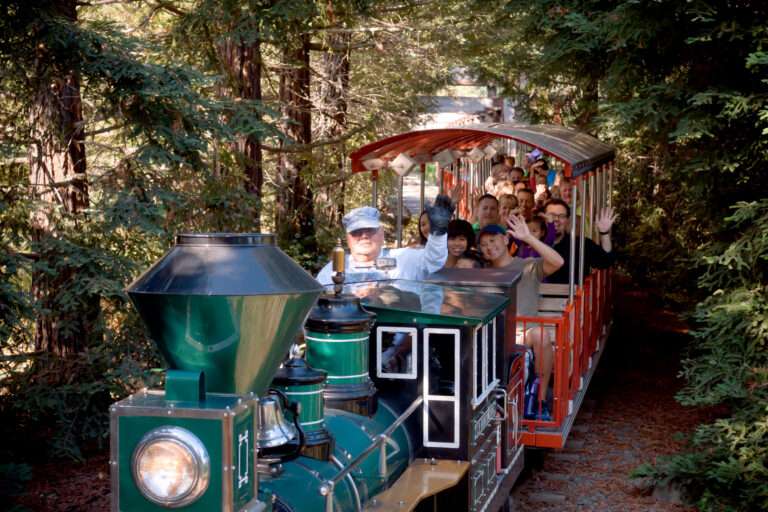
Gardens have always played a key role at Gilroy Gardens, with the rides and attractions seamlessly blended in. There are spinning rides themed to local agricultural crops (artichokes and garlic), a car ride that features two different tracks (one themed to 1920s cars and the other to sports cars from the 1950s), and a giant greenhouse with monarch butterfly gardens through which not only the train travels, but a monorail as well.

Young park guests wear garlic hats, celebrating Gilroy’s role as “Garlic Capital of the World.”

“Twenty-five years ago, parents first brought their children here to Gilroy Gardens,” says Dan Harney, Chairman of the Board of Gilroy Gardens, “Later, as teenagers, those same children started working here at the park, becoming ride operators and working in our stores and restaurants. And now, 25 years later, they’re adults and parents bringing their own children to Gilroy Gardens.”

Circus trees

The origins of Gilroy Gardens date back to the 1940s. In 1942, what is now known as Highway 17 opened between San Jose and Santa Cruz (home of the famous boardwalk amusement park). A number of roadside attractions popped up along the route through the Santa Cruz Mountains, including the Tree Circus in Scotts Valley, opened in 1947. This attraction was the home of the “circus trees,” created by Swedish-American artist Axel Erlandson. Erlandson applied unique pruning and grafting methods to create intricate patterns with the trees’ trunks, including some that resembled baskets, interlacing (which he called “needle and thread”) and a tree with an archway made of twin trunks, able to cross over a pathway.

In 1977, the property was sold and was scheduled to be bulldozed. Some of the trees that didn’t survive made their way to a number of art museums and even to the 2005 World Expo in Aichi, Japan. Two dozen of the remaining living trees eventually found their way into the hands of local grocery store owner Michael Bonfante. He placed the trees on display at his nursery, Tree Haven, eventually converting the space into the family theme park originally named Bonfante Gardens (now Gilroy Gardens), with the Circus Trees being a key attraction planted throughout the property.

The story of the original Tree Circus being paved over for a parking lot is told through song at a new Gilroy Gardens show, “25 Years: A Musical Celebration.” The show celebrates four key components of Gilroy Gardens: the circus trees, the railroad that provides a grand circle tour of the park, the water play area, and the gardens.

Education is a foundation

A major foundation of the park is its commitment to education. Attractions not only highlight plants, but pay tribute to the local region as well. Quicksilver Express is a family terrain roller coaster that pays tribute to the mining history of the Santa Cruz Mountains. Interpretive exhibits can be found throughout the extensive queue explaining the history of the local mining industry and some of the individual mines in the local area.

One of the park’s more recent additions is the Green Barn, opened in 2015. The barn (which is painted green) is named to evoke environmental awareness. Inside are a story reading area, an art studio, and the Nature Exchange, where guests can swap items they find in the natural world. The Green Barn is at the core of the park’s STEAM (science, technology, engineering, art, math) initiatives, with school groups visiting throughout the year, including the park’s specially scheduled Natural Science Days.

Water Oasis Lagoon was added to the park in 2014, featuring Brave the Bucket, a water play structure full of slides, water jets, and a tipping bucket. Interpretive signage in the area designed by BaAM Productions teaches guests about pollution and water conservation.

“Over the years, BaAM Productions has been a close collaborator, working with Gilroy Gardens Family Theme Park on several projects to enhance the guest experience and integrate learning in unique ways,” shares Aimee Roy, Senior Director of Marketing and Communications at BaAM. “Together we’ve created immersive experiences, such as Water Oasis Lagoon, a water play area that promotes themes like water conservation – as well as the Green Barn, an interactive education center where young guests can explore, create, and discover nature in an exciting hands-on way. Projects like these have supported and enhanced the park’s educational mission, while creating an engaging experience for young people to learn – and have plenty of fun!”

Signature events

Throughout the year, Gilroy Gardens plays host to a number of signature events. For summer 2025, the park is introducing Cherry Jubilee, featuring cherry-infused food offerings, an open air roller rink, interactive educational activities teaching about the cherry harvest, and other cherry-themed activities and characters.

Returning offerings include Carnival Nights, running from July through September, which allows guests to experience the park at night within a carnival atmosphere. Halloween and Christmas are also big at the park, with “The Great Big BOO!” and “North Pole Nights.”

“Happy 25th Anniversary to this truly special place!” says Patrick Roberge, President of PRP, which has produced both “The Great Big BOO!” and “The Magic of Santa,” the park’s Christmas holiday musical show. “On behalf of PRP and Wondersee Entertainment, we are proud to be longtime partners with Gilroy Gardens. When it comes to Halloween and holiday celebrations, no one does it better for families than Gilroy Gardens. We’re honored that our characters and shows are part of the magic each year. Congratulations on this milestone anniversary – we can’t wait to see what the next 25 years will bring!”

Gilroy Gardens is a testament to how a park can play a key role in the community, through education of children, employment, and the promotion of tourism dollars, with 93% of guests coming from outside Gilroy. Most importantly, it is a place where parents and children can come, enjoy nature, learn about the region, and just have fun – generation after generation. •
ProSlide: Sliding into Shanghai

As the industry prepares to return to China for IAAPA Expo Asia, ProSlide examines highlights and trends for APAC waterparks

interview by Martin Palicki

Waterparks in the Asia-Pacific (APAC) region experienced rapid growth during the 2010s. After a pandemic-related slowdown, the parks are back, reinvesting and expanding. Though China has long been the dominant player in the market, new hot spots are emerging, including Vietnam. Water attractions manufacturer ProSlide has played an important role in the recovery and recently opened four projects in the region: Sầm Sơn and Hà Nam in Vietnam, as well as OCT Yueqing Maya (scheduled to open summer of 2025) and an expansion at Chimelong Water Park, both located in China.

We asked two ProSlide leaders for their takes on the region, and what makes these new projects notable. Steve Avery is ProSlide’s Vice President of Business Development and focuses on Vietnam and Southeast Asia. Ray Smegal is ProSlide’s Chief Commercial Officer and specializes in the Chinese market.

What are some of the trends for waterparks in the APAC region, and Vietnam in particular?

Steve Avery (SA): There are industry trends and water ride trends. On the industry side, waterparks are increasingly becoming anchors within larger mixed- use developments with attractions designed to appeal to both domestic and international guests. We also see parks investing more in immersive theming and storylines to elevate the guest experience. When designing these parks and attractions, we consider the theme and storyline first – often turning to local folklore and traditional architecture for inspiration. Parks in the region are also moving towards more night operations and incorporating live entertainment in their parks.

Steve Avery

In Vietnam, we are seeing more parks move to year-round operations as well as the addition of more indoor waterparks. Larger, mixed-use developments and resorts are expanding, often anchored by waterparks, theme parks and FECs. For example, Hà Nam is a 1,000-hectare development that includes a waterpark, cultural and historical exhibits, commercial, residential, as well as a theme park. There is a growing middle class in Vietnam with a younger population, so both parks and water rides are being designed with a focus on the multigenerational family dynamic.

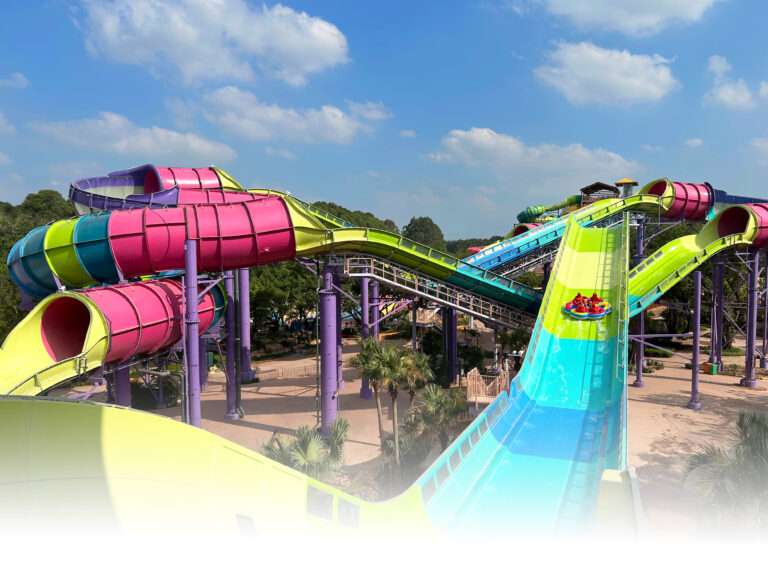
On the water ride side, we are seeing a trend for larger and more state-of-the-art water coasters like our ProSlide Dueling RocketBLAST, as well as competitive racing rides like our RallyRACER. And we can’t forget the kids! We’re seeing a lot more focus and investment in kids’ attractions. When China first started building parks they seemed to focus on the large attractions, and now the established parks are creating smaller versions of the big rides for kids to experience.

Talk about your work on Sầm Sơn park and what makes it notable.

SA: Sầm Sơn was initially designed to open all at once, but due to the pandemic it was split into three phases. Phase One launched in June 2024, and we helped bring Phase Two to life in April 2025.

What sets this park apart is the sheer scale and ambition behind its ride offering. Sầm Sơn is designed to appeal to local and regional guests who come to the area by the millions to enjoy the beaches. It does not currently have a big international draw. So, we knew a broad suite of water rides and compelling theming were needed to drive demand. They really have one of the most impressive collections of ProSlide attractions spread across each phase.

Sầm Sơn’s look and feel are inspired by the “Birth of Earth and Water,” with architecture, landscaping, and ride design reflecting this legend and nature’s balance.

Among its marquee attractions are the region’s tallest TornadoWAVE 60 and BehemothBOWL 60, plus the region’s first KIDZ TornadoWAVE and PowerRIVER Generation 2. The Phase Two launch added even more excitement, with a MammothBLAST, Dueling PIPEline, two FreeFALLs, and two exhilarating SkyBOX features for the park’s most daring guests.

Hà Nam is going to be Vietnam’s first nighttime waterpark. How do you design for that?

SA: When you know a park will operate at night from the start, you design pathways, walkways and trees so that guests can navigate them safely and easily at night. We include more clear or translucent fiberglass for the slides (which allows more light to enter inside the ride) so guests can anticipate the drops and turns along with thematic lighting for the exteriors. We can also incorporate LED lighting inside the slide that can change with the beat of the music. Experiencing a waterpark at night is a very unique experience as compared to traditional daytime operations. Night operations provide a unique opportunity to incorporate thematic lighting into the design which dramatically elevates the park experience at night. For Hà Nam, we worked hand in hand with the park’s design team and our channel partners to come up with the final solution that really must be experienced in person.

Hà Nam has a cultural component. Can you talk about how you integrated that into the attractions?

SA: The park is based on the cultural tradition of water puppets that is popular in the region. They shared the theme and storyline with us early on so we were able to design the colors for all the rides to fit within that theme. Each ride complex has a unique color and style to it, from the roof all the way down to the ground. Our RideHouse 600 is heavily themed to incorporate the characters of the water puppet show, including the legendary Chú Tễu narrator character. We see the color and theming across the entire suite of rides, which spans more than 10 complexes, including the PowerRIVER Generation 2, Dueling RocketBLAST, BehemothBOWL 60 and TORNADO 60, and OctopusRACER. Essentially, the park developed a custom IP based on the history and folklore of the town of Hà Nam. It’s really stunning.

What does the future hold for the waterpark market in Vietnam?

SA: Vietnam’s waterpark market represents one of the most competitive landscapes in the APAC region, which forces operators to continuously create unique experiences for their guests. Over the next five to 10 years, I expect Vietnam will continue pushing boundaries and challenging us as manufacturers to exceed expectations while constantly innovating to keep pace with growing demand.

We’re already seeing increasingly technologically advanced parks throughout Vietnam and the broader APAC region. There’s a new era of opportunity emerging as Vietnam rises on the global stage, and ProSlide is positioned to continue supporting their ambitious vision.

What sets Vietnam apart in the regional market is their sophisticated understanding that world-class waterparks require more than just great water rides. Vietnamese operators recognize that exceptional guest experiences demand safety, excellent theming/storylines, customer service, thoughtful landscaping with natural vegetation, quality food and beverage offerings, and impeccable cleanliness standards. This approach to park development is what’s driving Vietnam’s leadership position in the market and creating such exciting opportunities for continued growth and innovation.

Speaking of China, you have two projects opening there: an expansion at Chimelong Water Park and the grand opening of OCT Yueqing Maya. Share with us your perspective on the Chinese waterpark market today.

Ray Smegal (RS): The Chinese market slowed down during the pandemic, so I think we are now entering a great and promising phase of their rebound. Last year we saw big attendance numbers in parks, so I anticipate a great summer season for China.

Looking at Chimelong, there are several “firsts” at this installation. Can you talk about what those are and why they are important in the Chinese market?
Ray Smegal

RS: China is one of the most futuristic cultures in the world. It’s a market that craves innovation. For Chimelong it was important that they had highly marketable firsts that also provided exceptional experiences and added capacity. This expansion includes the world’s first Family HIVE (HIVE 35). We also installed the first HydroMAGNETIC MAMMOTH LIM coaster with a flat launch. The acceleration and the speed are amazing. Finally, we built our first Double TORNADO 60. Chimelong has had a TORNADO 60 for nearly 20 years and it’s the most popular ride in the park, so they said, “Let’s add two more!”

Chimelong Water Park is the most attended waterpark in the world [based on the 2023 AECOM Theme Index]. How did you address capacity for such a popular waterpark?

RS: We are fortunate that Mr. Su [Chimelong Group chairman/founder] and the Chimelong team take capacity issues very seriously. It was a big discussion during the design phase, particularly with the HydroMAGNETIC MAMMOTH family coaster. Capacity was designed into the ride from the beginning. China has strict regulations about dispatch intervals and raft spacing, so a lot of planning went into maximizing the potential throughput. The coaster has 10 rafts in operation simultaneously and three rafts being boosted – also simultaneously – up various hills. It’s a complex attraction, but the technology behind the HydroMAGNETIC system has matured and is incredibly reliable.

he expansion at Chimelong Water Park includes the world’s first Family HIVE (HIVE 35) and ProSlide’s first double TORNADO 60.
Turning to OCT Yueqing Maya, can you talk about the project’s delay?

RS: The pandemic paused several projects, which were also impacted by China’s financial and real estate crises. OCT Happy Valley group is a premier operator of waterparks in China. They emerged from the setbacks quite strong and we were very lucky to stay close to them during that period. Essentially, the project was put on pause. We are excited to be back and helping open this new park.

How important is theming in the Chinese market?

RS: Theming is a central component of Chinese waterparks and helps differentiate them from one another. Both OCT and Chimelong honor Chinese culture and develop themes that are approachable and fun, while remaining unique.

They also are very intentional about the orientation of rides and how they fit into the overall landscape. For example, at Chimelong, the HydroMAGNETIC coaster was originally to be built low to the ground for easier access, but during the design process the decision was made to raise it 15-20 meters and position it above this beautiful forest. It is iconic, eye-catching and it absolutely fits into the space and the park. •

Moment Factory: Exploring “The Source”

The Wilderness Resort in Wisconsin Dells partners with Moment Factory to develop a new world-class visitor attraction, Aquavia Lumina

by Martin Palicki

On October 11, 2024, the Wilderness Resort in Wisconsin Dells, Wisconsin, opened Aquavia Lumina, An Enchanted Night Walk through a Canyon of Wonders. The walk-through attraction is the 21st Lumina Enchanted Night Walk created by Moment Factory, and the second permanent installation of the series in the United States, following Astra Lumina (2022) at Anakeesta in Gatlinburg, Tennessee (another Astra Lumina has traveled around the United States and is currently presented as a permanent installation in Australia).

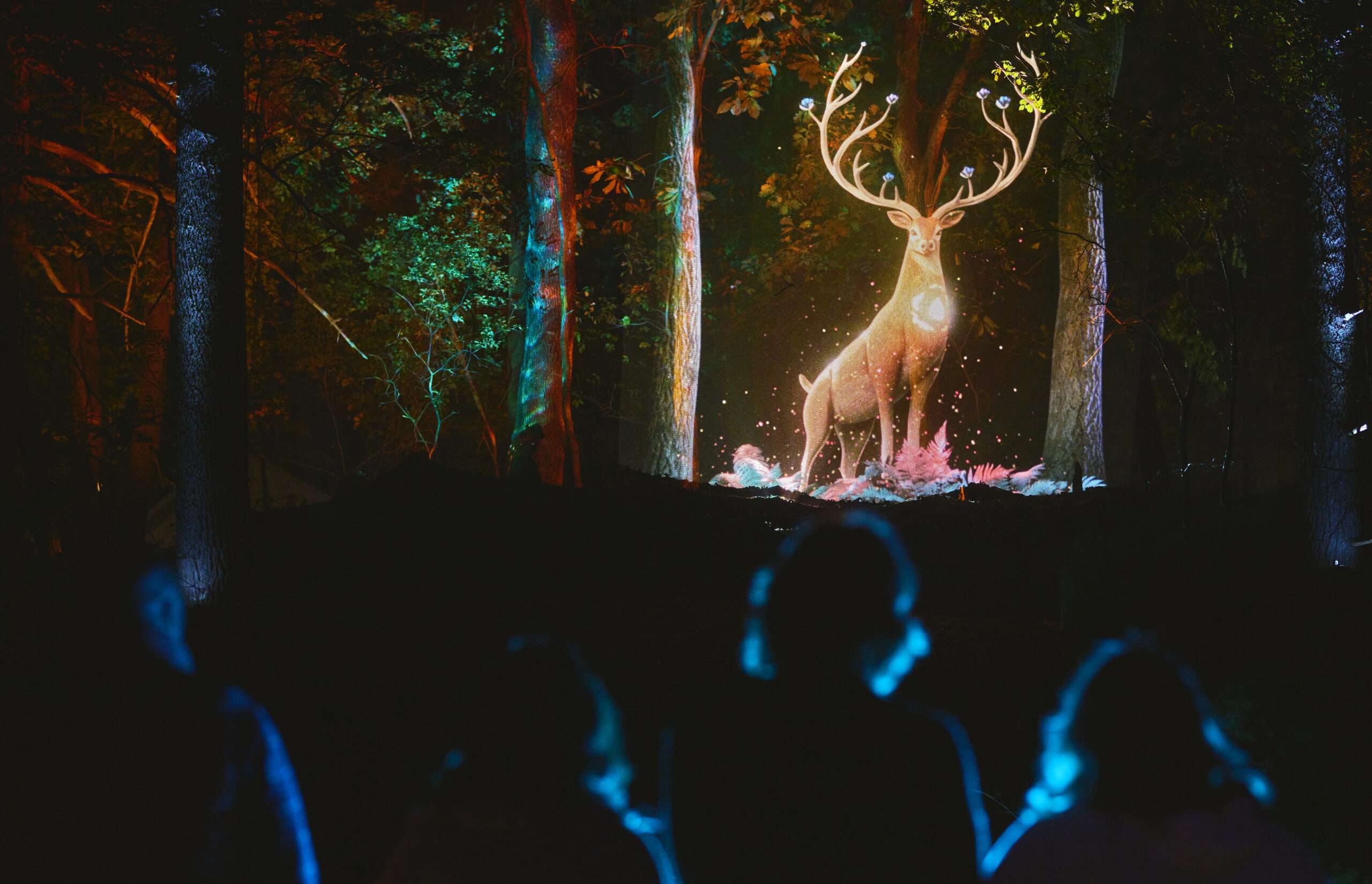
The attraction takes about one hour to experience. Visitors first encounter a guide in the form of a spirit animal deer who helps them search for “The Source” of water, an element critical for the success of the Wisconsin Dells – the self-proclaimed waterpark capital of the world.

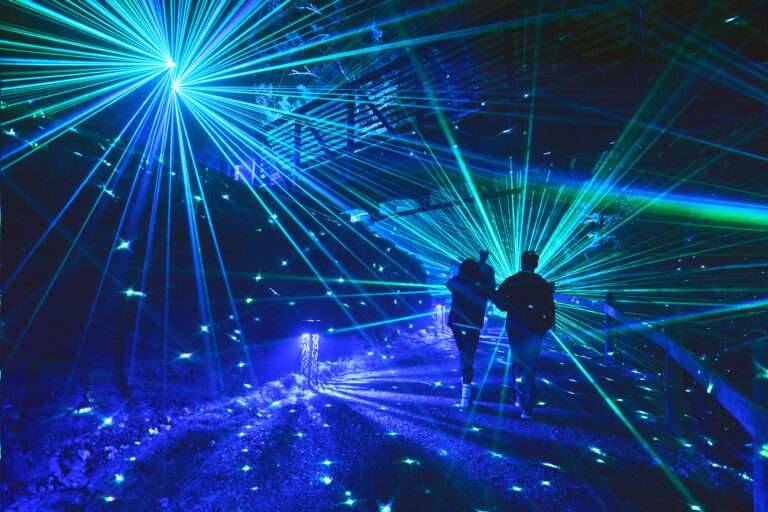
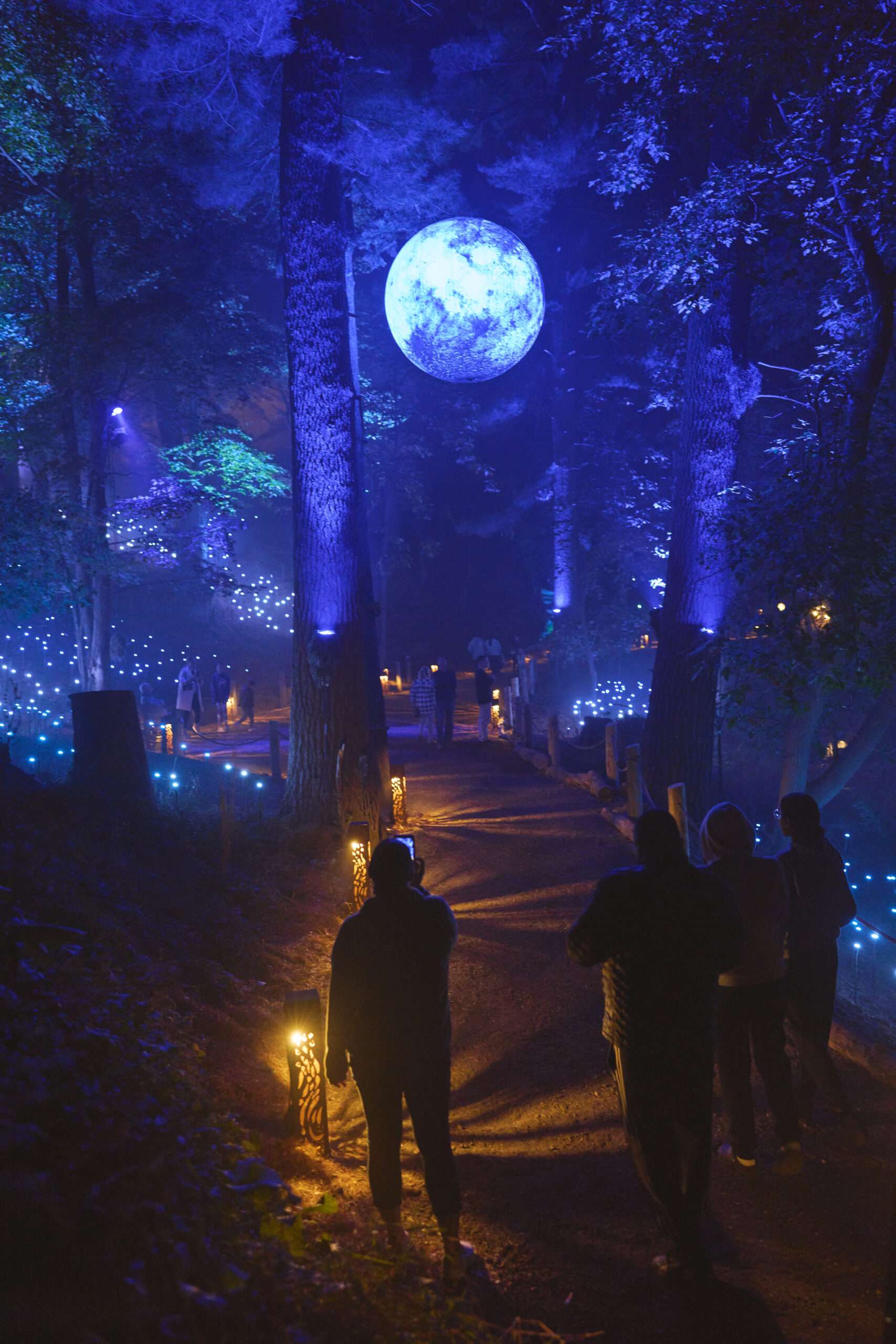
As with all the Lumina Enchanted Night Walks, lighting, special effects, projection and a custom soundtrack create the unique environment guests explore. The attraction’s location in and around a small natural canyon on the property makes it special. The Wilderness Resort and Moment Factory both sought to highlight nature’s beauty, and in doing so opened up a portion of the resort previously inaccessible to guests. “Aquavia Lumina provides Wilderness another signature attraction that separates us from other area resorts,” says Wilderness Resort Assistant General Manager Brandon Schindler. “However, it is open to the public and not just our resort guests. We feel Aquavia Lumina is so special and so unique to this area that it needs to be shared with anyone who wants to experience its magic.” •

Guests are accompanied throughout the journey by a deer, a spirit animal native to the Wisconsin Dells region that joins visitors on a quest to find “The Source” of water. The deer appears throughout the journey in various projections and media.
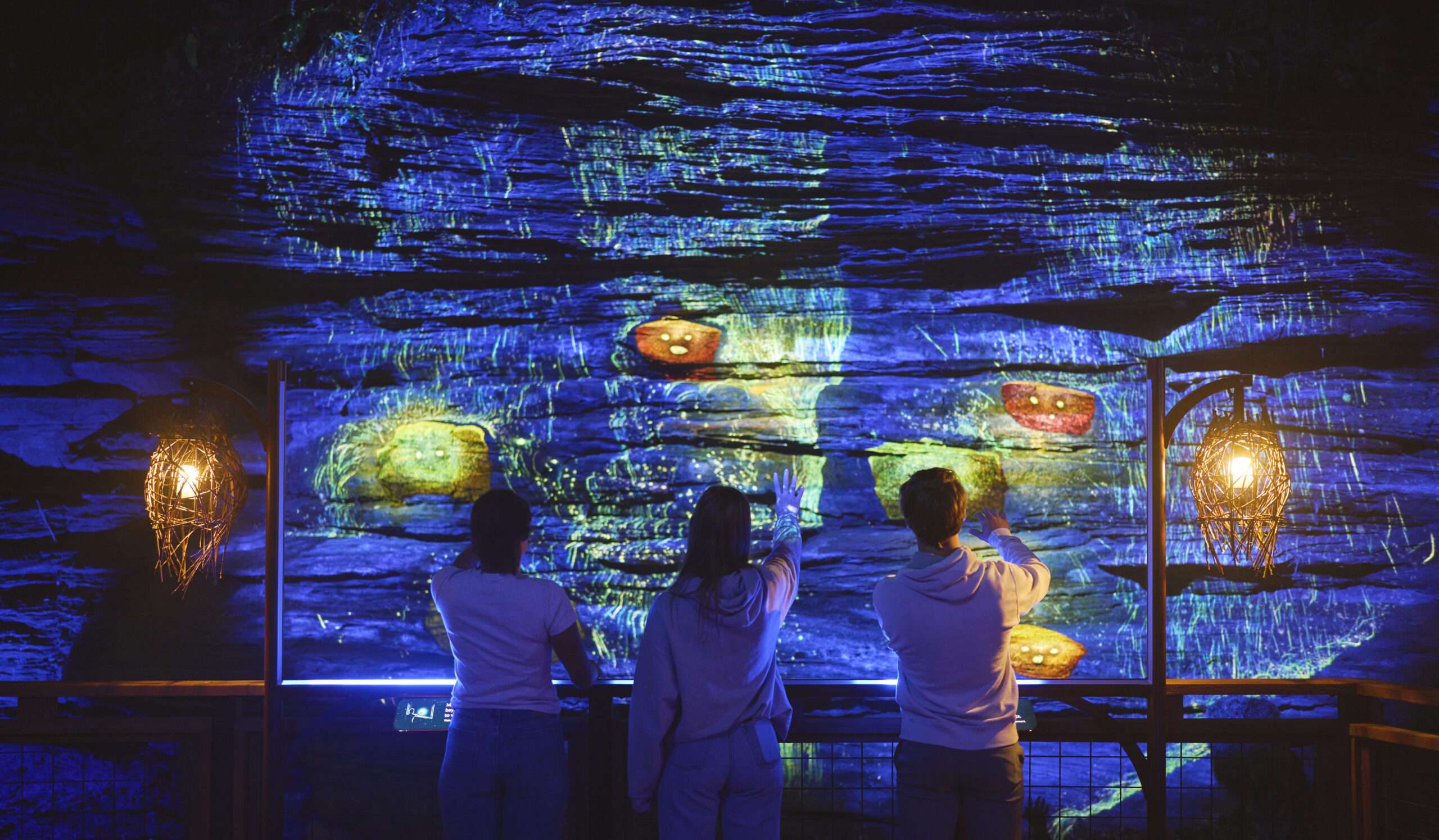
One of the unique elements of Aquavia Lumina is an interactive feature where guests wave their arms as if conducting a choir. Animated versions of the Stonians respond to the waving by singing in chorus, blending in with the soundtrack of the attraction. It’s an element of whimsy and fun that helps guests engage with the content in a different way. The feature also inspired the musical composer to record several folk songs by the Stonians that play in the Welcome area of the attraction.
According to Wilderness Resort Assistant General Manager Brandon Schindler, feedback has been overwhelmingly positive and even driven repeat visitation to the resort: “We’ve had guests finish the walk with tears streaming down their faces from how moved they felt throughout their journey. Many have commented that this was the highlight of their entire trip to the Dells and unlike anything they’ve ever seen before.”

The vision behind Aquavia Lumina

Mathieu Grainger, Producer at Moment Factory – the company behind the concept and design of Aquavia Lumina – helped realize the immersive Night Walk experience at The Wilderness Hotel & Golf Resort, a 600-acre Wisconsin Dells integrated family-friendly property that features eight waterparks. We asked him about the attraction’s development and comparison to other events the company produces.

How did your partnership with Wilderness come together to create Aquavia Lumina?

The first talk with Wilderness happened in 2021 as they were looking to diversify the types of attractions they offer at their resorts. They had a visionary approach to things and a clear path forward. They really got to know us at Moment Factory and our Lumina Enchanted Night Walks, visiting our installations in North America. By the time we were ready to confirm the project, we had a good relationship, clear expectations and a shared vision.

After we had started on Aquavia Lumina, they asked us to also help develop the Kaleidoscope Kavern at Wilderness at the Smokies in Tennessee (an immersive multimedia lazy river attraction). Our teams worked on both projects simultaneously, with Kaleidoscope Kavern opening in 2024.

What was the inspiration for the Aquavia Lumina story?

The site and location of the resort itself was our inspiration. When we started designing the experience, we had two possible locations but were inspired by exploring the small canyon located between buildings of the resort that had been previously inaccessible to guests.

It made sense to develop a theme around water considering the waterpark centric nature of Wilderness Resort, being in the waterpark capital of the world, and in a location that was literally carved out of water. Additionally, the owner, Tim Gantz, shared with the team how central water was to him. So it was just clear that the story had to revolve around water. Also there are deer living everywhere in the Wisconsin Dells, so the notion of using the deer as our guide and water as “The Source” made so much sense to the creative team.

How does your team prepare for a new project in an area you are unfamiliar with?

The first steps are an initiation process where we get to know the client and business, starting with an onsite visit. We develop recommendations and then bring a team in to visit the area and get to know the local people. We want to get a good sense of what the community is about. We continue to visit during different times of year to understand different traffic and guest patterns.

We can typically create a Lumina in 12-16 months, but this took a bit longer because of the complexities of working in the canyon. We had to get approval to be in the canyon from both the Wisconsin Department of Natural Resources and the Village of Lake Delton, while planning for potential flooding situations.

Above: Creating an experience in and around a canyon provided several challenges for Moment Factory. Overcoming the challenges, the team created an engaging attraction that highlights the amazing elements of nature. “Moment Factory was a tremendous partner on this project,” says Schindler. “The level of collaboration and communication from the idea phase through to opening night and beyond was outstanding. Their team was incredible in taking a piece of a forested canyon and re-imagining it into this gorgeous story world for visitors to experience.”

Below: The natural, textured walls of the canyon provide an interesting surface for projection mapping. Several media-based scenes throughout the walk help set the narrative arc and provide context for the many LED lighting, laser and sound scenes visitors encounter along the path.
Please share some of the unique challenges and opportunities of this particular installation.

We knew from the beginning that the canyon would dictate the path, and that to make the experience long enough we needed to encompass the length of the canyon from top to bottom. As soon as we decided the storyworld would be about searching for “The Source,” a legendary spring said to transform nature with the magic of water, it only made sense that the path should lead upstream. We were aware that the upper level of the path would allow guests to see down into the show scenes in the canyon. We planted more greenery that will grow and help obscure that over time, but we actually wanted little peek-a-boo moments where guests could get glimpses of what was to come.

Secondly, we had to exercise caution concerning power distribution and keeping everything safe and dry. We kept all control nodes out of the canyon to minimize loss if there were a major flood. The site really is unique – even hanging lighting and moving equipment up and down the canyon was challenging, especially since seamless multimedia integration is always a priority for us. But the result is spectacular and really makes you appreciate the natural beauty that has always been there. The show is owned by the Wilderness Resort, but in many ways it really belongs to the community, Lake Delton and the Dells area.

This installation seems to broaden the range of possible locations for Night Walk attractions.

Yes. The Aquavia Lumina canyon proved that we can explore less typical outdoor spaces. In recent years we have expanded our Night Walk offering to urban parks and botanical gardens. As an example, Light Cycles, an experience that transforms existing outdoor locations into nighttime immersive art destinations, has come to life in Australia, the USA, Italy, the U.K., Japan – in the country’s oldest botanical garden, the Kyoto Botanical Garden – and most recently in Chile’s capital city, Santiago. In addition to conservatories and greenhouses we also are looking at ski resorts and other large hotel and leisure facilities.

At the heart of it all we are always looking for the most beautiful natural canvas. It has always been about highlighting nature – she tends to be the star of our show – and is what differentiates our portfolio. In contrast to indoor experiences where you often have to create everything, we use sound, light and story to accentuate nature and elicit emotion in our guests. We can do that anywhere that is naturally beautiful. •

Special section: InPark market report

Welcome to the inaugural InPark Market Report. This special section is designed to provide focus on one particular area of our industry, with news and articles from leaders in the field. Our first focus is on ticketing.

For years, parks and attractions have been at the forefront of innovative ticketing technologies that enhance the guest experience and streamline operations. In many ways, the pandemic accelerated this movement, with both guests and operators becoming interested in remote, digital interaction.

Here are some recent trends to consider when evaluating ticketing systems:

Going mobile

Smartphones are everywhere, and attractions are taking advantage of that by encouraging mobile-centric transactions, allowing guests to purchase tickets, receive updates, and access promotions directly from their personal devices. Benefits include reduced wait times and simplified entry procedures for guests.

Going cashless

RFID wristbands, QR codes, and digital cards enable simplified cashless transactions throughout a facility. In addition to being fast, cashless systems allow operators to track spending, and parents can set up limited accounts for their kids to access on their own.

Dynamic pricing

For years the industry has been moving towards dynamic pricing, allowing adjustments to ticket prices based on demand and other factors. With the goal of incentivizing visitation during slower periods, the technology is not without its critics. Nevertheless, the adoption of dynamic pricing models is increasing as operators see benefits in its ability to maximize revenue.

Virtual queues

With many options for implementation, virtual queues seek to reduce the amount of time guests wait in attraction lines, potentially freeing them up to shop and spend more elsewhere in the facility. Initially introduced as paper-based systems, most options have moved to mobile devices. Some operators charge extra for this service while others include it as part of their offering to all guests.

Big data

Many attractions are seeing the benefits of integrated ecosystems where point-of-sale (POS), ticketing, and other operational systems work seamlessly together. Designed to increase operational efficiency, the information it provides to operators can help them make decisions on staffing and planning while offering insights into guest behavior. It can also provide an avenue for operators to offer a more personalized experience for guests.

AI integration

The relatively recent integration of artificial intelligence (AI) into operating systems allows attractions to offer tailored recommendations and targeted promotions, potentially increasing their fan base and offering a deeper relationship between their brand and guests. •

Connect&GO: Integrated software solutions and customer-centric culture

Hattiesburg Zoo modernizes operations with new, flexible platform from Connect&GO

by Andrew Friedenthal

Integrated attractions technology company Connect&GO has built their success on delivering innovative software solutions with a unique, customer-focused methodology that places each client at the center of a totally individualized process.

“We don’t see ourselves as just a tech provider – we see ourselves as part of the guest experience,” says CEO Dominic Gagnon. “Like our clients, we’re in the business of relationships. Attraction operators focus on creating unforgettable moments for their guests, and we bring that same mindset to our work with them. That shared focus on people over platforms is what sets us apart.”

One of the ways the company implements this philosophy is by assigning a dedicated customer success manager, who shepherds each client through the entire implementation cycle, from assessing their needs to launching and maintaining their software. Additionally, Connect&GO recently launched a Customer Advisory Board specifically to provide a space for clients to talk about their needs and struggles, with an eye towards sharing knowledge and learning about potential solutions.

Hattiesburg Zoo’s new Attraction Management System

Case-in-point: Hattiesburg Zoo in Hattiesburg, Mississippi. The facility is a multi-gated attraction, combining traditional zoo environments, family rides, a high-ropes adventure course and the waterpark Serengeti Springs. Now celebrating their 75th anniversary, the zoo reached out to Connect&GO to help modernize their operations and technology systems.

Hattiesburg Zoo opted for Connect&GO to deploy their flexible Attraction Management System, a modular platform that connects guest-facing and back-end touchpoints to create a seamless experience both for guests and managers [see sidebar].

Stéphanie Dionne

“The successful rollout at Hattiesburg Zoo and Serengeti Springs shows how technology, when designed hand-in-hand with those on the front lines, can create unforgettable guest experiences while giving teams the control, clarity, and confidence they need to thrive,” says Stéphanie Dionne, a Connect&GO customer success manager.

The customer success manager works directly with the client through the different phases of their project and relationship. “The Attraction Management System isn’t just built for attractions – it’s built with them,” says Dionne, who functions as a primary point of contact with Hattiesburg Zoo.

Customizing the platform to the client’s needs
Connect&GO’s Attraction Management System provides on-the-go functionality for guests. Image courtesy of Connect&GO

Dionne was on-site at the Hattiesburg Zoo during the project’s implementation and onboarding phase, working closely with the zoo’s Demetric Kelly, director of guest services and retail, and Salem Bunkheila, director of operations. The process began with several months of weekly virtual check- ins, where Dionne listened closely to Kelly and Bunkheila to fully understand the zoo’s needs and concerns, and translated their insights and requirements into the specific technological solutions offered by Connect&GO. “We had the opportunity to build a strong bond,” says Dionne. A critical part of her role is ensuring the Connect&GO technology becomes an integral part of a customer’s operations. “We’re there to allow the clients to better understand the platform, to make sure that we gather all of their feedback, and to help them make the most out of the platform,” she says. “Demetric and Salem are very detail-oriented. There was a lot for us to learn, both visual and operational. They are also both very proud of their park and facility. We wanted to provide a system that would deliver exactly what was needed, and enhance that pride.”

Demetric Kelly

Post-launch, Connect&GO remains involved with their clients, with the customer success manager serving as a point of contact who is aware of the client’s history and goals. In practice, this means the Connect&GO customer success manager works with the client to map out a success plan. For example, Dionne met with the Hattiesburg Zoo team to map out their main objectives for the coming year and to determine what key factors will make their next season successful.

Whether a client’s objectives are financial, operational, or based on some other specific goal, this success plan helps chart a path that allows the client to get the most benefit out of their Connect&GO platform.

The Customer Advisory Board

Another client resource is the Customer Advisory Board that Connect&GO recently launched, bringing together industry leaders from across North America and Europe to discuss challenges and share knowledge.

“The Customer Advisory Board is a new initiative that’s managed within our customer experience department,” Dionne says. “The goal is to bring together clients to share and learn from one another.” Among these clients is the Hattiesburg Zoo, with Demetric Kelly serving as a Board Member.

Feeding a giraffe at the Hattiesburg Zoo. Photo courtesy of Hattiesburg Zoo

In an industry where everyone is busy concentrating on their park’s operation, it is often difficult for professionals to keep in touch with other experts in the field. “We wanted to give them that space,” Dionne notes, “and the opportunity to meet those other experts and talk about their challenges, their wins, and industry trends. They are able to share and learn from one another in a low-stress, virtual environment.”

As host, Connect&GO gains valuable insights into what challenges their clients are facing and identifies ways that they can help implement solutions through their suite of products. “It’s critical for us to be aligned with their constantly evolving needs as well as the realities of the industry,” says Dionne.

The Customer Advisory Board allows Connect&GO to make sure that their plans for the future are actively meeting their client’s needs. “There’s a sense of validation when we see that some of the challenges our customers need to overcome are things that we’re already planning to integrate into future solutions,” she says.

E-commerce capabilities from Connect&GO make it easy for guests to buy admission passes. Image courtesy of Connect&GO

As with Connect&GO’s implementation at the Hattiesburg Zoo, the Customer Advisory Board is just one piece of the company’s larger goal to foster a tight-knit working relationship that benefits both organizations. “We’re there in a professional capacity,” says Dionne, “but we know our clients are extremely passionate people who love the industry and frequently feel it has become a part of their DNA. We want to be a part of that too.”

Both the customer success manager role and Connect&GO’s Customer Advisory Board’s existence fit into a broader mission that is near and dear to the technology provider: helping place that technology into the wider themed entertainment industry as a tool of engagement on multiple levels. “We’re not just a software supplier; we really see ourselves as a piece of the whole ecosystem of the attraction industry,” Dionne explains. “Just as the client is at the center of our business, we think Connect&GO is central to the entire attraction experience, both for operators and guests.”

You can learn more about Connect&GO at www.connectngo.com and about the Hattiesburg Zoo and Serengeti Springs at hattiesburgzoo.com. •

Attraction Management System

Hattiesburg Zoo launched Connect&GO’s Attraction Management System earlier this year. Designed on real-world insights from operators and the day-to-day challenges they face, the platform brings together everything modern parks need in order to deliver seamless, engaging, and efficient operations, including:

  • Cashless payments with pre-loaded funds, enabling quick, contactless payments throughout the park to reduce wait times and improve convenience.
  • An interactive park map simplifies reservations of premium products such as cabanas and parking spots and displays availability in real time.
  • A virtual wallet that stores all guest essentials (including tickets, entitlements, and information for cashless payment) in a single QR code or RFID wristband, with no app download required.
  • Personalized e-commerce tools, enabling the zoo to deliver targeted offers based on guest behavior and preferences, including rewarding loyal visitors.
  • Advanced access control that manages entry to the park as well as access to up- charged attractions like the carousel, train, and ropes course, helping to optimize guest flow, maintain safety protocols, and provide a more customized experience.
  • Centralized data and reporting with all the operational data consolidated into one real-time dashboard that enables smarter business decisions, improved resource planning and more personalized engagement strategies.
An example of Connect&GO’s wristband technology customized for the zoo. Image courtesy of Connect&GO

For more details on the installation and operations at Hattiesburg Zoo, visit bit.ly/4kayzAh to get an in-depth look at how the project came together.

Recent news in the world of ticketing

Semnox powers seamless guest experiences at Dubai’s new Loco Bear Entertainment Center

Dubai, UAE – Loco Bear, Dubai’s latest indoor family entertainment destination in Al Quoz 2, has partnered with Semnox Solutions to implement a fully integrated venue management system that simplifies operations and elevates the guest experience.

At 70,000 square feet, Loco Bear features an exciting mix of attractions for guests of all ages, including a trampoline park, two laser tag arenas, wall climbing, soft play zones, a six-lane interactive bowling alley with HYPER BOWLING – the first of its kind in the UAE, virtual darts, arcade games, birthday rooms, and the city’s first glow-in-the-dark SLIME UNIVERSE. The venue also features the two-story Loco Lounge café for guests to relax and refuel.

To manage this wide range of offerings, Loco Bear turned to Semnox’s Parafait suite of solutions. The implementation includes an integrated point-of-sale system, website, online ticketing and package sales, birthday and attraction booking modules, and RFID-based game readers for arcade management and access control.

Connect&GO announces industry- first AI-powered dynamic pricing built with operators, for operators

Montreal, Canada – In a move that puts power back in the hands of attraction operators, Connect&GO has started beta testing the industry’s first-ever AI-Powered Dynamic Pricing system – designed not just for operators, but with them.

Connect&GO’s AI-powered pricing engine is built right into the same platform that already runs the entire attraction. No third- party tools, no extra integrations, and no mystery errors. Unlike traditional dynamic pricing systems, Connect&GO’s approach includes a price management interface that allows operators to override the AI pricing at any time. This ensures the perfect balance between automation and control, empowering teams to adapt to special circumstances, or a special event.

Connect&GO’s AI-powered pricing engine is trained using your park’s own data. It learns from two years of historical attendance, ticket pricing, and purchase patterns to understand the unique rhythm of your operation. Whether your crowds surge during a heatwave or dip on cloudy weekdays, the AI knows how to respond – because it’s learned from your history. This isn’t shared intelligence. Your model is yours alone. Your data stays private, never used to train other parks’ systems.

Gateway Ticketing Systems announces the launch of Galaxy 8: A next-generation ticketing & admission control platform

Gilbertsville, PA – Gateway Ticketing Systems®, a leader in ticketing, admission control, and revenue-generating solutions for the attractions industry, is thrilled to announce the launch of Galaxy 8 – a transformative evolution in ticketing and admission control.

With a modern, user-friendly interface and powerful new capabilities, Galaxy 8 streamlines operations for new and experienced users, making ticketing, sales, and guest engagement more seamless.

Designed with Microsoft’s Fluent Design 2, Galaxy 8 delivers a sleek, contemporary interface inspired by Windows 11, making it easier to use, train, and navigate. But beyond aesthetics, it introduces cutting-edge functionality that enhances efficiency, security, and revenue generation.

Morey’s Piers partners with RocketRez for cloud-based solutions

RocketRez, provider of cloud-based management solutions for tours and attractions, announced a new partnership with Morey’s Piers. Located in Wildwood, New Jersey, and family owned and operated since 1969, Morey’s Piers has delighted millions of guests with its boardwalk amusement parks, waterparks, and oceanfront experiences for over five decades. RocketRez will collaborate with Morey’s Piers to further enhance its operations and guest engagement through ticketing, communication, and analytics solutions.

Qiddiya City elevates guest experience with accesso® Horizon

Orlando, FL – accesso Technology Group, a technology solutions provider to leisure, entertainment and cultural markets, announced it has been selected as the guest experience technology provider for the Qiddiya giga-project in Saudi Arabia.

Located southwest of Riyadh, Qiddiya City is set to become the crown jewel of entertainment, sports, and cultural experiences within the Kingdom, spanning over 300 square kilometers. As a key driver of Saudi Vision 2030, Qiddiya will make a major contribution to the diversification of the country’s economy and entertainment, sport and cultural sectors. accesso will implement its accesso Horizon across Qiddiya’s diverse portfolio of attractions, including the highly anticipated Six Flags Qiddiya and Aquarabia. •

Semnox: That’s the Tixera

Semnox’s Leinad Borman shares both operator and supplier perspectives in relation to ticketing trends, the future of Point-of-Sale (POS) technology and the Tixera platform

interview by Martin Palicki

According to Leinad Borman, Sales Partner – Parks, for Semnox Americas, “Evaluating and selecting ticketing and operations systems is a daunting task.” She knows this from experience. Prior to joining the Semnox team, she spent over 20 years on the operations side, including roles at Palace Entertainment and Apex Parks Group. Her unique perspectives from both the operator and vendor sides give her insight into the special challenges faced by theme parks, waterparks and other large attractions when seeking ticketing and POS systems that meet their unique needs. InPark asked Borman about Semnox’s Tixera platform as well as other trends and technologies impacting the marketplace.

What makes Semnox products unique?

Ultimately, every system has pros and cons, features you like and options you long for. As a former operator, I understand the struggle and stress that goes into selecting a system. What makes Semnox different are our core values, and that starts with our customers coming first in all of our plans. We’re not in the business of selling systems; we’re in the business of providing a solution that will enhance your location and empower you with the tools needed to continue growing.

How is Tixera optimized for theme parks and waterparks?

Semnox’s Tixera platform is an all-in-one solution built on the module premise. This allows for flexibility in implementation, which is a frequent concern for larger parks and attractions. While we can run all aspects of a park location, we can also come in and focus solely on admission sales if a location is, for instance, satisfied with their current F&B system. This also makes it possible to plan a strategic rollout over time which often can ease the struggle of training staff for the season along with training everyone on a location-wide new platform.

Can you give us an example of a successful integration of Tixera in a park setting?
Leinad Borman Sales Partner – Parks, Semnox Americas

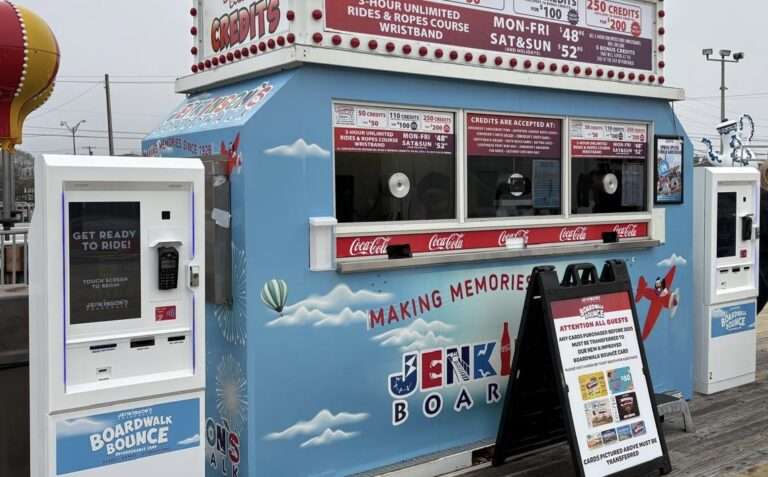
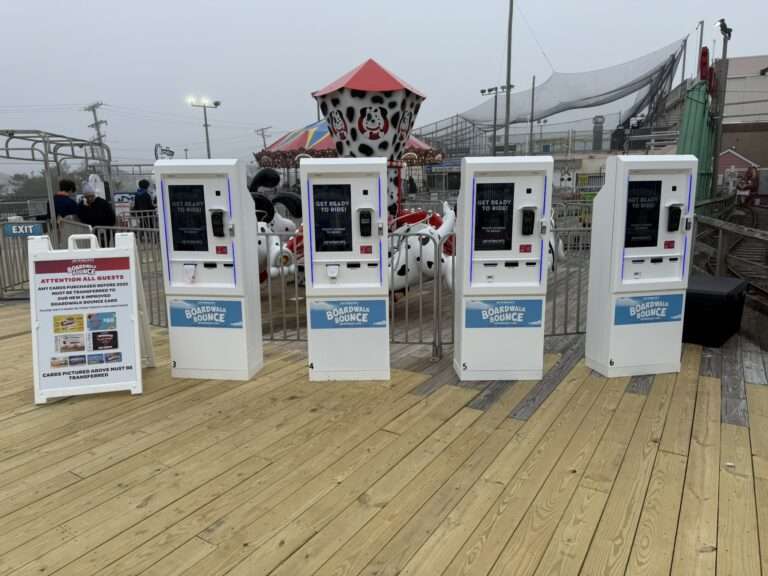
We recently deployed Tixera at Jenkinson’s Boardwalk and Casino Pier in New Jersey. Both locations were done in a phased rollout which allowed for implementation and training to begin during their quieter off-season time. We converted their arcades in early winter, then returned to install and assist with their ride park opening in early spring. Visits in April ensured their midway games were ready for the season. And we’ll be on-site for the opening of their waterpark, Breakwater Beach, this summer.

Tixera is used in parks around the world. How do you handle localization, language preferences, and different compliance needs across regions?

Having offices around the world (including in Europe, the USA, the UAE, China and India) helps us stay abreast with varying regional and compliance needs. Our developers have spent a lot of time ensuring the Tixera software has the capability to accommodate language preferences by including many default languages but also includes functionality for the regional teams to work with their clients to add or edit as needed. Because we focus on building strong client relationships, our clients work closely with us to ensure we’re also kept up to date on changing needs.

Cashless is quickly becoming an industry norm, but some facilities still want to accept cash. How do you handle that?

Cash acceptance is always an available option for operators. Our Form of Payment options are configurable by device. Our POS stations can run with or without a cash drawer; our kiosks can come with or without bill acceptors. In parks that want to be primarily cashless, we’re still seeing them set up one POS to accept cash at a Guest Service booth and a bank of cash- accepting kiosks at the front. Then clients are utilizing our location-based currency system within the location so guests can spend the value from their cards or wristbands throughout the location.

What are some of the potential challenges with moving to an integrated multi-channel ticketing solution like Tixera?

I have been reviewing and implementing systems for close to 20 years now, and the challenge I see most often is attempting to implement everything all at once. Systems come with lots of bells and whistles and sometimes those distract from first focusing on the critical components needed for day-to-day operation. We work closely with locations to evaluate the implementation plan that will be most effective for their unique situation. Each location is unique, and it is important to acknowledge that. We spend time meeting with the different departments; plan training based on strategic factors; visit before, during, and after implementation; and continue touch base sessions after go-live to plan the expanded use of the system.

What are some of the current trends in ticketing?

The biggest trend continues to be self- service options for guests. We meet regularly with our current clients for feedback as well as study trends emerging in various markets. Recently we’ve deployed outdoor-rated kiosks, so clients can now place units in more locations throughout their facility. Our latest software package also includes the ability for guests to convert cards from a legacy system to a new Semnox RFID card on their own, when a client has decided to switch operating platforms.

How do you encourage clients to evaluate systems?

I always tell potential clients to start first by creating a list of their top 10 critical system needs in order to keep their business operating. Make sure as you navigate through that you stay true to that list. After you’ve narrowed things down to a few system options, then discuss the additional options and “would like to have” features. Every system is unique with different features, so it’s critical to make sure you go back to your list and compare your options.

What kind of scalability does Tixera offer for parks that are expanding or adding new attractions or locations?

Because Tixera is built in a modular manner, it is easy for us to grow and change with location. Hardware devices for new attractions or revenue centers are simple to add to an existing platform. With our Cloud/On-Premises Server solution, it is easy to add additional locations that can then be managed independently or from a Corporate standpoint. We have many multilocation chains already in our client portfolio.

How does Tixera use guest data and analytics to improve the in-park experience and increase return visits?

This is a tricky question. The Semnox Tixera platform has many attributes that it can collect, collate and report on. But increasing return visits comes down to what the operator is going to do with that information in order to achieve their goal. We’ve developed options for our SmartFun App to keep guests engaged with a location, along with tools for clients to use in the app to keep guests connected to it. Our goal is to provide the tools for our clients to help them process, interpret and understand all the raw data our systems collect, so that they can build the best guest experiences.

Along these lines, we also have several platform options available for Season Pass, Membership or Loyalty Programs. An example of one would be our Recurring Billing program that allows locations to sell Season Passes Online or at the location for a low monthly rate. With Tixera, it is easy to manage guest profiles, ever-changing payment methods, configure varying payment programs and offer great passholder benefits.

How do you support parks in handling high guest volumes during peak seasons or special events?

There are different functions that we’ve built from real-time monitoring backed by our 24/7 support teams across the globe to allow for bulk activations of event cards or wristbands. Part of our evaluation and implementation process includes discussing those historical peak times or, for first-time operators, those anticipated high volume events. Through those discussions we then walk through different server options to assist with volume needs, staffing pitfalls they’ve seen in the past, and whether or not a client would like a member of the Tixera team to be on-site during those special times. We work to be more than a software provider, so a partnership in success mentality is the path we choose to follow.

How do you see AI or machine learning (ML) shaping the future of ticketing in this space?

AI and ML are set to play a transformative role in the future, and it’s an area Tixera is actively exploring. Right now, we’re still strategizing on how this part of technology will best suit our clients. We see immense potential for AI/ML to enhance various aspects.

From a customer experience standpoint, AI can enable hyper- personalized recommendations, dynamic pricing models based on demand patterns, and intelligent queue management, better resource planning, and more revenue opportunities through data-driven insights. So yes, AI is very much on our radar, and we’re carefully evaluating how best to harness it to drive smarter, more agile ticketing solutions for the future. •

Christie: A multifaceted gem of a projector

Christie’s new Sapphire brings together the best of both RGB pure laser and laser phosphor projection technologies

interview by Martin Palicki

Recognizing a critical need within the themed entertainment market, Christie launched their new Sapphire projector at ISE 2025 in Barcelona last February. The new unit is a hybrid projector, bringing together the best features of both laser phosphor and RGB pure laser systems to provide maximum versatility for themed entertainment applications. We asked Larry Paul, Christie’s Executive Director of Technology and Custom Solutions, for more details on how Sapphire fits into their suite of products.

Where did the inspiration for Sapphire come from?

Christie creates solutions that solve our customers’ problems, and we know that the creative landscape is constantly evolving. With that understanding, we recognized an opportunity to provide a new solution that would help our customers stay competitive in the marketplace.

Larry Paul

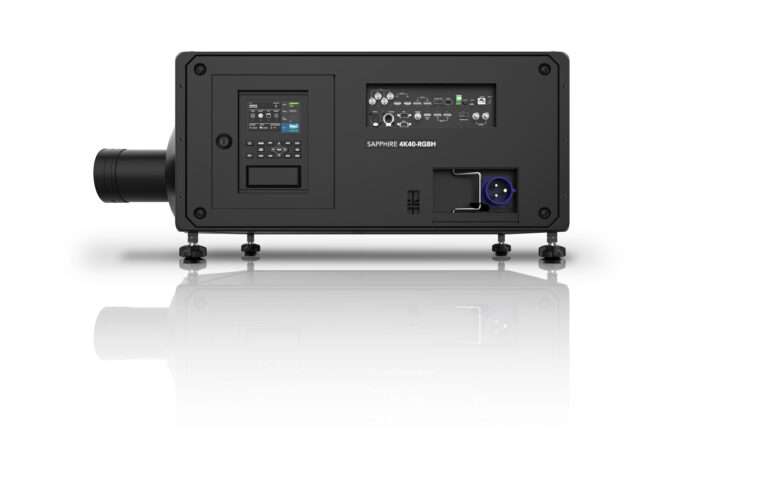
Our clients were looking for a projection solution with color comb 3D and rear projection capabilities, and technology that could be implemented in silver screen 3D applications – all important for dark rides and media-based attractions. These were the primary inspirations for developing the Sapphire 4K40-RGBH, the world’s first true high-brightness hybrid RGB pure laser and laser phosphor projector.

We wanted to set new performance benchmarks with Sapphire to exceed the capabilities of lamp-based and laser phosphor projectors. For example, we partnered with Infitec to develop an all-new 3D glasses technology that maximizes the broad color spectrum of Sapphire’s unique hybrid illumination technology, which we developed specifically for this projector.

Can you go into more detail on what specific features make Sapphire an ideal match for dark rides and media-based attractions?

The answer really boils down to 3D applications and color. Some of the most immersive dark rides use 3D technologies to captivate their guests but require a broader color palette for more natural-looking visuals. While silver screen polarized 3D may be appropriate or ideal for non-blended applications, installations that use blended projectors or short-throw lenses to create a larger, seamless canvas are challenging or impossible to do with a silver screen. This is when color comb 3D is an ideal solution.

Color comb 3D is essentially a much more advanced version of the old-fashioned blue and red lens 3D glasses. Two projectors emit slightly different wavelengths of red, green and blue colors with optical filters combing out the different wavelengths for each eye, resulting in a superior stereoscopic image.

Sapphire features an exclusive Infitec 3D color comb option. With a left-eye projector and a right-eye projector, a Christie Intelligent Filter Holder in each, and Infitec 3D glasses exclusively designed for Sapphire, the projector is automatically configured to project passive 3D content onto any surface. Paired with color perceived as DCI-P3, the result is brighter, more immersive experiences on attractions that surpass polarized 3D.

Additionally, Sapphire offers 25,000 hours to 50% brightness for the RGB pure laser system, and 20,000 hours to 50% brightness for the dual laser phosphor system.

The Christie Sapphire was first debuted at ISE in Barcelona, Spain, in February 2025.
You mentioned Sapphire’s benefits for 3D applications. Is it also beneficial for 2D projection?

Sapphire is the recommended choice in a few instances. It’s the optimal projector for high brightness 2D applications when the screen surface is prone to speckle, such as rear projection applications, and if you’re using a silver screen for 2D or 3D.

Sapphire’s broad color spectrum reproduces a DCI-P3+ color space, making it a superior choice for customers or projects that require a laser phosphor illuminated projector.

What other environments might be a good match for Sapphire?

Sapphire is also ideal for visualization displays like a CAVE or powerwall, as well as for customers who need immersive displays in simulation environments, including automotive and aerospace design, scientific visualization and simulation, government defense, and many other immersive 2D and 3D applications.

What are the benefits of a hybrid system?

An RGB pure laser illumination system has red, green, and blue lasers that enable the broadest color spectrum, allowing users to see more color than any other projection technology. Christie is a pioneer of RGB pure laser illumination, and we started deploying RGB illuminated projectors over 12 years ago.

In comparison, while laser phosphor illumination produces a broader spectrum of light, a typical laser phosphor illumination system is limited in its ability to reproduce color. However, it’s a very reliable light source with maximum screen compatibility.

Christie saw this as an opportunity to combine the best of both RGB pure laser and laser phosphor. We added dual phosphor disks and the technology needed to achieve DCI-P3 color, color comb 3D, and superior low speckle performance.

In practical situations, this means that for operators with existing attractions, Sapphire is a great option for replacing older lamp-based projectors for 2D and 3D applications. The combination of laser phosphor and RGB pure laser makes Sapphire versatile enough to work in just about any projection environment and screen setup. As mentioned before, it also provides superior 3D color comb projection, silver screen polarized 3D, along with better reliability, a longer lifespan, and dramatically better color and brightness than lamp-based products. It also uses the same Christie ILS4 lenses as Boxer 4K30, D4K40-RGB, and Griffyn Series.

Of course, all of these reasons make it a good choice for new attractions as well.

We frequently talk about the color gamut with you. Can you share more on how Sapphire stacks up in these areas?

High brightness, 3D, high frame rates, and color are all part of what enable designers to create engaging, entertaining, and immersive experiences for their guests.

Color is an especially key component. Sapphire achieves the DCI-P3 color space, surpassing the Rec. 709 color gamut of laser phosphor and lamp-based projectors, due to its hybrid illumination system. For context, DCI-P3 is the standard for cinema. It has more greens and reds than the Rec. 709 color space and reproduces more realistic and lifelike colors on screen.

Are there any other features we didn’t talk about that designers and integrators should know about?

The Christie Sapphire 4K40-RGBH adds a new solution to our product portfolio, enabling our customers to unleash their creativity and create the entertaining and enjoyable experiences they expect when they visit an attraction or immerse themselves in a virtual environment. •

Mad Systems offers new analytics services that delivers visitor engagement data for cultural institutions

Mad Systems Inc., the technology provider behind QuickSilver, Alice, and CheshireCat, unveiled AV++ Analytics, a new service that delivers live, privacy-conscious visitor intelligence. By capturing dwell times, repeat visits, hot-zone traffic, and engagement levels in real time, AV++ Analytics empowers cultural venues to optimize exhibits, staffing, and storylines with hard data.

“Great experiences start with understanding what audiences do, not what we assume they do,” said Maris J. Ensing, founder of Mad Systems. “AV++ Analytics transforms every moment a guest spends onsite into insights that curators, operators, and funders can act on immediately.”

Key capabilities
  • Real-time dwell tracking: Usage, sensors and recognition tools measure how long guests linger at each exhibit, spotlighting content that resonates and flagging displays that need a refresh.
  • True behavior metrics: CheshireCat facial recognition (processed entirely on-premises for privacy) measures dwell time to a second accuracy, identifies returning visitors, giving institutions an accurate view of loyalty and repeat engagement.
  • Heatmaps and hot zones: QuickSilver aggregates location data to reveal peak hours, crowd flow, and underused areas, feeding a live command-center dashboard.
  • Data-driven operations: Insights guide exhibit design, staffing levels, and visitor routing. Venues can redeploy resources on the fly and justify upgrades with evidence, not anecdotes.
  • Grant-ready reporting: Automated SQL reports show growth in engagement, dwell time, and repeat attendance, strengthening funding proposals and stakeholder updates.
From insight to action

A science museum might spot a midday surge in its physics lab and schedule extra facilitators, while an art gallery could see that a new digital installation doubles average dwell time and decide to replicate its interactive elements elsewhere. With AV++ Analytics:

  • Exhibit teams refine content based on concrete engagement thresholds.
  • Operations managers schedule staff precisely when and where visitors need assistance.
  • Development officers present funders with undeniable impact metrics.
  • Guests enjoy smoother traffic flow and richer, more personalized experiences.
Privacy by design

AV++ Analytics stores no personally identifying information. CheshireCat converts faces into non-reversible alphanumeric IDs, and all processing can remain on local servers for full data sovereignty. The result is actionable intelligence without compromising visitor trust.

Disney’s parks-first strategy makes stock pop

Philip Hernandez breaks down Disney’s latest earnings call

Disney continues its parks-first strategy with a new announced expansion in the Middle East as streaming turns profitable.

By Philip Hernandez


Disney’s Q2 FY25 earnings revealed a company leveraging its core strengths in experiences while expanding globally. The announcement of Disneyland Abu Dhabi served as the crowning achievement of a strong quarter. The stock jumped approximately 7% following an earnings call, signaling investors’ positive response to Disney’s pivot back to its experiential offerings.

The parks-led approach is paying dividends, as evidenced by a 9% increase in Experiences segment operating income to $2.5 billion and record-high returns on invested capital in this division. This impressive performance occurred despite softness in Disney’s China operations, where guests are “tightening their belts,” according to CFO Hugh Johnston.

Parks & Experiences: The Core Growth Engine

Disney’s domestic parks and experiences business showed particular strength, with operating income growing 13% to $1.8 billion. This improvement reflected higher volumes from increases in theme park attendance, occupied room nights, Disney Vacation Club unit sales, and higher guest spending at theme parks.

The company highlighted strong forward-looking indicators, with Walt Disney World bookings up 4% for Q3 and 7% for Q4 year-over-year, suggesting continued momentum despite macroeconomic uncertainties and competitive pressures from Universal’s new Epic Universe park opening.

Bob Iger emphasized the company’s commitment to strategic parks investments: “We already have more expansion projects underway domestically and around the world than at any time in our history,” he noted on the earnings call, referencing the approximately $30 billion earmarked for expansion in Florida and California.

International parks results were more mixed, with operating income declining 23% compared to the prior-year quarter due to lower results at Shanghai Disney Resort and Hong Kong Disneyland Resort, reflecting what Disney described as “softness we are continuing to see in China.”

Abu Dhabi: Disney’s Seventh Global Destination

The most significant announcement was the new strategic partnership with Miral to develop Disney’s seventh global theme park destination in Abu Dhabi. The arrangement follows Disney’s licensing model, similar to Tokyo Disney Resort, with Miral providing capital and construction resources while Disney oversees design, licenses IP, and provides operational expertise.

Iger, speaking from the UAE during the earnings call, highlighted the strategic rationale: “It was very obvious to us that there were many people — basically hundreds of millions… — where a trip to one of our six [current] locations was pretty lengthy and expensive. So, we felt the best way… is to bring our product to them.” He noted that the Middle East region offers “500 million income-qualified people within a four-hour flight” and Abu Dhabi alone is projecting 39 million annual tourists by 2030.

According to Iger, the park will be “authentically Disney and distinctly Emirati,” and he emphasized Miral’s strong track record operating attractions on Yas Island, including SeaWorld, Ferrari World, and Warner Bros. parks. Design work is already underway, and the park is expected to be “largely indoor,” following the precedent of other Yas Island attractions.

Disney Cruise Line Expansion

Disney Cruise Line continues to be a growth driver for the Experiences segment. Operating income at domestic parks and experiences was bolstered by Disney Cruise Line’s fleet expansion, with Q2 reflecting the first full quarter of operations for the Disney Treasure, which launched in December 2024.

The company reported approximately $35 million in pre-opening expenses related to the Disney Destiny and Disney Adventure, which will join the fleet later in 2025. The Adventure will sail from Singapore, with Iger noting that “the first quarter sold out in a matter of days,” demonstrating strong demand in Southeast Asia.

Disney expects full-year fiscal 2025 pre-opening expenses for Disney Cruise Line of approximately $200 million, with $40 million in Q3 and $50 million in Q4. Ultimately, the fleet will grow to 13 ships by 2031, more than doubling its pre-2024 size.

Streaming: Finally Profitable

After years of investment, Disney’s streaming business has turned the corner toward profitability. Direct-to-Consumer operating income increased $289 million to $336 million, marking the third consecutive profitable quarter. Total Disney+ and Hulu subscriptions reached 180.7 million, despite recent price increases.

“Not only is engagement up, but churn is down — and significantly,” Iger said, crediting the broader content on Disney+ (which now includes Hulu series and some sports) for boosting retention.

Disney+ ended Q2 with 126 million subscribers, an increase of 1.4 million compared to Q1, while Hulu added 1.1 million subscribers to reach 54.7 million. Average revenue per user also showed improvement, with Disney+ domestic ARPU increasing from $7.99 to $8.06.

To drive streaming into its next phase, Disney is pursuing a three-pronged approach:

1) enrich the product with more content and better technology

2) continue disciplined cost management

3) invest in local content in key international markets.

This strategy appears to be paying off as Disney’s confidence in streaming as a growth driver has noticeably increased.

Movie Business: Quality Over Quantity

Disney’s theatrical business showed renewed strength, with Thunderbolts from Marvel Studios opening number one worldwide and described as “the best-reviewed Marvel film in years.” The company has a strong upcoming slate for calendar 2025 including Lilo & Stitch, Elio, Fantastic Four, Zootopia 2, and Avatar: Fire & Ash.

Iger addressed recent turbulence in Marvel’s output and the strategy going forward: “We had Marvel produce a lot more. We’ve also learned over time that quantity does not necessarily beget quality.” He admitted “we lost a little focus by making too much,” especially on the Disney+ side, and confirmed that Marvel is now “consolidating around fewer, better projects.”

Content Sales/Licensing and Other operating income increased $171 million to $153 million in Q2, driven by higher TV/VOD distribution results, including an increase in sales of episodic content, and improved home entertainment distribution driven by the performance of Moana 2.

Sports: ESPN+ Preparing for Flagship Launch

ESPN continues to be a bright spot, with primetime TV viewership up 32% in the key 18-49 demographic, marking “ESPN’s most watched Q2 in primetime ever.” Sports advertising revenue was up over 20% for the quarter, though operating income fell due to higher programming and production costs for additional College Football Playoff and NFL games.

The company is preparing to launch its direct-to-consumer ESPN offering “in a few months,” with pricing details expected to be announced next week at the Upfronts. The service will be bundled with Disney+/Hulu, and linear ESPN subscribers will get access at no extra fee.

Financial Outlook

Disney delivered 7% revenue growth to $23.6 billion and 20% growth in adjusted EPS to $1.45 in Q2. The company raised its full-year adjusted EPS guidance to $5.75, up from $5.30 previously and representing a 16% increase over fiscal 2024.

For Experiences specifically, Disney now expects operating income growth for fiscal 2025 to be at the high end of the previously guided 6-8% range compared to the prior year.

Looking Ahead

With Disneyland celebrating its 70th anniversary beginning this week and Hong Kong Disneyland marking its 20th anniversary next month, Disney continues to balance maintaining its heritage with ambitious expansion plans.

The earnings results demonstrate Disney’s renewed focus on its parks business as a core competitive advantage while simultaneously stabilizing streaming and recalibrating its content strategy. With strong domestic parks performance, the Abu Dhabi announcement, and continued cruise line expansion, Disney is signaling that experiences remain the heart of its growth strategy for the foreseeable future.

However, there are two clouds on the horizon: China and Tariffs. Per Cap spending in China is down, as consumers reevaluate spending in light of a rough economy. Can Disney maintain pricing power in mainland China? And, of course, Tariffs. Remember that this earnings report is a trailing indicator, all pre-tariff. With costs rising, inbound travel falling, and consumer sentiment falling – will Disney’s bookings and per cap remain strong? Disney seems to be betting that the live entertainment and seasonal overlays will keep guests coming, and we’ll have to wait and see. With its diverse portfolio and strong performance, Disney appears to be in the best position to weather any storm.

Disney should be congratulated for its turnaround in streaming, just in time to refocus on its most profitable segment. Disney’s IP flywheel is now safe from cable’s decline, and its poised to bring renewed energy to its experiences.

Philip Hernandez is a journalist reporting on the haunted house industry, horror events, theme parks, and Halloween. He is also the CEO of Gantom Lighting and Founder / Publisher of the Haunted Attraction Network, the haunted attraction industry’s most prominent news media source. He is based in Los Angeles and co-founded/co-hosts the Green Tagged podcast