
HOW CREATIVE STUDIO BERLIN AND THE ROOM LABS BLENDED EDUCATION, HISTORIC STORY TELLING AND THEME PARK TECH INSIDE AN AUTHENTIC GERMAN CASTLE
by Martin Palicki
Some experiences are easy to label. Museum. Workshop. Escape room. Dark ride. Secret Laboratory is not.
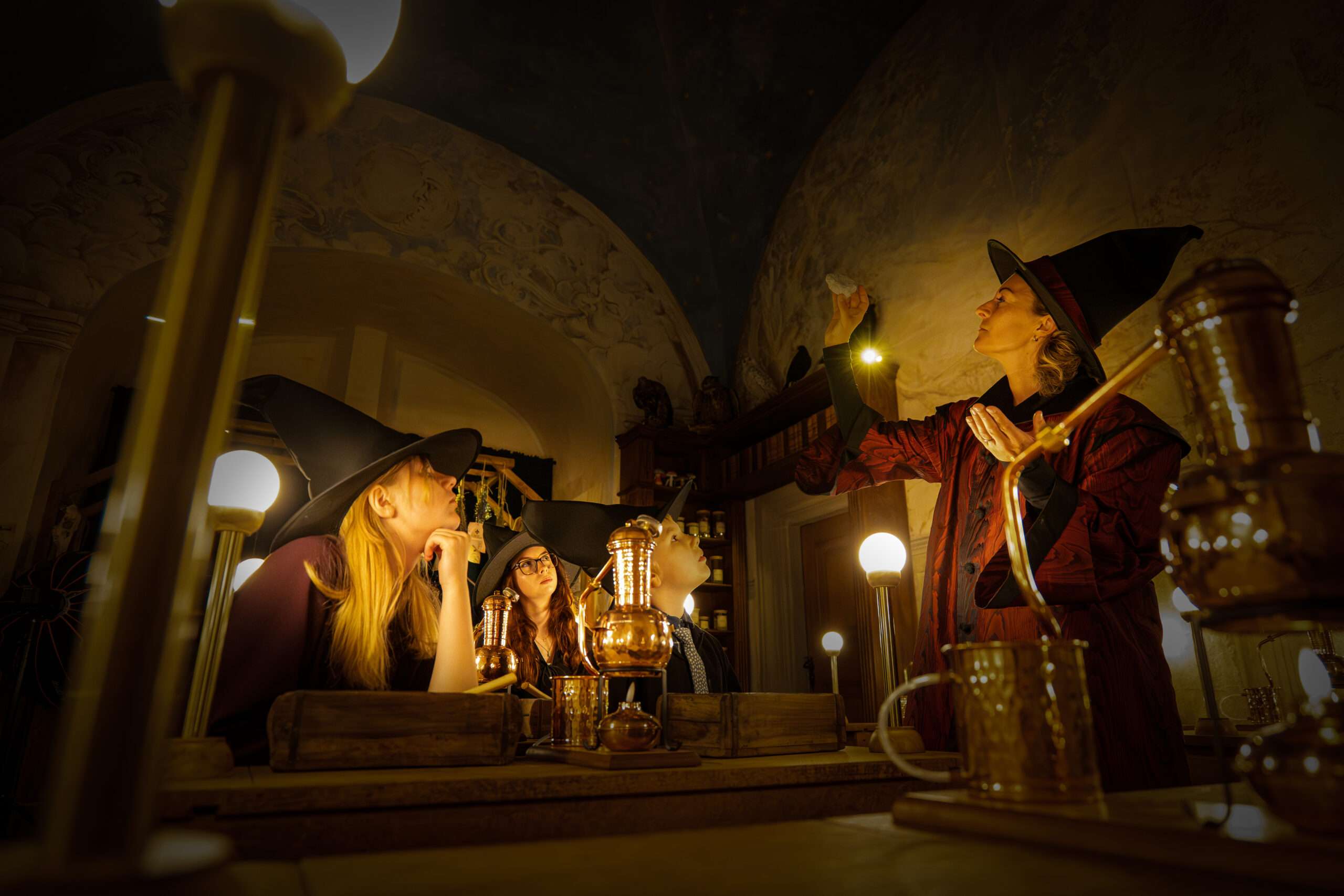
Inside the historic Schloss Augustusburg in Germany, guests dress in robes, pass through candlelit rooms and meet Renaissance-era figures who send them on historical missions. Along the way are practical puzzles, scent and sound cues, integrated media systems, theme park-style special effects and a descent into a mysterious basement.
Secret Laboratory is themed entertainment disguised as an educational workshop, providing participants with an interactive history lesson and a special souvenir to showcase their accomplishments. Guests pick from one of two experiences: Elixir of Life or Treasure of the Earth. Both take place in the same small three-room space, alternating throughout the day.
Creative Studio Berlin (CSB) did the initial ideation and design, then reached out to The Room Laboratories (The Room Labs) to build upon and execute it.
InPark spoke with Chris Lange (Chief Creative Officer/Owner, Creative Studio Berlin), Chris Lattner (Founder/Creative Director, The Room Labs) and Niels Reinhard (Creative Director, The Room Labs) about how the experience came together, why it defies categorization and what made it worthy of earning a coveted TEA Thea Award.



How do you explain the experience?
Chris Lattner: It’s difficult to categorize because it has elements of different categories mixed together. In a very basic way, we refer to it as a hands-on workshop. A group of 24 people experience a 45- to 60-minute instructor-led workshop on one of two different topics.
What makes it special is that the workshop is fully themed. Guests are traveling back to the Renaissance, meeting people from that time, and enjoying a workshop in a completely different environment than a typical classroom. We incorporated detailed theming, special effects and interactive puzzles to make it feel as real as possible.
Niels Reinhard: It’s a show, it’s a workshop and it’s a little bit of an escape room, all under the roof of historical theming. It’s hard to put a label on it.
Chris Lange: That’s part of why it feels truly innovative. A lot of science centers and museums have traditional workshops. This is delivering education on an experience level.
Where did the idea originate?
Chris Lange: Creative Studio Berlin had a relationship with the client already, having designed experiences for some of their historic environments, including castles. They approached us with a desire for a workshop or “classroom” experience. They wanted something new and innovative that would help students, families and groups learn about the region. We did initial ideation and design before reaching out to The Room Labs.
Chris Lattner: I remember Chris calling me and saying, “Can we do something magical and wizard-inspired in that castle?” That was the core spark.
We knew, of course, that it couldn’t be fantasy. It needs to be “real” Renaissance to fit the period and place of the castle. So we asked: What would have felt like magic back then? Casting metal. Creating potions in the form of distilling herbal medicine. Those things could have felt like magic to people at the time. We took those ideas and then translated them into fun experiences that were also historically grounded.
Walk us through the spaces.
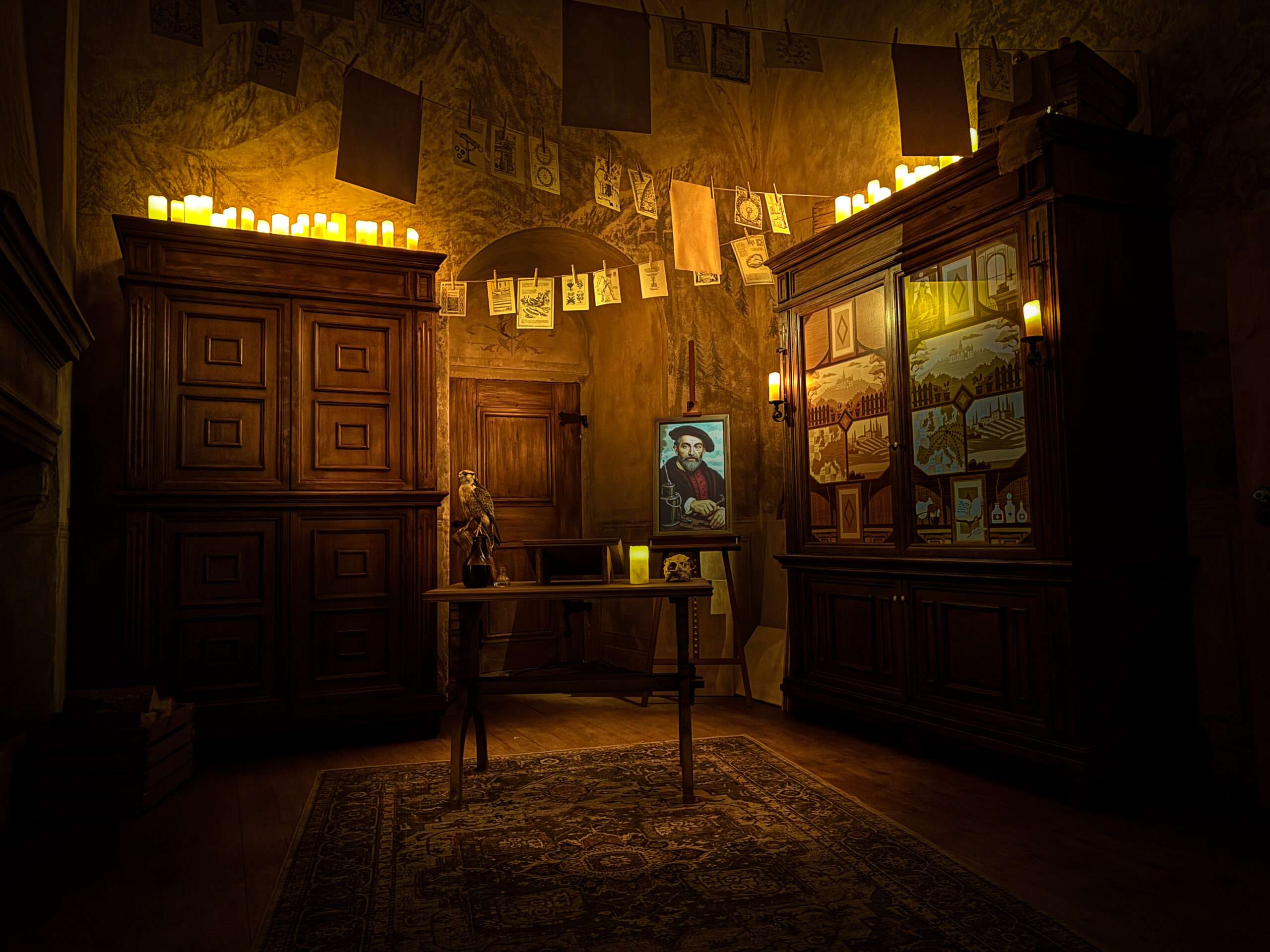
Chris Lattner: Guests are first greeted outside by a guide in period costume with a lantern. The guide leads them into the preshow room, which is set up as a candlelit study with bookshelves, cabinets and a fireplace. There’s also a conservatory with frosted glass on one end. This room introduces guests to one of the two historical figures they will be following in the footsteps of during their experience: Anna or Augustus. The two characters are based on the former Duke Augustus and his wife Anna of Denmark. Together, they ruled as Elector and Electress of Saxony during the mid-1500s.
From there guests enter the main classroom workshop with 12 shared workbenches, and a small basement area is accessed by a spiral staircase.
What happens in the Anna version?
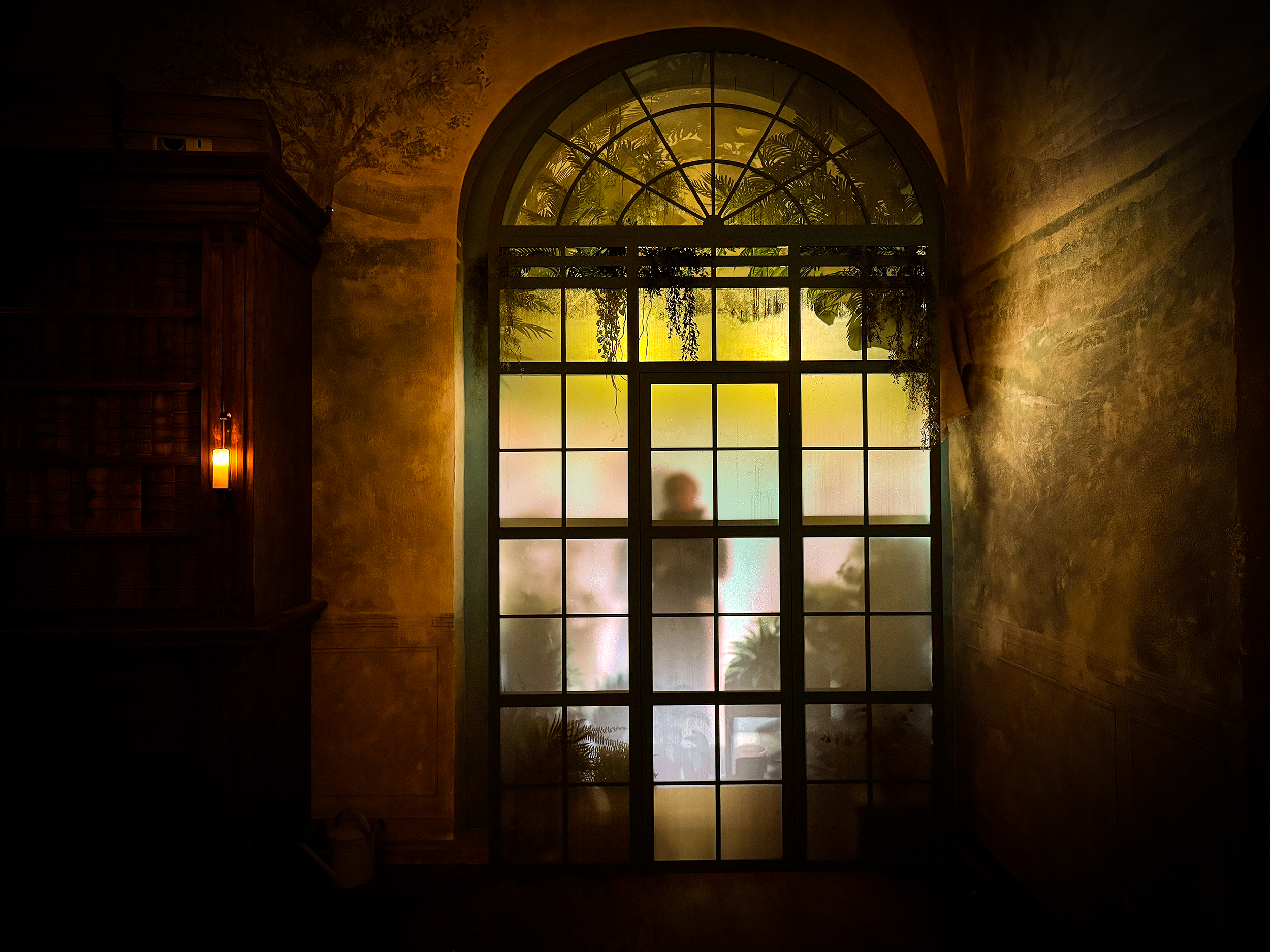
Niels Reinhard: In the preshow, the guide introduces the story of Electress Anna. Woodwork in the wardrobe magically comes to life and helps set the scene. Moments later the silhouette of Anna appears in the conservatory and speaks directly to the group about her skills with herbs and plants. She provides a challenge to the group: help her create an elixir of life, or aquavit.
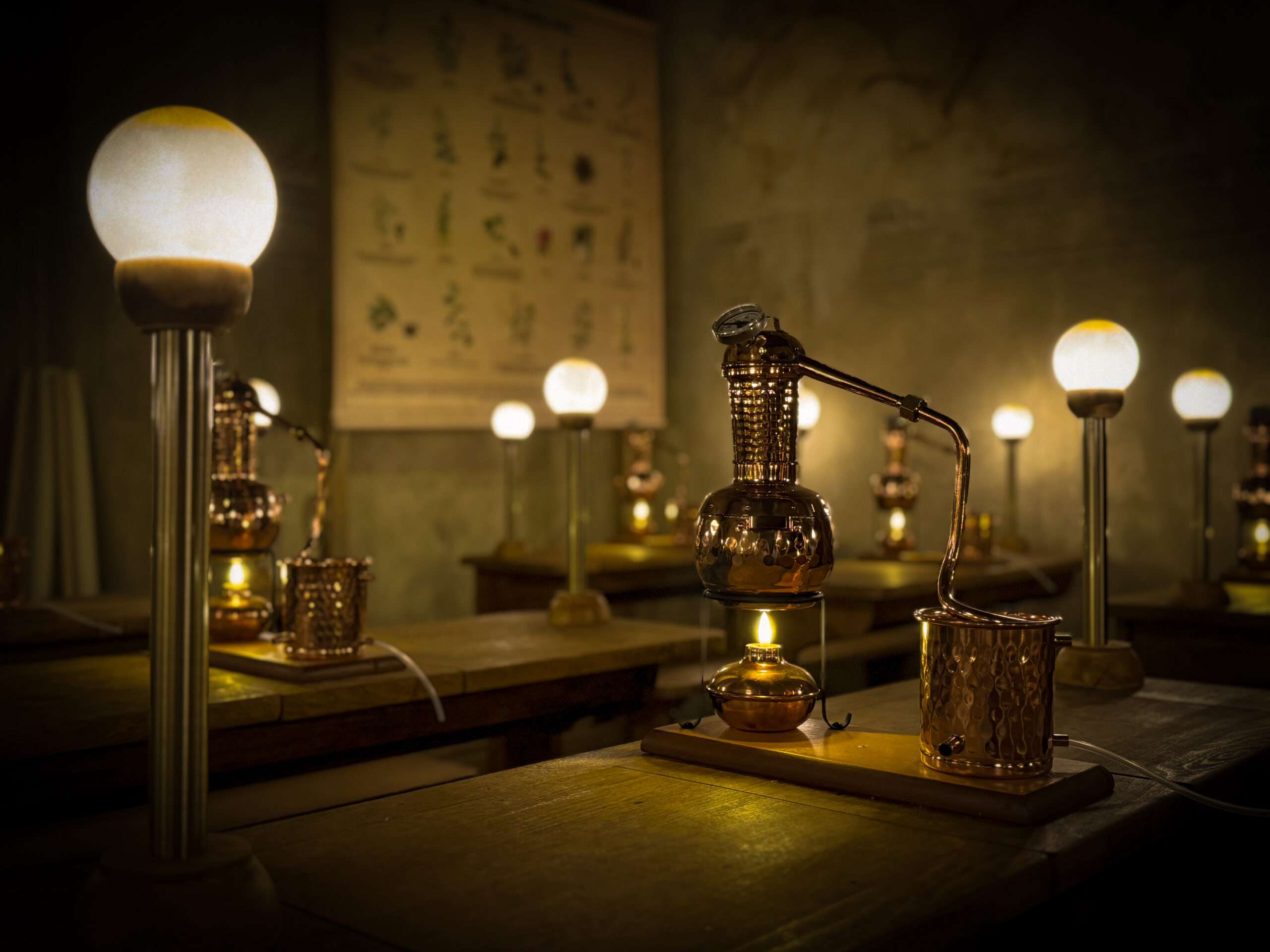
Once inside the classroom, guests decode a secret recipe, identify ingredients through the use of smell, prepare the mixture with a mortar and pestle, and finally assemble and use a small distillation apparatus at each table.
But there’s one key ingredient missing and the group must retrieve shimmering vials of “moonlight water” from the basement and add it to their potion to complete the effect. Achieving success, each guest gets to keep a small container of their elixir as they leave.
What happens in the Augustus version?.
Niels Reinhard: In this preshow, portraits of Augustus and Agricola begin talking to one another about Augustus’ skills with mining. At one point the wardrobe opens to reveal an infinite mine shaft illusion.
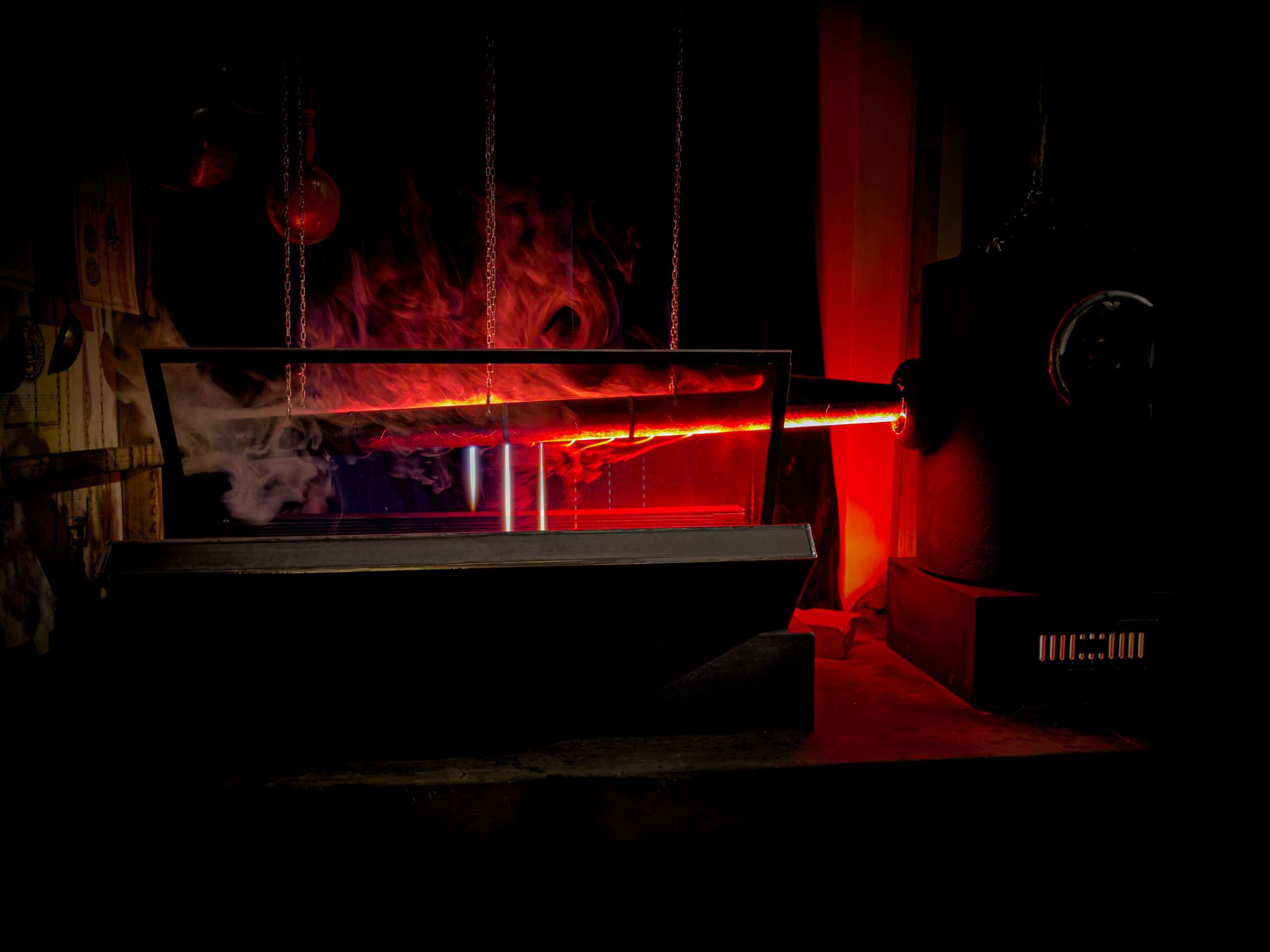
Back in the classroom, guests crack open a small rock to find ore. The guide collects it and loads it into the oven for melting. Guests must determine the correct wood to fire the oven and retrieve it from the basement. The guide then carries a pot of “molten silver” across the room and pours it into a casting machine. Guests see the liquid metal flow into the molds and then the guide retrieves the silver coins and distributes them among the guests to keep.
How did historical accuracy shape the design?
Chris Lattner: Prior to this project, we did not have deep knowledge of Anna and Augustus, and there is not a huge amount written about them. We had to research how they might have spoken, how they would react if 24 people arrived in their castle, and how to tie a learning objective to these historic characters.
We also had to learn about mining and pharmacy processes. In a way, our learning journey became the guest journey. We wanted guests to leave with the kinds of insights we developed ourselves while creating the project.
Once we started making decisions, we had a team of historians that reviewed everything. Frequently, the historians would see early drawings and say, “No, that’s from the wrong period,” or “That didn’t exist.” For example, the inclusion of the conservatory became a debate as they were not really in use at that time in Germany.
Chris Lange: We were able to convince the historians that it was worthwhile keeping the conservatory because it really helped to tell the story. Conservatories existed in Italy in that period and Anna had connections to Italy, so it wasn’t too much of a stretch. Many times in projects like these it’s about finding the right balance.
Niels Reinhard: As another example, we also had to balance what audiences visually expect from the Renaissance period. Many people think of Italian Renaissance cues, but not much is recognized from the German Renaissance. We needed visual storytelling that felt right immediately, without requiring heavy explanation, so we did take a few liberties with style in order to convey the period and mood intuitively.
What technology are you using in the show?
Chris Lattner: The core show control runs on a system called COGS, originally built for escape rooms, and now used in large immersive experiences. We enhanced it for our needs, particularly for the added levels of media and audio in the experience.
A lot of the physical effects are custom built. Every school desk is essentially a prototype device: each one has sound, lighting cues and an internal mechanism that can dispense liquid. We even created custom “candle” lighting fixtures to reflect how light would have been created in the period.
Niels Reinhard: One of the most convincing elements is the coin-casting machine. We couldn’t use actual liquid metal to create coins, so we had to design a special illusion. We created a protective “glass” surface that also becomes the reflective plane for a Pepper’s Ghost image. Guests can stand very close, and it looks like real liquid metal falling from the tube into the molds below. Of course, timing, sound and smoke cues complete the illusion.
Chris Lattner: I also must mention the projection of Anna in the conservatory. It’s a mixture of projected plants and physical plants, and Anna appears quite realistic. To accomplish it, we studied what happens when someone moves behind frosted glass. Most silhouette effects are too crisp, so we created a more realistic blur level, including layers of shadows from multiple light sources. The result is that even when you know it’s a projection, it still feels real.
Have you had any feedback on the experience?
Chris Lattner: The client is very happy with the experience and has interest in a third story, potentially about witches and witchcraft, which will likely take place in a new space.
Chris Lange: The only “problem” they have now is capacity. They can only do a limited number of sessions per day and demand has grown. This is a good problem to have, of course. Because it means you’ve successfully created a new benchmark for what can happen when you combine education, storytelling and the themed entertainment toolkit in a beautiful, historical real-world location. •

