
BACHO FOUNDER NIKOLAI TOLSTYKH ON HOW CUSTOM-BUILT THEMED ZONES AS A FORM OF PLACEMAKING CREATE LONG-TERM GUEST VALUE FOR THEME PARKS, AMUSEMENT PARKS, MUNICIPAL PARKS, RESORTS, PROMENADES, AND MIXED-USE PUBLIC DESTINATIONS.
interview by Martin Palicki
Bacho initially specialized in creating durable all-season topiary sculptures and landscape elements before expanding into custom-built themed park environments. In other words, they are designing spaces that do more than merely decorate a site. Custom-built themed environments shape how people move through a space, spend time there, and remember it afterward. For theme parks, amusement parks, municipal parks, resorts, promenades, and mixed-use public destinations, these environments can become long-term assets rather than short-term visual features.
We asked Bacho founder Nikolai Tolstykh about how he approaches this type of custom development – from long-term project planning, concept and design work to fabrication and installation.
What value do custom-built themed zones create versus standalone decorative elements?
A standalone object can catch the eye. But it usually does not change how people experience the whole place. A well-themed park zone can. It shapes the route, creates places where people stop, take photos, spend time, and remember the visit later. It gives the site more than a visual accent, it gives it a stronger identity.
We saw that clearly in Aiva Park, a roughly 1,200-square-meter themed park space within a larger existing amusement park in Moscow that opened in 2020. What worked there was not one object, but the environment as a whole: the paths, the atmosphere, the family focus, and the way one visual scene led into another. The project received very positive visitor feedback and repeatedly appeared among recommended places to visit. That told us something important: people respond not only to individual pieces, but to the feeling of a complete park environment.
What does Bacho provide to a client, and what does the process of working with your team typically look like?
We are often perceived first as a manufacturer, and of course production is a big part of what we do. But in projects like this, manufacturing is only one piece of the work.
Very often, the first thing a client wants to discuss is the sculptural elements. But the real conversation needs to be about the place itself: who it is for, how people move through it, what kind of atmosphere it needs, and how it should function over time. From there we move into concept development, design adaptation, engineering, production, and installation support.
In Aiva Park, for example, we handled the project turnkey: concept, spatial design, production of the sculptural pieces, implementation, and launch preparation.
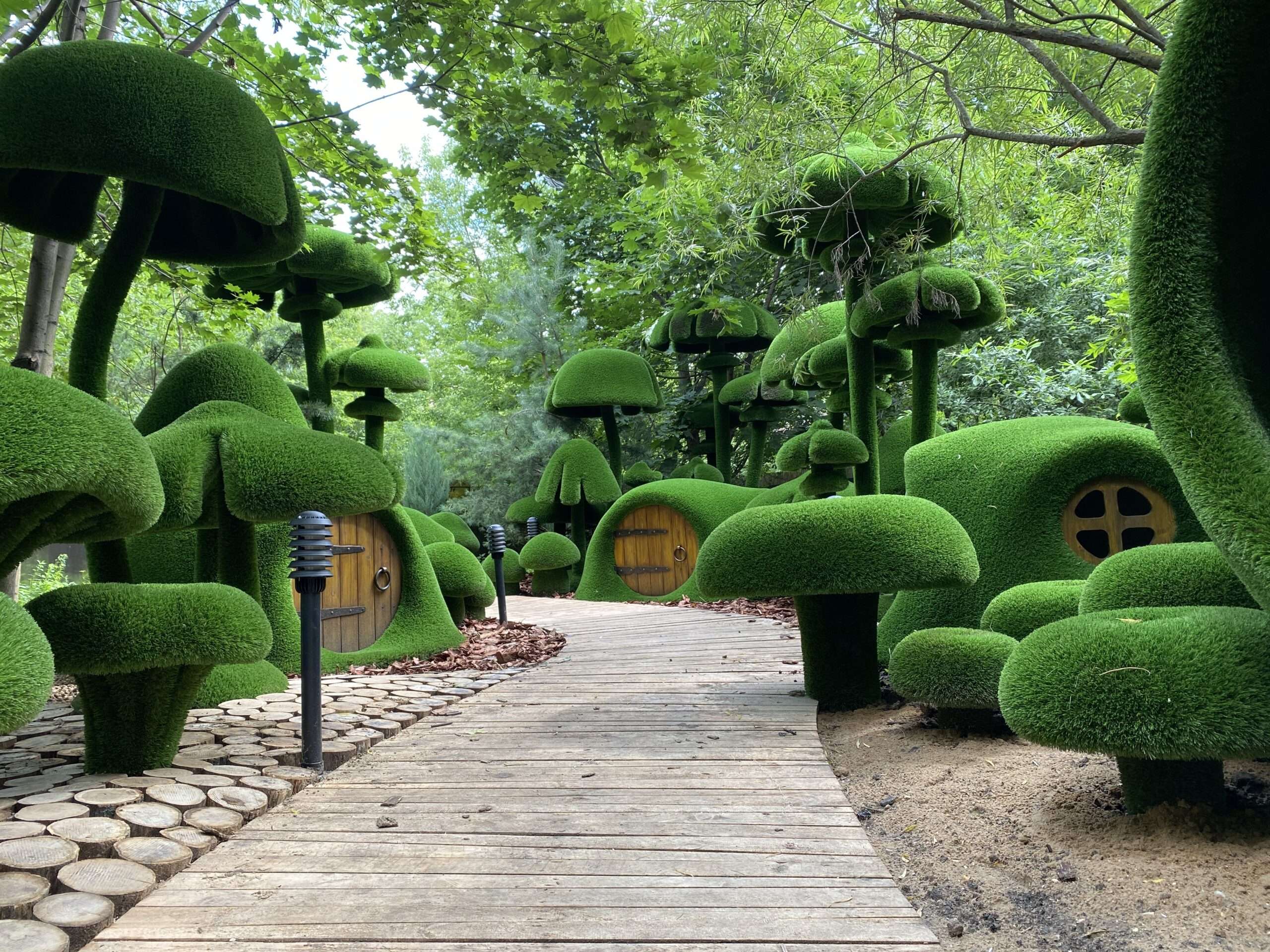
One interesting element was the entrance area. We created several versions and test-marketed them, asking people which one they liked visually. We also wanted to find out which one felt most intriguing. Was the park idea clear? Did it make people want to enter? The version we ultimately built was the one that got the strongest response across all these questions. That matters because the result is usually stronger when design decisions are tested against real human reaction, not just internal opinion.
Why are more parks and public destinations investing in permanent physical environments alongside temporary or seasonal activations?
Temporary formats are good at creating attention, but not always good at creating attachment. A seasonal event, a light show, or a temporary activation can absolutely work. But it works better when the place already has character. A permanent physical environment gives that character. It works in both day and night. It is there between campaigns. It gives people something stable to return to.
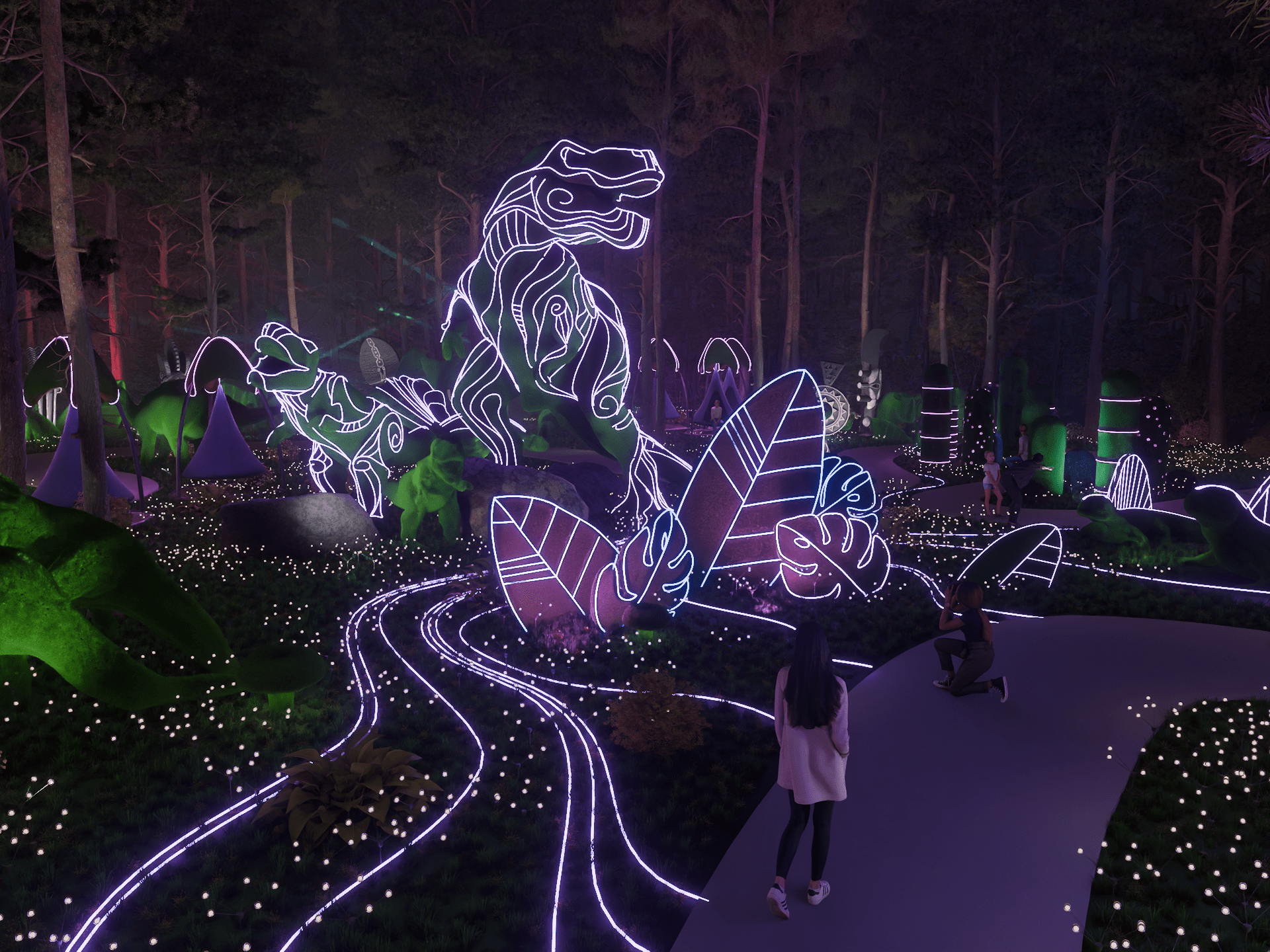
We think of it as the difference between a moment and a setting. The moment may bring people in, but the setting is what makes the destination feel real. Lumia is a good example of how we think about that today. Lumia is a concept we created and plan to open in Vietnam next year. It is designed as one physical environment with two different operating modes. By day, visitors enjoy the spatial composition, themed zones, sculptural focal points, rest areas, and the overall walking route. At night, the same route is restructured through layered lighting and sound, which shifts the emotional tone of the space without changing the underlying environment.
In a sense this permanent environment functions as a temporary activation in that it encourages people to return back to the same space again for a different experience.
What makes a themed zone successful from both a guest-experience and client perspective?
For the guest, the intent must feel clear. People should quickly understand the mood of the space, where to go, where to pause, and what makes the place memorable.
For the client, the test is more practical. Does the zone still work after the opening excitement is gone? Is it safe? Is it durable? Is it manageable over time? Those questions matter even more in outdoor projects, especially when the environment is subject to extreme weather, constant public use, and year-round exposure. In our park projects, we design not only for visual impact, but also for constant public interaction and long-term outdoor use. That means durability, safety, and maintenance are built into the concept from the start.
That is why success is never only visual. The best zones are the ones that create a strong impression and still hold up in real conditions. If a place looks great on day one but becomes difficult to operate after that, it was not created properly in the first place.
What are the most common mistakes clients make when trying to create themed zones or visual attractions?
The most common mistake is thinking in objects instead of thinking in space. A client may focus on a few individual pieces and expect them to create a strong result by themselves. Sometimes they do look good on paper. But once they are placed on site, it becomes obvious that there is no real route, no rhythm, no reason for the visitor to move naturally through the space.
Another common issue is underestimating operations. A concept may look impressive in renderings, but if you do not think early enough about materials, maintenance, climate, and public use, the visual idea starts losing strength soon after it is built.
For us, the first question is never “What objects should go here?” It is “What should this place feel like, and how should people move through it?” That usually leads to much better decisions.
How do you balance creative ambition with budget, durability, and long-term maintenance?
By being honest very early in the process. Not every beautiful idea should be built exactly as it first appears in a sketch.
Sometimes one part of a zone carries the emotional impact, while the rest needs to be quieter, tougher, and easier to maintain. That is not a compromise in a negative sense – it is part of making the concept work in real life.
For us, durability is not an abstract point. Our structures are designed for long-term outdoor use in conditions ranging from -58°F to +122°F, and their service life can exceed 10 years. So when we talk about balancing creativity with budget and maintenance, we are really talking about making sure the original idea still works after years of use and weather.
As Bacho’s U.S. model evolves, what should potential partners understand about how the company works in this market today?
The way we work in the U.S. is evolving. At an earlier stage, we worked with finished inventory in the U.S. That is now being phased out. The direction we are moving toward is much more project-based: custom-built zones, site-specific work, and longer-term collaboration around a particular destination.
That does not mean individual custom pieces are no longer possible. In some cases, they still are. But we increasingly see our role in the U.S. not as a stock supplier, but as a company that comes in to help shape a place around a specific concept and a specific site.
Beyond theme and amusement parks, where else do custom-built park zones make sense today?
They are ideal for many more places than people first assume. Yes, theme parks and amusement parks are the obvious category. But the same logic can work in municipal parks, resorts, promenades, mixed-use leisure developments, and other public destinations. The need is often the same: create stronger identity, make the space more memorable, and give visitors more reason to stay.
What changes is the tone. In a resort, the emphasis may be more atmospheric. In a municipal park, it may be about long-term public use and visual character. In a promenade, it may be about adding a destination quality without overwhelming the site. But the principle is similar across all of them. A custom-built themed zone can help turn a space from “pleasant” into “worth visiting again and again.” •

