Home Blog Page 4

Expo 2027 Belgrade: Can a World’s Fair survive the political defeat of its biggest champion?

0

Serbia is heading into Expo 2027 with a political landscape very different from the one that secured the event. With less than seven months before opening day, the October 25 parliamentary elections have reshaped the country’s leadership and raised unavoidable questions about continuity.

Vučić was not just a supporter – he was the Expo’s political engine. Since Serbia won the bid in 2023, he positioned Expo 2027 as the centerpiece of a national development push, tying it to infrastructure, investment, and Serbia’s international branding.

A Transition Arriving at the Most Delicate Phase

More than 140 countries are participating, and most have already committed resources, contractors, and pavilion designs. Construction is underway across the site. With opening day locked for May 15, 2027, the timeline is no longer flexible.

The new government’s first test is simple: continuity.

  • Will it honor existing Expo commitments?
  • Will funding and construction proceed without interruption?
  • Will the organizing company retain its mandate and momentum?

Scrutiny vs. Schedule

The incoming government campaigned heavily on accountability and anti‑corruption. It is reasonable to expect a review of Expo‑related contracts, procurement decisions, and spending. That scrutiny may be politically necessary, but it carries operational risk. Investigations that slow payments or halt tenders could disrupt construction schedules and create uncertainty for participating countries.

For national pavilions, politics matter far less than readiness. Countries will judge Serbia not by its election results but by whether their pavilion spaces are delivered on time and to specification.

The BIE’s Role

The Bureau International des Expositions has navigated political transitions before, but rarely one this close to opening day. Its role now is to reinforce continuity, maintain confidence among participants, and ensure that Serbia’s commitments remain intact. The BIE’s presence and pressure will matter.

The Real Test

Expo 2027 was designed to showcase Serbia’s ambition, creativity, and economic trajectory. It may now also become a test of Serbia’s institutional resilience and its ability to manage a political transition while delivering a complex, internationally scrutinized project on schedule.

If Serbia maintains momentum, Expo 2027 will open as planned and the political shift will be a footnote. If not, the consequences will be visible to the entire world.

Filming wraps on upcoming immersive cinema production for Heritage Great Britain

Filming has wrapped on A Keeper’s Tale, a new immersive cinema production for Heritage Great Britain, set to open at Land’s End and The Needles in 2027.

Developed with CONDUCTR and Simworx, Land’s End: A Keeper’s Tale and The Needles: A Keeper’s Tale will combine live action, CG and illustration with 4D effects. Created for visitors of all ages, each experience will explore the history, characters, myths and legends of its destination, allowing audiences to discover these stories in the heart of the places that inspired them.

The film centers on a lighthouse keeper, portrayed by Nick Cornwall (How to Train Your Dragon, 2025), and is now in post-production.

Allan Leech, CEO of Heritage GB, said: “What excites me about this project is the mix of young British talent creating a wholly British production about two extraordinary British landmarks. Land’s End and The Needles have so many stories to tell, and this gives us a wonderful opportunity to share them with new visitors and people who have been coming for years.

“It continues our partnership with CONDUCTR and Simworx, bringing audiences into the myths, legends and history of these destinations. The combination of live action, CG and illustration is outstanding. The teams have gone above and beyond to bring this film to life, and I can’t wait for our guests to experience it in 2027.”

Production took place across two filming blocks. For the first, CONDUCTR recreated the interior of a Cornish lighthouse at its Manchester studio. The set incorporated hand-drawn illustrations depicting the keeper’s stories, with removable wall panels allowing the crew to compose camera angles and close-ups specifically for stereoscopic 3D.

The second block included a studio recreation of the top of the lighthouse, followed by night filming in the Peak District with extras and musicians. The shoot involved animals, practical rain and wind effects, and sequences involving fire.

The production team used in-house set design, art and media resources alongside stereoscopic production workflows to manage costs, addressing a challenge for heritage operators considering immersive cinema.

Simon Mulvaney, Live Action Film Director at CONDUCTR, said: “Productions of this scale have traditionally come with budgets that can put them out of reach for heritage attractions. We’ve had to think carefully about how we make every element, using innovative workflows and our in-house resources to make stereoscopic 3D content more affordable.

“The film brings together live action, CG and illustration, and each needs to work as part of the same story. Having our set designers, creatives, project managers and art and media teams working closely together has been a huge part of making that possible. That support has continued through the shoot, from building the lighthouse to managing on-location logistics.

“We’re now in the edit, bringing those elements together into a film designed from the outset for an immersive cinema experience with 4D effects.”

The project continues Heritage GB’s relationship with Simworx, which supplied the existing 4D cinemas at both destinations.

Terry Monkton, CEO of Simworx, said: “Our 4D cinemas at Land’s End and The Needles have already proved hugely popular with visitors. It’s a pleasure to continue our partnership with Heritage GB and work alongside CONDUCTR on a new experience that will give guests a compelling reason to return again to these amazing iconic U.K. destinations.”

acesso Intelligence introduces library of over 100 Decision Skills, powered by its AI platform

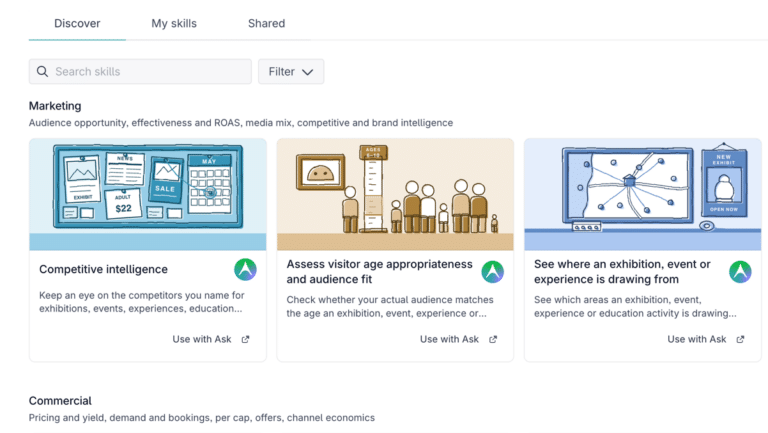
accesso Technology Group, a global technology partner to leisure, attractions, entertainment and cultural markets, announced the introduction of a library of more than 100 Decision Skills within accesso Intelligence, its AI-powered decision intelligence platform for visitor attractions.

Decision Skills packages accesso’s 25 years of experience in the attractions industry, together with the decade of data and AI expertise from its Dexibit acquisition, into reusable approaches to real industry tasks. They help operators discover what AI can do, get started without having to design the approach themselves, and apply consistent methods across their teams.

“A blank prompt line doesn’t tell you what’s possible,” said Angie Judge, Chief Data and Intelligence Officer at accesso. “It’s the cold start problem: you don’t always know what AI could help you do, let alone how to ask it. Visitor attraction teams know their businesses incredibly well, but they shouldn’t have to become prompt engineers to get work done. Decision Skills package our industry experience and AI expertise into reusable ways of tackling real business problems, so teams can get started more easily and work more consistently, regardless of who’s asking.”

Ready to use expertise

The Decision Skills library spans leadership, finance, commercial performance, marketing, membership, operations, guest experience, retail, food and beverage, risk management and analytics.

Examples of skills include variance analysis, profit protection, menu design, competitive intelligence and identifying annual pass holders at risk of churn. Operators can access these skills in three ways:

  • Ask a question. accesso Intelligence can identify and apply a relevant Decision Skill automatically.
  • Explore the library. Teams can browse more than 100 ready-made skills, select one that addresses a particular business question, problem or goal and run it directly.
  • Create and share their own. Organizations can turn their own methods and ways of working into reusable skills and share them across their team.

The library will continue to expand as accesso develops, evaluates and refines skills in response to evolving industry practices, AI capabilities and operational needs.

“We want AI to become part of a venue’s operating fabric, supporting the people who make decisions every day,” Judge said. “Decision Skills give teams a repeatable way to put industry expertise to work in their own operation, building it into how they plan, report, and act.”

Advancing AI from insight to action

The introduction of Decision Skills builds on accesso’s ongoing expansion of accesso Intelligence, launched in March 2026 following the acquisition of Dexibit.

In September, accesso introduced agentic AI capabilities that allow operators to turn conversations into recurring automated workflows for monitoring performance, forecasting, reporting and other analytical tasks. Decision Skills extend those capabilities with a rapidly growing library of industry-specific methods that can be applied through conversation or incorporated into automated work.

Together, these capabilities support accesso’s broader approach to decision intelligence: connecting information across an attraction, applying relevant industry expertise and helping teams move from understanding what is happening to deciding what to do next and acting on it.

The Decision Skills library is now available within accesso Intelligence.

Maurer Rides develops new transportation system based on Spike technology

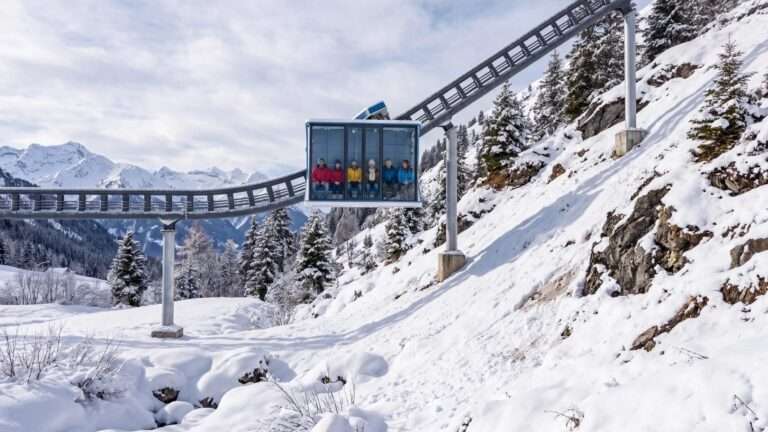
Maurer Rides introduced the Spike PM360, an electrically powered passenger transport system that combines mobility with entertainment. Its pivot-mounted cabin remains horizontally aligned even on vertical and overhead track sections, keeping passengers in an upright seated position throughout the ride. This opens up new design possibilities for transport connections and standalone attractions – from resort shuttles to rideable landmarks.

Upright seating position with flexible track layouts

The PM360 is a rail-guided passenger transport system featuring a cabin with a 360° pivoting suspension that compensates for any track inclination. This allows horizontal, steep, vertical and overhead track sections to be combined while the cabin remains level.

Proven Spike technology

The PM360 is powered by Maurer Rides’ proven Spike rack-and-pinion technology, ensuring positive transmission of drive force at any position, regardless of gradient, weather conditions or load. This enables steep gradients and vertical sections.

As each vehicle is equipped with its own drive and braking system, no additional drive or braking components are required along the track, simplifying infrastructure and maintenance. The electric drive operates quietly and without local emissions while recovering energy during braking.

“Transportainment” combines mobility and entertainment

Maurer Rides uses the term Transportainment to describe the combination of passenger transportation and entertainment. Drawing on its experience in roller coaster engineering, the company applies its expertise to new transport applications: the journey is designed not only to connect destinations but also to become an experience in its own right.

From resort shuttle to rideable landmark

Potential applications include shuttle connections within resorts and experience-oriented routes in urban districts. Beyond transportation, the PM360 can also be designed as a standalone attraction.

Its flexible track layout allows for shapes beyond conventional circles and ovals – such as a closed, heart-shaped track or a dramatic spearhead-like structure projecting into the sky. In this way, the track itself can become an architectural landmark.

“Operators often face the challenge of connecting areas at different elevations, with limited space and high architectural design requirements,” says Jörg Beutler, CEO, Maurer Rides GmbH. “With the Spike PM360, we open up new possibilities: the track can even run vertically while passengers remain seated upright. This allows a transport connection to become a standalone attraction in its own right.”

Candy Land store, based on Hasbro’s board game, to open in NYC

Just in time for the holiday shopping season, Candy Land, the globally-beloved childhood game first introduced in 1949, opens as an immersive New York City experience sure to delight children of all ages, as well as adults who remain young-at-heart. Developed by Event Network, the experiential retail partner for cultural attractions and iconic destinations in North America, under license from Hasbro, Candy Land NYC invites guests to shop, play and fill their bags with the sweetest treats.

“We’re incredibly excited to bring the ultimate candy destination to New York City and invite guests to step into the colorful, imaginative world of Candy Land,” said Larry Gilbert, CEO of Event Network. “For generations, Candy Land has sparked joy, wonder and nostalgia. Together with Hasbro, we’ve created the first Candy Land store in the United States—an immersive experience that celebrates the beloved game, delights longtime fans, and introduces new audiences to its enduring magic.”

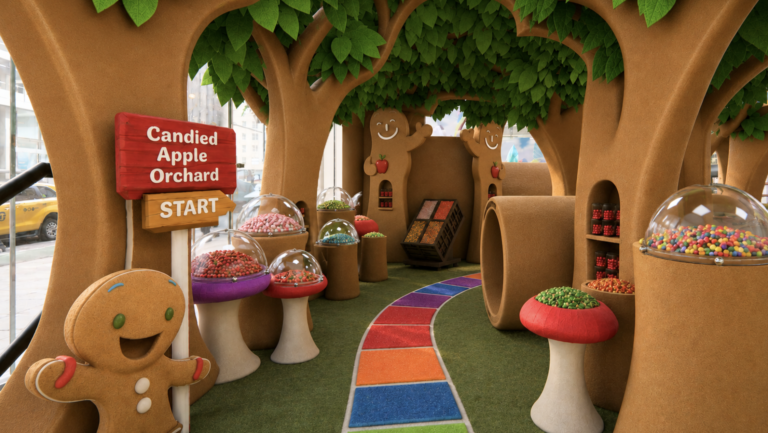
Opening this November adjacent to the New York Hilton Midtown at 1335 Avenue of the Americas (6th Avenue at 54th Street), Candy Land NYC turns the beloved board game into a real-life candy wonderland, bursting with color and filled with treats.  Each guest becomes a player on the board, following the iconic game path, through the store with a sweet surprise at every stop.

Along the way, visitors explore candy-filled realms including the Candied Apple Orchard, Gummy Mountains, Chocolate Caves, Lollipop Forest, Ice Cream Beach, before reaching the grand finale, the Candy Castle. Detailed with graham cracker textures, swirled ice cream turrets and flanked by oversized lollipops, the castle is also where guests check out, making it a sweet finish line.

Throughout the journey, guests will experience delightful surprises while engaging the senses as they build a personalized selection of sweets and treats. The experience offers a wide selection of nostalgic candies, along with beverages and a variety of toys, souvenirs, collectables, and apparel all themed to the Candy Land realms.

“At Hasbro, we’re always looking for new ways for fans to experience the brands they love, and Candy Land NYC is a great example of what that can look like,” said Matt Proulx, Senior Vice President, Global Experiences, Partnerships and Music at Hasbro. “Event Network has been an incredible partner in bringing the game to life with real creativity and care, and we can’t wait for families to walk the path, reach the castle and leave with a bag full of treats.”

First permanent U.S. teamLab museum to be located in Southern California’s OCVIBE

teamLab, the internationally celebrated art collective known for creating immersive environments that merge the boundaries between art, technology, nature, and guest experience, announced plans to open its first permanent museum in the United States at OCVIBE, the 100-acre sports, entertainment, and arts district currently under construction in Southern California. Spanning approximately 110,000 square feet, the purpose-built museum will be designed around teamLab’s immersive art experience, with architecture by smith-clementi.

“It is with great joy that we announce the opening of teamLab’s first major museum in North America, located at OCVIBE in Anaheim,” said Toshiyuki Inoko, Founder of teamLab. “For teamLab, through art, we seek to explore what perception is and what existence is. The artworks change with the presence of people, making them an integral part of the art itself. People immerse themselves with their entire bodies, transcending the boundaries between themselves, the artworks, and the world around them, becoming part of a borderless continuity.”

“At OCVIBE, where people gather and where sports, music, and culture come together, visitors share the same space, perceive the world anew through their bodies, and share that experience with others. Here, we aim to bring to life this very experience that we continuously strive to create through our art,” added Inoko.

The teamLab museum will be an integral part of OCVIBE’s master plan, joining a deliberately curated mix of entertainment, dining, hospitality, and public spaces. Rather than treating art as an amenity, OCVIBE is making it central to the district’s experience, woven into its architecture, landscape, and public realm, which has been designed to encourage continual exploration and outdoor walkability.

“From the outset, our vision for OCVIBE has been to create more than a collection of buildings and venues. We’re building a connected, vibrant district where architecture, public spaces, art and entertainment come together to create an experience that is greater than the sum of its parts,” said Dan Young, Executive Director of Development at OCVIBE. “Bringing teamLab to OCVIBE reflects the importance we’ve placed on integrating arts and culture into the district’s master plan. It adds an entirely new dimension to what people can experience here in Anaheim, while helping establish OCVIBE as a cultural destination for California and the U.S.”

At OCVIBE, teamLab will be part of a vibrant, interconnected district that brings together chef-driven dining, live music and entertainment, expansive parks and public spaces, a large outdoor public art gallery, and year-round programming. Rather than visiting a stand-alone exhibition, guests will have opportunities to experience teamLab as part of a full day or extended stay in Anaheim.

“teamLab choosing Anaheim for its first permanent U.S. home is a powerful statement about where our destination is headed,” said Mike Waterman, President & CEO of Visit Anaheim. “Anaheim has always been a place where people come to experience something they can’t find anywhere else, and teamLab will expand our appeal to new audiences from around the world. Experiences like this inspire longer stays, repeat visits, and even greater exploration of everything Anaheim has to offer.”

Designing space for teamLab

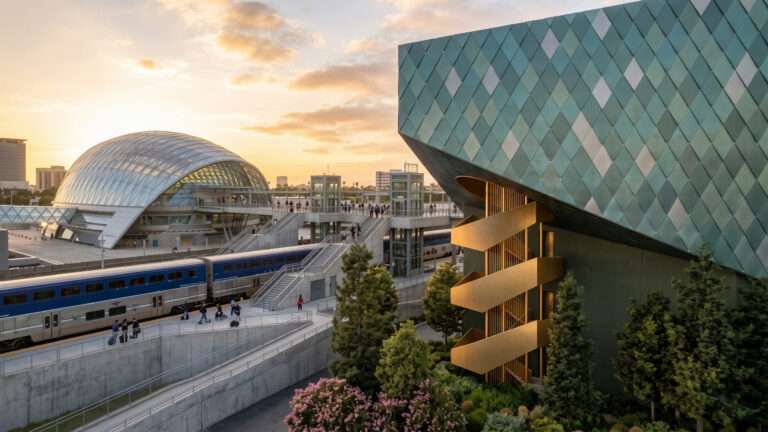
Designed by smith-clementi, OCVIBE’s master planners, the museum is conceived as a distinctive sculptural presence within the district. Anchoring one end of OCVIBE, and very visible from the freeway, the building is designed to reveal itself differently as visitors approach and move around it, whether by car or on foot. With the museum’s immersive galleries requiring a largely windowless environment, smith-clementi approached the exterior as a shimmering cloak enveloping the darkened spaces within. The textured exterior draws on natural forms, with a pattern that evokes scales and movement, while its surface responds to changing sunlight, subtly shifting in color and appearance throughout the day.

The design also creates a deliberate dialogue with the neighboring ARTIC (Anaheim Regional Transportation Intermodal Center) and OCVIBE’s park landscape. Where ARTIC is transparent and illuminated from within, the museum is conceived as its inverse: a solid, colorful presence that comes alive in daylight while allowing ARTIC’s illuminated form to take prominence after dusk. From the park and ARTIC, the museum forms a sculptural backdrop to the landscape, visually extending the park and giving this part of OCVIBE a distinct architectural identity.

“Designing teamLab’s permanent U.S. home let us think about their building as a reflection of their immersive experiences, often depicting the beauty of movement in nature,” said Julie Smith-Clementi of smith-clementi. “There’s a feeling of transformation important to the exterior. While buildings are normally fixed in place, the environment can still be leveraged into the script. This building feels different depending on the direction or pace of your approach. The time of day, or movement of clouds participates in rendering its iridescent cloak, enriching what you think you see. We want the design to leave room for imagination and discovery and, like in nature, to offer something new with each visit.”

LPA is working with smith-clementi as the Architect of Record and is working directly with teamLab on the exhibitions for the OCVIBE museum.

Opening the first phase of OCVIBE in 2027

OCVIBE will welcome its first guests in March 2027 when the 5,000-person capacity concert hall opens, followed by Katella Commons, the 50,000-square-foot chef-driven market hall. Later in the year, The Weave, the district’s commercial office building, and home to co-working operator Kiln, will open along with the first phase of the district’s restaurants, public art program, and public spaces.

PIXERA platform keeps 19 projectors in sync at Czech digital art gallery

The main immersive hall at Signal Space in Prague wraps imagery across its walls and floor from 19 Panasonic 4K laser projectors, driven by Virtuality.one PixelBox media servers running AV Stumpfl‘s PIXERA software. The platform was specified for its 3D mapping and for clustering that keeps all 19 outputs in step as a single canvas. “We recommended PIXERA mainly for its reliability and its 3D mapping,” says David Houžvička, chief technology officer, Virtuality.one. “The clustering is straightforward to configure, so a client can run four outputs from a single system, or build a cluster of render engines that keeps all 19 of our 4K projectors perfectly in sync.”

Signal Space is the largest digital art gallery in the Czech Republic, a 2,500-square-meter (nearly 27,000-square-foot) venue that opened to the public in September 2025 inside Prague’s heritage-protected Old Town Market Hall. It is the year-round successor to Signal Festival, which its founders have run in the city since 2013.

The immersive hall is the largest of its spaces at around 300 square meters and it’s the most technically fixed. Its 19 outputs run at 3,840 by 2,400 at 60 frames per second in 10-bit 4:4:4, which comes to slightly over 175 million pixels across a surface that has to read as one continuous image. What made that surface difficult was not its size.

The Old Town Market Hall was completed in 1896. It’s a cast iron, wood and glass structure built as a working market, and its floor was laid with a deliberate fall so that it could be washed down. It drops around 25 cm from one side to the other. The concrete was also never poured perfectly level, with the result being an area that looks rectangular but is not. Projecting onto it meant mapping a surface that is neither flat nor square, and doing it with ultra-short-throw lenses that introduce barrel distortion of their own.

Calibration began with Panasonic’s camera-based automatic system, using networked cameras permanently mounted on the truss alongside the projectors. That got the walls into position, but it could not finish the job.

“The cameras do not point at the floor. And even if they did, automated calibration is not capable of mapping a floor properly,” says Houžvička. “The floor itself is uneven, because the concrete was never poured perfectly level, which turns what looks like a rectangular area into an irregular rhombus. And we are not only mapping the floor. We need the projection to be pixel-perfect where it meets the walls, so every slight deviation becomes a challenge. On top of that, we are using ultra-short-throw lenses, which introduce barrel distortion. PIXERA’s warping tools are what allowed us to reach a pixel-perfect calibration.”

The join between floor and wall is where a 360-degree room is won or lost. A soft-edge blend between two wall projectors forgives a small misalignment. A hard edge running along the base of a wall does not, because the architecture itself gives the eye a straight line to compare the projection against.

Holding that geometry steady across 19 outputs is a question of how the servers are arranged. PixelBox nodes handle the immersive hall as a PIXERA cluster, with rendering distributed across them and a further node held in reserve, each running an RTX 5000 Ada GPU and a Threadripper 7965WX processor. PIXERA’s support for NotchLC lets that hardware be used efficiently, and the engine processes both 8-bit and 10-bit video directly on the GPU.

Synchronization is then enforced in hardware, with framelock and genlock holding the cluster to a common timing reference.

“Without frame sync, we could never hold absolute synchronization across the cluster, and you would get tearing between the servers,” says Houžvička. “That shows during transitions, particularly on the hard-edge joins between the floor and the walls, or between individual walls. Then, when an event is running and cameras are recording the room, we want the cameras and the video chain fully in sync so there are no artifacts on camera. Beyond both of those, we want to do the job as well as it can be done. It would be easy to assume nobody will notice, but that is not a standard we want to work to.”

The same system carries the audio. PIXERA plays out and routes the surround sound over Dante alongside the video, with processing handled downstream, which was a deliberate decision rather than a convenience.

“It is crucial that the system handling video playback also handles the audio,” says Houžvička. “It simplifies the workflow enormously, as content creators and operators are both working in one piece of software, one pipeline, one workflow. The second reason is synchronization. A separate audio system means more work and introduces potential sync problems between audio tracks, video tracks and cues. And on a live event, nobody has time to configure two separate systems on site. You need to drag your media onto the timeline, run a quick test, and open the doors.”

That matters because the room is not only a gallery. It is used for events, performances and conferences, which means switching between pre-produced immersive content and live inputs, with third-party graphics arriving over SDI as picture-in-picture or over NDI. Houžvička is direct about where the ceiling sits, and it is not in the software. Distributing more than 170 megapixels over NDI while playing 10-bit video and capturing SDI at the same time is the point at which the current GPU and memory configuration is working hard, and a planned upgrade has been deferred on component availability.

Two commercial factors sat alongside the technical case. PIXERA’s software-only licensing allowed Virtuality.one to build media servers specified precisely for the project while meeting a fixed budget. And the pool of people able to operate the system is growing, which matters for a venue that has to staff events.

“Thanks to the training sessions and demos we run in the Czech market, the number of qualified operators keeps growing, and PIXERA is slowly becoming the standard for live events here,” says Houžvička. “That makes staffing an event significantly easier.”

The system has been in service since it was configured in late summer 2025 and has run continuously since, through daily gallery opening hours and live events. It has been shut down once, for a planned week of projector servicing and server maintenance covering mechanical cleaning, component stress testing and an operating system update.

“We have not had a single hardware or software issue all year, and that is with daily operation and live events, so active operator intervention rather than passive playback,” says Houžvička. “The software never froze, never crashed and never stopped responding. Unstable software is the most expensive decision you can make, even when the software is free.”

TEA releases annual attendance report for the attractions industry, sharing insights on 2025 visitation

The attractions industry continues to evolve — and the newly released 2025 TEA Global Experience Index™ provides a complete snapshot of the places guests are visiting around the world.

According to the Index 2025 attendance at the world’s 25 leading theme parks was essentially flat at 245.4 million visits, down 0.2% from 2024. Europe’s four parks in the top 25 added more than 1.1 million visits, while extreme summer weather affected leading parks in South Korea. In Central Florida, the opening of Universal Epic Universe helped lift combined attendance at the region’s leading parks by 4.3%.

The new Index also reveals that waterparks and museums continue to deliver growth. The global top 20 waterparks welcomed 36.3 million visits, up 3.0%. Spain’s Siam Park grew 26.0%, while Hot Beach and Beach Park reinforced Latin America’s strong presence. The top 20 museums reached 161.4 million visits, a 5.4% increase. Sixteen institutions grew, led by Beijing’s Palace Museum at 19.0 million visits. The Musée du Louvre remained the most visited museum outside China.

Beyond attendance, the Index highlights the broader themed experience economy. Anchor attractions are increasingly connected with hotels, dining, retail, special events, immersive entertainment, and cruise experiences. These destination-wide strategies are continuing to add and open opportunities in emerging markets as well as help established operators renew mature destinations.

The 2025 TEA Global Experience Index™, presented in partnership with Storyland Studios is now available on TEA’s website. This year’s edition features in-depth examinations of attendance around the world by region – Africa, the Americas, Asia-Pacific, Europe, and the Middle East – and includes a special section on the cruise industry. Since 2006, TEA has published the annual Index as a free resource for TEA members and the global themed entertainment industry. Now in its 20th annual edition, the Index is made possible by the collaborative work from research partners Entertainment + Culture Advisors (ECA) and The Park Database (TPDB), design partner, Moongate Design Studio, and editorial partner InPark Magazine.

The 2025 Index and previous Indexes can be found here.

ETC supplies new Prodigy Balance system to Henry Ford Museum theater

In the heart of Dearborn, Michigan, lies the Henry Ford Academy, a public charter school that blends STEM education with art, design, and hands-on career experiences. Uniquely located within Henry Ford Museum of American Innovation, the school offers students an immersive learning environment surrounded by history and progress. The museum spans 12 acres of exhibition space, showcasing achievements in automobiles, trains, planes, and manufacturing. The complex also features the Anderson Theater, a shared space for both the museum and the academy.

Jon Weaver, Technical Director at Fantasee Integration, shares how the new award-winning Prodigy Balance rigging system found a home in this space. “The previous wire guide system was from the late ‘70s and was just placed on top of the original system installed in the ‘30s,” says Weaver. 

After a new system quote came in much higher than anticipated, both Weaver and the theater were left scratching their heads on how to move forward. That’s when they turned to ETC. Weaver explained the plan for the space and assumed ETC would propose a dead hung pipe grid and motorized electrics.  “This had become the norm. People weren’t doing counterweight safely; we saw so many high schools just ripping (their systems) out completely.”

After connecting with Matt Mullen, Rigging Regional Sales Manager, and Rebecca Knipfer, Rigging Product Manager, Weaver learned that the team had the ideal solution for the theater’s rigging challenge. 

Prodigy Balance features an integrated brake and overspeed sensor that automatically engages if the system detects the arbor moving faster than the preset speed. “After seeing the drop test and all of the other features, I was left speechless,” Weaver recounted. “Twenty-five years of seeing all the coolest stuff in the industry, and it’s very rare that I’m left speechless.” 

“The install went very well. ETC spends so much time making sure that the layman can install this stuff, and it’s the same kind of quality that we’ve come to expect,” Weaver notes. Prodigy Balance’s standard parts and modular design make both installation in a new space or a retrofit straightforward, helping to minimize cost and time. “I had an IA rigger on call for the installation, and three or four times he came up to comment how nice [Prodigy Balance] was,” Weaver shared. 

Prodigy Balance’s versatility as a manual rigging system creates a safe environment for staff and students to learn the principles and craft of manual counterweight rigging. Fully eliminating the need for traditional weight loading practices, Balance keeps everything at stage level, enhancing safety and efficiency.

Another key safety feature is its electronically locking line sets. Weaver states, “The idea of being able to digitally lock all of the line sets except for the ones they are supposed to use – without using 30 padlocks – was really an advantageous thing because of how many different people we have in the space.”

Integrated work lights positioned to the floor and rope remove the need for additional backstage rail lighting. The intensity and color of these LED work lights can be easily controlled through a QuickTouch Preset, Foundation Controller, or Paradigm system. During installation, Weaver noted students and faculty stopped by to see the progress, “As soon as the work lights lit up and the ropes turned blue, everyone was very excited.”

In addition to the state-of-the-art Prodigy Balance system, the Henry Ford Museum of American Innovation also hosts seven Paradigm systems, a Mosaic system, and an Echo system.

ISE announces Mo Gawdat as keynote speaker for 2027; FREE registration to ISE 2027 for IPM readers

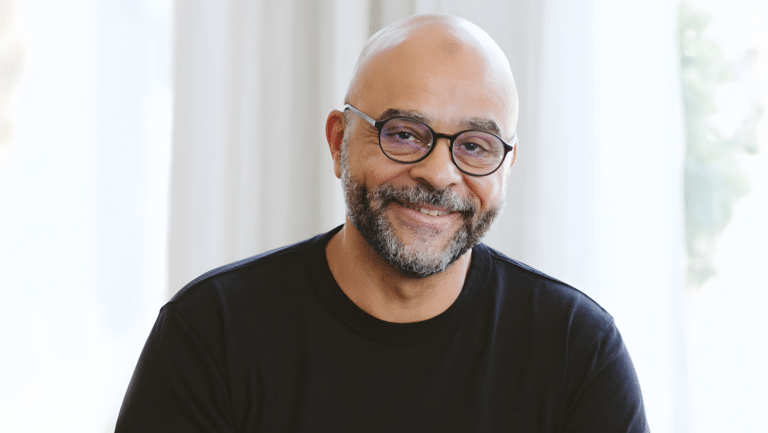
Integrated Systems Europe (ISE) has announced Mo Gawdat, four-time international bestselling author and business leader as the Business Keynote speaker for ISE 2027. Returning to Fira de Barcelona, Gran Via, February 2-5, 2027, the keynote will give attendees the opportunity to step back from individual solutions and enrich their ISE experience to consider the bigger picture: where AI is taking us and the role people must play in shaping what comes next.

InPark readers can join the global pioneers and industry leaders uniting AV, technology and creativity at ISE 2027 with FREE registration! Use the code inparkmag when registering!

Gawdat will take to the stage in CC4 on Tuesday, February 2 under the title “When Human and Artificial Intelligence Unite: Building a Future Worth Living In.” The keynote session will evaluate the current impact of AI whilst raising bigger questions surrounding the speed of change, responsibility and human behavior, and address how organizations should respond.

With a career spanning over three decades, Gawdat brings a wealth of experience from prestige companies such as IBM, Microsoft and Google, as well as co-founding more than 30 businesses throughout his career. He is also a four-time international bestselling author, with a core focus on happiness, artificial intelligence and the future of humanity. His first published title, the bestselling Solve for Happy: Engineer Your Path to Joy, developed an algorithm that models how our minds encounter the world and process joy and sadness. It also sparked his global mission to make one billion people happy.

Following the publication of his second book, Scary Smart: The Future of AI and How You Can Save Our World, Gawdat established himself as one of the world’s leading voices on AI. This expertise extends to how AI will continue to grow and what businesses could be doing differently to effectively incorporate AI into their operations. This knowledge is implemented in his work, including his latest initiative Emma.love, an ethical AI coaching platform that helps to cultivate meaningful relationships, platonically, romantically and professionally; and also his forthcoming book Alive: A Human’s Guide to Living in the World of AI.

“Mo Gawdat brings a rare combination of business leadership, technological insight and human perspective to the conversation around AI. As industries and disciplines surrounding the AV world become increasingly interconnected, his keynote will challenge the ISE community to look beyond the hype and consider how AI can be applied responsibly to unlock new ideas, experiences and opportunities”, comments Mike Blackman, Managing Director of Integrated Systems Events. “His message captures the spirit of ‘When Worlds Unite,’ and we look forward to welcoming him to the stage at ISE 2027.”

ISE’s 2027 theme “When Worlds Unite” reflects the growing convergence of the worlds of AV, digital content, immersive experiences, smart buildings and live events. Gawdat’s keynote brings this theme to life as he offers invaluable expertise in this area, especially with how AI could be used to help different technology worlds continue to unite, without losing the human connection.