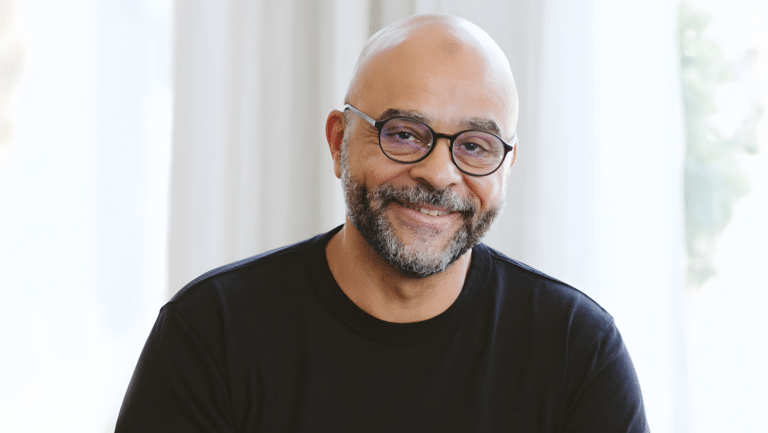
Integrated Systems Europe (ISE) has announced Mo Gawdat, four-time international bestselling author and business leader as the Business Keynote speaker for ISE 2027. Returning to Fira de Barcelona, Gran Via, February 2-5, 2027, the keynote will give attendees the opportunity to step back from individual solutions and enrich their ISE experience to consider the bigger picture: where AI is taking us and the role people must play in shaping what comes next.
InPark readers can join the global pioneers and industry leaders uniting AV, technology and creativity at ISE 2027 with FREE registration! Use the code inparkmag when registering!
Gawdat will take to the stage in CC4 on Tuesday, February 2 under the title “When Human and Artificial Intelligence Unite: Building a Future Worth Living In.” The keynote session will evaluate the current impact of AI whilst raising bigger questions surrounding the speed of change, responsibility and human behavior, and address how organizations should respond.
With a career spanning over three decades, Gawdat brings a wealth of experience from prestige companies such as IBM, Microsoft and Google, as well as co-founding more than 30 businesses throughout his career. He is also a four-time international bestselling author, with a core focus on happiness, artificial intelligence and the future of humanity. His first published title, the bestselling Solve for Happy: Engineer Your Path to Joy, developed an algorithm that models how our minds encounter the world and process joy and sadness. It also sparked his global mission to make one billion people happy.
Following the publication of his second book, Scary Smart: The Future of AI and How You Can Save Our World, Gawdat established himself as one of the world’s leading voices on AI. This expertise extends to how AI will continue to grow and what businesses could be doing differently to effectively incorporate AI into their operations. This knowledge is implemented in his work, including his latest initiative Emma.love, an ethical AI coaching platform that helps to cultivate meaningful relationships, platonically, romantically and professionally; and also his forthcoming book Alive: A Human’s Guide to Living in the World of AI.
“Mo Gawdat brings a rare combination of business leadership, technological insight and human perspective to the conversation around AI. As industries and disciplines surrounding the AV world become increasingly interconnected, his keynote will challenge the ISE community to look beyond the hype and consider how AI can be applied responsibly to unlock new ideas, experiences and opportunities”, comments Mike Blackman, Managing Director of Integrated Systems Events. “His message captures the spirit of ‘When Worlds Unite,’ and we look forward to welcoming him to the stage at ISE 2027.”
ISE’s 2027 theme “When Worlds Unite” reflects the growing convergence of the worlds of AV, digital content, immersive experiences, smart buildings and live events. Gawdat’s keynote brings this theme to life as he offers invaluable expertise in this area, especially with how AI could be used to help different technology worlds continue to unite, without losing the human connection.
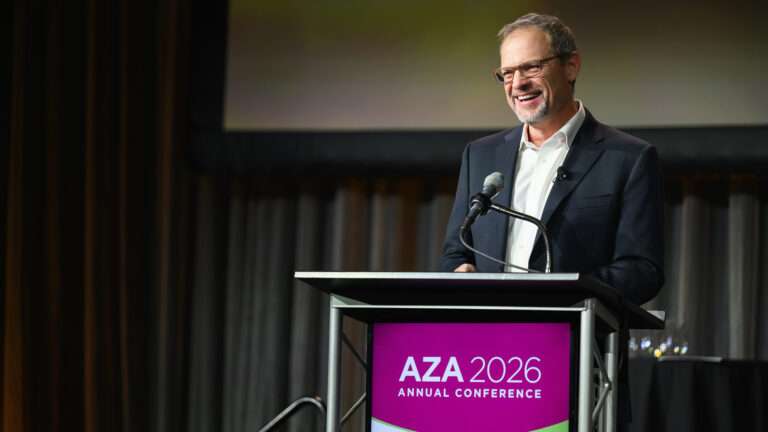
The Association of Zoos and Aquariums (AZA) is honored to announce the appointment of Dwight Scott, Dana Brown president and CEO of the Saint Louis Zoo, as the Association’s 102nd chair of the Board of Directors, officially sworn in at the AZA’s Annual Conference in Portland, Oregon, on September 30.
Scott assumes the role after having served on AZA’s Board of Directors since 2019. With over 30 years of zoological experience spanning animal care, operations, and executive leadership, the experience he will bring to the Association’s chair role will be invaluable.
“Nearly everyone who works in this field can point to a moment when an animal or a wild place changed the direction of their life. That common starting point is what makes this Association so powerful. Nature belongs to everyone, and aquariums and zoos are uniquely positioned to bring people together around it,” said Scott. “Every visit is a chance to inspire someone to protect the natural world, and our members are doing that at a scale we have never seen before. I am honored to serve such a dedicated community, and grateful for the chance to give back to the profession that shaped me.”
As Board chair, Scott, along with three other executive officers and 10 board members, will be involved in aspects of the global organization, including fiduciary oversight and member services, ethics, animal wellbeing and conservation.
“Dwight has two personal traits – curiosity and kindness – that frame his approach to leading people and caring for animals, and that make him an outstanding choice to chair AZA’s Board of Directors,” said Dan Ashe, president and CEO of the Association of Zoos and Aquariums. “His integrity, judgement and steady leadership will guide AZA towards continued success.”
Scott’s career began as an animal keeper for the Kansas City Zoo & Aquarium in 1994 and his positions advanced throughout his career at Disney’s Animal Kingdom, Oklahoma City Zoo and Botanical Garden, Tulsa Zoo, and San Diego Zoo. He was appointed to lead Saint Louis Zoo in 2022.
Scott has previously chaired AZA’s Ethics Board and has served on the Dian Fossey Gorilla Fund International Board of Directors. Scott holds a Bachelor of Arts degree with a concentration in anthropology from the University of Missouri, Kansas City.
In addition to Dwight Scott’s appointment, the AZA Board of Directors also welcomed three new Board members:
Hollie Colahan, executive director of the Arizona-Senora Desert Museum in Tucson, Arizona
Jon Dohlin, CEO and zoo director of Fresno Chaffee Zoo in Fresno, California
Michael “Hap” Fatzinger, director of the North Carolina Aquariums Division, which include North Carolina Aquariums located in Roanoke Island in Manteo, North Carolina; Pine Knoll Shores in Pine Knoll Shores, North Carolina; Fort Fisher in Kure Beach, North Carolina (currently closed for construction); and Jennette’s Pier in Nags Head, North Carolina
ProSlide, experts in water ride design and manufacturing, has announced its partnership with Hot Beach Parques & Resorts to deliver Brazil’s first dueling water coaster at Hot Beach Olímpia in São Paulo.
Scheduled to open in 2027, the high-performance attraction will become the centerpiece of the park’s most ambitious expansion to date.
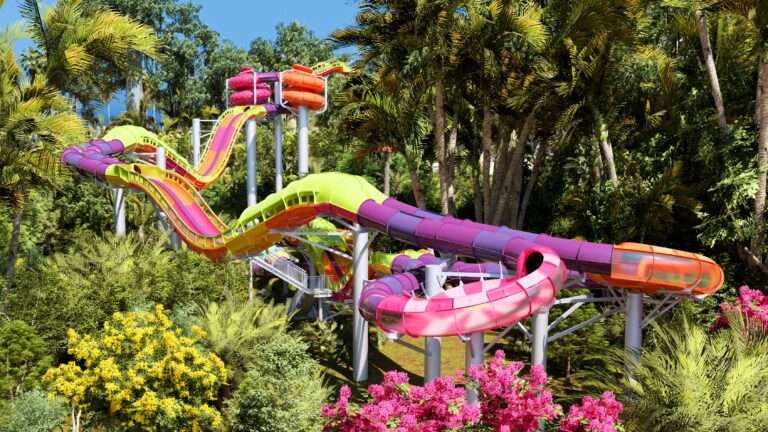
At the heart of the expansion is ProSlide’s Dueling RocketBLAST, bringing two competing tracks together in a head-to-head race. Each track will feature ProSlide’s signature FlyingSAUCER 20 and HIVE 20 technologies, combining powerful uphill propulsion, sweeping curves, and unexpected transitions in a high-speed race to the finish.
The attraction will also feature a distinctive fiberglass design and vibrant color palette inspired by the energy and adventurous spirit of Brazilian culture, creating a visually striking new landmark for Hot Beach Olímpia.
“At ProSlide, we’ve always believed that the best water rides change what guests expect from a waterpark,” explains Phil Hayles, Senior Vice President, Business Development & Strategic Accounts at ProSlide. “That’s what we’re bringing to Hot Beach. Dueling RocketBLAST takes the power and speed of our water coaster technology and combines it with the sweeping turns of FlyingSAUCER and HIVE to create a race unlike anything Brazil has seen before. We’re proud to be the team bringing this attraction to life!”
Olímpia has become an important destination for waterpark tourism in Brazil, with continued investment in attractions and resort development. Hot Beach’s latest expansion builds on that momentum, introducing a new water coaster experience designed to attract visitors from across the country and beyond.
For ProSlide, the partnership builds on its growing presence in Latin America, bringing Canadian engineering expertise and four decades of water ride innovation to one of the region’s most dynamic tourism markets.
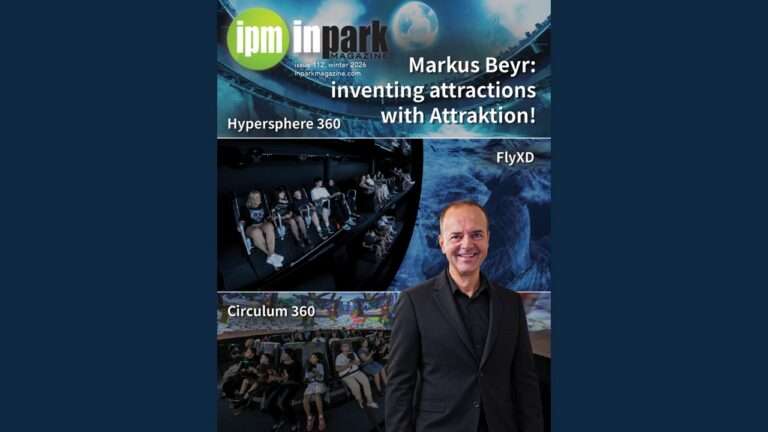
From IAAPA Impact Award-winning Hypersphere 360 at Sea World Abu Dhabi to FlyXD and Circulum 360, CEO Markus Beyr’s Attraktion! turns technical, media driven inventions into robust experiences for a global market.
As we look forward to IAAPA Expo in Orlando, it’s hard to ignore the challenges facing the entire world. Geopolitical conflicts, economic uncertainty and a seemingly endless stream of troubling headlines can make the business of creating entertainment feel, at times, a little disconnected from the bigger issues of the day.
A conversation at the recent TEA SATE conference in New Orleans brought that tension into focus for me. The conference was centered on cultural authenticity and one of the presenters asked how I could justify working in an industry whose stories sometimes draw on appropriated cultures, contested histories and land/ideas taken from Indigenous populations. It was a pointed question, and one that deserves more than a reflexive defense of our industry.
My initial answer was that our industry brings joy to people. I thought of the kids who choose a Central Florida vacation through the Make-A-Wish Foundation. Those experiences give them and their families something wonderful to anticipate and remember while they navigate through an extremely challenging part of their lives. In those moments, the value of what we do seems self-evident.
But the conversation stayed with me. Creating joy doesn’t exempt us from examining how we create it, whose stories we tell, or whose perspectives might be missing. An industry built around imagination should be willing to look critically at itself, learn from uncomfortable questions and do better.
This has been a challenging year in many parts of the world. Yet people continue to seek out experiences that entertain, educate, inspire and bring them together. The attractions industry is one small part of a much larger human story: our desire to discover something new, share time with others and occasionally step outside the routines and worries of everyday life.
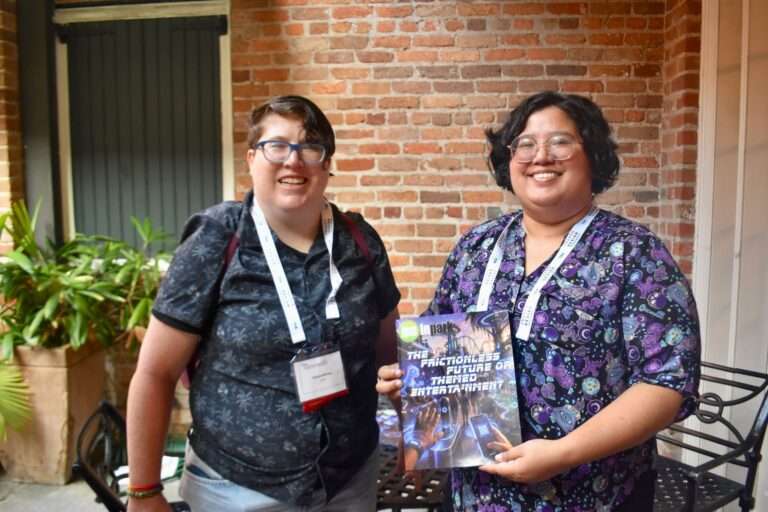
As I write this column I’m also putting the final touches on the 2025 edition of the TEA Global Experience Index, the global attendance report I have edited on behalf of TEA for the past few years. I’m reminded of both the usefulness and the limitations of numbers. Attendance figures and charts help us understand where people are going and how the business is evolving. They offer a valuable perspective on an industry that reaches millions of people around the world. But numbers alone cannot tell us what an experience means to the person who has it. That meaning is something we have to discover by communicating with one another.
InPark Magazine is one medium that facilitates that exchange of information. But another method is through sessions and conversations held at gatherings like TEA’s SATE events and the upcoming IAAPA Expo. Beyond the deals, product launches and business meetings, they bring together people who share an interest in creating experiences that matter. We arrive from different markets and backgrounds, carrying different challenges and perspectives, but with an opportunity to learn from one another and consider what comes next.
Our industry cannot solve the world’s problems, and entertainment should never be offered as a substitute for confronting them. But neither should we underestimate the value of giving people opportunities for wonder, connection and joy. As we prepare to gather in Orlando, perhaps it’s worth remembering both sides of that equation: the value of what we create, and the responsibility we carry in creating it.
Flying Theater Adventures Based on Television Programs Co-Produced by NHK and Fractal Picture
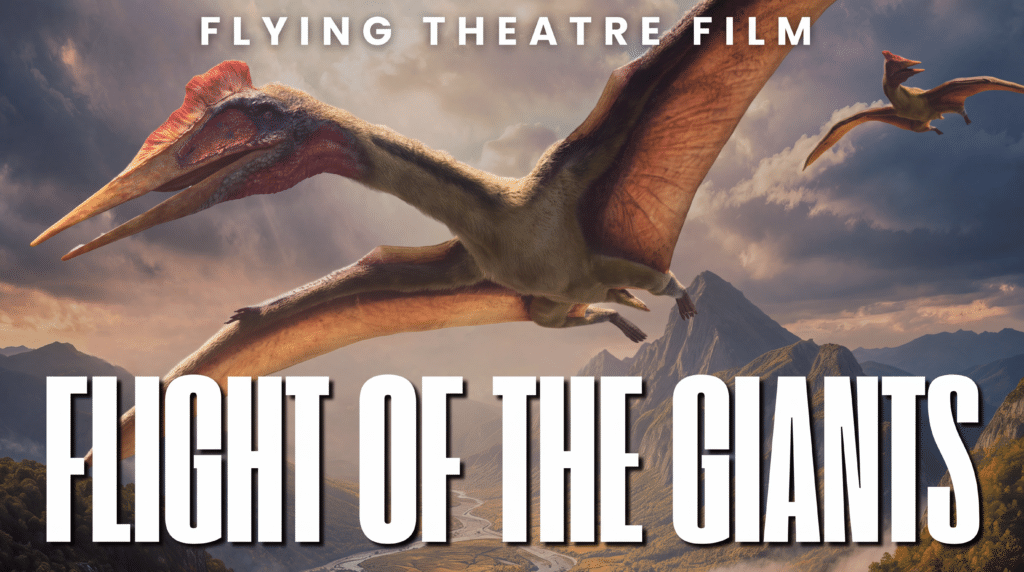
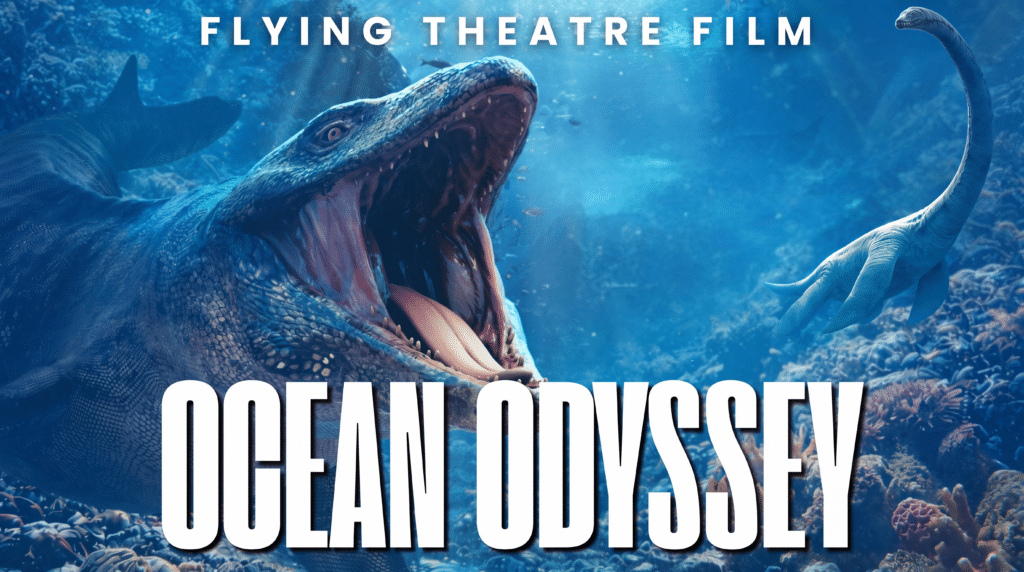
Fractal Picture will introduce two new flying theater films at IAAPA Expo 2026: Flight of the Giants and Ocean Odyssey. The films will bring prehistoric skies and oceans to flying theater audiences in stunning 8K and 6K. Licensing opportunities are available through Fractal Picture.
Based on science and natural-history television programs co-produced by NHK and Fractal Picture, these immersive experiences will transport audiences millions of years into Earth’s past, where giant dinosaurs ruled the land and extraordinary creatures inhabited ancient seas.
Using the scientific research and natural-history storytelling explored in television programs co-produced by NHK and Fractal Picture, both films transform prehistoric life into memorable location-based entertainment experiences.
NHK, Japan’s public broadcaster, has produced a wide range of science and natural-history programs in collaboration with researchers and scientific institutions worldwide. Fractal Picture is an animation, visual effects, and themed entertainment studio specializing in large-format films and immersive experiences for location-based entertainment venues. Together, the two films offer audiences a spectacular opportunity to encounter some of the most extraordinary creatures ever to inhabit our planet.
Flight of the Giants: AnAncientMind.A Lost World. An Extraordinary Flight.
Flight of the Giants follows an imaginative premise in which advanced technology unlocks memories preserved within a fossilized brain, allowing audiences to experience the prehistoric world through the eyes of Quetzalcoatlus, one of the largest flying animals ever known.
The journey soars above landscapes populated by Puertasaurus, Triceratops, Tyrannosaurus rex, and raptors before plunging beneath the waves for a dramatic encounter with a giant Mosasaurus. Presented in 8K resolution at 60 frames per second, the film combines photorealistic creatures, spectacular scenery, and an original musical score to create a thrilling adventure through ancient skies, lands, and seas.
Ocean Odyssey takes audiences beneath the surface of Earth’s prehistoric oceans, revealing remarkable marine ecosystems filled with strange creatures, powerful predators, and breathtaking underwater landscapes.
Descending through vast submarine canyons, the journey explores a hidden world before culminating in a dramatic escape from a violent underwater volcanic eruption. Presented in 6K resolution at 60 frames per second with an original score, the film combines wonder, suspense, and discovery in an immersive voyage into the distant past.
LicensingEnquiries:Fractal Picture representatives will attend IAAPA Expo 2026 in Orlando and welcome the opportunity to meet with attraction operators and industry partners. To schedule a meeting and arrange a private preview of both films, please contact: [email protected]
ETC’s new Orbit fixture puts big lighting capability into a very small package
Interview by Martin Palicki
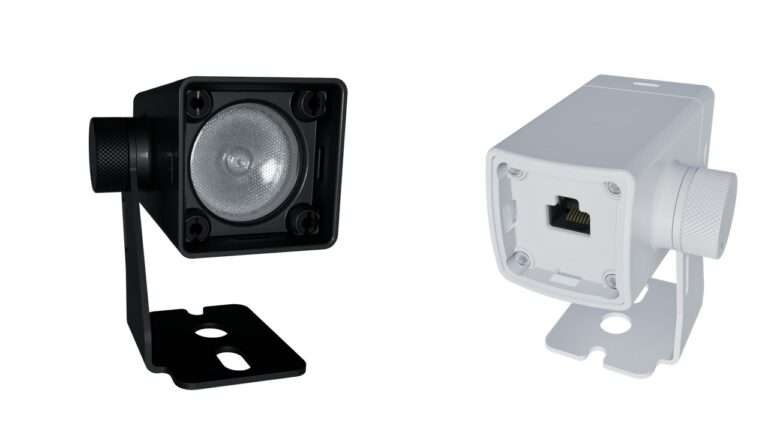
ETC is expanding its architectural lighting portfolio with Orbit, a new family of compact, color-tunable fixtures designed for applications where light needs to get close to the subject without impeding the audience’s view. The Orbit BT-1 is a 6-watt, 24-volt fixture developed with themed entertainment, museums, galleries, retail, hospitality and theatrical applications in mind.
Orbit grew out of a longstanding challenge in LED fixture design: how to combine a very small form factor with the color quality, dimming performance and flexibility that designers increasingly expect. Developed in partnership with The Black Tank, the fixture incorporates power scaling, hybrid dimming, tunable color and tunable white, as well as interchangeable optics.
Brent Sullivan ETC
InPark spoke with ETC architectural luminaires product manager Brent Sullivan about the thinking behind Orbit, how it can help lighting designers and where he sees the new fixture fitting into the themed entertainment toolkit.
InPark: What was the original opportunity that led ETC to develop Orbit?
Brent Sullivan: There’s a little bit of history behind that. ETC started 50 years ago as a lighting controls company, but it was the mid-2000s when we really started getting into architectural fixtures. When we launched the Source Four Mini in 2013, and then the Source Four Mini LED in 2014, people asked, “When is it going to get DMX? When is it going to do color?”
As LED technology evolved, color-changing fixtures became much more common. The problem was that many of the fixtures originally designed around LED technology were designed for white light. Their thermal and mechanical systems were optimized around that. Once you introduce a color engine, the LEDs require more energy and produce more heat in order to achieve comparable output. The fixtures weren’t necessarily designed to handle those requirements.
So the market was asking for a compact, powerful, color-tunable fixture. We looked around and didn’t really see something that we wanted within our own portfolio. That became the opportunity for Orbit: a very compact, powerful and versatile color-tunable fixture.
InPark: What role did The Black Tank play in the development?
Sullivan: I had been working with The Black Tank on different product lines, technologies and driver systems, and they showed me this product at a trade show last year. I immediately saw a lot of potential.
The Black Tank is a small, nimble company with very smart people. They can iterate and change things very quickly. That’s a strength that can sometimes be more difficult for a larger corporation. ETC brought distribution, marketing, a broader understanding of the market and additional manufacturing resources. It was a great combination of strengths.
InPark: How does Orbit approach that market differently from other fixtures?
Sullivan: There are some great products out there, and I’ve used them on a lot of projects. But we wanted to bring some things to the market that we felt could make a difference. The way we handle hybrid dimming and power scaling gives us a lot of flexibility. We have a native optic that can be swapped out, and then we can use holographic lenses for additional beam shaping.
We also put a lot of attention into seemingly small details. There’s a knurled adjustment knob with a rubber gasket down, it really locks in place. There’s also a set screw for permanent installations. The sidearm was designed so it clears the RJ45 connection on the back. You don’t have to disassemble the fixture just to install it. Those are the kinds of things that people get surprisingly excited about when we demonstrate it.
InPark: Can you explain power scaling and hybrid dimming in practical terms?
Sullivan: Orbit is a 6-watt fixture with four LEDs. In a conventional fixture, each emitter might receive 1.5 watts. If you turn all four on, you get your full 6 watts. But if you move from a mixed color to a saturated red, for example, you may suddenly be using only that one emitter. You’ve gone from roughly 5 or 6 watts of output to 1.5 watts.
With power scaling, we can transfer that available power to the emitter that needs it. As I bring up the red emitter and bring down the others, I can push the red all the way up to the same 6-watt maximum level. That means I don’t lose output when I shift between scenes and looks. It’s a powerful thing for a lighting designer because you don’t have to add four times as many fixtures to get the punch you want from a saturated color. Hybrid dimming adds another layer of flexibility. Orbit receives power and data through category type cable and can receive standard DMX and RDM directly at the fixture. But it can also receive a 0-10V signal.
Imagine a gallery where you want everything set to 3000K. You can use DMX to program the fixture, lock those values in and then switch to 0-10V. You can remove the DMX system and use a simple 0-10V wall control for intensity.
For a long-term installation, such as a theme park attraction, you may not need a full DMX system running continuously if the fixture is simply repeating the same look. It gives the designer or operator another option and the ability to save costs.
InPark: Where do you see Orbit being used in themed entertainment?
Sullivan: Its 1.75” cube x 3” deep size and 24-volt operation give it a lot of possibilities. I could see it on rides and floats, and in theme parks, particularly with the tunable white version. I also see retail, display cases, hospitality and theatrical applications.
In a lot of ways, themed entertainment spaces are getting smaller. The trend of more personalized experiences translates to smaller, more intimate spaces. That means lighting fixtures have to shrink too! Orbit is the solution for designers who are lighting venues where guests will be close to sets and props. It works particularly well when placed within about 10 feet of the subject, allowing the fixture to be hidden and still get the light exactly where it is needed.
InPark: What are the key features you think will resonate with themed entertainment professionals?
Sullivan: Flexibility is probably number one. The yoke, the mounting options, field-replaceable optics, additional beam-shaping accessories and multiple lighting engines all allow you to adapt the fixture to the application.
Secondly, Orbit can be supplied in a custom color or primed so scenic artists and construction companies can finish it as needed. We’re also moving toward using RAL standards for custom industrial finishes, which gives everyone a specific color reference and improves consistency, allowing the fixture to disappear into the environment.
Finally, tunable white is probably my favorite feature. The way we’re handling it is different from the rest of the industry, and we’ve gotten great reactions to the quality of light. Rather than using the typical two-chip warm-and-cool approach, Orbit uses three desaturated red, green and blue chips to create white from 2200K to 6500K. That gives us a fuller spectrum and very high color rendering across the range. The benefit is especially important in museums, galleries and retail, where the goal is not just to illuminate something, but to make sure its colors, textures and finishes look their best. And you can change the color temperature without changing the fixture, giving designers a lot of flexibility while maintaining that quality of light.
InPark: How does Orbit fit into ETC’s broader architectural lighting strategy?
Sullivan: When I came to ETC, one of the things that was important to me was starting with the most challenging parts of the fixture. For me, that meant solving color first. The color-tunable engine has the highest thermal requirements, so once we solve that, tunable white, UV and potentially static white become easier.
At the same time, the industry, particularly in themed environments and architecture, continues to push toward smaller fixtures. Designers want less visibility and less glare.
I see Orbit as one piece of the broader ETC architectural portfolio. We have products such as Source Four Mini and Irideon that are more oriented toward displays and galleries and provide higher output. Orbit fills in the more subtle end of that spectrum.
The larger goal is to be able to support a client across different environments.
A project might start with a themed attraction, then extend into a hotel, restaurant, retail space or other hospitality environment. We want to be able to continue that journey with the client, maintaining the same quality and helping them solve the different lighting challenges that come with each space.
InPark: When will Orbit be available?
Sullivan: We’re previewing it at IAAPA Expo and LDI this year, with shipping expected in early Q2 of next year. I think Orbit is a much bigger product than it looks like. That’s part of the fun. It’s the premiere of a special fixture that we’re very excited to continue developing. •
How Markus Beyr & Attraktion! are turning ambitious concepts into groundbreaking entertainment experiences
by Becci Knowles
When Markus Beyr began working after school in lighting design and event productions, installations were sometimes still being finished as guests walked through the door. A few hours later, the team would dismantle everything. The settings were temporary, but the ambition was to create something people would remember. “We created stunning 360-degree atmospheres with simple but effective visuals, long before anyone started using the term immersive,” he says. “The only metric that mattered was if guests could forget about their stresses in life for a few hours and dig into something new and unexpected, creating fun and enjoyment.” That goal has been Beyr’s driving force through more than three decades in the industry. His work has ranged from introducing multi-person games using patented group motion tracking to developing new attraction formats for water parks – including wet cinemas, flying theaters and everything in between.
From 1997 to 2011, Beyr was managing director of Kraftwerk Living Technologies, developing a lighting and sound business focused on discotheque supplies into a global specialist in audiovisual integration for the leisure market. Keen to explore new and holistic formats for experiences, he launched Attraktion! in 2012. The company has since grown from a small media and technology integrator (introducing its first patented product, Playoke, in 2012) into an international creator and turnkey provider of media-based attractions and immersive solutions, with capabilities spanning ideation, concept design and technical engineering through to full media production with a team of 50+ employees.
Markus Beyr CEO
“I never set out to be an entrepreneur,” Beyr says. “I started my own company because I wanted the freedom to follow my instincts and turn my visions into reality. I didn’t want to waste any energy proving myself or convincing others of my ideas. I wanted to focus on creating great attractions, trusting my own judgment about what would excite people and succeed in the market, and having the freedom to bring those ideas to life.
“My passion for inventive, innovative and first-of-a-kind experiences never stopped. I love looking beyond boundaries at what could be achieved by bringing different disciplines together with a unique team of colleagues and experts in their individual fields. What fascinated me then – and still fascinates me today – is the symbiosis of concept, content and technology: the moment when an idea becomes more than a product, more than a show, more than an installation.” Over time, that obsession with emotional guest response evolved into the solid foundations of a turnkey provider for standard, proven products and what Beyr describes as globally unique, one-off attractions. Audience connection is and has always been central: “I run a company built to leave emotional imprints – something that sparks awe in a child’s wide eyes,” he says.
Today, Attraktion! combines attraction design, media production, show technology and interactivity across a portfolio encompassing flying theaters, dome attractions, motion cinemas, interactive group games, immersive exhibitions and dining experiences. It creates new ride formats and supplies individual attractions as well as complete destinations, supported by in-house film and game production. That breadth has developed through Beyr’s interest in creating new attraction genres and in response to clients seeking a particular experience. “Even in Attraktion!’s earliest days, clients would ask: ‘Can you also do this?’ Most of the time, no one else could,” Beyr says. “And somehow, we kept saying yes.” For Beyr, responding to those requests meant making an invention understandable to clients, technically achievable and suitable for an operating venue. “That’s what still drives us today: saying yes to what hasn’t been done yet.”
Creating new formats
Playoke was an early expression of that approach and one that has evolved into a major trend. Introduced in 2012 as the world’s first group game of its kind, it uses 3D motion tracking to analyze participants’ movements as they follow performers or characters on screen. Players receive scores for their performance and can compete together within a shared space at scale, with up to 24 players at once. The system can be adapted through its songs and characters, with applications extending from children’s entertainment to fitness and dance.
FlyXD’s modular five-seat units allow Attraktion! to adapt the flying theater to different venue sizes and capacities.
Cinesplash 5D explored another new setting: the waterpark. The format combines a motion theater with effects including rain, fountains, waterfalls and even flooding and waves, making water part of the action unfolding on screen. Delivering that experience presents its own engineering demands. Motion, sound, projection, controls and water effects must work together in an environment where guests expect to get wet. Installations at Yas Waterworld in Abu Dhabi, Sonnentherme Lutzmannsburg in Austria and waterparks in China demonstrate how the format has travelled into different markets. Its development has now continued with Cinesplash 5D Outdoor, a version using daylight-capable 3D LED screens and motion seating in a pool – making it perfect for applications outside. Removing the requirement for a dedicated theater building changes its potential application for operators, while making the attraction visible and appealing to other guests.
Beyr’s interest in inventing formats has been consistent, although the conditions needed to deliver them have not always been in place. Some ideas he is working on today, he says, were already in his mind a decade before. “Others were possible in theory, but not yet understandable, scalable or there was just no market for it yet. Over the years, I realized that innovation is not only about having the right idea or a great product. It is also about the moment when people, markets and culture are ready for it.” Finding an operator prepared to commit to an unfamiliar product is part of that process. An attraction may require years of development before its first installation provides an opportunity to demonstrate the experience to a wider market.
From concept to Hypersphere
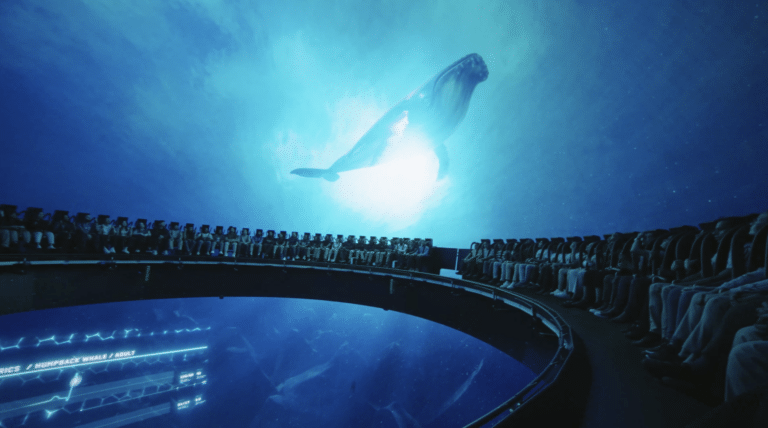
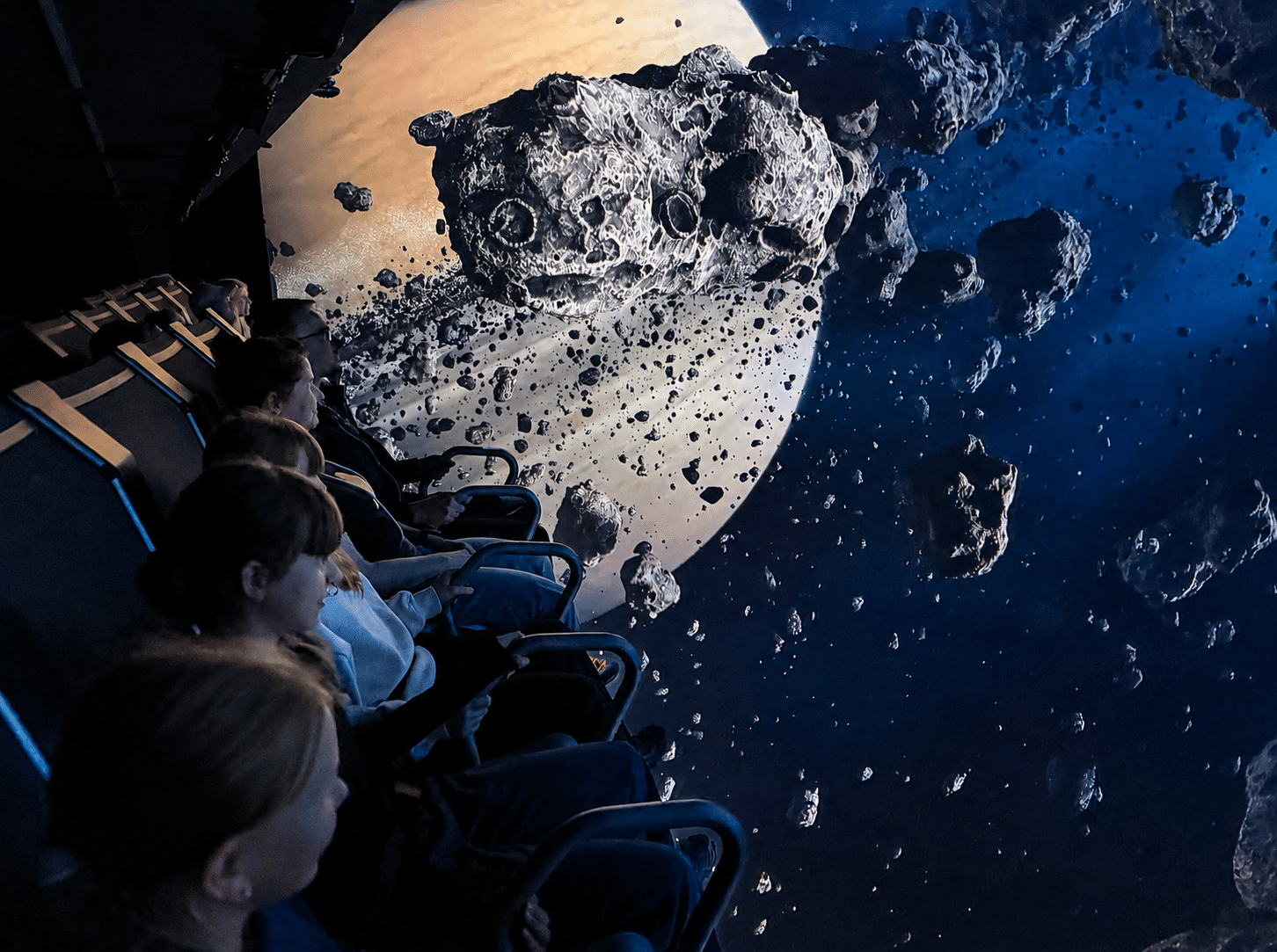
Case in point: The Dome Ride Theater. Part of Attraktion!’s development story since 2019, the system first became an operating attraction in 2022 as Hypersphere 360 at SeaWorld Abu Dhabi. Developed in partnership with Intamin, the ride seats 80 guests on a ring inside a 17-meter LED sphere. The ring rotates and tilts within the surrounding media, while special effects accentuate the experience. A disappearing floor reveals the bottom half of the sphere beneath the riders, extending the imagery beyond the conventional boundaries of a theater screen – an experience both immersive and thrilling.
Guests journey into space aboard Querion Piechowice’s 50 seat FlyXD flying theater, which combines motion, rotation, media, wind and special effects to create the sensation of flight.
Attraktion! designed and patented the concept, including the LED sphere, audio, effects and control system/show programming. Intamin contributed the ride system, seats and safety features. “Bringing these elements together creates a fully surrounding media environment in which movement, sound and effects support the action. This is a globally unique experience that nobody should miss,” says Beyr.
Another of Attraktion!’s inventions, FlyXD, delivers the emotional sensation of flight through motion, rotation, media, wind and special effects in a space-efficient attraction format. Multiple five-seat units can be arranged in different configurations to accommodate varying capacities, while flexible screen options, custom theming and bespoke media allow the experience to be adapted to different venue sizes, markets and project ambitions.
FlyXD also illustrates how Attraktion! approaches the commercial application of an invention. “FlyXD is the only system on the market that enables small and mid-sized venues to deliver an authentic flying theater experience profitably, combining a lower initial investment with the original soaring sensation, rotation and a full range of movement and special effects,” Beyr says.
Flying theater attractions have traditionally relied on projection-based media systems. FlyXD’s optional LED configuration offers venues seeking higher image quality, operational flexibility and alternative design possibilities.
A 50-seat FlyXD flying theater is currently in operation at Querion in Poland, and Attraktion! is working on two additional FlyXD projects in Austria and Poland, targeting summer 2027 openings.
A range of experiences
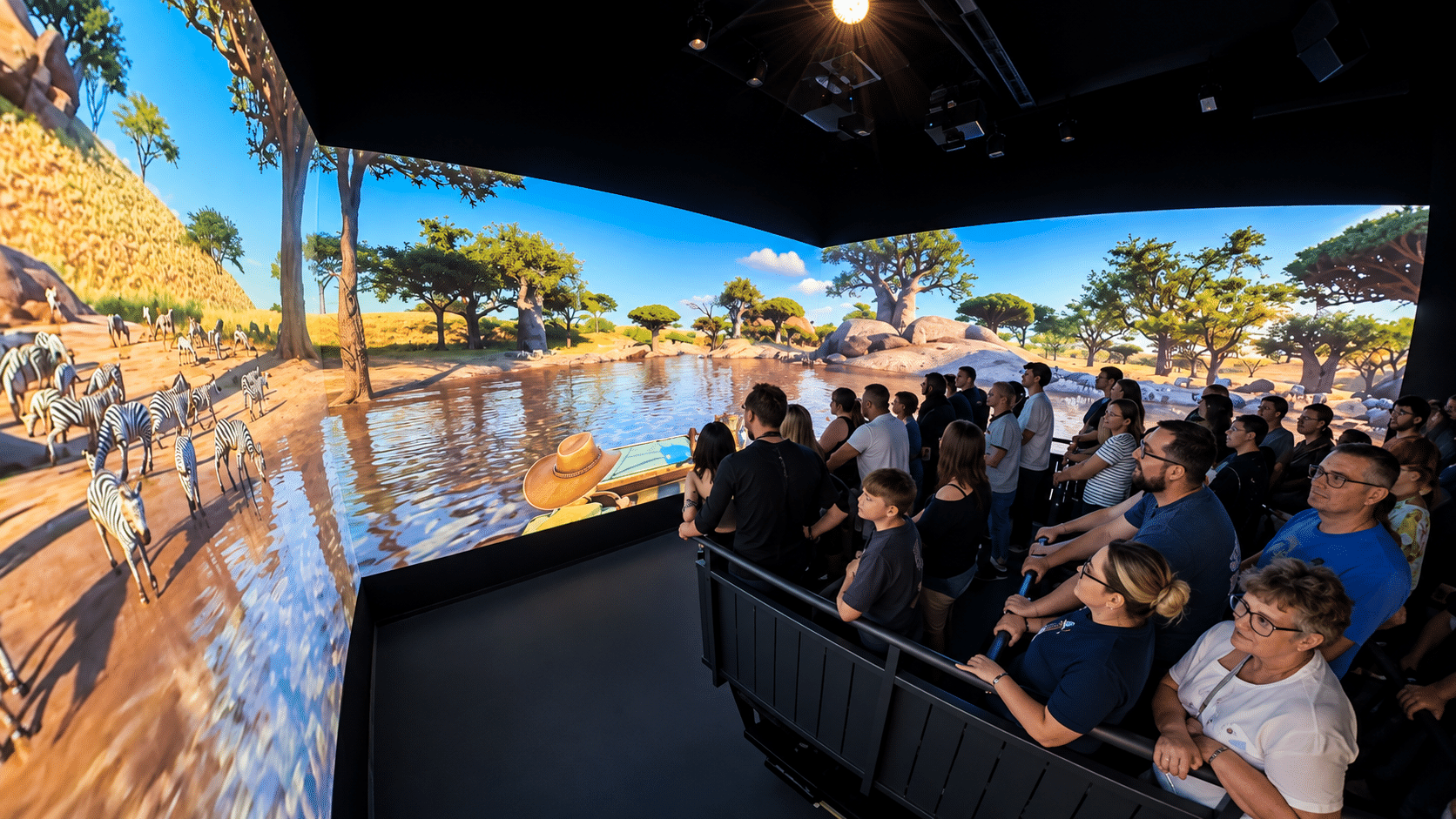
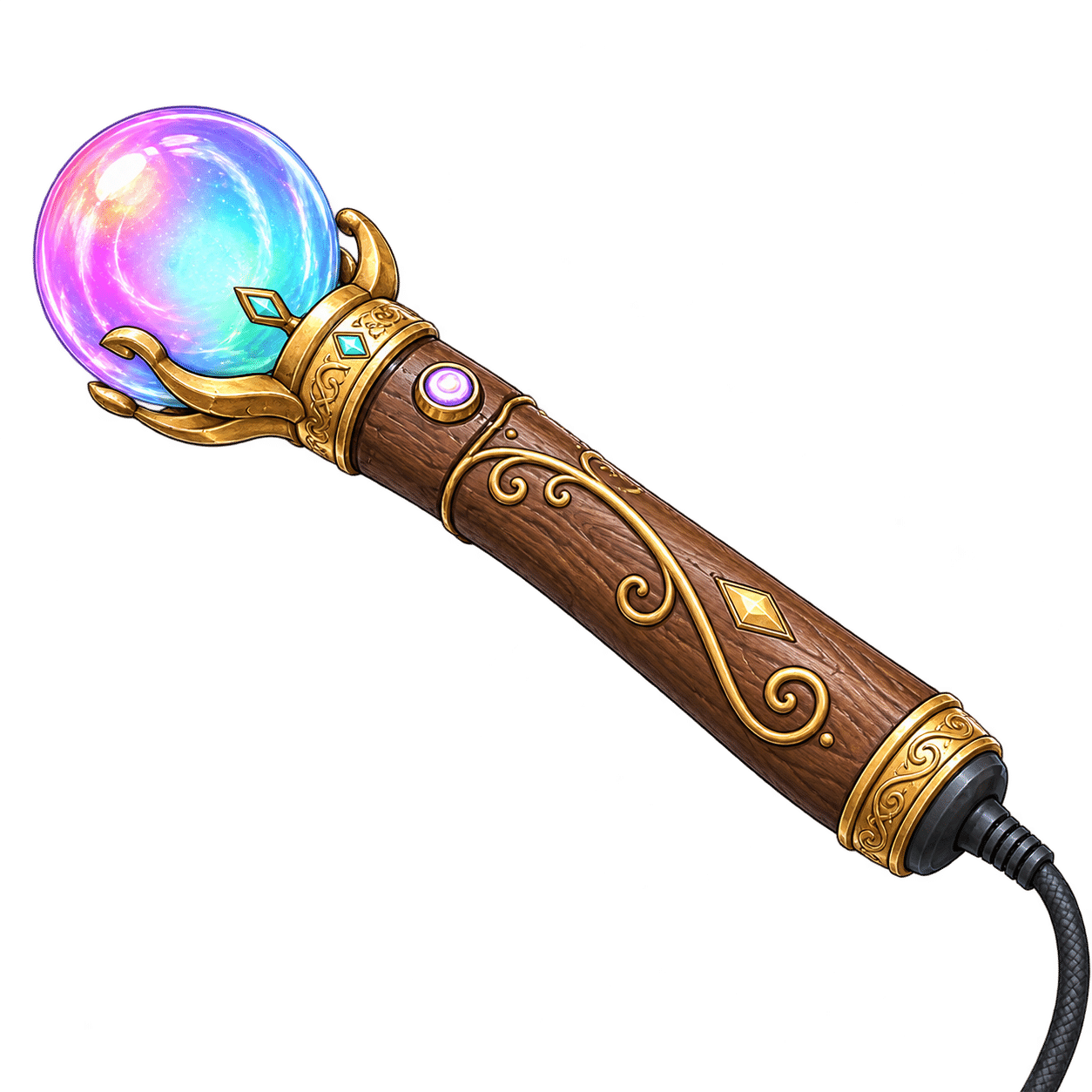
Attraktion! offers other unique attraction concepts as well. Explorer 5D is a compact stand-up motion theater, with guests facing a surrounding screen from a moving platform. Circulum 360 combines a 3DOF motion platform, rotation and 360-degree projection. Playblaster, Attraktion!’s interactive shooting system, extends that technology across projected and LED environments. Playblaster’s applications include dome venues, interactive dark rides, standalone games and customized attractions. It can also be supplied to third-party ride manufacturers and system integrators, providing additional options for designers and operators.
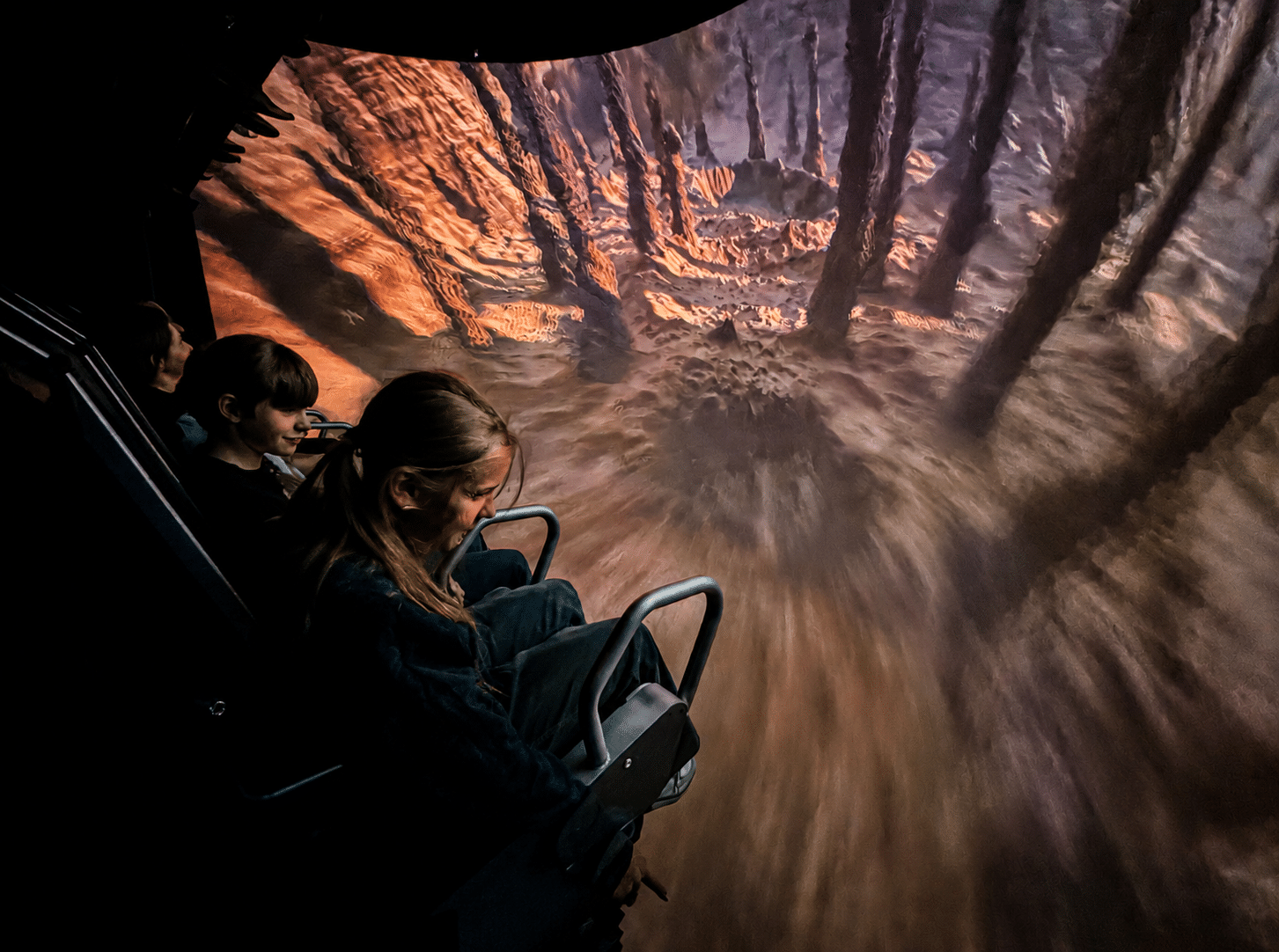
Explorer 5D takes guests on a wildlife adventure at Querion Piechowice, combining a stand-up motion platform with a surrounding screen. The installation accommodates 50 people.
Playneo lets groups move around immersive environments with up to 360-degree projection and interact with digital content using handheld devices. Playful Universe combines activities such as interactive drawing and dancing within a digital entertainment room. Immersive exhibitions including Jurassic and Planet Wildlife introduce another way to explore content, through spaces that guests navigate on foot with edutainment content.
Attraktion!’s film and game production team supports those experiences as well. Their in-house animation team handles work from story and character development through to animation and rendering, while their interactive department develops software that connects content with hardware.
A project at Harzdrenalin in Germany demonstrates how Attraktion!’s various disciplines come together to create an experience specific to its location. Utilizing an Explorer 5D installation, Expedition Water takes guests into the world of the Rappbode dam after they are shrunk to the size of a water droplet. The media content combines drone footage, CGI and studio recording, connecting the motion experience to the surrounding environment.
A case study in building the destination
Opened on June 4, 2026, in Poland’s Karkonosze region, Querion Hypermedia Entertainment Park in Piechowice was developed by hotel operator Górskie Resorty together with Attraktion!, which designed the park and supplied all its core attractions.
A wand-style design demonstrates how Attraktion!’s Playblaster interactive shooting system can be customized to suit an attraction’s theme and story.
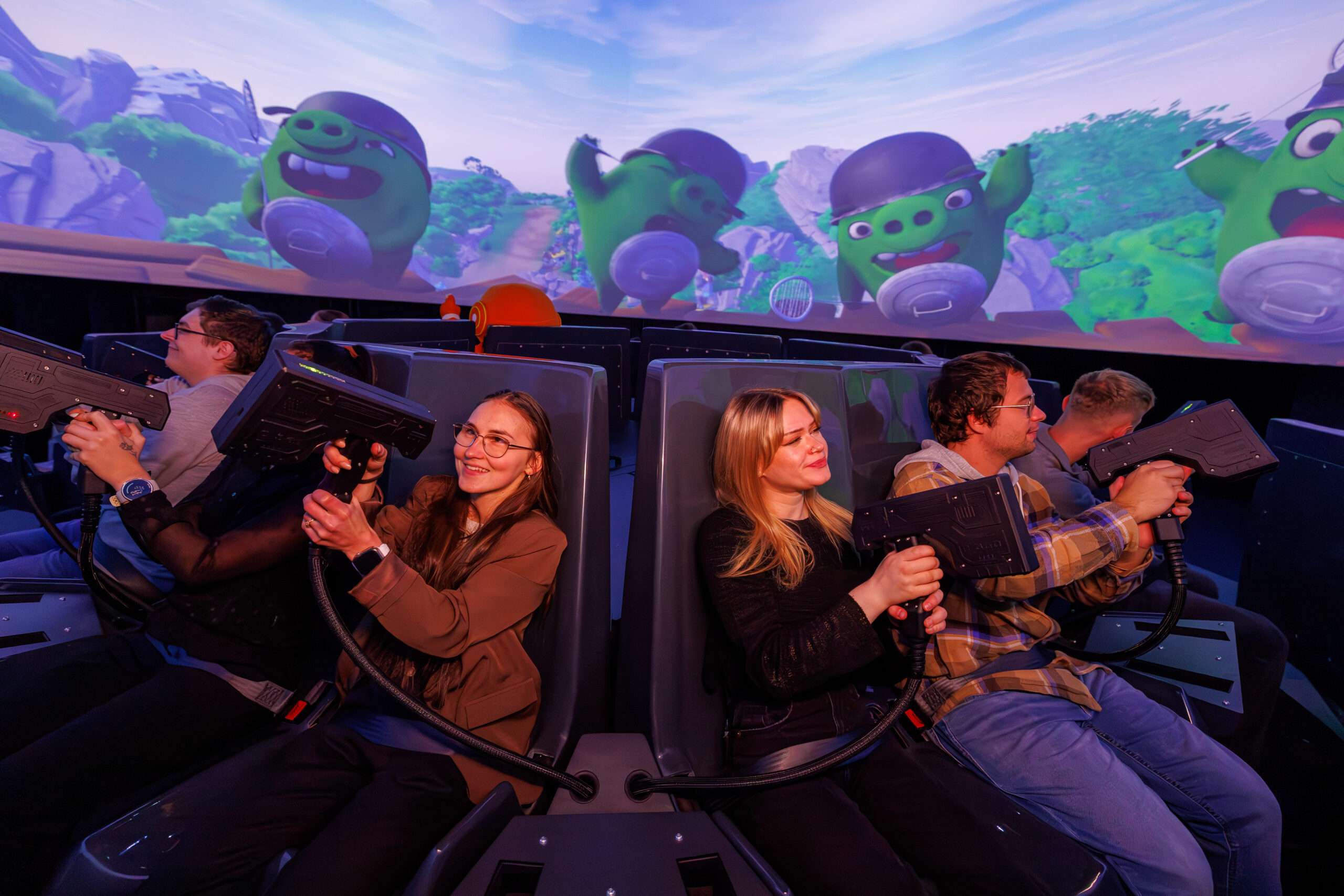
Its attraction mix comprises a 50-seat FlyXD Flying Theater, Circulum 360 Interactive featuring Angry Birds Pigvasion, a 50-person Explorer 5D Stand Up Motion Theater, a 52-seat 4D/5D Motion Theater and an Immersive Experience Theater with interactive floor projection. The Immersive Experience Theater brings a format associated with touring immersive exhibitions into a permanent indoor park setting. VR stations and an AI education zone add further experiences, while a futuristic immersive common area connects the attractions.
Together, these elements create a year-round indoor destination combining immersive storytelling, motion, interactivity and themed architecture in one connected guest journey. The common area contributes to that experience from arrival, using media, light, sound and digital content to establish Querion’s futuristic identity.
“Querion is an important milestone for the future of media-based entertainment,” Beyr says. “We are proud to have supported Górskie Resorty in this unique development, and to have contributed to a destination that brings together immersive technology, artificial intelligence, interactivity and attraction design in one complete environment.”
Recognition followed in September, when Querion Piechowice won Best FEC of the Year and Beyr received the Industry Icon – Supplier award at the 2026 Park World Excellence Awards. The awards recognize destinations and industry figures across the EMEA region.
Work has already begun on a second Querion Hypermedia Entertainment Park, opening in Kolobrzeg on Poland’s Baltic coast in summer 2027. Continuing the partnership with Górskie Resorty, it will feature the same attraction mix as Piechowice, bringing year-round, weather-independent entertainment to families, tourists, groups and event audiences in a seaside destination.
Operator empathy
Developing attractions for clients is one part of Beyr’s experience; welcoming guests into his own venue is another.
Attraktion! owns and operates Immersium in Vienna, an immersive museum and family destination that opened in October 2023. It brings Beyr closer to the practical concerns of the operators he supplies, including how guests move through a space, how different audiences respond to content and how an attraction can give people reasons to return. “With Immersium, I stepped into another new role: becoming the host of our own museum and representing it in front of the media,” Beyr says, admitting he was nervous at first.
Guests take aim in Angry Birds Pigvasion at Querion Piechowice, where Attraktion!’s Circulum 360 Interactive combines gameplay with a rotating motion platform and 360-degree projection.
The venue provides a permanent home for immersive storytelling, with changing experiences including Jurassic and Planet Wildlife. It has also expanded into dining, demonstrating how the same space can accommodate a different audience and extend its use into the evening. Around the World in 80 Minutes, launched in November 2024, combines a five-course menu with projected journeys through different environments. Each course accompanies a stage of the story. Since then, Attraktion! has introduced two new dinner show formats, both also available for licensing. Whether Beyr’s projects are on trend or ahead of the trend, innovation remains a common thread running through everything he and his team create. Immersium is already transforming into the next generation. “We don’t like to stop being innovative.” Beyr says.
Back to the future
Beyr describes Attraktion!’s origins as a response to ideas he felt compelled to pursue. “It happened because there were ideas I couldn’t shake, and no one else was making them real.” That impulse has taken Attraktion! from individual attraction products to complete entertainment destinations. But as its successes demonstrate, bringing an invention to market also means finding a format that works for the operator, the location and the audience.
For Beyr, the next attraction may already be taking shape, even if its market has yet to emerge. “My strongest ideas are never the ones I build right away,” he says. “They are the ones I keep carrying until the world is finally ready for them.” Given what Beyr has brought to life so far, we can’t wait to see what comes next. •
A quarter century of projects, clients, travel and the occasional piece of “unobtanium” has taught Utopia Worldwide a thing or two about the business of creating experiences
by Martin Palicki
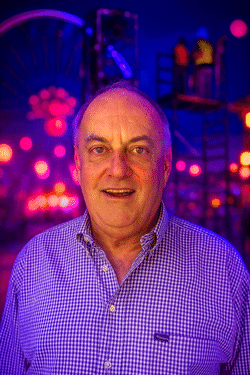
Norm Kahn CEO
Twenty-five years ago, Norm Kahn and Danny Burzlaff launched Utopia with a simple idea: combine their backgrounds in live entertainment, events and themed entertainment into a company that could take on a variety of creative challenges.
Their first major project was Pets Rule at SeaWorld San Diego, an animal show built around the idea of telling the story from the animals’ point of view. The company launched in March 2001, just months before 9/11. Utopia’s event work helped provide some stability while the theme park business went through its inevitable cycles. Early projects included work for Warner Bros. Movie World in Germany and Madrid, while events such as DVD releases and city celebrations provided diversified business opportunities.
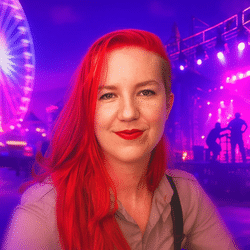
Hailey Buck Creative Manager
The company evolved considerably. Utopia Digital came and went. Events grew. Theme park projects expanded. A $5,000 holiday design for Beverly Hills eventually became a long-running relationship encompassing millions of dollars of annual work. The company survived 9/11, the 2008 recession and plenty of other ups and downs. Today, Utopia has worked in 34 countries and recently opened an office in the UAE.
Along the way, Kahn and the Utopia team have accumulated a collection of lessons that apply as much to running a creative business as they do to designing experiences. In honor of their 25 years, here are 25 of them:
1. It’s easier to keep a client than find a new one.
Utopia’s relationship with the City of Beverly Hills is the ultimate example. What began as a $5,000 holiday design grew into a 20-year relationship encompassing holiday programming, lighting more than 1,100 trees, summer programs and other city events. The lesson is simple: take care of the clients you have.
2.Never say no to a project that hasn’t been offered.
It’s easy to talk yourself out of an opportunity before you know what it actually is. Utopia’s approach is to follow an opportunity all the way to a decision point. Maybe the answer is no but let the client be the one to make that decision too. An unlikely call from Egypt, for example, ultimately led to a real project there – and Utopia is still chasing new opportunities around the world.
3.Global and local belong together.
A world-class idea or technology doesn’t automatically make a successful show. Utopia’s international work has taught the company to bring global experience to a project while making sure the execution speaks to the local audience, culture and market. What works in Seoul, Abu Dhabi or Beijing may need to look, sound or feel different from what works in Los Angeles.
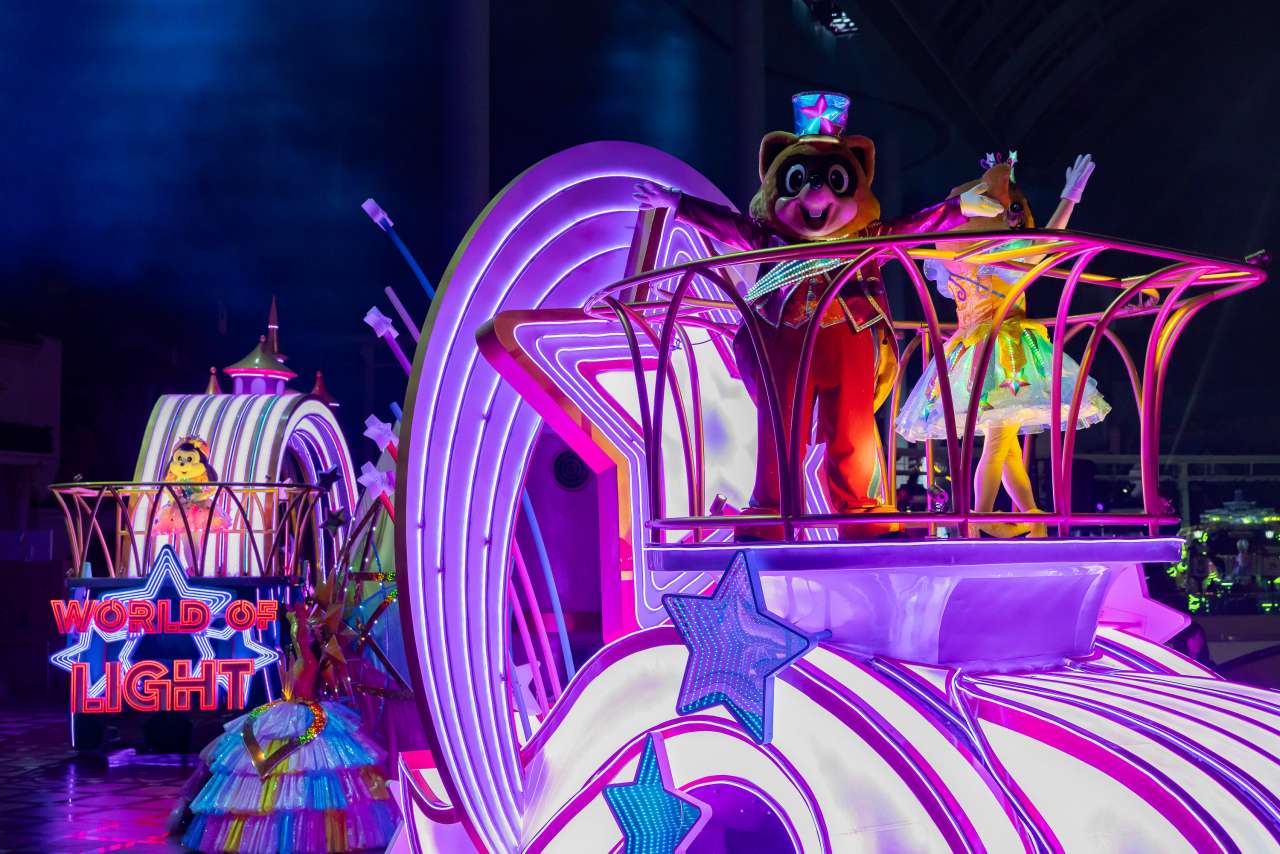
Lotte’s 35th Anniversary Parade, World of Light, shows their mascot, Lotty, gathering all his friends from around the world to celebrate in this interactive combination of parade and show.
4.Brilliant collaborators are the key.
No company creates a great experience alone. Utopia has built long-term creative relationships with people who bring expertise the company doesn’t have internally. One standout is show director Kahori Kanaya, whom Kahn met while working at Universal Studios Japan. Their collaboration has since expanded to projects in Hong Kong, Korea and Abu Dhabi, including the Lotte World parade and Ocean Park’s summer carnival.
5. Diversify when you can.
Utopia was deliberately structured to have more than one source of revenue. Events helped smooth the cycles of the themed entertainment business, and eventually the Beverly Hills relationship became another important engine. The original plan doesn’t always work – Utopia Digital, for example, quickly proved that websites weren’t going to be the company’s big opportunity – but having more than one way to make money matters.
6. Build a team you can count on.
Utopia has traditionally hired people at entry level and allowed them to grow through the company. Kahn himself started at Universal as a runner before moving through increasingly responsible production roles. At Utopia, everyone is expected to pitch in, whether that means producing a show or helping move something into a truck. That creates both practical flexibility and the trust that comes from knowing the person beside you will get the job done.
7. There is no such thing as a small project.
A $25 million attraction and a $15,000 city event may look very different on a spreadsheet, but they can be equally important to the client. Utopia has learned to give every project the same level of attention and respect because the stakes are defined by the client, not the budget.
8. Connect with the audience.
People don’t just want to watch. They want to feel something. For Lotte World, Utopia helped create a moment in the parade when the action stops and the audience becomes part of the story. The crowd sings, the centerpiece comes alive and fireworks follow. The moment creates a memory because the audience has a role in it. [See “Celebration of Lights,” InPark issue #102]
9. Give people a reason to stay.
Some of Utopia’s work is ultimately about changing guest behavior. At Al Ain Zoo in Abu Dhabi, a projection mapping show was created to give guests a reason to remain at the zoo into the evening. The goal wasn’t simply to add another show. It was to extend length of stay, encourage additional spending and make better use of the facility.
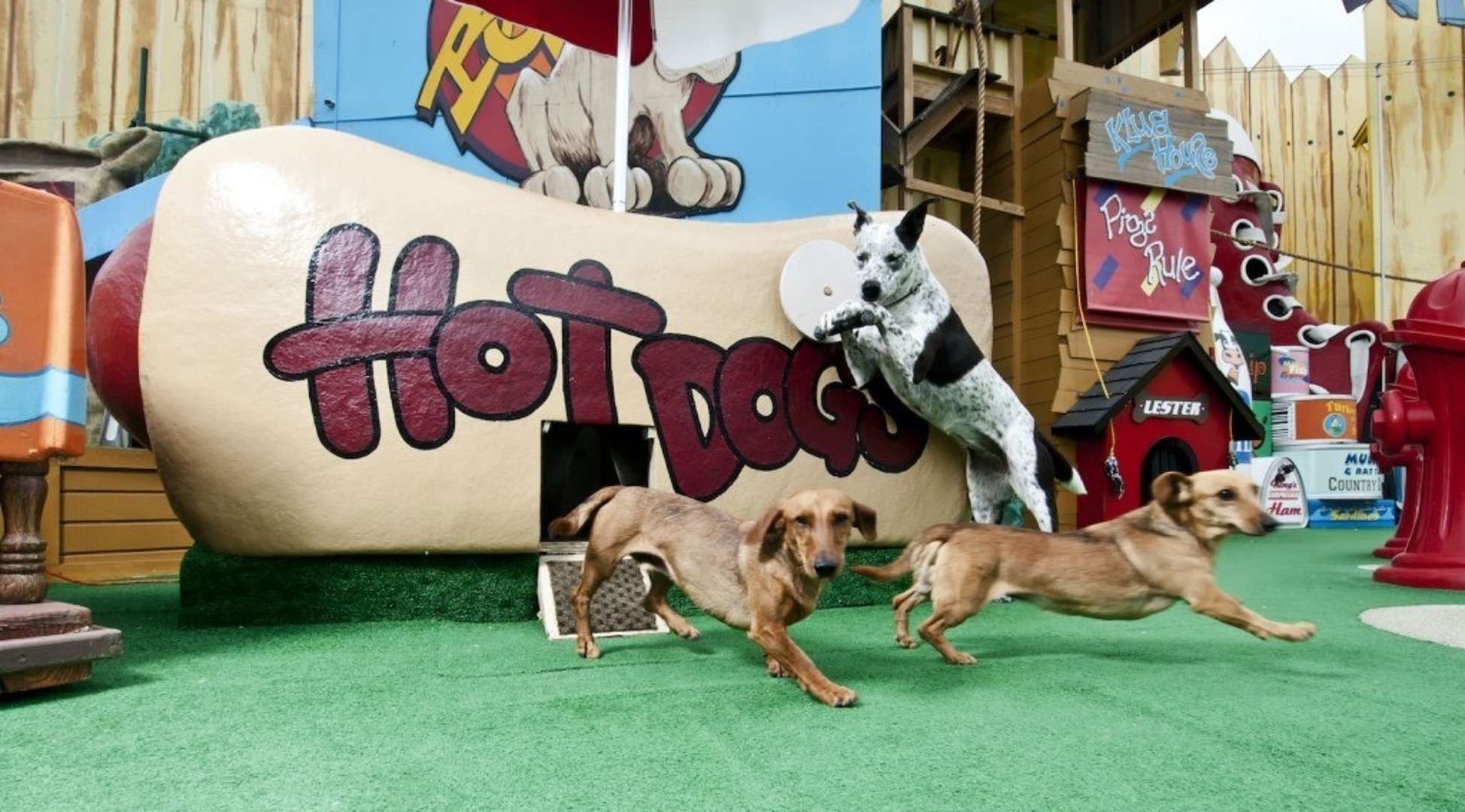
Pets Rule at SeaWorld San Diego was Utopia’s first project; the long-running show helped earn the park a Thea Classic Award in 2008.
10. Keep old connections alive.
Utopia’s first project was Pets Rule for SeaWorld San Diego. More than two decades later, the company was invited back to work on SeaWorld’s Halloween event. Nothing happened between the two projects, but the relationship was maintained through continued contact and relationship marketing.
11. Follow the market…
When Utopia started, projection mapping as we know it barely existed. The company went from working with expensive slide projectors to deploying dozens of high-resolution projectors across an entire parade route. New technology creates new capabilities – but only if you’re willing to learn how to use it.
12. …and be willing to add new skills.
Today Utopia can be hired to produce an entire project, fill a specific production role, write a treatment, provide translation, develop choreography or handle projection mapping. The company didn’t necessarily set out to become all of those things. The business evolved because the opportunities evolved.
13. Story is at the heart of everything.
Whether it’s a parade, a projection mapping show, a theatrical production or a community event, people connect through stories. Utopia’s Creative Manager Hailey Buck notes that people have gathered to tell stories for as long as humans have gathered. For Utopia, the format may change, but the fundamental need for story does not.
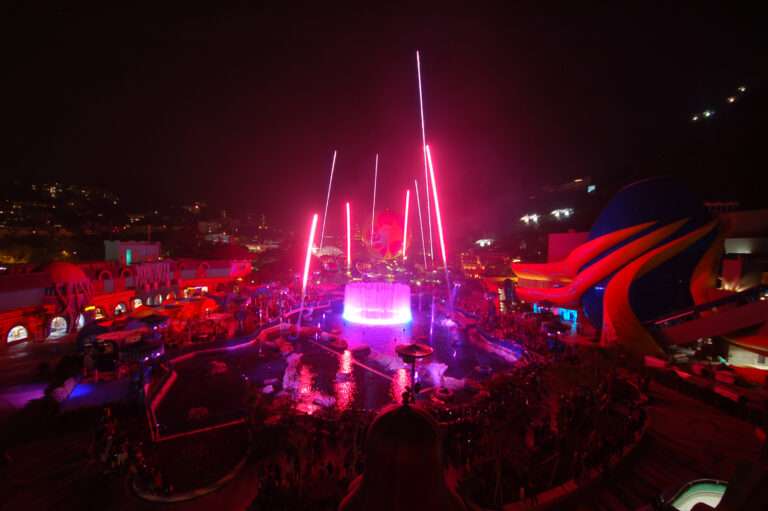
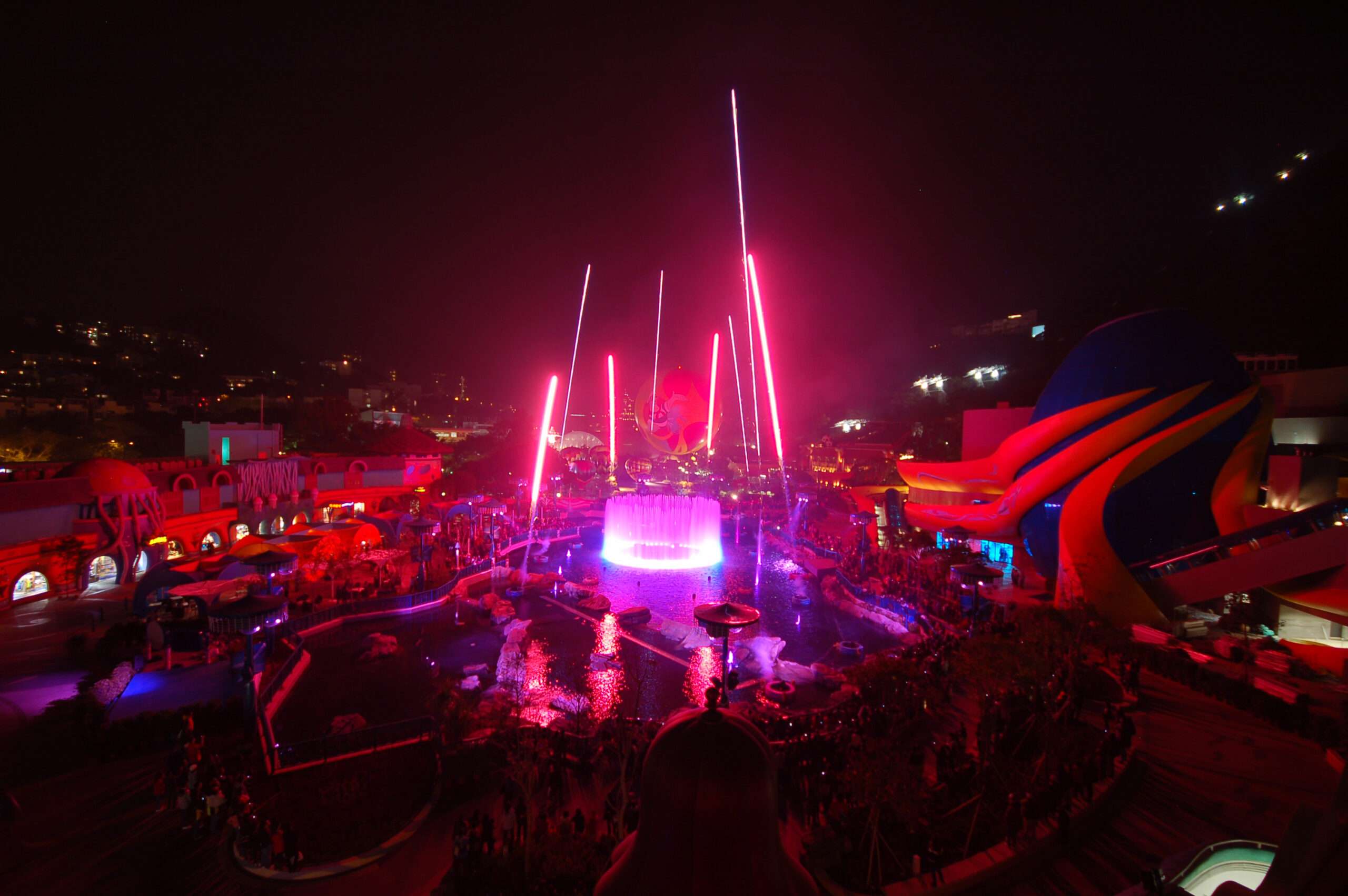
Symbio was a nighttime spectacular featuring a first-of-its-kind 360-degree water screen, custom animation projections, LED water fountains, articulating flame jets, pyrotechnics, original soundtrack, and an enormous fire-on-the water effect for Ocean Park Hong Kong. All photos courtesy of Utopia Worldwide
14. Design for the audience you actually have.
Utopia’s Symbio at Ocean Park Hong Kong drew on local mythology, using the yin and yang and fire and water dragons as the foundation for its story. The show was also presented in English, Cantonese and Mandarin. Local relevance can make an experience mean more to the people experiencing it.
15. Build what the client wants.
Creative people naturally want to put their own stamp on a project. But sometimes the client has a very specific vision, and your job is to bring that vision to life rather than replace it with your own. On the Lotte World parade, Utopia learned to embrace the client’s desire for a classic parade experience rather than continually pushing for something more unconventional.
16. Learn from projects big and small.
A project matters because it matters to the client, not because of its size. Working on a small community installation can teach something that eventually informs a major theme park project. Utopia’s work ranges from enormous international productions to comparatively modest public installations, and each one adds another piece to the company’s experience.
17. Blue sky needs a path to reality.
Dream big during the creative process. Then figure out how to build it. The producer’s job is to reconcile the creative vision with technical realities, budgets and schedules. Kahn’s preferred term for impossible technology is “unobtainium” – a reminder that if you’re going to promise something, you should have a credible way to make it exist.
18. Optimize the whole project, not just your piece of it.
Utopia’s Mission: Impossible stunt show at Canada’s Wonderland started as a design assignment, grew into a build project and eventually included operating the attraction for the season. The lesson is to think about the full life cycle of an experience, even when the immediate assignment is only one piece of it.
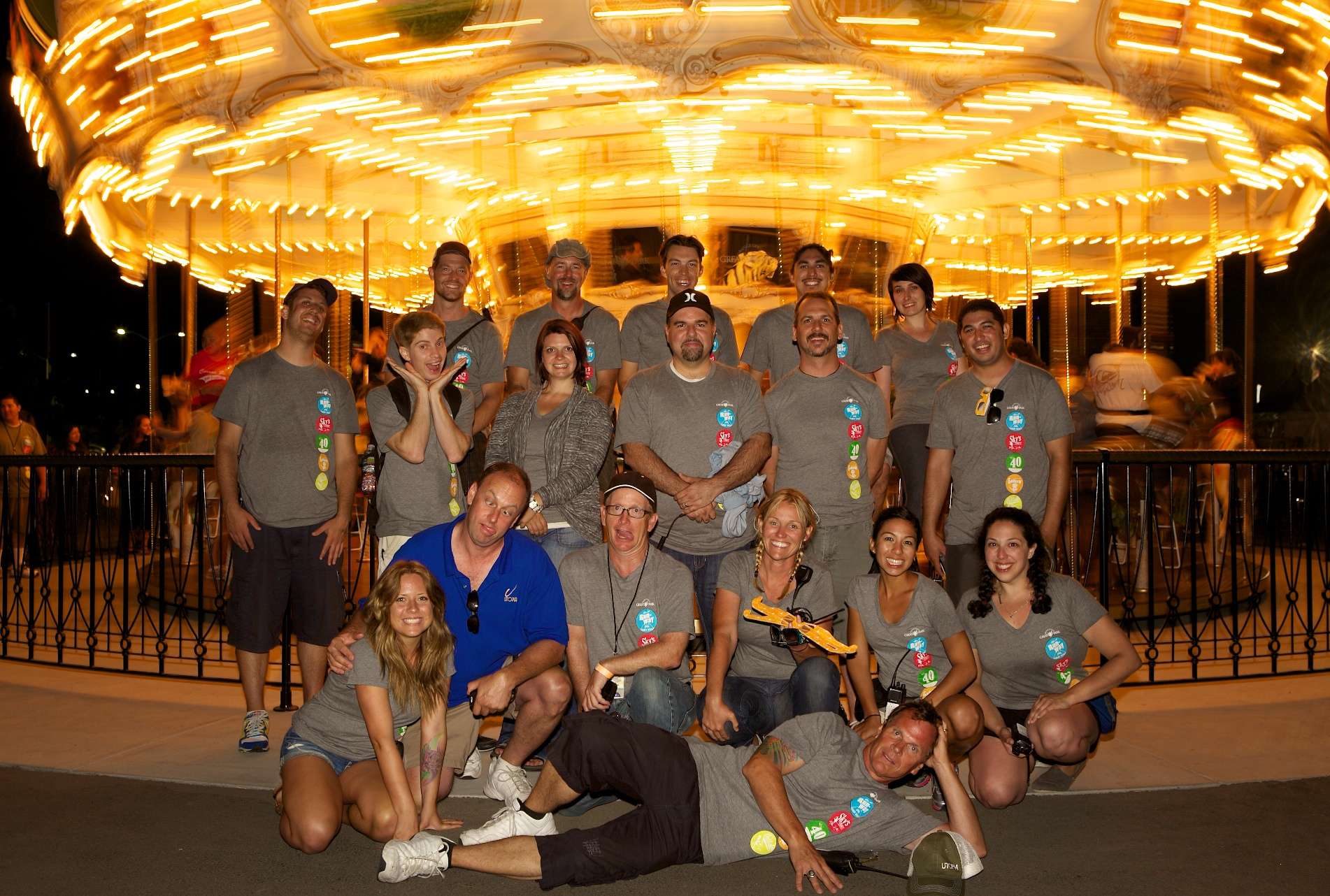
Utopia’s crew at the Great Park of Irvine Anniversary Celebration in 2011.
19. Tangible experiences matter in a digital world.
As more of life moves onto screens, people continue to seek experiences they can share physically with other people. Buck sees themed entertainment as a form of accessible theater – an opportunity to experience theatrical techniques and storytelling without necessarily thinking of yourself as “going to the theater.”
20. Try new things.
Utopia has repeatedly pushed beyond its comfort zone, from live shows and events into projection mapping and other emerging areas. The company has learned that staying in the same place is difficult in an industry that is constantly changing. New ideas, clients, people and technologies keep the business moving.
21. Travel is part of the job – make it work for you.
Utopia works around the world, and that means a lot of time in airplanes, airports and hotels. The company’s advice: do whatever you need to do to make travel comfortable. For Utopia, that means Global Entry, airport lounges and a good suitcase. Find your own system, then stick with it.
22. Worldwide should mean worldwide.
The name Utopia Worldwide has become an accurate description of the business. The company has worked in 34 countries and recently opened an office in the UAE, strengthening its presence in the Middle East. After 25 years, “worldwide” is less a marketing description than a reflection of how the company actually operates.
23. Keep the joy in the work.
There are plenty of stressful moments in producing live entertainment. There are budgets, schedules, technical challenges, travel and clients. But the variety is also what makes the business rewarding. Kahn describes one of the joys of the work as the fact that no two days are ever alike.
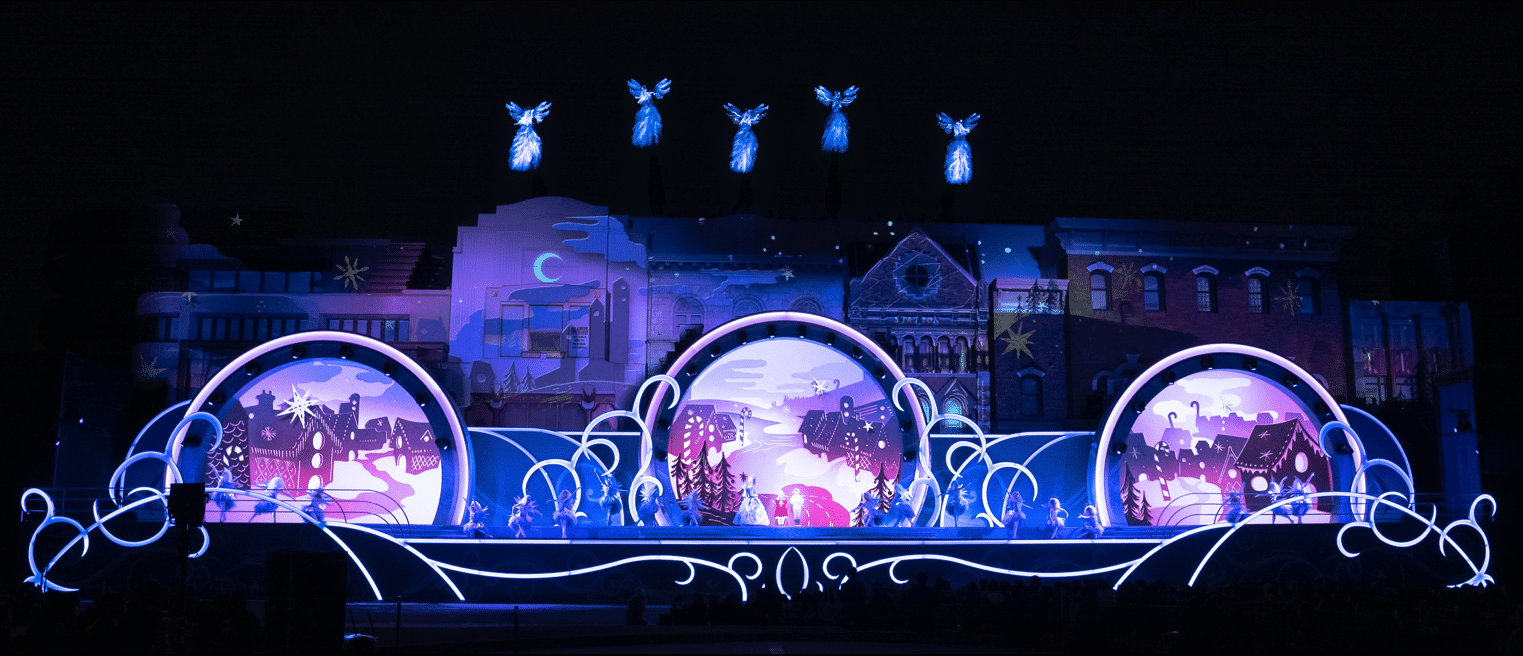
Universal Studios Japan’s holiday show featured 70 talented performers in spectacular costumes singing and dancing under a 30-meter-tall LED Christmas tree, projection mapping, lasers, aerial performers, and a 500-shot pyrotechnic display.
24. Sometimes the best business plan is adaptability.
Utopia’s history is full of things that weren’t planned. The company expected Utopia Digital to be a major business. It wasn’t. A small Beverly Hills holiday assignment became a decades-long relationship. A company founded around theme parks developed a substantial events business and a warehouse full of holiday equipment. The ability to recognize an unexpected opportunity – and adapt – can matter as much as the original plan.
25. Build the next generation.
Perhaps the most important lesson after 25 years is that the company has to outlive its founders. Utopia’s tradition of bringing people in at the production-assistant level and allowing them to rise through the ranks is part of that plan. Kahn knows that eventually someone else will take his place. That’s not a threat to the company’s identity. It’s the point. And it will help lead the company into the next 25 years and beyond. •