
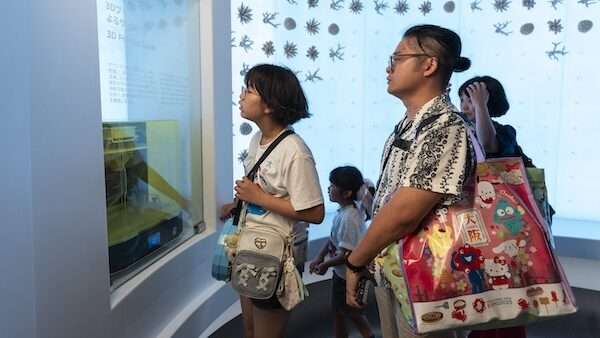
For over 150 years, world’s fairs were where the future made its debut. The Eiffel Tower rose for Paris 1889. The television age began at New York 1939. Touchscreens appeared at Knoxville 1982. These events were once the world’s most ambitious stage for national identity, technological optimism, and architectural spectacle.
Then came the digital era, ushering instant information sharing and artificial intelligence – a global acceleration of the ability to see and know anything instantly. And some began to question the value of world’s fairs in that they were a relic of past.
But as the world grapples with geopolitical tension, climate anxiety, and the dizzying speed of technological change, the World’s Fair model is quietly reemerging as a place where nations can gather, collaborate, and tell stories that matter. As evidence of this notion, following the great success of Expo 2025 Osaka Kansai, the next five years will see a rapid succession of expos — in Belgrade and Riyadh — each with its own vision of what the future should look like.
This is a snapshot of where things stand, what’s coming, and why the world is paying attention again.

Belgrade 2027: A new global hub in the making
Expo 2027 Belgrade is the first Specialized Expo ever hosted in the Western Balkans. Serbia’s victory in the BIE vote surprised many observers, but the country has since moved with speed and confidence to turn its pitch into a global gathering.
A theme built for a what we share
The official theme — “Play for Humanity: Sport and Music for All” — may sound lighthearted, but it’s strategically chosen. Sport and music are two of the few cultural forces that transcend borders, politics, and ideology. In a moment when global cooperation feels strained, Belgrade is betting that “play” can be a diplomatic language.
Belgrade 2027: Scale, investment, visitors, and strategic impact
The official Expo 2027 Belgrade site covers 25 hectares (2,691,000 square feet). This footprint is typical for a Specialized Expo, but Serbia is pairing it with major adjacent infrastructure projects that dramatically expand the effective scale of the event. Serbia has committed $1.52 billion to the Expo 2027 project.
While Serbia has not yet released a final attendance forecast, Specialized Expos typically attract 4–8 million visitors over their three month run.
Specialized Expos typically attract 60–80 countries. Belgrade has already surpassed 110 confirmed participants, with more expected as pavilion contracts are finalized. Delegations from over 150 nations attended the first International Planning Meeting, signaling unusually broad engagement.
Pavilion announcements
Recent months have brought a steady stream of national commitments:
- Japan unveiled a pavilion concept centered on connection, creativity, and the playful spirit of Japanese culture.
- Nauru, one of the world’s smallest nations, will highlight its athletic traditions and community identity.
- Iran, Russia, and several Middle Eastern and African nations have formalized their participation.
The diversity of early commitments suggests that Belgrade is positioning itself as a welcoming stage for countries across political divides.
Legacy: A permanent new district for Belgrade
The infrastructure being built for Expo 2027 is designed for long term use as designated by the following plans:
- The National Stadium will become a permanent sports venue.
- The exhibition halls will convert into a convention and events district.
- The new rail line will permanently connect the airport, Zemun, and the expo zone.
- Waterfront improvements along the Sava will support tourism and recreation.
The Expo will open May 15, 2027 and close August 15, 2027.
Expo 2027 Belgrade — Key Facts
| Category | Details |
| Event Type | Specialized Expo (Recognized Expo) |
| Theme | “Play for Humanity – Sport and Music for All” |
| Dates | May 15 – August 15, 2027 (92 days) |
| Site Size | 25 hectares (250,000 m²) |
| Location | Zemun–Belgrade, Serbia |
| Expected Participation | 120+ countries |
| Projected Visitors | 4–8 million |
| National Investment | €1.29 billion |
| Major Projects | National Stadium, Aquatic Center, rail line, expo halls |
| Legacy Plan | Sports district, convention complex, transit improvements |
The United States: A two-expo strategy
The U.S. is entering a rare period of dual expo engagement, preparing simultaneously for Belgrade 2027 and Riyadh 2030. For years, American participation in world’s fairs was hamstrung by a recurring problem: Congress had prohibited the use of Federal funds for expo pavilions, forcing the State Department to rely on private fundraising. That restriction repeatedly delayed or diminished U.S. participation, and in some instances prevented it entirely.
A major policy shift: Congressional roadblocks removed
In a significant development for American cultural diplomacy, Congress has lifted the longstanding funding restrictions that prevented Federal dollars from supporting U.S. pavilions. The change gives the State Department the ability to plan, design, and execute expo participation with the same stability and predictability as other nations.
For the first time in decades, the United States can approach upcoming expos with a fully funded, government-backed strategy rather than a patchwork of private sponsorships. Inside the expo world, this shift is widely viewed as a turning point — a signal that the U.S. intends to reassert itself on the global stage of cultural and technological storytelling.
With the funding barrier removed, planning for the U.S. Pavilion at Expo 2027 Belgrade has accelerated dramatically. In late 2025, the State Department issued a formal Request for Information/Market Research titled: “Design Build Fit Out of USA Pavilion at Expo 2027 Belgrade, Serbia.”
This RFI signals several important things:
- The U.S. is moving into active procurement, not just conceptual planning.
- The pavilion will be delivered through a design-build model, emphasizing speed, integration, and accountability.
- The government is seeking firms capable of handling full fit-out, including architecture, fabrication, media, and exhibit installation.
- The scope includes turnkey delivery, from design to construction to final operational readiness.
In the expo world, an RFI of this type is a clear marker that a pavilion is officially underway. A senior State Department delegation led by Leslee Michelsen, Director of International Expositions, also visited Belgrade to advance design and programming. Early indications suggest a pavilion centered on:
- American music
- American sport
- The creative industries that shape U.S. cultural influence
This aligns neatly with Belgrade’s theme, “Play for Humanity,” and positions the U.S. to deliver one of the expo’s most high profile national showcases.

Riyadh 2030: One of the largest, most ambitious world expos of the modern era
Expo 2030 Riyadh is shaping up to be one of the biggest world expos ever staged, both in physical scale and economic ambition. Saudi Arabia is treating the event as a central pillar of Vision 2030, its national transformation plan.
The Expo site will measure a massive 6 million square meters (64.5 million square feet). Making it one of the largest expo sites ever. For comparison, Expo 2020 Dubai’s site, which was also large for world expo sites, measured 4.38 million square meters. Saudi Arabia has already allocated $7.8 billion specifically for the Expo which it expects will attract 21.7 million visitors over its six-month run. The Expo will open October 1, 2030 and close March 31, 2031.
Saudi Arabia’s theme, “Foresight for Tomorrow,” emphasizes technology, innovation, and shared global solutions.
The expo is designed to align with — and amplify — Vision 2030’s goals:
- Diversifying the economy
- Expanding tourism
- Building global partnerships
- Showcasing cultural openness and modernization
Governance: A dedicated Expo 2030 company
The Public Investment Fund has created a wholly owned entity — Expo 2030 Riyadh Company (ERC) — to build, operate, and manage the expo site and its legacy.
Legacy: A permanent innovation & tourism district
Saudi Arabia intends for the expo site to become a sustainable tourism and innovation hub after 2031.
The legacy plan includes:
- Research and innovation centers
- Cultural institutions
- Hospitality and retail districts
- Green mobility infrastructure and technology
- Digital transformation
- Cultural exchange
Massive construction projects are underway, and early architectural concepts suggest a blend of futuristic design and regional identity.
Expo 2030 Riyadh — Key Facts
| Category | Details |
| Event Type | Universal World Expo |
| Theme | “Foresight for Tomorrow” |
| Dates | October 1, 2030 – March 31, 2031 (181 days) |
| Site Size | 600 hectares (6 million m²) |
| Location | North Riyadh, Saudi Arabia |
| Expected Participation | 180+ countries |
| Projected Visitors | 21.7 million |
| Government Allocation | $7.8 billion |
| Projected Economic Impact | $50–70 billion |
| Major Projects | Transit systems, hospitality districts, digital infrastructure |
| Legacy Plan | Innovation district, tourism hub |
Expos beyond 2030
Phuket has renewed its campaign to host a Specialized Expo in 2032 or 2033, unveiling an updated bid centered on longevity, wellness innovation, and sustainable development. Thai national agencies and local leaders are positioning the island as a global hub for healthy aging after its earlier loss in the Expo 2027 race. The refreshed proposal highlights new infrastructure commitments and a reworked site plan designed to strengthen Thailand’s standing in the next World’s Fair cycle.
Why expos matter
Expos offer something rare: a shared stage where nations can present their best ideas, their cultural identities, and their visions for the future.
They serve multiple purposes:
- Diplomatic platforms
- Cultural showcases
- Innovation laboratories
- Tourism engines
- Architectural experiments
They are a tradition that demonstrate global cooperation, creativity, and optimism.