
Doug Smith, Head of Sales for WhiteWater, shares info on the latest trends and issues facing the waterpark market in North America
interview by Martin Palicki
With the World Waterpark Association’s annual conference and trade show taking place October 20-23, 2025, at the Walt Disney World Resort in Orlando, Florida, InPark wanted to learn more about the current market for water attractions, particularly in North America. We spoke with Doug Smith, Head of Sales for WhiteWater, for an industry update. Doug’s career has centered on parks and attractions for decades, with the last 12 years spent in various leadership roles at WhiteWater.

Give us a snapshot of the waterpark market in North America right now.
Currently the market in North America has been primarily focused on indoor waterparks. Standalone facilities mostly cater to a regional market. Since most guests drive to the facility, they tend to be more immune to the ups and downs of tourism cycles. Additionally, year-round operations can speed up the ROI, especially for mid-to-large indoor waterparks.
We are also noticing an increasingly competitive landscape among hotels and resorts. There are more amenities offered at hotels and resorts than ever before. Historical data proves that adding a waterpark amenity can increase occupancy rates by up to 26 points. Revenue per room increases by 59%. These numbers can pay back a waterpark expansion in 2-5 years while bolstering the brand and creating a competitive edge against their competition.
Waterparks have historically had a faster ROI than theme parks. Do you think that is still the case?
Absolutely. Roughly speaking, the cost of a waterpark can be in the $50 million range, where the ballpark cost of a theme park is in the $500 million range. The price of an admission ticket, however, is much closer. You don’t get 10x the revenue per ticket for the spend. This makes waterparks – or waterpark expansions – appealing.
What are some of the trends you’re seeing in new attraction development?
At WhiteWater, we have quickly adapted to the growing indoor sector with covered attractions, slide effects to increase repeat ridership, and lower guarding requirements to help with staffing challenges.
We also are seeing water coasters gaining in popularity. Since they first came out in the early 2000s, water coasters have been steadily growing, but in the last five years they have become non-negotiable for high profile parks. Additionally, the technology has only gotten better. We have developed blasters that use less water and power, climb higher, and reduce spray that can cause corrosion and waste.
There’s also a noticeable increased focus on the family market, and venue management software like Vantage is providing a platform to help parks increase per cap revenue for family groups while improving their experience (e.g., a find-my- friends feature gives parents peace of mind). The high-quality data about customers (who they are and what they do in park) helps parks determine what types of attractions they need and even how to staff more efficiently. Rides used to skew extreme with launch capsules, thrill elements, and freefall type slides. We still see the demand for these, but there is an increased need to balance out those attractions with more family experiences. Parents want to have areas where they can relax and their kids can have fun. Those types of water play areas are inexpensive and improve the guest experience at parks.
Finally, we are noticing how operators are not just looking at capital expenditures, but they are also looking at long-term operating expenditures. Operational concerns such as guarding, water requirements, and facility capacities are all much more in the forefront when discussing attraction expansions.
We hear more about iconic attractions. Are they important for parks to have?
It is not always required to build an “icon.” For example, let’s say that an amenity center for a local community puts in one waterslide. That slide, to the locals, is iconic. Zoombezi Bay at Columbus Zoo added a RainFortress 5 with a large, themed octopus. That attraction is now synonymous with that park. It is iconic. It doesn’t need to be the tallest, fastest, biggest or best. It can be thoughtfully built to be iconic for the park and provide a draw for guests to visit.
Do you feel the effects of climate change might be impacting waterpark attendance?
There are many different ways to look at this question. Summers are getting hotter and guests are flocking to waterparks because of this. Evidence of this can be found in the amount of theme park operators adding waterpark attractions, which are frequently the busiest areas of theme parks during the peak summer months. From that perspective, it is definitely something operators are taking into account, as water-based attractions and amenities are growing in comparison to traditional theme park rides.
The awareness of climate change has also heightened concern for conservation. For example, there is a critique that waterparks use a lot of water. While this is not true thanks to water treatment and recirculation systems, the industry must be cautious of this perception. A golf course uses much more water to maintain their grass on a daily and annual basis.
Also, there is more attention being paid to the impact of waterpark construction, which is why WhiteWater has invested so heavily in our environmental footprint. We are the only waterpark company that is ISO 14001 certified, which is the framework for organizations to develop their environmental management systems.
Many are concerned about the economy in North America and beyond. What are your thoughts as it relates to the waterpark market?
As I mentioned earlier, historically speaking, slower economies can frequently be a boost for regional attractions like waterparks. When money is tighter, families will spend less on big flashy vacations and tend to focus more on regional road trips or even staycations. Waterparks are frequently well positioned to take advantage of that type of consumer behavior.
That being said, for many facilities it still can be a highly competitive environment and it’s important for them to continue to reinvest in their parks to continue to give guests a reason to keep coming back again and again.
What are some of your recent success stories?
We just helped Yas Waterworld in Abu Dhabi open a big expansion. We built a fantastic tall tower that features numerous waterslides and also integrates one of our Shoot the Chutes Water Rides attractions into the tower. It changes the complex completely and is very unique. While that water attraction has been installed in waterparks before, it has never been built into a waterslide tower. It has the effect of giving a theme park setting within a waterpark and is incredibly visually appealing.
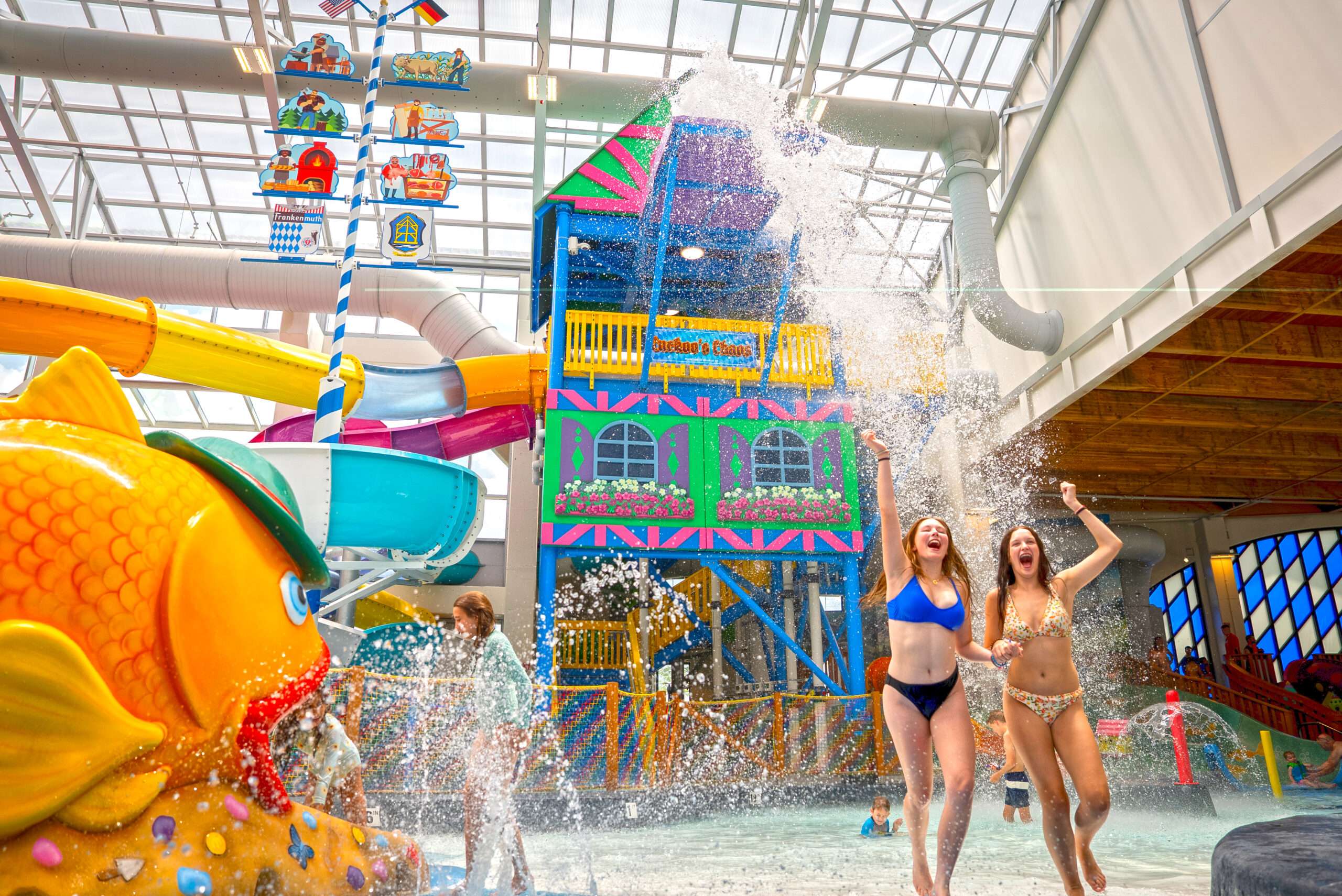
In North America we’ve started a series of indoor waterparks that will be opening over the next two years. Bavarian Blast opened in Michigan earlier this year [See InPark issue #106, “Ein Prosit”] and seven more indoor facilities are on track to open. Only one, the Kalahari Resort in the Wisconsin Dells, is an expansion of an existing park. All the others are new buildings – some for resorts and others for local municipalities. We’ll be sharing more information about these projects soon, but it’s a clear indicator that indoor waterparks remain a popular option within North America. •

