WhiteWater helps operators design experiences guests can’t stop talking about
by Martin Palicki
In a crowded marketplace where parks need to compete for attention and attendance, simply building a ride isn’t enough anymore. Guests arrive with smartphones in hand, social media accounts ready, and opinions they’re eager to broadcast. A single viral video can draw thousands of new visitors. Conversely, a wave of bad reviews can keep families away. In this brave new world where peer reviews matter more than ever before, marketing is no longer in the hands of the parks – which means parks need to create ways in which guests can broadcast for them.
WhiteWater, a leading designer and manufacturer of water attractions, has been at the forefront of this evolution. By blending ride design with a deep understanding of guest behavior and marketing dynamics, the company helps parks create experiences that people can’t stop talking about – and can’t stop sharing.

Una de Boer, WhiteWater’s Chief Marketing Officer, puts it simply: “People don’t trust paid advertising the way they used to. If you visit a city and want to book a restaurant, you don’t just check the ad, you read reviews, you look at ratings, you see what other people are saying. That’s called ‘social proof,’ and it has become central to how parks drive visitation.” Furthermore, social proof can directly impact the bottom line. In the case of hotels, Katanox reports that travelers are willing to pay 35% more for a hotel with higher guest rankings and better reviews.1
From campaigns to credibility
For decades, marketing for attractions was built on traditional media: TV spots, radio jingles, magazine ads, billboards. While they still create brand awareness and plant the idea of a visit, increasingly what seals the decision is what people find online. Families watch ride POVs on YouTube, browse hashtags on Instagram, or scroll TikTok for influencer reactions.
“There’s a hierarchy of trust when it comes to sources of information,” says de Boer. “Traditional media used to carry the most credibility because of research and verification. Now, people trust peers and influencers more than brand messaging. You can have the best targeted Instagram campaign, but consumers still want validation from someone else.” According to CrowdRiff, 92% of consumers trust word of mouth and UGC more than other forms of traditional brand advertising.2
What’s UGC? It’s user-generated content, which means you’re earning positive word-of-mouth coverage from your guests. For operators, this means the experience itself must become a marketing engine. Every attraction, every sightline, every emotional beat is a chance to inspire user-generated content that reinforces the brand message with third party credibility. Another benefit of UGC is that it can reduce content creation costs by 30%3 by offering a budget-friendly alternative to professional content while also offering proof that you’re positively engaging your visitors.
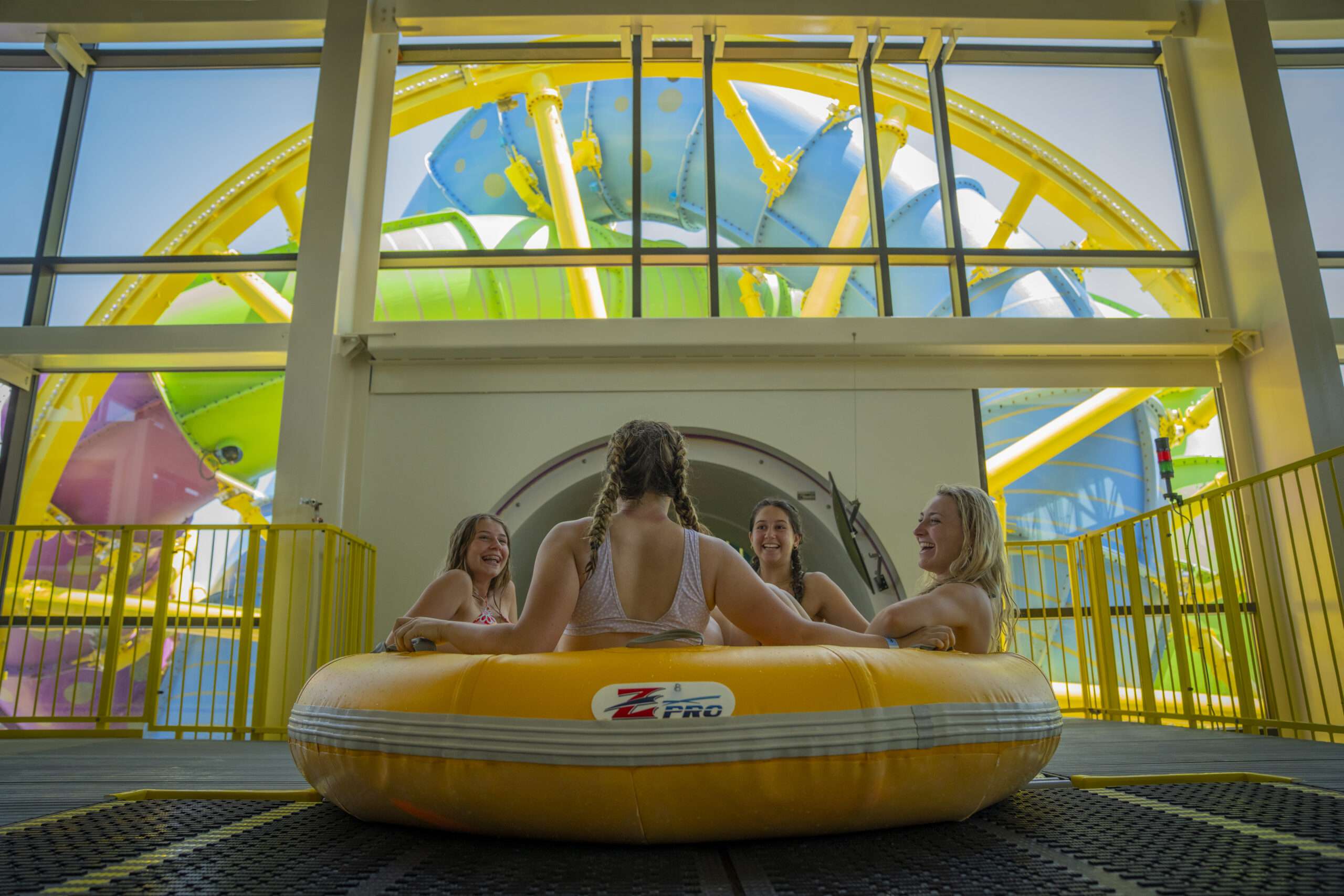
One of the clearest illustrations came with the first U.S. installation of a SlideWheel® at Mount Olympus in Wisconsin. Initially skeptical of social media’s marketing power, the park’s management quickly changed their minds after working with an influencer.
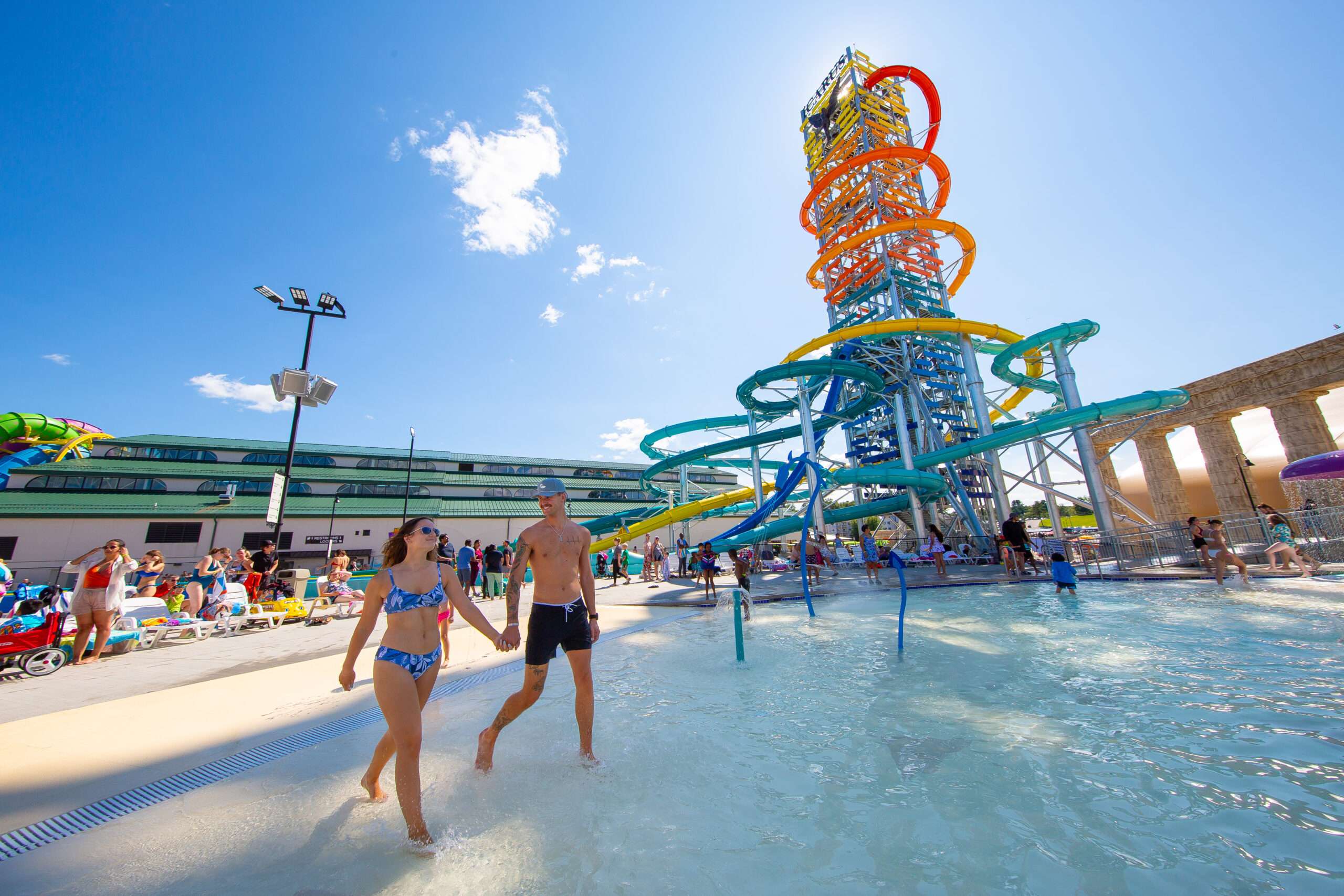
“One of WhiteWater’s early social media partners, Alex Ojeda, posted a video of the SlideWheel,” recalls de Boer. “Bookings went through the roof. The hotel saw a surge in reservations, and the park was busier in the following weeks. It was measurable, immediate, and undeniable. The park owner, who had been doubtful, became a total convert to the power of social media.”
SlideWheel’s spinning slide that lights up at night is an intriguing icon that people naturally want to share. That experience highlighted a simple truth: when a ride is both fun and visually striking, it naturally helps fuel digital word-of-mouth.
Social proof and algorithms
Guest-generated content doesn’t just influence people, it influences algorithms.
Search engines and AI increasingly evaluate credibility based on engagement and online chatter. Parks with more authentic reviews, shares, and mentions are more likely to surface in recommendations and summaries.
“Just creating content you control isn’t enough anymore,” de Boer explains. “You need other people talking about you. That’s what AI notices. Social proof drives both human and algorithmic perception.” Ads featuring user-generated content achieve four times higher click-through rates than branded ads.4
This has profound implications. It means marketing is no longer a push activity alone. It’s also a pull strategy, where the park’s guests do much of the heavy lifting by sharing their genuine experiences.
While most guests probably aren’t going to tag the manufacturer of your attraction, having a well-known attraction that they’ve seen at other parks helps build awareness for your park by piggybacking on the popularity, such as a Boomerango or Master Blaster.
Designing for shareability
While creating “Instagrammable” moments has become a buzzword across the hospitality industry, WhiteWater stresses that it’s not just about a single photo backdrop. It’s about designing entire experiences that are positive, photogenic, memorable, and worth sharing. “Details like ride comfort, smooth slide joints, landscaping, and clean facilities all matter,” says de Boer. “They shape the story people share. Did you enjoy the experience or was it unpleasant? No one wants an unexpected face full of water from a poorly designed ride.”
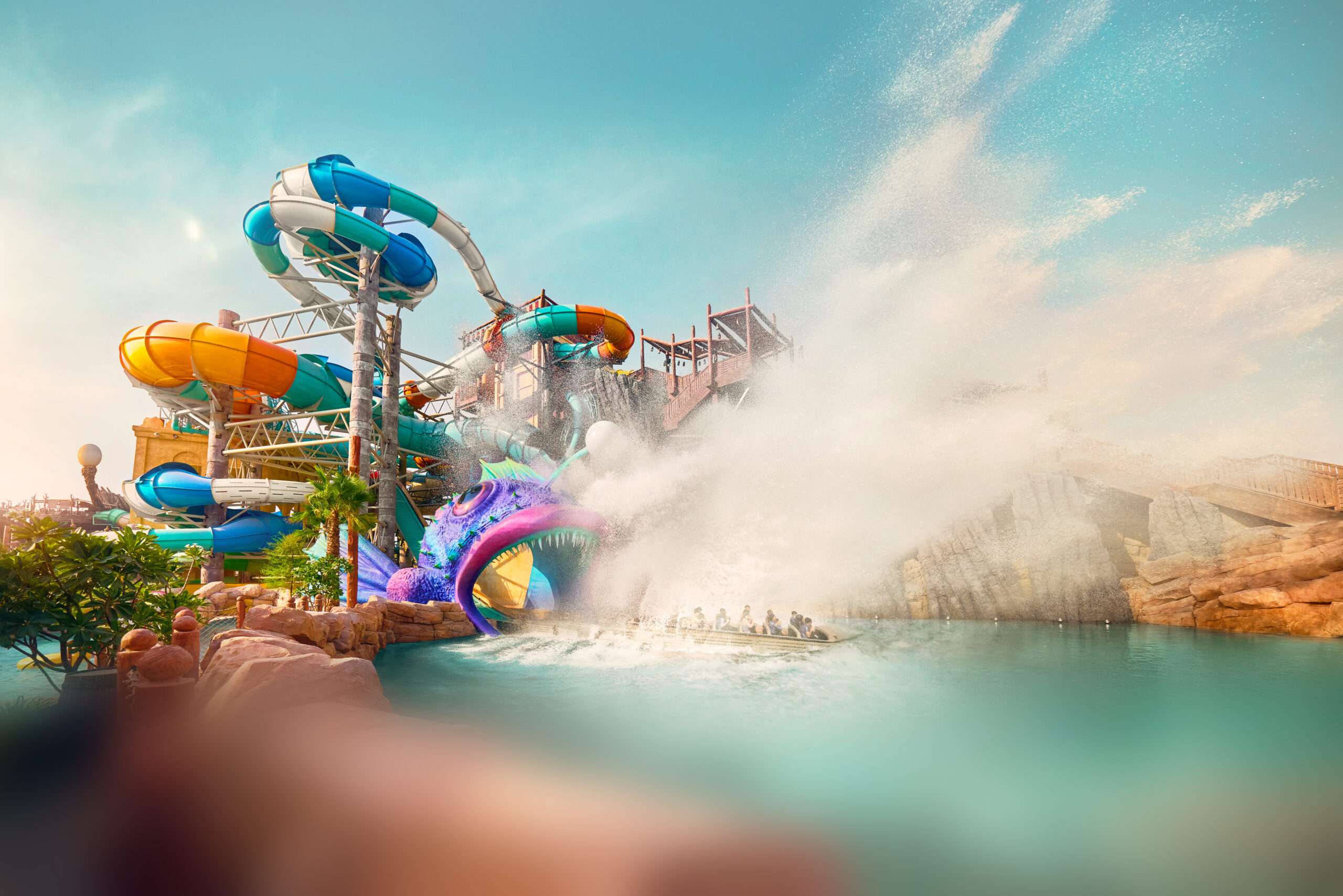
At Yas Waterworld in Abu Dhabi, WhiteWater helped create a notable example. Bahamut Rage, a Shoot the Chute water attraction integrated into a waterslide tower, propels guests down a 15-meter drop into a spectacular splash. Importantly, the attraction also offers viewing areas where non-riders can watch (and record) the big splashdown, either getting soaked in the process or staying dry, depending on their location. The effect is to turn the ride into a theater of spectacle, ideal for photos and videos.
“Adding that spectator element makes the ride inclusive in a new way,” notes de Boer. “It’s not only thrilling for the riders but also for friends and family who want to watch, film, and share the moment. That’s exactly the kind of design that multiplies a ride’s marketing power.”
Other attractions follow similar design principles. WhiteWater’s AquaPlay structures are colorful and kinetic, with giant tipping buckets that build anticipation before drenching crowds, a guaranteed fun experience and a notable video magnet. FlowRider surf simulators are essentially built like stages, creating an arena for bystanders to enjoy, film and share in all the surfing triumph as well as the wipeouts.
Authenticity matters
With the power of influencers evident, some parks might be tempted to manufacture buzz. But audiences can sense when content is staged and de Boer stresses that authenticity always wins. “The best influencer posts aren’t glossy ads. They’re raw moments: the scream at the top of a slide, the family laughing together in the wave pool. That’s what people trust.” And brands have taken notice, with Joli reporting that 56% of brands now focus on UGC as a core part of their marketing strategies.5
WhiteWater helps operators think about which attractions lend themselves naturally to influencer content, as well as how to balance experiences to help narrative content flow easily across the course of a visit. Big, dramatic rides provide instant impact. Interactive features highlight family bonding. Theming transports guests to new worlds. Surf simulators blend skill with spectacle. When the experiences themselves deliver, influencer partnerships feel organic rather than forced.
Supportive infrastructure
Creating the experience, the environment and the visual appeal is only part of the equation. The easier a park can make it for guests to capture and share content, the better. Park- wide wifi, for example, provides easy and fast access to the internet for guests to post quickly and often.
Developing new ways for guests to use their devices within the park can also help. According to 5W PR Agency, Holiday World, Splashin’ Safari saw a 35% increase in social- media mentions and UGC after implementing AR filters for their attractions.6
Advanced systems like WhiteWater’s Vantage platform offer even more advantages and tools to help streamline the experience-to-content pipeline. Vantage provides operators key data about their park and also offers guests easy access to on-ride and in-park media directly in the app on their phone. Because Vantage ties ride experiences to guest profiles, photos and videos can be automatically captured, shared, and most importantly, branded. “The magic of Vantage is that it integrates seamlessly,” says de Boer. “It doesn’t feel like a marketing tool to the guest; it just enhances their experience. But for operators, it’s a powerful driver of engagement and loyalty.”
Lessons to live by
The lesson for operators is clear: marketing needs to be considered before an attraction is fully conceptualized. Marketing value for the park is found in the stories guests tell – in photos, videos, reviews, and conversations – that drive credibility and choice.
WhiteWater’s role is to ensure those stories are worth telling. By embedding marketing thinking into ride design, the company creates attractions that double as content engines. By guiding operators on theming, layout, and guest touchpoints, WhiteWater helps parks turn every detail into an opportunity for fun and sharing. “Smart operators realize marketing isn’t just pushing messages,” de Boer concludes. “It’s about crafting experiences people want to share. When you get it right, the results speak for themselves, both online and in the park.” •
- https://katanox.com/blog/the-impact-of-user-generated-content-on-travel-decision-making
- https://crowdriff.com/resources/ugc-stats/
- https://www.reelertech.com/post/theme-parks-embrace-user-generated-content-ugc-in-their-marketing
- https://joliapp.com/blog/user-generated-content-for-hospitality-brands/
- https://joliapp.com/blog/user-generated-content-for-hospitality-brands/
- https://www.5wpr.com/new/emerging-trends-in-water-park-public-relations-strategies/