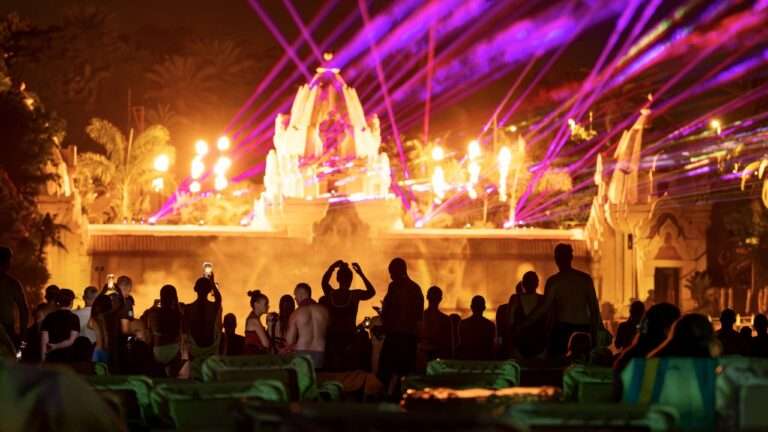
Siam Night brings its 2026 edition to a close with historic success, attracting over 120,000 visitors during July and August. Two intense months of fun, music and adrenaline that have left an indelible mark on the Canary Islands’ summer. Having closed on August 29, Siam Night saw a 20 percent increase in attendance compared to last year’s edition.
For eight weeks, the magic of Siam Park was transformed under the moonlight into a unique festival that brought together families, young people and tourists from all over the world. Every night, thousands of visitors enjoyed iconic attractions such as the Tower of Power and Saifá, alongside the vibrant atmosphere of Siam Beach, with international DJs and fireworks displays that lit up the sky over Adeje.
Siam Night is part of a strategic vision to address a key need identified during the global summer peak season: to offer a premium water-based experience where the ground is not heated by the midday sun and where the evening climate provides a cool, pleasant and comfortable environment for visitors of all nationalities.
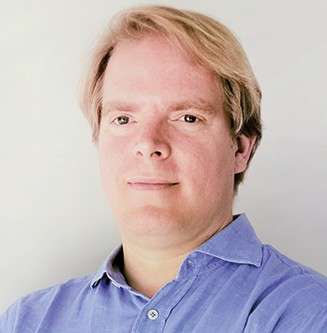
The vice-president of the Loro Parque Group, Christoph Kiessling, emphasized that Siam Night “not only enriches Tenerife’s tourist offering, but also has a direct impact on the local economy, benefiting hotels, restaurants, shops and transport. And most importantly, we have achieved this whilst maintaining our essence, with safety, hospitality and quality in every detail.
“The success of Siam Night 2026 would not have been possible without a large team of professionals, who ensured our visitors enjoyed an unforgettable experience.”
One of the greatest achievements of Siam Night 2026 has been its ability to stimulate and drive new demand in the international tourism market. The evening event has succeeded in attracting a global audience that previously did not consider visiting a conventional waterpark as part of their travel plans.
“It was an unforgettable night, with incredible energy,” commented a visitor from Germany. Another young attendee emphasized: “I’ve never enjoyed a water park so much; the night-time experience is simply magical.”
One of the aspects most appreciated by the public was how it differed from the daytime version: the night-time atmosphere allows visitors to enjoy the rides and shows more smoothly and in a more relaxed setting, which greatly enhances the sense of comfort and enjoyment.
Furthermore, Siam Night 2026 renewed its commitment to accessibility and support for the local community, maintaining the 50 percent discount for Canary Islands residents and strengthening the bus service linking the north and the metropolitan area with the south of the island, making it easier for families, groups of friends and tourists to travel comfortably from different parts of the island.
The Loro Parque Group’s philosophy has always been linked to its commitment to the Canary Islands, which includes creating jobs, boosting the local economy, and strengthening the island’s competitiveness as a tourist destination.
Following the conclusion of Siam Night, the park will continue to be open 365 days a year.
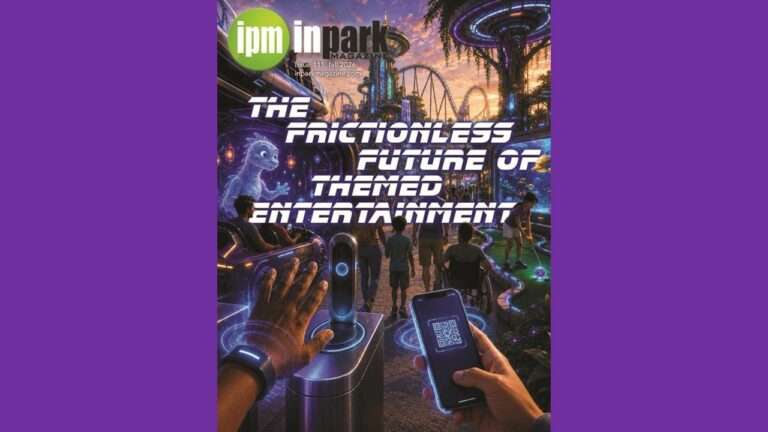
With some human prompting, ChatGPT created this image of a fantasy theme park where technology provides frictionless experiences for guests, a major theme of this issue of InPark Magazine.
The idea of making the guest experience as friction-free as possible and in nearly all aspects permeates this issue. Consider accesso’s look at ticketing and in-park purchasing. The goal is simple: remove obstacles between the guest and the experience. Jora Vision explores how technology can make competitive socializing more appealing and engaging, without letting the technology itself get in the way. And Alterface has long championed interactive attractions where the technology effectively disappears, allowing guests to focus on the story and the fun rather than the machinery making it happen.
That idea of frictionless experiences can also extend to the initial concept of an attraction. At the recent TEA SATE EME conference at Liseberg, Brad Shelton, Owner/Partner at BRC Imagination Arts, offered a thought that resonated with me. He questioned whether focusing attractions on guest agency represents the ultimate goal of themed entertainment.
Perhaps, sometimes, people just want to be told a story. They want to sit back, follow the narrative, marvel at what is happening around them and enjoy losing themselves in the moment. There is something to be said for surrendering control and allowing a talented creative team to take you somewhere.
Could it be possible that we, as an industry, sometimes get so excited about what technology can do that we forget to ask what the guest actually wants it to do.
As we share this issue with readers through our bonus distribution at TEA SATE North America, the Association of Zoos and Aquariums (AZA) Annual Conference, the World Waterpark Association (WWA) Trade Show and IAAPA Expo Europe, we hope these stories spark that kind of conversation. Across themed entertainment, the goal remains the same: create memorable experiences, then get out of the way and let the experience work its magic.
Six Flags, Plague Productions, and Warner Bros. Discovery Global Experiences invest in premium interactive horror with The Conjuring: Beyond Fear
by Phillip Hernandez
Fall is one of the most important and challenging seasons on the theme park calendar. For operators, the goal is to offer compelling experiences while moving large crowds efficiently through the park. That balancing act becomes especially difficult when haunted houses are part of the mix. For chains such as Six Flags, high throughput is essential. Long waits can quickly undermine guest satisfaction, but pushing more people through a haunted house can also mean a faster, more compressed experience with fewer opportunities to build suspense and deliver a scare.
Some parks have experimented with a different approach: slow the experience down, make it more immersive, and charge a premium for the privilege. Busch Gardens Tampa Bay’s Alone and Universal Studios Japan’s Hotel Albert demonstrated the model’s potential, but these experiences have largely remained isolated offerings rather than part of a broader operating strategy.
The Conjuring: Beyond Fear offers a different kind of case study. Developed by Six Flags and Plague Productions in partnership with Warner Bros. Discovery Global Experiences, the 20-minute interactive walkthrough is entering its second season at four Six Flags parks. The attraction offers a premium experience and something rare in the theme park haunt world: exclusivity. By reducing throughput and upping immersion, Six Flags is exploring whether guests will pay a premium to linger longer in a haunted attraction, and whether that model can work at scale.
The experience
The Conjuring: Beyond Fear runs during the fall at Cedar Point, Carowinds, Canada’s Wonderland, and Kings Island. Small groups spend roughly 20 minutes moving through 13 rooms drawn from the Warner Bros. horror film franchise, escorted by one of four guide characters, each themed to a different film in The Conjuring Universe. Rather than filing past scenes, guests are instead given a mission: recover cursed artifacts, carry the Annabelle doll from room to room, and lock her back in her case before the haunting escalates. In its debut season, Six Flags sold the experience under its SCREAMium premium brand as an upcharge option, on top of event admission.
“We wanted it to feel different from an escape room, so we created something that is a blend between both theatrical and maze experiences,” says Kelly Daugherty, Corporate Director of Live Entertainment at Six Flags Entertainment Corporation. For Jon Cooke, founder of Plague Productions, the haunted attraction design studio behind the experience, that north star of guest agency was the starting point. Giving guests a role to play and extending dwell time would be fundamentally different from other theme park haunted houses, and Cooke’s team began to brainstorm: How do we make it more than just a haunted house?
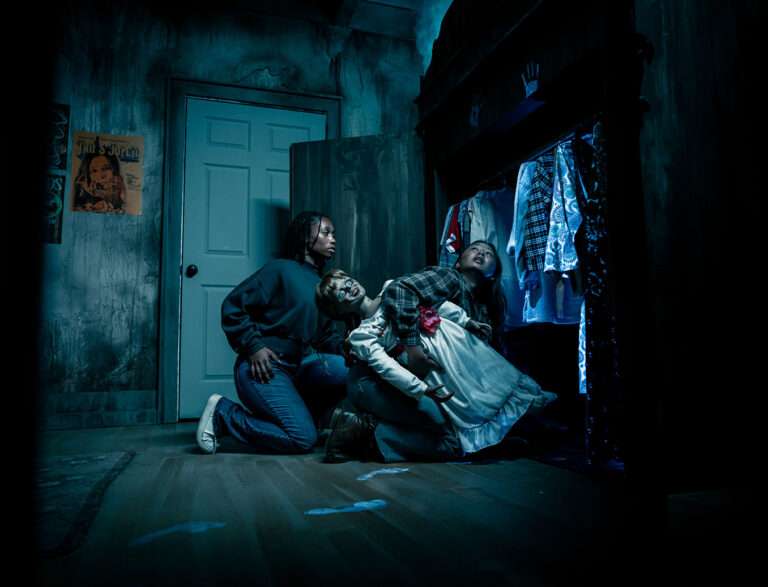
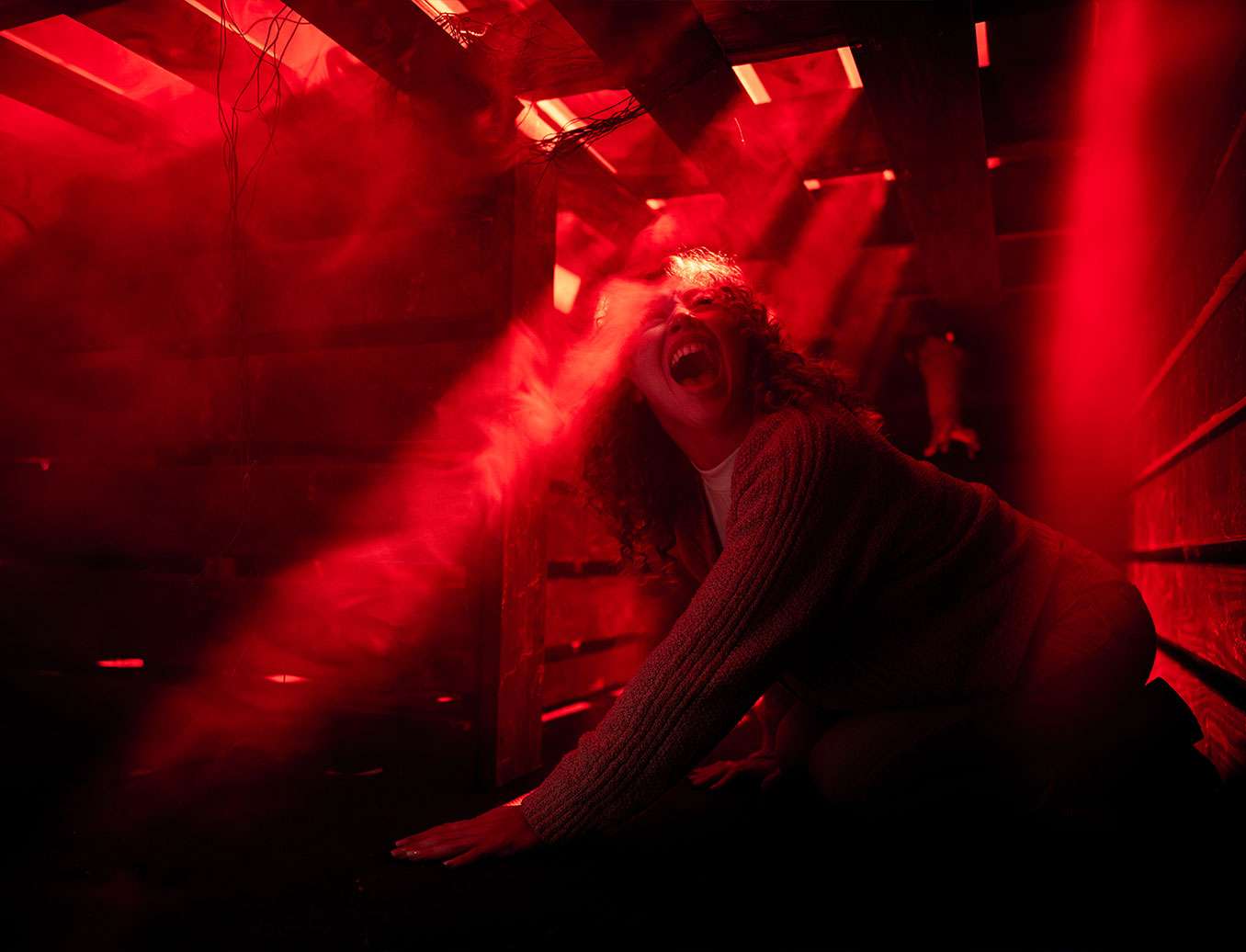
The solution was making interactivity part of the scare. “Going back to basics on haunted houses, a distraction can set up a really strong scare,” Cooke says. “By giving them a mission, we’re giving them actions, and as they are completing these tasks, we’re setting up big scares.” In one scene built from the first film’s hide-and-clap game, guests clap in an apparently normal room, hear a clap answer back, and watch the lights shift to UV, revealing footprints that lead to a wardrobe. The scare comes from above, and guests must then crawl between the walls to get out.
As a premium attraction with a lower throughput by design, “The Conjuring: Beyond Fear” provides guests with unique fear-inducing experiences, such as crawling between walls in confined spaces.
“We were aiming for roughly one minute per scene, but if the scenes take too long, our actors adjust to keep the show on time,” Cooke said.
The four guide characters escort groups through the experience and hand off to one another at the transitions as the story crosses from one film’s world into the next. “One disappearing and another one coming in is what helped bridge those gaps,” Cooke says. The guides set the pacing and the urgency, and they carry the exposition load that a ten-second maze room never could. Live actors throughout the rooms respond to each group in real time, adjusting to guests who lean in and guests who hang back.
The technology backbone
To create an experience this ambitious requires a lot of technology, all housed in permanent buildings. Every scene is networked back to a central control room over a Q-SYS system, with each scene triggered live by an actor. That architecture gives operations real-time visibility into pacing. “If scene seven is supposed to get triggered every 60 seconds but it’s getting triggered every minute thirty, we need to speed this up,” Cooke says. “In real time, we’re able to tell the guides to get through this part faster.” Technicians can also remote in to diagnose and fix bugs without stopping the show. “It’s definitely quite a bit more tech firepower than we’re putting into a standard haunt attraction,” Cooke says.
Lighting follows the same philosophy of dense capability in a small footprint. Gantom fixtures handle roughly 90 percent of the lighting in the experience. “It’s a great product, it’s versatile, and we really love the smaller fixtures,” Cooke says. “Being able to get the firepower out of this tiny fixture that you’d get out of a larger fixture is really good for us from an immersive standpoint, because guests are not seeing these giant fixtures.” The unified control also compresses troubleshooting. “We don’t have to go find the controller behind the wall and chase the cable,” he says. “In real time we know about an issue and how to fix it while keeping the show running.”
Betting on premium and IP
Beyond betting on a premium experience, The Conjuring: Beyond Fear was also a wager that fans would respond to IP at the legacy Cedar Fair properties. After Six Flags debuted IP mazes across the legacy Six Flags parks in 2024 (including The Conjuring Universe, Saw, Stranger Things, Trick ‘r Treat, Texas Chainsaw Massacre, and Army of the Dead), the newly merged company decided to bring branded haunts to parks that had never had them before: Cedar Point, Kings Island, Carowinds, and Canada’s Wonderland.
“With any new experience or attraction, we strive to capture what will resonate for our guests through various survey platforms, so we don’t go blindly into new projects,” Daugherty says. Still, she is candid about the risk. “With anything new, you’re going to take a bit of a gamble, even if you do all of the homework.”
After setting the north star direction, Six Flags reached Plague Productions, with whom they have an extensive working relationship, to execute. Plague Productions has worked with Six Flags and legacy Cedar Fair for most of Cooke’s career, and Daugherty calls the studio one of their most trusted creative and fabrication partners. “Six Flags dictated how we were to use the IP. We got to dictate what the experience was,” Cooke recalled.
Four installations in three months
The trust between Six Flags, Warner Bros. Discovery Global Experiences, and Plague Productions was critical because all four installations had to be completed in roughly three months. Although the four installations share scenes, sequencing, characters, and props, each occupies a unique footprint.
Plague designed the show for quick adaptation, with modular set pieces that reconfigure easily to each space. Programming also helped speed up the install; the control system was programmed once, then copied to the other locations. “The first one was important to get up as quickly as possible to give us time to fine-tune, and from there the other ones fell in line,” Cooke said.
A permanent footprint
Three of the four builds went into spaces that had never housed a haunted attraction, with the parks handling demolition, construction, and power. At Canada’s Wonderland, the experience occupies a level inside the park’s signature mountain that did not exist a month before installation began.
“A park only has so much footprint and so many indoor spaces,” Daugherty explained. “Anytime there’s an opportunity to do an entertainment activation in a space that’s a little more permanent, we will jump on it, because we can quickly reactivate the experience.” A permanent building also protects a technology investment; the density of show control, audio, and lighting inside The Conjuring: Beyond Fear is not the kind of system a park wants to tear down and rebuild every September.
Because the buildings stay dressed, Carowinds reopened its installation this spring for the park’s first Scream Break, a standalone spring event that ran April 3-12, 2026. “That was something we hadn’t done at Carowinds, and that was fun for the guests,” Daugherty says.
Lessons learned
For Six Flags, The Conjuring: Beyond Fear represents more than an experiment in premium Halloween. It is an attempt to rethink the economics and operating model of the haunted attraction itself. By slowing the experience down, giving guests an active role, and investing in permanent infrastructure, the company is testing whether fewer guests can generate greater value when the experience is deeper and more exclusive. If guests continue to respond, the model could offer operators another way to balance the competing demands of throughput, immersion, and revenue. And for haunted attraction designers, it may signal that the future of Halloween is not necessarily about getting more people through the door, but giving some of them a reason to stay longer. •
CREDITS
SIXFLAGSENTERTAINMENT CORPORATION
Kelly Daugherty, Corporate Director of Live Entertainment
PLAGUE PRODUCTIONS
Jon Cooke, Creative Director / Founder Ted Dougherty, Writer / Show Director Kyle Arnold, Technical Designer
Ray Zupp, Art Director
Pierce Rolli, Production Designer
WARNER BROS. DISCOVERY GLOBAL EXPERIENCES
VENDORS
Gantom Lighting and Controls, Lighting Manufacturer
Jora Vision expands its competitive socializing portfolio
interview by Martin Palicki
Competitive socializing has quickly evolved from a niche concept into an increasingly important segment of the location based entertainment (LBE) industry. By combining familiar games with food and beverage, engaging environments and technology, operators are creating destinations that encourage guests to stay longer, socialize more and return often.
While many of the earliest concepts emerged in the U.K., the trend has expanded across mainland Europe, creating opportunities for operators looking to offer experiences that appeal to families during the day and adults in the evening. At the same time, technology is becoming less about flashy features and more about removing friction, enhancing gameplay and encouraging interaction between guests.
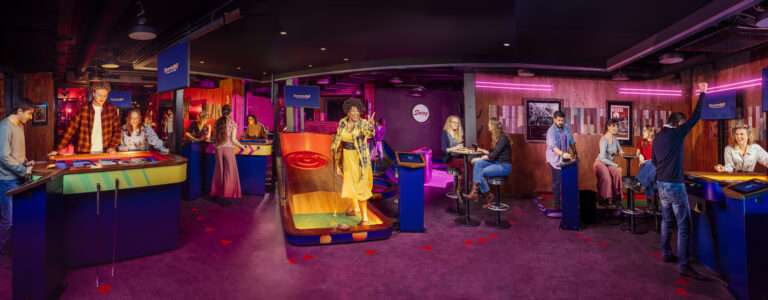
Jora Vision entered this space with RemarkaBall, its interactive mini golf system that combines traditional putting with automated scoring, skill games and cooperative gameplay. Since launching in 2022, the product has expanded across Europe and into the Middle East, while the company has continued to develop its approach to competitive socializing with the introduction of TripleShot Pool.
RemarkaBall evolved in part from the company’s decades of design work for indoor mini golf courses as well as its 2009 Thea Awarded work on The Forgotten Mine course at Molenheide in Belgium.
Jan Maarten de Raad Jora VisionAnthony Nelemans Jora Vision
For Jora Vision CEO Jan Maarten de Raad, the development of these products represents more than an expansion of the company’s portfolio. It is an opportunity to apply the company’s experience in themed entertainment and attraction design to products that can be developed, tested and refined across multiple locations.
“Developing products like RemarkaBall allow us to implement and refine these new technologies, incorporating skills we developed from decades creating dark rides and attractions,” says de Raad. “It’s exciting to now see RemarkaBall being followed up by TripleShot Pool. Both demonstrate how contemporary design, technology and gameplay merge into a single integrated experience.”
That product strategy is becoming an increasingly important part of Jora Vision’s business alongside its bespoke project work. RemarkaBall has found applications in FECs, bars and restaurants, while TripleShot Pool offers another format for operators looking to maximize their available space and appeal to social groups.
“The products are a response to what we see happening in the market,” de Raad says. “We want to provide operators with the best tools available to meet their customers’ needs.”
For Anthony Nelemans, Head of Product for Jora Vision and RemarkaBall, the opportunity is ultimately about using technology to make familiar games more social rather than simply making them more technologically advanced. He spoke with InPark about RemarkaBall’s growth in Europe, the evolution of competitive socializing and how Jora Vision sees the category developing.
RemarkaBall launched in 2022. How has the rollout progressed over the past few years?
Anthony Nelemans: Jora Vision had already designed several themed mini golf attractions before launching RemarkaBall, so we understood both the operational side of mini golf and what makes it enjoyable for guests. Around the same time, we began seeing the emergence of competitive socializing.
The trend really gained momentum after COVID because people wanted opportunities to reconnect. We saw successful standalone concepts in the U.K. centered on mini golf, shuffleboard and upscale bowling, but we also recognized that mainland Europe presents different challenges, starting with smaller footprints. As such, operators need attractions that deliver a strong return in a more compact space.
That thinking shaped RemarkaBall from the beginning. We developed a product designed to balance footprint, investment level and guest capacity without sacrificing the experience.
Our first installation opened in France in 2022 and generated significant attention. Since then we’ve expanded throughout France, Switzerland and Belgium, and we’re now seeing rapid growth in the Netherlands and Germany as the market continues to mature.
Why has Europe become such a strong market for competitive socializing?
We’re seeing the same pattern that first developed in the U.K. Guests, especially younger adults, are looking for experiences that let them spend time together rather than simply going out for drinks. Games create a natural icebreaker. Instead of everyone looking at their phones, they immediately have something to interact around. The activity sparks conversation, laughter and friendly competition.
What’s interesting is that technology isn’t really the attraction. The technology works best when guests forget it’s there. It removes friction by automatically keeping score, organizing gameplay and handling the mechanics, allowing people to focus on enjoying time together. That’s ultimately what competitive socializing is about. Technology supports the experience, but the real product is the social interaction.
How does RemarkaBall use technology differently than a traditional interactive mini golf course?
Automatic scoring is the foundation because it removes one of the biggest interruptions during play. Once that foundation is in place, technology can create much richer interactions. We’ve designed several gameplay variations that encourage guests to interact with each other rather than simply taking turns putting.
For example, one of our skill holes presents trivia questions that players answer by putting through different tunnels. Success depends not only on putting ability but also on knowing the right answer. We also have collaborative challenges where members of the group influence each other’s gameplay. Those moments create conversation and laughter because guests are actively participating in each other’s experience rather than simply waiting for their turn.
We always ask ourselves how technology can make the game more social, not just more digital.
France has become your largest market so far. What has driven that success?
France adopted competitive socializing earlier than some neighboring countries, and our first installation there helped demonstrate what interactive mini golf could become. Today we have four locations operating in France, with two more under construction.
Germany is now beginning to experience similar growth, particularly in cities such as Berlin, Hamburg and Munich, where operators are investing in new multi-activity entertainment concepts. The Netherlands is following a similar path. Over the past year we’ve seen tremendous momentum there, including multiple projects with Hollywood Entertainment Center. It’s exciting because we’re watching the trend continue to spread across Europe.
Where do you see the greatest opportunities for future growth?
Germany remains one of our biggest opportunities simply because of the size of the market and the number of entertainment projects now entering development.
The United States is another important focus. Competitive socializing is already well established there, but we believe there’s still significant room for growth as operators continue looking for new ways to differentiate their venues.
Competitive socializing has become one of the hottest trends in location based entertainment. Where do you see it heading over the next several years?
The first generation of competitive socializing venues was often built around a single activity, whether that was mini golf, shuffleboard or bowling. That worked well in large markets like London, where there’s a huge population and strong tourism.
For many markets, though, I think the future lies in multi-activity entertainment centers that combine several experiences under one roof. Guests have more reasons to visit, and they have more reasons to return because they can enjoy something different each time.
The next step is making those activities feel like one connected experience instead of separate attractions sharing the same building. Today you might have mini golf from one supplier, bowling from another and shuffleboard from someone else. They’re all enjoyable, but they operate independently. I think there’s an opportunity to connect them through a shared digital ecosystem, where guests have one profile, one leaderboard and one ongoing experience that continues from one activity to the next. That’s very much the direction we’re exploring at Jora Vision.
RemarkaBall is offered as a white-label product. Why was that important?
Every venue has its own identity, so we wanted operators to be able to make RemarkaBall their own. The gameplay itself remains consistent because those games have been thoroughly tested, but the visual design can be customized to match each property’s brand. Colors, finishes, graphics and environmental theming can all be adapted to fit the overall experience.
Because Jora Vision is fundamentally a design company, we often help clients think beyond the attraction itself. We look at how the game integrates into the surrounding environment, from lighting and media to the overall guest journey.
We’re also beginning to integrate venue-wide audiovisual effects. If someone scores a hole-in-one, for example, the lighting, audio and digital signage can all respond instantly, turning an individual achievement into a shared moment that everyone notices. Those small moments create energy inside the venue and encourage guests to celebrate together.
How important is theming to the success of these venues?
It’s extremely important because people aren’t just coming to play a game anymore. They’re choosing places where they want to spend an evening with friends.
Older family entertainment centers were often designed around the attraction itself. Today’s social gaming venues are destinations. Guests come for the atmosphere as much as the activities.
That’s where our background in themed entertainment becomes valuable. We understand how design influences guest behavior and how environments encourage people to stay longer, order another drink or share photos on social media.
For one of our current projects with Hollywood Entertainment Center in the Netherlands, we’re designing much more than the mini golf course. The environment itself is part of the attraction, with large-format graphics, integrated lighting and immersive décor that creates memorable photo opportunities throughout the venue.
You’ve recently introduced TripleShot Pool. What inspired the development of a second product?
As RemarkaBall expanded, we began studying how guests moved through different venues and how operators used their available space. One challenge we consistently found was that many social gaming attractions require dedicated bays where a single group occupies one area for an extended period. That works well, but it also limits guest capacity. We wanted to create a more compact attraction with a carousel-style flow, allowing guests to move from one table to the next while maintaining a premium experience.
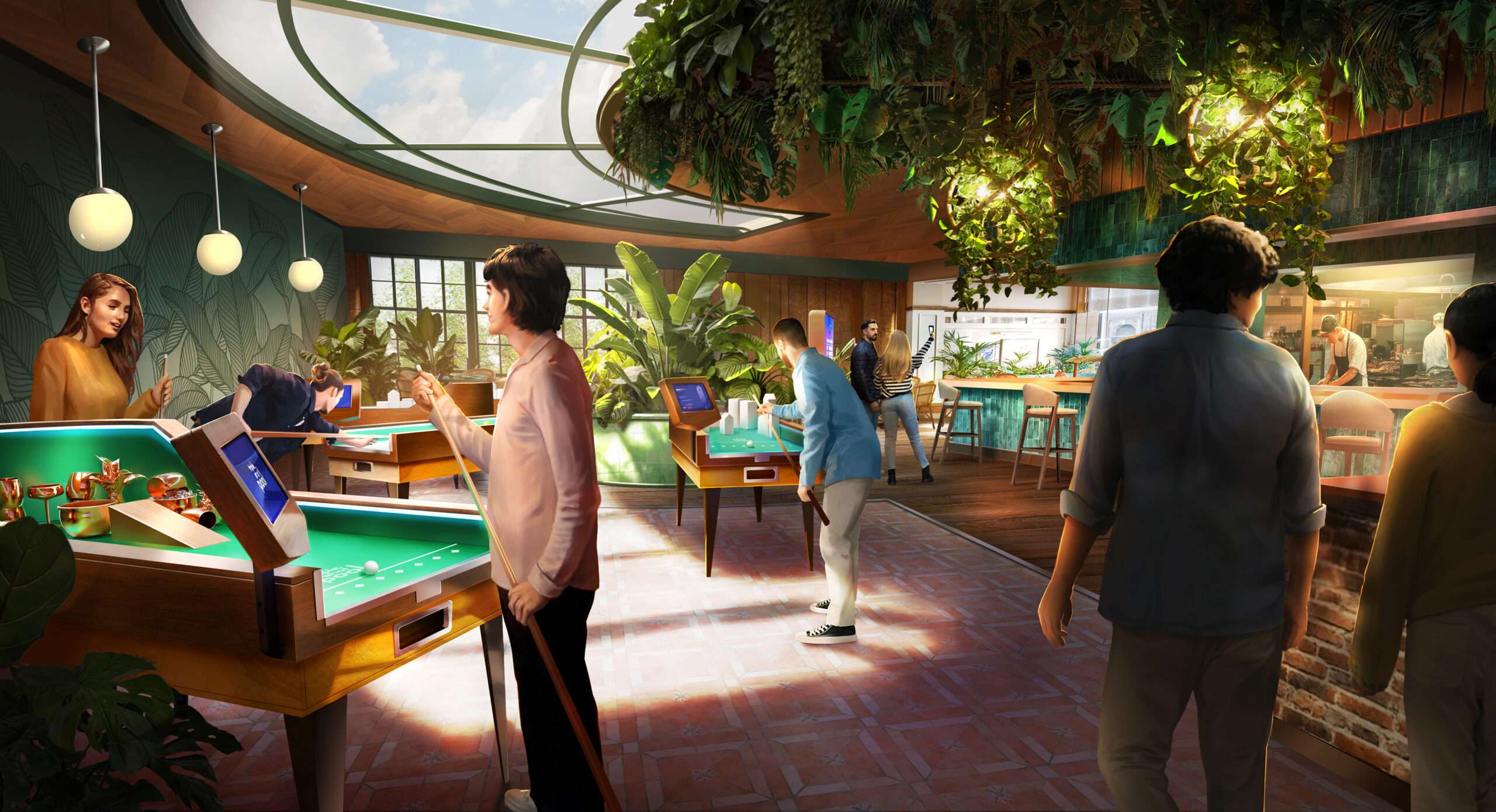
TripleShot Pool offers operators a competitive socializing experience in a small footprint.
TripleShot Pool delivers that. It requires a much smaller footprint than mini golf, offers a lower investment for operators and offers a comparable guest experience. It also complements RemarkaBall without competing with it.
How does TripleShot Pool differ from traditional billiards?
It’s inspired by cue sports, but it’s really its own game. Players use a cue, but every table presents a different challenge with multiple scoring opportunities. On each table there’s an easy shot, a medium challenge and a much more difficult trick shot. That creates an interesting balance because players decide how much risk they want to take. Someone with little experience can still play competitively, while more experienced players can challenge themselves with higher-value shots. Technology also supports tournament play, automated scoring and personalized features.
One feature we’re especially excited about is TrickShot Playback. When someone successfully completes the most difficult shot, the system captures and replays their reaction. It’s a simple feature, but it creates moments that people naturally want to share.
Who is TripleShot Pool designed for?
RemarkaBall appeals to a broad audience. During the day we see families, birthday parties and younger guests. In the evenings the audience shifts toward young adults, corporate events and social groups.
TripleShot Pool was designed specifically with that evening audience in mind. It fits naturally into corporate outings, team-building events and adult social experiences while still remaining accessible to players of all skill levels.
How do these products fit into Jora Vision’s long-term strategy?
At Jora Vision we’ve always been interested in designing experiences rather than simply designing attractions. That philosophy comes directly from our work in themed entertainment, where every creative decision is made with the guest experience in mind.
When we looked at competitive socializing, we saw an opportunity to apply that same thinking. Rather than simply adding technology to traditional games, we wanted to rethink how those games could encourage interaction, conversation and memorable shared experiences. RemarkaBall was the first step. TripleShot Pool expands that vision, and we’re already exploring additional concepts that can work together as part of a connected entertainment ecosystem. •
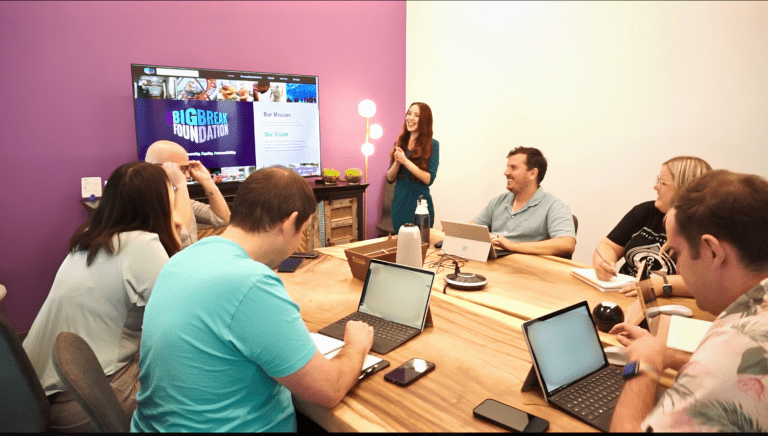
This is the third column in a series with Big Break Foundation, bringing readers perspectives on topics of diversity, equity, inclusion and accessibility.
by Nicolle Figueroa Rosado, Big Break Foundation
When the business world appears to be retreating from IDEA (inclusion, diversity, equity and accessibility), it’s easy to become discouraged and lose momentum. Yet, it is during these times of challenge when the work we do as an industry is needed most. As experience creators, we have an opportunity to build spaces where people can feel and be welcomed through the stories we tell and the design choices we make. And yes, despite the mounting legal, cultural and social pressure, the decisions we make to include or exclude still matter.
The news cycle may be broadcasting that inclusion is “dead,” but IDEA isn’t going away – it’s evolving.
This public rollback we’re witnessing is, in many cases, a quiet repackaging of inclusive initiatives under less politicized terms, such as “belonging” and “workplace culture.” A recent survey by Catalyst and the Meltzer Center for Diversity, Inclusion and Belonging1 found that approximately 80% of employees and leaders say their organization remains committed to diversity, inclusion and fairness, with the majority agreeing that these efforts strengthen their companies and result in positive business outcomes.
Although the prevailing narrative reduces IDEA to a demographic check-the-box approach, it actually is a human-centric approach that enables us all to operate, communicate, and collaborate better. Indeed, the benefits of inclusion have been well documented over the years, resulting in a wide variety of gains, including improved talent retention, better and faster decision-making, and higher innovation. It’s no surprise that when we create spaces where people feel valued and safe, workplaces thrive.
In the experience industry, an inclusive business is prepared to weather skill shortages, has the cultural competence to participate in a changing global market, and possesses the tools and perspectives needed to design more inclusive and accessible experiences.
Even in today’s charged political climate, leaders across all sectors recognize that inclusion is an investment in business resiliency and a measurable driver of economic growth. Inclusive companies are up to 39% more likely to outperform financially2, while companies that have stagnated or retreated from inclusion efforts take a hit to their reputation, talent strategy, and their bottom line.
Take Target, for instance. Its market share took a massive hit after it scaled back its inclusion initiatives. Meanwhile, by doubling down on its values, Costco gained a competitive advantage, winning over an increasingly multicultural consumer base – with Latine households alone driving a good share of this growth.
This reflects a much broader shift in purchasing behaviors. A majority of consumers believe that companies have a responsibility to address societal challenges and they are aligning their purchasing power with their values, with 70% reporting they are more likely to buy from companies who actively champion inclusion.3 This number goes up for women, who control approximately $31.8 trillion of the global economy. With women making up the majority of visitors across many top-ranking attractions, this is an especially relevant statistic for the location based experience (LBE) industry.
Similarly, younger generations, especially Gen Z consumers, divest from brands that abandon their IDEA efforts, a pattern we can expect will translate to the experience economy as well. Notably, as Baby Boomers reduce leisure travel with age, these younger generations are expected to dominate the travel market, accounting for over half of the U.S. leisure trips by 2030.4 With a visitor base that is growing increasingly diverse in age, race, ethnicity, language, culture, and ability, it’s vital that we as an industry recognize IDEA is not a trend, but a core business imperative.
Caught between such conflicting business and regulatory demands, many company leaders are left in a difficult position, grappling to uphold their inclusive values while also managing risk.
It’s natural that some may be tempted to walk back their IDEA commitments, but it’s during these inflection points that we need to reaffirm our commitments. Not only does it erode trust and alienate supporters when companies turn on their espoused values, but it ignores long-term business viability in favor of stopgap solutions.
Future-ready companies recognize that this period is part of a longstanding cycle in our history, and rather than wait for the IDEA pendulum to swing back around, this is an opportunity for the industry to evaluate and finesse its inclusive strategies.
The question then becomes: how can the LBE industry safely navigate today’s complex regulatory and social landscape? While the approaches vary by organization – with heightened scrutiny for Federal contractors and subcontractors – businesses can still execute an IDEA strategy that balances legal compliance with organizational impact.
Take hiring practices, for instance. Instead of demographic quotas, employers can address the root cause of disparities by creating structured interviews with consistent identity-neutral criteria, or actively recruiting from colleges, networks and job boards that serve historically underrepresented talent, such as Historically Black Colleges (HBCUs) and Hispanic Serving Institutions (HSIs).
When it comes to embedding IDEA into creative processes, one approach could be to train teams on inclusive design methodologies, such as Universal Design and Participatory Design. By helping to shift how we design and who we design for, the result is an experience that is welcoming and accessible to the widest possible audience.
No matter what adaptations companies make to align with the current legal constraints, clear communication throughout the process is vital for preserving trust. Looking ahead, this period may very well continue to put our leadership skills to the test. Fortunately, our industry already has all the tools required to engineer a way forward. By channeling our trademark creativity, innovation and collaboration, we can build workplace cultures resilient enough to weather whatever comes next. •
More from Big Break Foundation in InPark Magazine:
As Programs Director and Co-Leader of Big Break Foundation, Nicolle Figueroa Rosado oversees the organization’s talent initiatives and programs dedicated to advancing equity, access, and representation across the LBE industry. Her work supports organizationsin creating sustainable and data-driven IDEA solutions that are good for people, for business, and for the LBE industry at large.
accesso’s Lee Cowie on AI, data and the future of attractions technology
interview by Martin Palicki
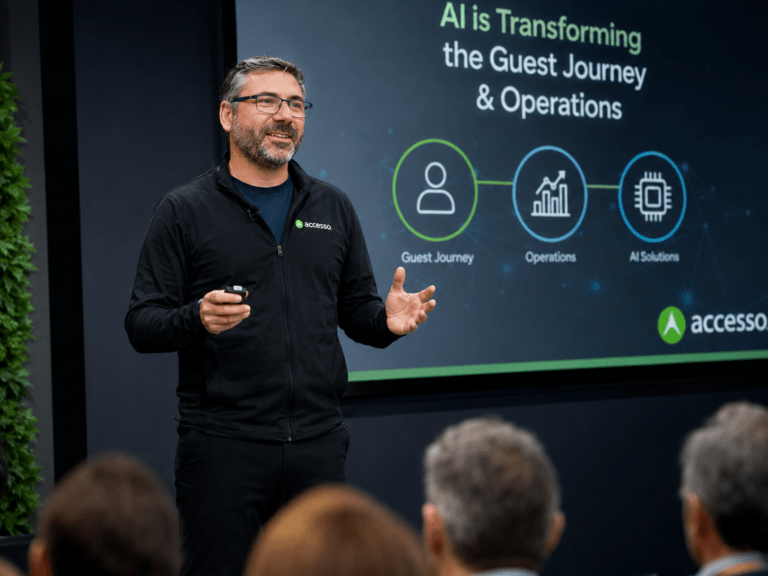
Mention the word technology to most attractions professionals and they’ll likely think of AV hardware, ride controls or safety systems working behind the scenes. But technology supports far more than the attractions themselves. Increasingly, it shapes the entire guest journey, beginning long before visitors arrive at the front gate. Guests now discover destinations, plan itineraries, purchase tickets and manage their day from the comfort of their couch. According to accesso’s new CEO Lee Cowie, even that experience is changing.
Lee Cowie, accesso
Under Cowie’s leadership, accesso is evolving beyond its roots as a ticketing provider to become what he describes as “a technology partner focused on connecting every touchpoint of the guest journey, from discovery and ticket purchase to food and beverage, retail, virtual queuing and post-visit engagement.”
Cowie brings an unusual perspective to that vision. Having led technology teams on both the operator side at Merlin Entertainments and the vendor side, he understands the daily realities facing attraction operators, particularly the challenge of turning vast amounts of guest data into meaningful decisions.
InPark spoke with Cowie about the future of guest experience technology, the promise and pitfalls of AI, and why he believes the industry’s greatest opportunity lies in using technology to help people create even more memorable guest experiences.
Thank you for talking with me and congratulations on your new role. accesso is historically thought of as a ticketing company. Is changing that perception one of your biggest challenges?
Lee Cowie: It’s probably our biggest branding challenge. We’re incredibly proud of our ticketing heritage. It’s still a core part of who we are. But I don’t think selling tickets is the biggest challenge operators face anymore. Today’s challenge is creating exceptional guest experiences that encourage people to return. That’s why I prefer to think of accesso as a guest experience partner rather than simply a ticketing company.
Yes, we sell tickets. But we also help operators manage food and beverage, retail, virtual queuing, mobile engagement, personalized offers and now, business intelligence. Those capabilities become much more valuable when they’re connected.
Imagine a guest walking past a major attraction. Because the platform understands their profile and knows the current wait time, it can offer a personalized Fast Track upgrade at exactly the right moment. Or it can recommend dining options, merchandise or future visits based on what that guest has done throughout the day. Those kinds of experiences aren’t possible when every system operates independently. Our goal is to connect the entire guest journey so operators can make better decisions while guests simply enjoy a smoother, more personalized experience.
You’ve seen the industry from both the operator and vendor sides. What perspective has that given you as CEO of accesso?
The biggest thing is empathy. I’ve spent years in an operator’s shoes, and I know how difficult it is to run an attraction. It’s a capital-intensive business with constant competition for people’s time and attention. Every investment decision matters, and technology is often competing with the next ride, exhibit or attraction.
That experience shapes how I think about our role as a technology partner. Operators don’t want disconnected systems. They want intuitive tools that reduce friction, work together seamlessly and help them deliver a better guest experience. That’s what we have built and continue to refine at accesso: an ecosystem of capabilities that helps attractions succeed.
After Merlin you spent some time outside the attractions industry before joining accesso. What brought you back?
I’ve bounced between the operator and vendor sides throughout my career, so the move itself wasn’t unusual. What attracted me back was the industry itself.
Working with attractions is incredibly rewarding because you can actually see the impact of what you’ve built. We support more than 1,100 venues around the world, and when I walk through one of those gates, I know we’ve helped make that guest experience possible.
If I’m being completely honest, though, the original reason I joined Merlin was because it instantly made me the coolest dad in the playground. Before that, my kids never really understood what I did. Working in attractions changed that, and coming back to the industry was an easy decision.
What operational challenge frustrated you most during your time on the operator side?
Data. Or more accurately, the inability to use it effectively. Attractions generate enormous amounts of information about how guests behave, where they spend money, which experiences they choose and what they ignore. The problem is that the data lives in dozens of different systems that were never designed to communicate with one another. You end up investing heavily in analysts and data warehouses just to produce reports that don’t always lead to meaningful decisions.
That frustration heavily influenced our recent acquisition of Dexibit, which we rebranded accesso Intelligence. My goal was to solve the problem I’d experienced firsthand as an operator: making data accessible, understandable and useful without requiring a massive analytics team.
We’ve been talking about “big data” for more than a decade. Are you saying that big data wasn’t useful prior to AI?
AI certainly helps, but I think the bigger breakthrough is organizing the data before AI ever touches it. The challenge has never been collecting information. It’s been normalizing it. Different systems describe the same products in different ways, store information differently and don’t share common standards. The platforms we acquired and turned into accesso Intelligence help solve that problem.
accesso Intelligence organizes and harnesses data to assist operators with informed decision-making. All photos courtesy of accesso.
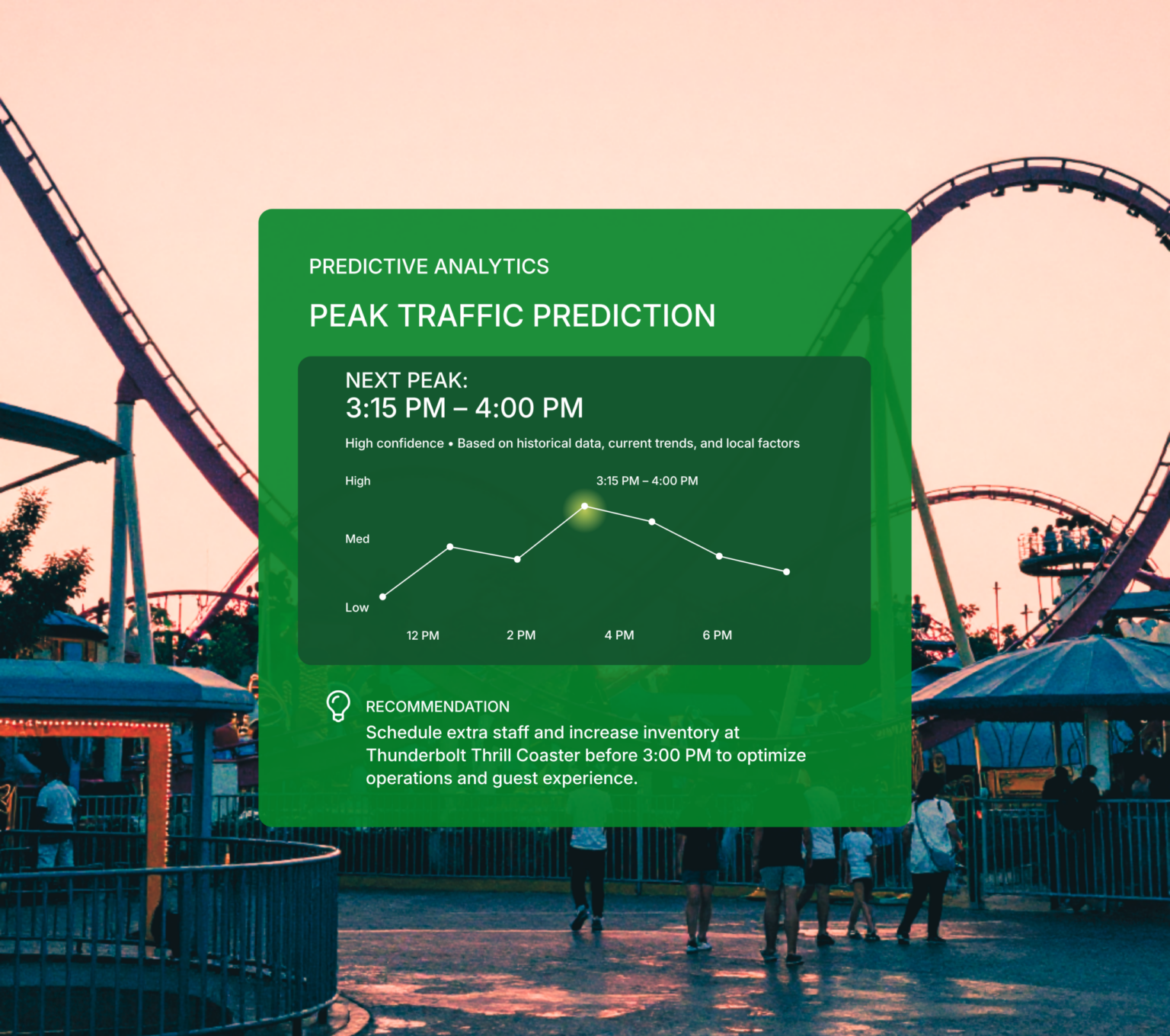
Once the data is connected, AI becomes incredibly powerful because you can simply ask questions in natural language instead of building reports. You can ask why attendance changed, predict staffing needs or identify purchasing patterns that would have been nearly impossible to uncover before.
In a public post you wrote to your team, you described the attractions industry as reaching an “inflection point.” That’s a bold statement. Why is this different from previous waves of technology?
I compare AI to the Industrial Revolution. The steam engine fundamentally changed industry, but it took decades because only a handful of organizations could afford the machinery. Today, virtually anyone with a laptop and an internet connection has access to AI tools. That democratization means innovation is happening at an unprecedented pace. As such, operators will have a much smaller window to get up to speed.
Historically, attractions have been slower to adopt new technology, and for understandable reasons. Capital typically goes toward new rides and experiences because that’s what brings guests back. But technology has increasingly become part of the guest experience itself. As competition for people’s time and spending increases, operators can’t afford to ignore tools that improve efficiency, personalization and decision-making. The pace of change is simply too fast.
What are some practical examples of AI you’re already seeing in attractions?
AI becomes transformative when it’s grounded in context and real operational data. For example, we’ve seen operators use AI to detect fraudulent activity by comparing register transactions with employee schedules and cash-out patterns. We’ve seen it forecast attendance weeks in advance, allowing managers to optimize staffing before busy periods arrive.
Though operators typically think of the guest experience in terms of time in park, technology increasingly allows visitors to begin planning their day and interacting with the attraction long before they have purchased a ticket.
One operator combined attendance data with census information and realized they were underserving a significant demographic in their local community because they didn’t offer Kosher food options. That’s an insight that directly changes the business.
Those are the kinds of decisions AI should be helping operators make. It’s about connecting information that already exists and uncovering opportunities people couldn’t easily see before.
One topic you discussed in your post is agentic AI. What does that actually mean for attraction operators?
We’ve already experienced several major shifts in how people buy tickets. We first moved from the ticket window to desktop websites. Then we shifted to mobile. Along the way, online travel agencies and third-party marketplaces became increasingly important. Agentic AI is simply the next iteration. People are now asking questions to AI platforms instead of traditional search engines. Increasingly, those conversations won’t end with recommendations. They’ll end with bookings.
Eventually your personal AI assistant may know your preferences well enough to recommend attractions, compare options, negotiate pricing and complete the purchase on your behalf without ever visiting a traditional website. For operators, the challenge becomes making sure they appear in those recommendations. Search engine optimization is evolving into what many now call generative engine optimization. Attractions will need to think carefully about how they’re represented online because AI agents are heavily influenced by reputation, reviews and trusted sources. That’s a significant change, and it’s happening much faster than many people realize.
You’ve said that technology should become increasingly invisible to the guest. What does that look like in practice?
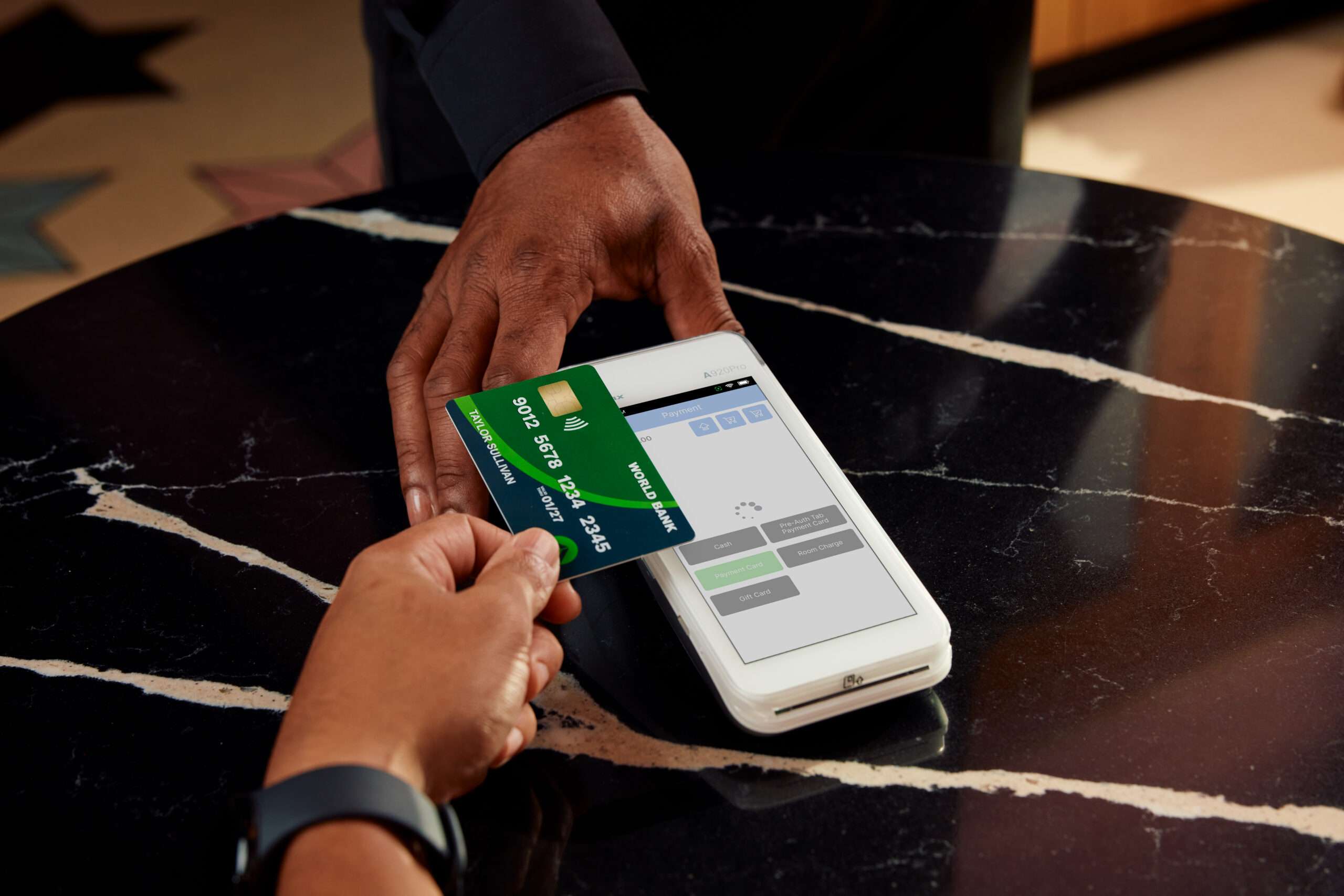
Invisible technology means systems working seamlessly behind the scenes to provide a frictionless guest experience across ticketing, in park transactions, virtual queuing and more.
The best technology is the technology guests never notice. Guests don’t visit an attraction because they want to interact with software. They come to enjoy the experience. Technology should simply remove friction along the way.
If you’re a season passholder with food and beverage discounts, that process should be seamless. The various systems should already know who you are and work together behind the scenes. That’s how we think about the guest journey. We touch ticketing, admissions, food and beverage, retail, virtual queuing and rebooking. Because those systems are connected, we can eliminate unnecessary steps and create an experience where everything simply works.
As attractions become more data-driven, how do operators avoid creating experiences that feel optimized but less human?
That’s one of the biggest questions surrounding AI. There are two schools of thought. One says AI replaces people. The other says AI removes routine work so people can spend more time doing what only people can do. I firmly believe the second path is the smarter option.
No attraction operator wants employees spending their day buried in administrative tasks. If AI can automate scheduling, reporting or repetitive analysis, it gives staff more time to engage with guests, solve problems and create memorable moments.
But isn’t the business case for AI about reducing labor costs? Doesn’t that inevitably mean fewer people interacting with guests?
Jobs will absolutely change. History tells us that. Operators will have choices. Some organizations will use AI primarily to reduce costs. Others will use it to remove administrative burdens so their teams can spend more time creating exceptional guest experiences.
I actually think that human interaction could become a competitive advantage. As AI becomes more common, people may place an even greater value on authentic experiences and genuine hospitality.
What’s the most important thing for the attractions industry to know about this moment in time?
I think we’re entering an incredibly exciting period for this industry. For years, technology has often been viewed as something separate from the guest experience. I think those worlds are now coming together.
When technology becomes connected, intelligent and largely invisible, operators can spend less time wrestling with systems and more time creating experiences that guests remember. At the end of the day, that’s what attractions are all about. Technology is simply there to help make those moments easier. •
Alterface celebrates 25 years of creating engaging interactive experiences across the world of themed entertainment
interview by Martin Palicki
For 25 years, Alterface has helped redefine what interactive attractions can be. From pioneering multiplayer interactive theaters and trackless dark rides to immersive walkthroughs and next-generation projection-based gameplay, the team at Alterface has consistently pushed the boundaries of guest participation while remaining committed to one guiding principle: technology should disappear, allowing guests to become the heroes of their own stories.
To mark Alterface’s 25th anniversary, InPark spoke with Chief Creative Officer Laurence Beckers, who has been with the company since its inception, and CEO Stéphane Battaille. Together they reflect on the company’s evolution over the past quarter century and share their thoughts on where interactive entertainment is headed next.
I’ve always been curious. Where did the name Alterface come from?
Laurence Beckers: The name originates from “alter,” meaning “the other,” and “face,” from the French word meaning “side.” We wanted to create attractions where guests could reach the “other side” of a story, not just be part of an audience – to offer a different and new reality in which they become participants in creating their own tale of adventure, not just viewing someone else’s tale.
Speaking of origins, Alterface began by creating experiences for museums and science centers before moving into themed attractions. How did those early projects shape the company?
Stéphane Battaille: Our original goal was to invent new ways for people to interact naturally with digital content.
Back in 2001, we were developing gesture recognition systems for museums that allowed guests to become part of a digital environment, years before technologies like Kinect existed. Every museum project was different, so we experimented with countless forms of interaction. It gave us tremendous freedom to innovate.
Those early years taught us which types of interaction truly engage people and which don’t translate well to high-capacity attractions. Theme parks introduced entirely different challenges, especially throughput and operational reliability, but they also gave us the opportunity to create larger, more immersive experiences.
Beckers: Those projects also established principles that are still part of Alterface’s DNA today. We learned to balance creativity with technology while always designing around the guest experience. In the beginning every installation was custom-built, but over time we standardized our technologies without losing that user-centered approach.
Looking across your portfolio of projects which innovations do you feel had the greatest impact on interactive attractions?
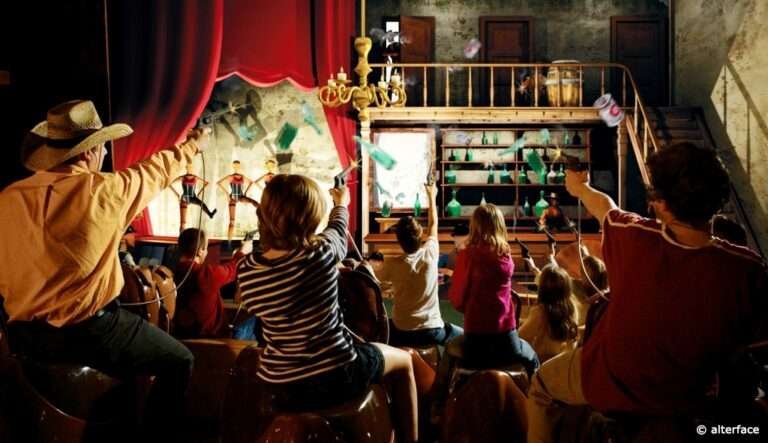
Battaille: Desperados was certainly one of the biggest milestones. It demonstrated that large groups of guests could play together simultaneously, creating a shared multiplayer experience that simply hadn’t existed before. It changed both the technology and the gameplay.
Another important moment came in 2008 with Reset Anno Zero at Miribilandia, where we blended both physical and digital media targets. It opened only one month after Disney’s Toy Story Midway Mania! and really made that style of gameplay accessible to many types of parks. The impact from that innovation continues today because we believe the most convincing experiences combine real environments with digital storytelling instead of replacing one with the other. More recently, Popcorn Revenge introduced nonlinear ride experiences.
Guests’ actions could influence the path their vehicle followed, giving them a meaningful impact on the story itself. That concept is still evolving, and as ride systems become more sophisticated, we see even greater opportunities for personalized storytelling.
Throughout Alterface’s history, you’ve said that technology should be invisible. Why has that remained such an important philosophy?
Beckers: Because the moment guests notice the technology, they’re pulled out of the story. Everything we do is aimed at preserving immersion. Whether it’s projection mapping, synchronized motion, audio, tracking systems, or interactive media, every technical element should disappear into the experience. Guests shouldn’t be thinking about projectors, sensors, or computers. They should simply feel like they’re part of the adventure.
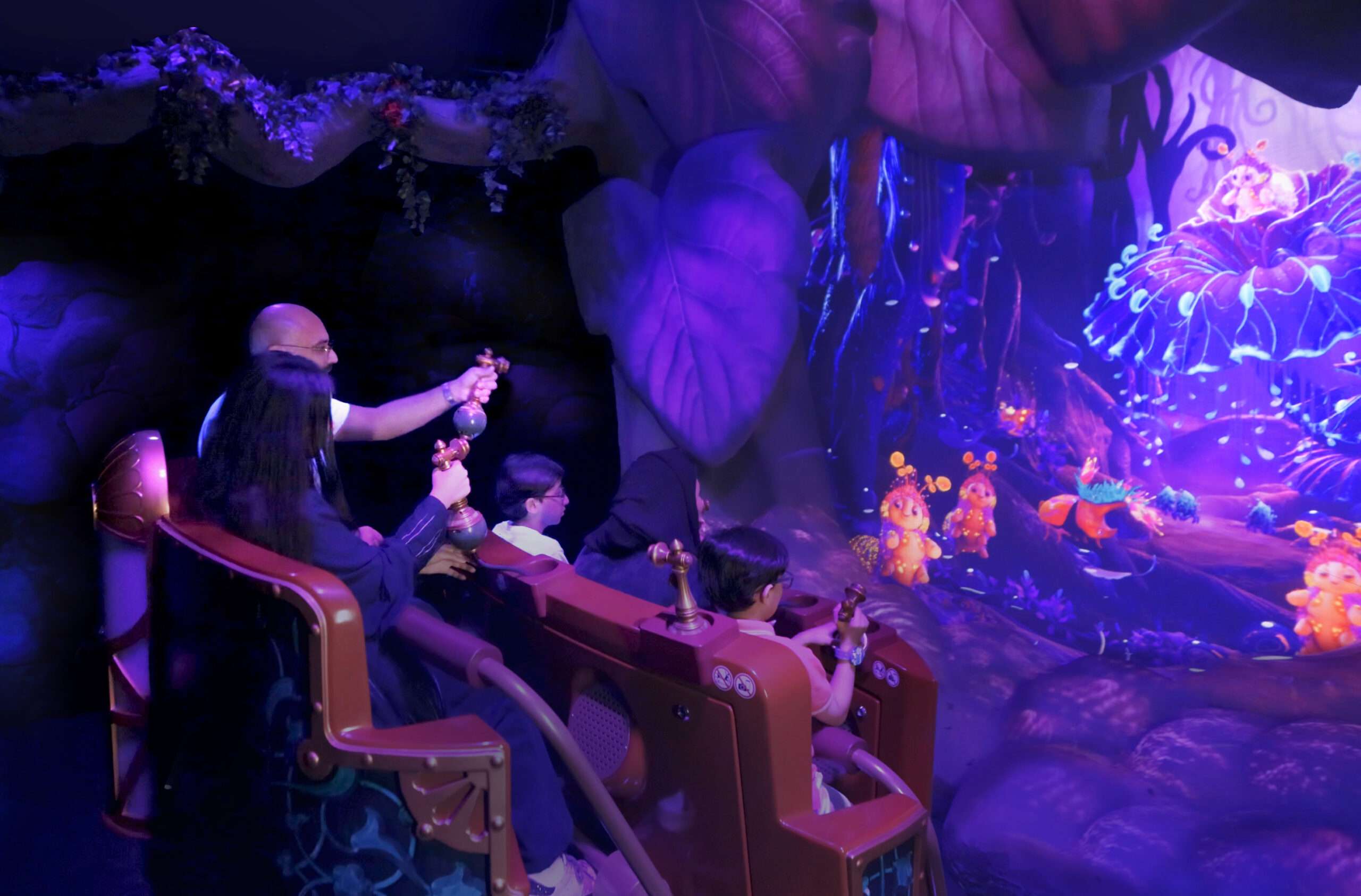
Enchanted Greenhouse at Six Flags Qiddiya City showcases Alterface’s interactive technology in an extensively themed dark ride that expertly blends digital and built environments. Photo courtesy of Lift Hills and Thrills.
You mentioned that Popcorn Revenge demonstrated that the ride vehicle itself could become part of the storytelling. How important have advances in ride systems been compared to developments in media or gameplay?
Battaille: They’re inseparable. Popcorn Revenge was developed together with ETF Ride Systems, and we both had to create new tools to support nonlinear storytelling. It wasn’t simply about designing a trackless vehicle. The show control, media systems, and ride logic all had to work together.
Today’s ride systems are becoming even more flexible. Advances in LiDAR, SLAM navigation, and autonomous vehicle technology are opening entirely new possibilities. We can begin thinking of ride vehicles as intelligent robots rather than machines that simply travel from one programmed location to another.
“Popcorn Revenge introduced nonlinear ride experiences. Guests’ actions could influence the path their vehicle followed, giving them a meaningful impact on the story itself.” – Stephane Battaille. Photo courtesy of Alterface.
Early interactive attractions often focused on competitive scoring. More recent projects emphasize exploration, cooperation, and narrative. Do you see that as a shift in the industry?
Battaille: I see it as an expansion rather than a replacement. Competitive gameplay is still incredibly effective when it fits the story. But today’s technology allows us to explore many more forms of interaction. Instead of always giving guests a blaster, we can give them a flashlight, a magic wand, or a paintbrush. Each interaction creates a completely different emotional experience.
A shooting attraction naturally focuses players on targets. Exploration-based gameplay encourages guests to look at the environment, discover details, and experience the story together. That opens the door to richer narratives and appeals to a broader audience, particularly families.
One of Alterface’s newest technologies reduces interaction latency to around 30 milliseconds. That’s a very technical achievement, but what does it actually mean for guests?
Battaille: It means the technology disappears. There is no reality check. When you’re using a flashlight, magic wand, or paintbrush, the projected effect has to respond instantly. Even a slight delay reminds guests they’re interacting with a computer. By reducing latency to around 30 milliseconds, the response feels completely natural. That immediacy is what makes these new forms of interaction believable.
Phantom Theater: Opening Nightmare at Kings Island utilizes Alterface’s newest technology to reduce interaction latency to around 30 milliseconds, resulting in a system that feels natural and realistic. Photo courtesy of Kings Island.
Phantom Theater: Opening Nightmare at Kings Island is the first attraction to use this next-generation technology. What makes it significant?
Battaille: It’s the best example of adding projection and gameplay into a scenic environment. Instead of just projecting on screens surrounded by sets, the sets become the backdrop for the projection, which is an incredibly natural way to present the media. Rather than simply aiming at targets, guests use a flashlight to explore the environment and find floating “ghost notes.” That changes the pace of the experience. Instead of searching for the next target, guests begin looking around, exploring the world, and noticing details they might otherwise miss.
Beckers: For us, that’s a very important evolution. The interaction supports the story rather than distracting from it. Our collaboration with Sally Dark Rides was also extremely rewarding because we share the same philosophy. The technology is present, but it never becomes the focus. Guests simply experience the magic.
Walkthrough attractions such as Stranger Things: Face the Dark represent another area of growth. Do you see walkthrough experiences becoming more common?
Battaille: Absolutely. Walkthrough attractions create a different kind of immersion because guests are physically inside the environment. They choose where to go, what to explore, and how long they spend with each scene. That demands a much more convincing and complete environment.
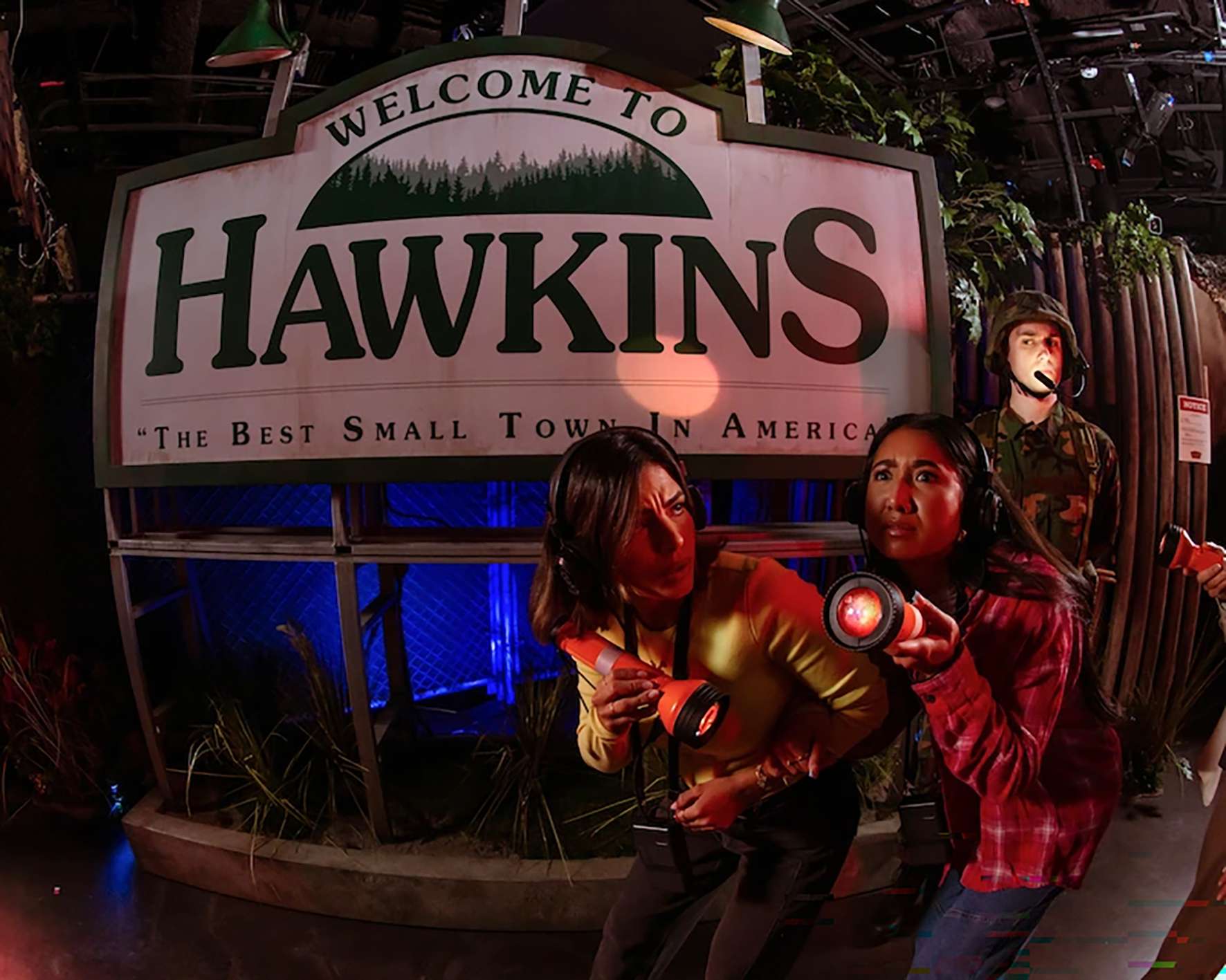
Walkthrough attractions, such as Stranger Things: Face the Dark at Netflix House in Dallas, require advanced interactivity systems to track and respond to guest movement throughout the space. Courtesy of Netflix.
Walkthroughs also require an entirely new technology stack. We need accurate guest tracking, adaptive storytelling, and systems capable of responding intelligently to unpredictable human behavior.
They’re also an excellent fit for video game intellectual properties. Many game publishers are looking for ways to translate open-world experiences into physical environments, and walkthrough attractions are uniquely suited to that challenge.
Many of your attractions continue operating successfully years, and sometimes decades, after opening. What have you learned about designing experiences that remain engaging over the long term?
Battaille: Interactivity naturally encourages repeat visits because guests want to improve, compete, or discover something they missed the first time. That’s one of its greatest strengths. When we design an attraction, we also try to build in layers of discovery. Every ride should reward guests for paying attention, whether it’s subtle visual details, environmental storytelling, or small surprises they notice on subsequent visits. We’ve learned that if the core experience is strong, operators rarely want to replace it.
Beckers: We’ve seen that happen many times. Operators often ask us to modernize the technology while keeping the experience exactly as guests remember it. Sometimes we’ll migrate an attraction to a new real-time engine or install higher-resolution projection, but the story and gameplay remain unchanged because they still resonate with visitors.
How do you think AI will impact the guest experience in interactive attractions?
Battaille: AI-powered characters will eventually allow much more personalized interactions. Imagine a walkthrough attraction where characters remember what you’ve done, respond naturally to your questions, and adapt the story to your choices. That creates a level of personalization we haven’t been able to achieve before. Combined with real-time translation, those technologies could make interactive experiences more personal and more accessible than ever before.
What advice would you give an owner who is considering adding interactivity to an attraction for the first time?
Battaille: My first answer would be: Call us! But more seriously, interactivity should never be treated as an overlay or a gimmick. It must serve the story. The guest’s actions need to have meaning within the narrative. If you’re simply adding targets or a game mechanic after the attraction has already been designed, you’re missing the opportunity to create something memorable.
Beckers: Interactivity should be part of the creative process from the very beginning. When it’s integrated into the story, guests become active participants instead of observers, and that’s when it creates a lasting emotional connection.
Alterface has always worked closely with ride manufacturers, media studios, scenic designers, and creative partners around the world. Has collaboration always been central to the company’s philosophy?
Battaille: Absolutely. We’ve never wanted to do everything ourselves. Our role is to contribute our expertise while working alongside the best people in every discipline. The strongest projects are always the result of collaboration between specialists who bring different perspectives and different talents to the table.
Beckers: Collaboration is also cultural. Working internationally has reinforced how important it is to partner with local creative teams. Interactive storytelling is deeply connected to culture. If you’re creating an attraction in Asia, Europe, or North America, local knowledge helps ensure the story feels authentic to the audience. Working with regional partners also allows us to build stronger relationships while creating experiences that genuinely belong in their markets.
Looking ahead another 25 years, what do you hope people will say about Alterface’s contribution to themed entertainment?
Battaille: I hope they’ll say that we continually pushed the boundaries of interaction to create experiences that were more immersive, more personal, and more meaningful. But more than that, I hope they’ll remember that our attractions brought people together. Families laughing together. Friends competing together. Guests exploring together and creating memories they could share afterward. That’s always been our goal. •
interview by Peter Weishar, Director of Themed Experience Graduate Programs, University of Central Florida, Co-Founder of the Themed Experience & Attractions Academic Society (TEAAS)
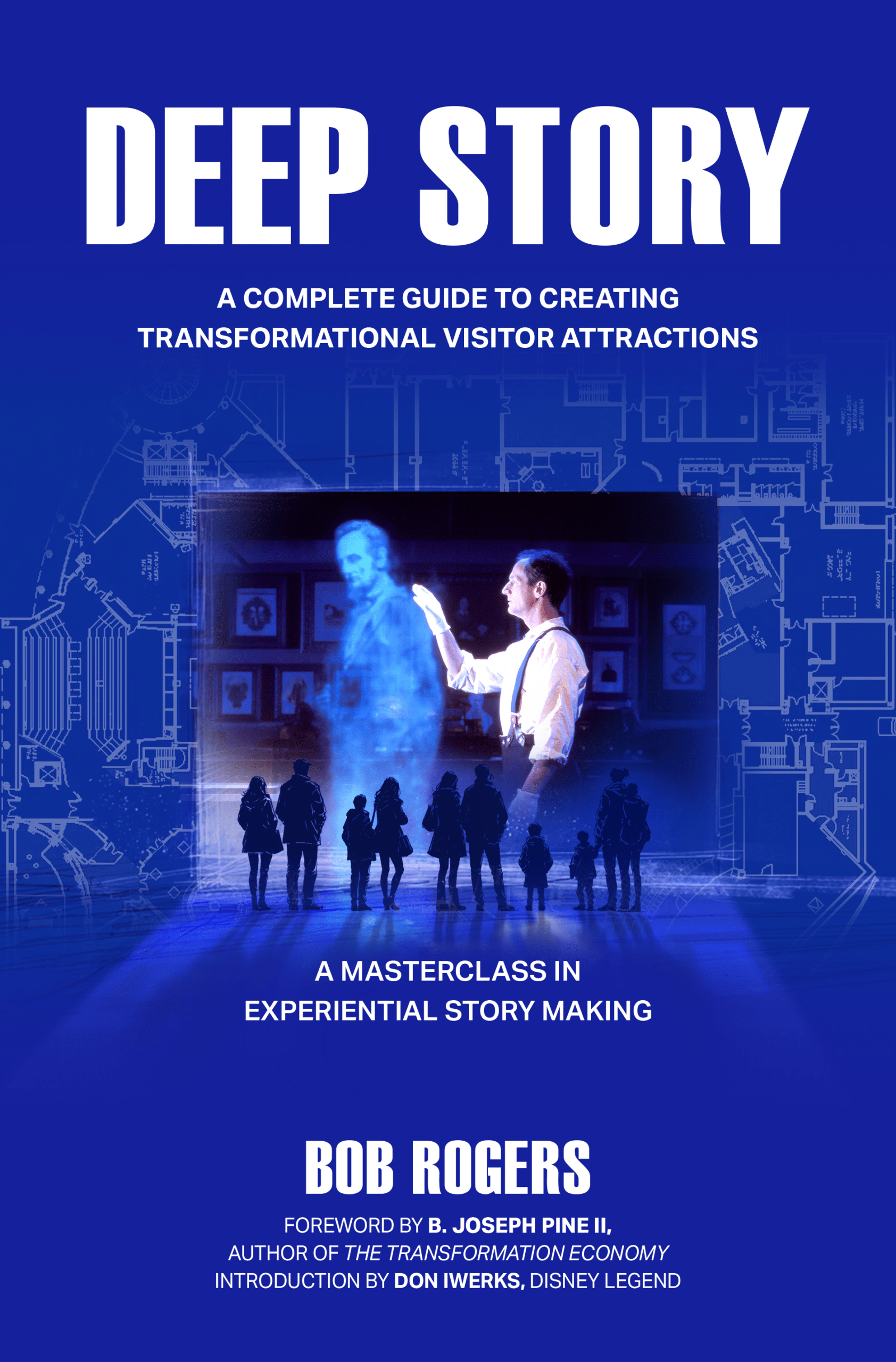
Industry legend Bob Rogers, Founder of BRC Imagination Arts, a company known for magic with heart, has just completed DEEP STORY™ : A Complete Guide to Creating Transformational Visitor Attractions. DEEP STORY is filled with concrete step-by-step examples, case studies and techniques that help the creators of transformational themed experiences connect with their audience on an emotional and profound level, achieving a real difference in what visitors thereafter do.
Bob Rogers, BRC Imagination Arts
Bob’s and BRC’s accomplishments have served as inspiration to me, my colleagues and students. Bob has been awarded his industry’s two highest honors, having received the Buzz Price Thea Award for a Lifetime of Outstanding Achievement from the Themed Entertainment Association (TEA), and being inducted into the International Association of Amusement Parks and Attractions (IAAPA) Hall of Fame. He has personally been nominated for two Oscars and one Emmy. He was reelected to the Board of Governors of the Academy of Motion Picture Arts and Sciences (the organization behind the Oscars) and previously served on the IAAPA Global Board of Directors. I recently had the pleasure of sitting down with Bob to talk about mentorship, DEEP STORY and his incredible career.
-P.W.
Thank you for writing DEEP STORY. It is an exceptional book filled with useful strategies that feel like inside information. Who did you write DEEP STORY for and why?
DEEP STORY is for everyone, including business and creative leaders as well as people who are just starting their careers. When I was a beginner, established leaders like Marty Sklar, Buzz Price and Don Iwerks had faith in me even when there was absolutely no evidence that I deserved it. They patiently and generously shared their knowledge. The only way I can thank them is by paying it forward by sharing some of the things I’ve learned.
I have some favorite sections in DEEP STORY, including your Disneyland Magic Shop introduction and the Abe Lincoln experience. The book presents a new way of thinking about transformational visitor experiences. Can you recap the Deep Story strategy used at Lincoln?
Sure. Education, information, and entertainment are important means, but whether you are doing a museum, a brand visitor center, or any experience that seeks to make a real difference in what visitors later do, start by precisely defining that change – the transformation you want to create in your visitor. Exactly what do you want visitors to do differently after they leave? Thereafter, every design and story choice should be aimed at achieving that.
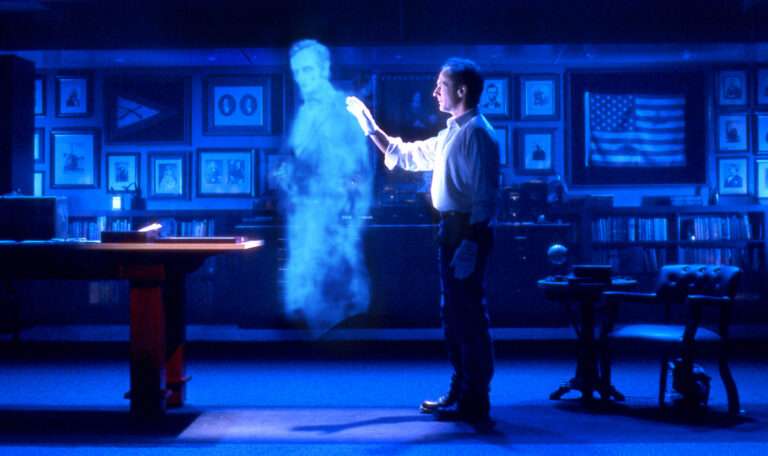
“Visitors to the Abraham Lincoln Presidential Library will become permanently more interested in, and attracted to, the life and times of Abraham Lincoln.”
Every experience at Lincoln is focused on achieving that change. It’s the same whether you are creating a brand flagship like the Johnnie Walker Experience on Princes Street in Edinburgh or a cultural attraction like The Rock & Roll Hall of Fame. Start with the result in mind. In the words of Yogi Berra, “If you don’t know where you are going, you are likely to end up somewhere else.”
Peter Weishar, University of Central Florida
Why did you title it DEEP STORY? Themed experiences often reinterpret complex narratives into a few, short minutes. What about it is deep?
It is very hard to change what people think and do. DEEP STORY is about going deep into the things people already authentically feel and believe, while simultaneously going deep into the subject or brand. You are looking for the deep emotional truth that pre-exists and is common to both. If you base your entire story experience on that deep truth it will have authenticity. It will connect the heart of the visitor with the heart of the subject or brand. The result is that you don’t impose a change on people so much as you awaken possibilities that have always been in them. That’s DEEP STORY.
Is there a common misstep you see that causes experiences to be less effective?
One signal that you might be on a questionable path is when the building has nothing to do with the content. The package that a product comes in should make a promise about the product or experience inside. Another danger signal is that the tools and technologies are selected before the task is crisply defined. Instead, start by defining the exact transformation you seek and then make all subsequent choices based on the achievement of that one goal. Finally, focus. Don’t try to tell multiple stories. Throughout your visitor experience, tell one story, tell it often, tell it different ways, and tell it well.
You wrote a chapter about the “The Magic of Myth” where you talk about our subconscious connections to things like castles, monsters, forests, and dreams. Can you give us an example of how this can be used to create emotional connections and feelings like safety, fear, or excitement in themed experiences?
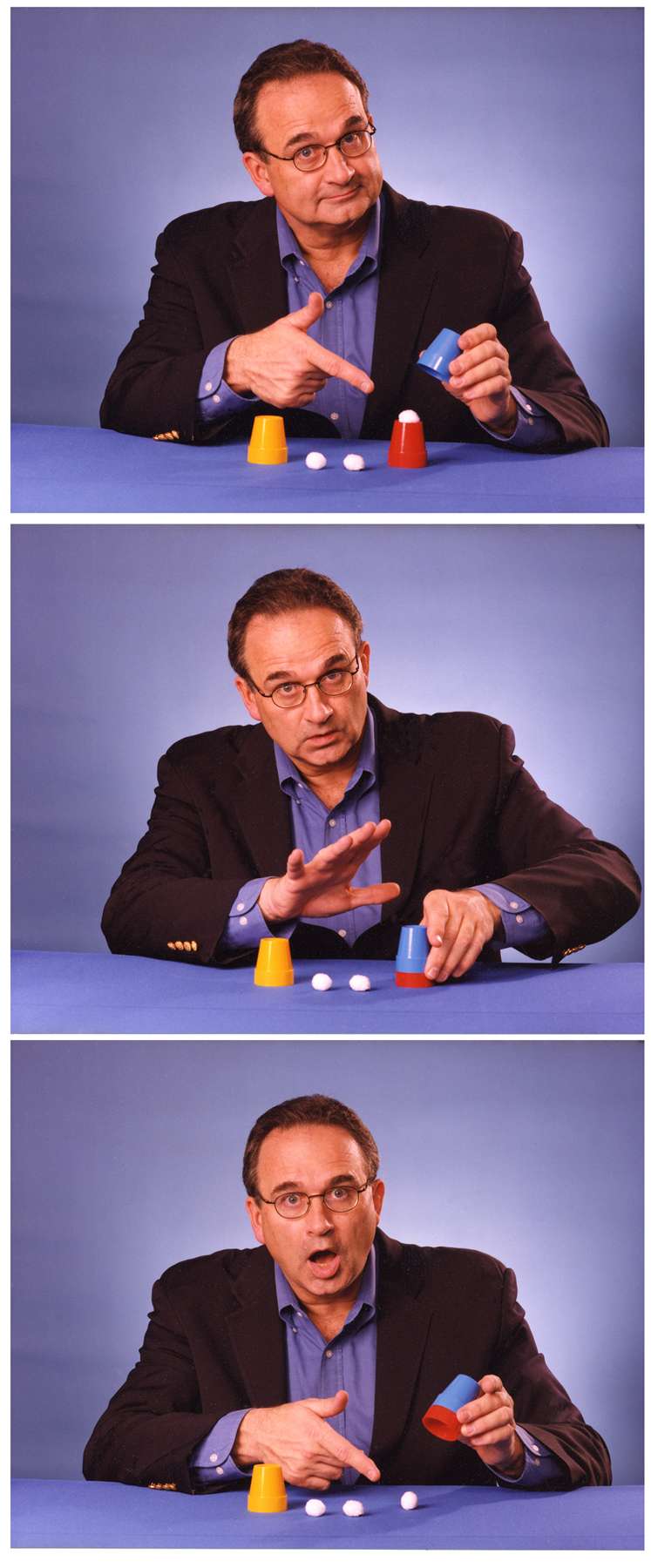
The author’s first job was as a magician in the magic shop at Disneyland.
Designers of educational and commercial attractions regularly use deeply meaningful and powerful psychological symbols, often with little understanding or respect for their power – like monkeys playing with explosives. DEEP STORY describes some of the most common recurring archetypal symbols used, misused or wasted in museums and brand experiences, together with some of their common meanings in Jungian and/or Freudian psychology. For example, the castle can represent self-mastery or self-actualization, meaning our idealized self. Somehow when we achieve our goals and live happily ever after, it will be in a castle. The pirate is the complete opposite. Whereas the castle often symbolizes the security and safety of order and stability, the pirate symbolizes the joys of chaos and instant gratification. Pirates take what they want right now. The director of any museum presenting the American West knows that, sadly, to fire the public imagination bandits, gunfighters, cattle rustlers, prostitutes, robber barons, card sharks, and other land pirates are more useful than solid citizens and community builders.
A more subtle example is the difference between a cave and a tunnel. The cave is a dead end, a descent into the subconscious where one might encounter monsters or treasure or become lost. In contrast, a tunnel is a transition. The tunnel under the train track at the entrance to a Disney park marks a transition from the ordinary world to the special world. The portals at the entrance to the lands of Epic Universe serve a similar role. Your work will gain impact and transformational power if you understand and leverage the meaning of the deep stories, symbols and icons already in your audiences’ heads, hearts, and subconscious. By constructively using those meanings in your storytelling, you can engage your guests in a way that enriches their lives with insight, love, hope, reassurance, strength and positive transformation.
What is the primary point you want readers to understand from DEEP STORY?
DEEP STORY outlines a rigorous approach; it’s not easy. But DEEP STORY can empower your work. Bottom Line: If your project seeks to make a difference, start there. Then go deep into the heart of your audience and deep into the heart of your subject or brand. Do that, and you can use your craft to achieve a real and positive difference in the world. •
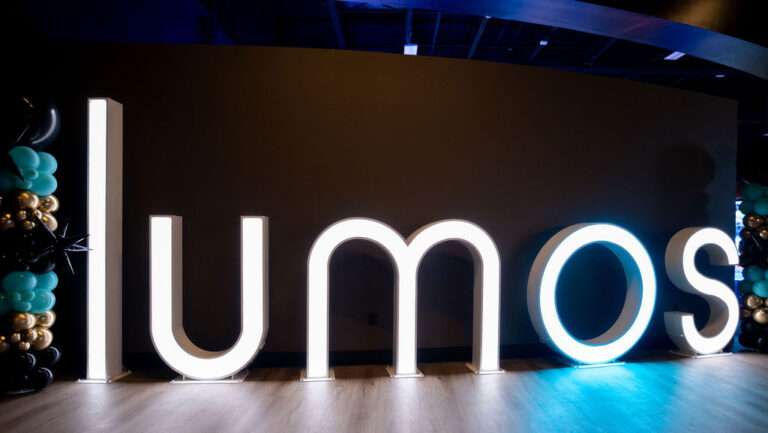
Lumos, a Texas-based entertainment venue, set out to create a technology-forward entertainment experience, but wanted more than just a cashless system. Semnox Solutions, a technology provider for the leisure and attraction industry, supported Lumos’s vision by providing a custom integration with a proprietary redemption system.
Since opening in October 2025, Lumos has used the Semnox Parafait RFID Cashless system across its arcade and attractions, combining modern RFID technology with a custom integration developed between Semnox and Lumos’ proprietary redemption platform.
The result is an integrated guest journey designed to make play and redemption easier while reducing friction for both guests and employees.
“We looked into the top cashless systems in the market and decided to move forward with Semnox for several reasons,” said Greg Little, president at Lumos. “We wanted a system that was simple to use, modern looking and inviting. But what has stood out most is the cooperation. Semnox did not just sell us equipment and a system and walk away. They continue to work with us to ensure we are getting the most out of it.”
That collaborative approach became particularly important in developing Lumos’s redemption experience. Rather than relying on a traditional redemption counter, Lumos created a proprietary system that allows guests to browse and order prizes digitally through their phones or a kiosk. Semnox developed a custom integration that deducts tickets from the guest’s RFID card in real time as part of the process.
According to Lumos, guests can receive their selected prizes through the venue’s locker system within approximately two minutes of placing an order, eliminating the need to wait in a traditional redemption line.
“The custom integration with our proprietary and unique redemption system has been game changing and has worked incredibly well,” said Little. “It allows guests to have an ‘Amazon-like’ experience shopping for their redemption prizes, and the Semnox integration deducts tickets from the guest’s RFID card in real time, making the experience very simple for both guests and our team.”
For Lumos, flexibility extended beyond the initial integration. The venue’s leadership has continued to work with Semnox on potential system enhancements based on real-world operating experiences and opportunities to improve both the guest journey and revenue generation.
“The answer we receive from Semnox is rarely ‘no,’ but rather, ‘let’s see what we can do,’” said Little. “They work to help us deliver the best guest experience to our guests. That is what we were seeking: a great partner.”
The relationship also demonstrates the role implementation, and post-launch support can play when a new entertainment business introduces unfamiliar technology and workflows. Semnox provided a combination of remote and onsite training during implementation, followed by onsite support during Lumos’s opening and additional remote reinforcement sessions. A dedicated program manager and solution specialist supported the venue through onboarding and continued operations.
Lumos and Semnox now maintain regular monthly calls to discuss operational needs, system performance and opportunities for further development.
“As operators invest in technology, the real value comes from how well that technology supports the experience they are trying to create,” said Bepin Jose, president of Semnox Americas. “Lumos had a clear vision for a highly intuitive, technology-forward guest journey, including a redemption experience that was uniquely their own. Our role was not simply to provide the platform, but to understand that vision, find ways to support it and remain engaged as their needs evolve.”
That ongoing relationship has become increasingly important as Lumos evaluates future promotions, seasonal initiatives and new ways technology can support both the guest experience and revenue growth.
“I would highly recommend the Semnox card reader system,” said Little. “It is high-quality hardware and a very reliable software back end that meets our needs. And the service has been stellar.”