Industry leaders respond to Trump’s evolving and uncertain tariff situation
Edited by Martin Palicki
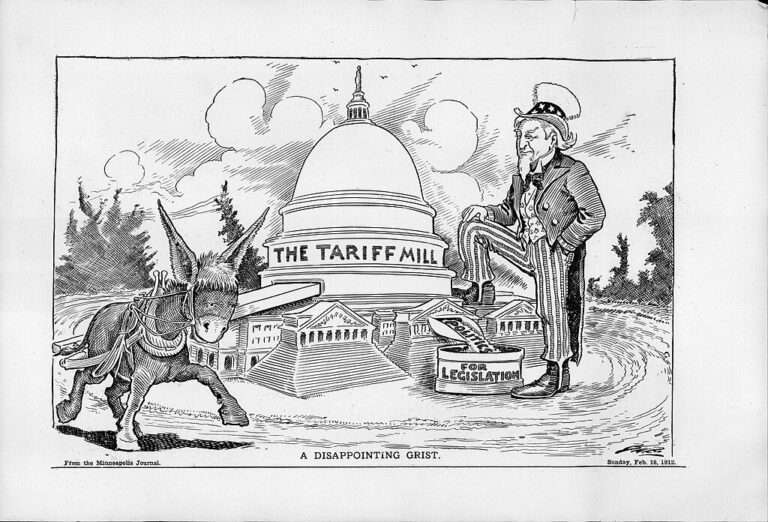
The uncertainty caused by the Trump Administration’s strategy of implementing, pausing and changing tariffs for various countries and products around the world has led to a great deal of confusion across the business community. While the United States is by no means the only provider of entertainment and attractions, it remains a pivotal player in the ecosystem of themed entertainment. Early this spring, we approached a select group of both suppliers and operators around the world for their take on the tariff situation. We asked each of them if they are currently being impacted by the tariffs, if they expect future disruption, and how they are dealing with the changing situation.
Since we started collecting responses, the issue of tariffs has been overshadowed by other stories in the news cycle, and to some extent markets have calmed. Still, the issue remains salient for many businesses in our industry. Below are the responses we received, edited for space and clarity, and presented in alphabetical order, by company.
-Martin Palicki
Michael Marko, Director of Contracts & Administration and Adrian Magowan, Director of Production, Adirondack Studios
Our supply chain for durable goods and materials is experiencing volatility in pricing due to the lack of clarity in proposed tariffs. To address this uncertainty, suppliers have communicated that pricing will be subject to change based on the results of new legislation. We convey this information to our clients and collaborate with them to mitigate the costs where possible. Additionally, potential tariffs affect material availability as supply chains tighten in anticipation of cost increases.
If a highly specialized material or item is not currently fabricated in the USA, finding an alternate US-based supplier can be challenging. These products are often tied to either client specifications or government regulations. For projects in early development, our designers are able to offer alternate material and product solutions.
Our goal is to be transparent with all parties in finding ways to mitigate the budget, schedule and design challenges. ADKS is a global company headquartered in the US. Our dedication is and has always been to support our home country and the countries in which we operate. We will continue to provide concierge-level service while finding ways to operate within the boundaries of fair margins.
Steve Birket, President, Birket Engineering
Known tariff increases result in an increase in cost of goods and can negatively affect availability. The threat of unknown future tariffs increase uncertainty in estimates and proposals and in the ability to confidently perform a service at a given price. A buyer trades their money for the seller’s product or service. When expectations are understood and met, everyone wins. The greater the uncertainty, the more likely either the buyer’s or the seller’s expectations will not be met, and someone comes out the loser.
The business risk associated with the impact of unknown future tariffs must be identified as part of every negotiation. The risk has a dollar value and somebody has to pay for it. Ignore this risk at your peril.
Stefan Rothaug, Director of Sales & Marketing, Brogent Technologies
At present, the impact of the new tariff policies on Brogent is manageable. Brogent’s long-term commitment to global market diversification, combined with a broad portfolio of high-margin products and diverse services, has effectively mitigated our exposure to any single geographic region. Notably, the U.S. market accounted for only 4% of Brogent’s total revenue in 2023 and just 1% in 2024. As a result, our strong presence in regions such as the Middle East and Asia, where opportunities continue to grow, further reduces our reliance on tariff-sensitive markets.
While persistently high tariffs may increase cost sensitivity among themed entertainment operators, we believe their impact on people’s pursuit of leisure is limited, especially when compared to the ban on human interaction during the Covid-19 period. Looking at historical market patterns such as those during periods of financial crisis, the global leisure and tourism sector has proven to be resilient, with limited long-term downside.
Geoff Thatcher, Founder & Chief Creative Officer, Creative Principals
We are a creative firm. While we know some of our production partners are dealing with issues related to LED screens coming from China, for example, our company has not been impacted by tariffs.
Compared to AI and how it’s changing both how we create and the experience we create, we see the tariffs as a blip. For us, it’s AI that is disrupting the way we work.
Philip Hernandez, CEO, Gantom
When the recent tariffs on Chinese imports were announced, they weren’t just a headline for us—they represented a potential bankruptcy event. For context, we manufacture the world’s smallest intelligent fixtures, which illuminate theme parks worldwide. In one recent instance, we had to inform a client that a $11,000 order would now cost nearly $40,000 due to tariff increases. In another case, we narrowly avoided financial catastrophe when our importer warned us about changing regulations, prompting us to split a shipment—saving us from a $30,000 tariff bill on components valued at only $20,000.
Like many manufacturers, we have staff in both the US and China – and we ship components back and forth throughout the manufacturing process. Meaning, the tariffs hit us twice – once on components going to China and once on the fixtures coming back to the US.
For small manufacturers like us without massive cash reserves or stockpiles, these aren’t just cost increases—they’re existential threats. We’ve been forced to implement pricing strategies that would have been unthinkable just months ago: POA (price on application) pricing and lowering quote validity to 15 days. While we can guarantee prices outside of the US, the volatility is too significant within the US.
The irony isn’t lost on me that policies ostensibly designed to strengthen American manufacturing are pushing us to consider moving more operations out of the US rather than bringing production home. Our capital will go towards establishing warehouses outside the US to maintain prices worldwide. With the strong dollar, our current prices were already tough for international clients—any additional tariffs would kill our international market.
The reality is that even if we wanted to manufacture domestically (which we’ve explored extensively), we face insurmountable challenges:
- Finding appropriately skilled assembly workers has proven nearly impossible
- The setup time for new manufacturing would take years, not months
- The cost structure would require multiple US workers to replace one overseas position
- Key personnel can’t relocate to oversee quality
Warren Kong, Principal, Lightswitch
The cost of lighting equipment is wildly unpredictable as even if the lighting is assembled and manufactured in the USA, parts of a light (especially the LED portion) are always imported from another country. We just do not currently have anyone producing LED chips of quality in the US. As a result, we have been raising our cost estimates to account for this unpredictability.
Andreas Andersen, CEO, Liseberg Group
We are being impacted not directly, but indirectly. For example, we are located in one of the largest industrial hubs in Scandinavia. If/when the European car-industry is impacted, it will have a vast impact on the economic outlook for the region – and thereby customer purchasing power.
The unfortunate reality is the situation is almost impossible to forecast. Like many other companies, we can work with different scenarios – but the uncertainty is substantial. However, as we are not an exporting company, most impacts will be indirect (possible recession, stagflation, etc.).
Seth Cover, CEO, Mycotoo, Inc.
The tarifs are certainly having an impact on all markets. We have multiple projects in the production and fabrication phase with openings in the United States later this year and in the first quarter of 2026. These projects have specialty vendors and equipment sourced from China, Europe, and Canada. The cost estimates were determined before the tariffs were implemented. As a result, there is currently uncertainty on final pricing. We are actively working with our clients to find alternative sources where we can. Additionally, all our project budgets are built with contingencies to ensure that we are always prepared for any unexpended overages.
None of us has a crystal ball, but we do know that developers are more likely to invest when markets are stable. If policy remains in flux, this may cause some developers to take a wait-and-see approach. Projects that have been in the pipeline may be considered cost prohibitive, causing some developers to potentially cancel projects, or at best put them on hold.
Fundamentally, the uncertainty in tariffs remains a material risk to planning and executing projects, locally and globally. With these constraints and risks in mind, it is prudent to proceed with cautious but steady hands. As creators and project managers, Mycotoo has a great track record of calmly navigating disruptions and uncertainties in our industry.
Greg White, Chief Operating Officer, ProSlide Technology
ProSlide, and many of our clients, are being impacted by the tariffs. As a global company with active projects across the U.S. and around the world, we’re navigating a complex trade environment. Many of the products we manufacture and deliver into the U.S. come from countries that are now affected by U.S. tariffs – some more significantly than others. In turn, we’re also seeing counter-tariffs from other nations, which further complicates international supply coming from the U.S.
It is important to note that these tariffs are paid by Americans, and the costs are inevitably felt by our clients. These developments are having a tangible effect on water parks in the U.S., not just on manufacturers like us, but also on developers and operators. We understand the pressure this puts on our clients, and we are committed to helping them navigate it.
These tariffs drive up the cost of goods coming into the U.S., which has a negative impact on Americans. This in turn drives up the cost of capital projects, increases the price of water park equipment, and can also negatively impact operations and maintenance costs. Ultimately, this could lead to fewer projects breaking ground or forcing parks to raise admission prices, something we all want to avoid.
Right now, we’re working together with our clients to minimize the impact of tariffs, because protecting their budgets helps them maintain guest affordability. We are listening closely and acting quickly because we understand how much our clients are juggling behind the scenes. We’re fortunate to have strong, collaborative partnerships and a diverse global supply chain. We’re actively leveraging that diversity to source from regions that aren’t affected or are more favorably aligned with current trade agreements.
Looking ahead, we’re doubling down on that strategy. We’re continuing to invest in supply chain diversification and tailoring our approach to each individual project, matching sourcing plans to trade realities, using local suppliers where we can, and optimizing for stability. This way, we’re not just reacting – we’re staying ahead of disruption and doing right by our clients. Our goal is to stay one step ahead to support our clients with transparency, empathy, and resilience.
That said, we don’t expect this to be a long-term issue; tariffs are rarely sustainable in the long run, and they are ultimately not beneficial for consumers or global trade.
Massimiliano Freddi, Founder & CEO, Wonderwood
Our sourcing is primarily from Italian and other EU-based companies, and since we operate as a facility without engaging in exports, we haven’t experienced any direct impact so far. However, in discussions with EU manufacturers—particularly in Italy, which is a key player among M&S members—there’s a growing concern about potential long-term repercussions. Several of these companies are already reporting a noticeable decline in orders from the U.S., which could signal broader challenges ahead.