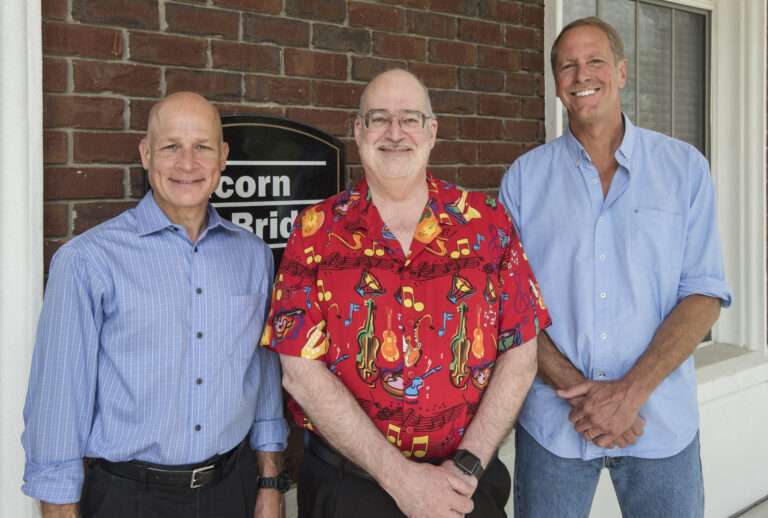
Alcorn McBride celebrates 40 years in business. Started after Steve Alcorn’s experiences opening EPCOT, the company has become a staple in the attraction A/V industry.
Issue 109 editorial by Martin Palicki, InPark Magazine Publisher
Every so often it feels right to change the way the magazine looks – not for the sake of change, but because the industry it serves has evolved and grown. This is one of those moments. Our refreshed design is a visual expression of what I am seeing everywhere I turn: a themed entertainment community that is rebuilding confidence, expanding geographically and, more than ever, working together.
That sense of momentum runs through this entire issue. For years we have talked about the Middle East as an emerging market. Now we are watching it become something much more significant – a place where projects are not only opening, but where long-term infrastructure, permanent teams and local talent pipelines are taking shape.
What has struck me most in the articles in this issue is how often the word collaboration comes up – not as a buzzword, but as a requirement. Whether it is the alignment between brands, operators and designers, the partnerships behind major productions, or the alliances forming between our industry organizations, the message is the same: the scale and complexity of what we create today demands that we work together earlier and more openly. The projects recognized by the TEA Thea Awards have always demonstrated that truth. They are reminders that our greatest achievements are never the result of a single company or discipline, but of teams that share a vision and execute it at the highest level.
On a personal note, one of the most rewarding aspects of putting this issue together was the range of voices represented. You will find industry veterans whose work has defined entire eras alongside new contributors who are bringing fresh ideas and new questions. That mix matters. Hearing these perspectives side by side gives me optimism about where we are headed.
There is also a thread in these pages about the “invisible” – the technology, the systems, the people behind the scenes who make the magic possible. As our cover story feature company Alcorn McBride celebrates 40 years, it is a reminder that our industry is sustained by companies and individuals who rarely get to take a bow but whose work is experienced by millions of guests every day. That kind of legacy deserves to be celebrated.
So yes, this issue looks different. But more importantly, it feels different to me. It reflects an industry that is broader, more connected and more diverse than at any point in our history. And it reflects a magazine that continues to evolve along with the community it serves.
AJ GARDNER LEADS RWS GLOBAL’S NEW OFFICE IN SAUDI ARABIA. HE WEIGHS IN ON DEVELOPMENTS IN THE REGION, THE ROLE OF ENTERTAINMENT AND WHAT’S TO COME IN THE MIDDLE EAST
interview by Martin Palicki
With the opening of its Riyadh headquarters in Saudi Arabia’s King Abdullah Financial District, RWS Global has made a clear statement about its long-termcommitment to the Middle East. Leading that effort is AJ Gardner, VP, Operations | Middle East. His career spans theme parks, opera, live entertainment, and large-scale destination development across the U.S. and the Gulf Cooperation Council (GCC). Most recently he served as Manager of Entertainment and Events at Six Flags Qiddiya City in Riyadh and previously held key roles at Dubai Parks & Resorts. His diverse background in creative production, operational management and live event strategy positions him to drive RWS Global’s continued growth and partnership expansion across the market. In this interview, Gardner discusses RWS Global’s strategy for the region, the evolution of the Saudi market, and how talent development and collaboration will define the next chapter.
Why Riyadh and why now?
RWS Global has built a global reputation for delivering world-class entertainment and elevating the guest journey across land-based attractions, cruises, mega-events, museums, and destination experiences. Opening our seventh international headquarters in Riyadh positions us to serve the Middle East with speed, professionalism, and cultural understanding.
There is an enormous appetite in Saudi Arabia and across the GCC for premium entertainment, and the region deserves the very best. By establishing permanent operations in Riyadh, we are creating a foundation for long-term growth at a moment when the world’s attention is turning toward Saudi Vision 2030. We are excited to contribute meaningfully to that plan and to the transformation of tourism and entertainment in the region.
How has your work in the Middle East shaped your perspective?
I was raised in the southern United States and had very limited exposure to the Middle East early on. When I had the opportunity to relocate to Dubai in 2016, I wanted to experience the region firsthand and form my own perspective.
What I discovered is that people are people everywhere. Stories transcend language, and live performance is one of the oldest and most powerful ways to share culture. Working in Dubai taught me how to collaborate across cultures and nationalities toward a shared goal: great entertainment.
That experience was also the first time I worked on a theme park resort from the ground up. Watching a project rise from sand to a fully operational destination, and then seeing families experience it for the first time, was transformative. It gave me a deep respect for the scale, collaboration, and care required to create meaningful guest experiences. It also made me fall in love with the Middle East. The hospitality and openness I’ve experienced here is unmatched.
You’ve worked on both the operator and supplier sides of the industry. How does that inform your approach?
Having been on the client side at major parks and resorts gives me a very practical understanding of what works and what doesn’t, especially in this region. Success here requires flexibility, commitment, cultural awareness, and strong teams.
RWS Global is uniquely positioned because we can provide full turnkey support, from master planning and design through execution, operations, consulting, and special events. Our global network, combined with more than 25 years of collective GCC experience, allows us to support projects of any scale while remaining deeply focused on guest experience. That balance is critical in the Middle East.
How would you describe the entertainment landscape in the region today?
It’s ambitious, immersive, and happening everywhere. Entertainment is embedded into daily life, from parks and festivals to malls and public spaces. There is a strong emphasis on lighting, architecture, and atmosphere, creating thoughtful and inclusive guest environments.
Events like Riyadh’s Noor Light Festival, which broke international records using light as a storytelling medium, show how seriously experiential entertainment is taken here. Free, citywide immersive installations, drone shows, and exhibitions connected by public transit made culture accessible to everyone.
The region now hosts major international music acts, comedy festivals, opera, musical theater, and large-scale touring productions. Audiences are highly engaged, and entertainment is available on demand, any day of the week. Most importantly, it’s family-focused, which is central to the culture.
Where do you see the Middle East market heading over the next decade?
We’re only at the beginning. In particular, Saudi Arabia has a family-centered culture that deeply values immersive entertainment. With recent milestones such as the opening of Six Flags Qiddiya City, global tourism has taken notice. The scale, pace, and vision behind Saudi Arabia’s transformation is unlike anything I’ve seen before. It will reshape expectations for destination entertainment worldwide.
Looking at Saudia Arabia alone gives a hint of what’s to come. Qiddiya City will continue to expand with Aquarabia, F1, more hotels and entertainment. Expo 2030 takes place in Riyadh in a few years, and it’s going to be impressive. The World Cup arrives in 2034 and those stadiums are already being built. They will need fan activations, sports production and entertainment. And these are only the largest projects. There are countless smaller community-sized developments for entertainment and culture planned as well.
As projects move from development intolong-termoperations,whatrole does RWS Global play?
We are a bespoke, turnkey entertainment provider. Whether a project needs master planning, execution, operations, consulting, or long-term operational support, we can step in at any phase.
Our Riyadh headquarters is designed as an operational hub, not a satellite office.
We provide the same level of care and attention to every project, from giga-developments to smaller activations. Accessibility and responsiveness are core to how we work.
How would you characterize Saudi Arabia’s transformation in relation to the rest of the region?
The Kingdom of Saudi Arabia has positioned itself in a unique way, as the Kingdom is reforming their entire economic and cultural systems at the same time. Their transformation is unprecedented in its scale and vision. Transforming its economic diversification to focus on tourism, cultural heritage, and entertainment will define the success of the Kingdom.
His Highness Mohammed bin Salman (MBS)’s Saudi Vision 2030 development plan will go down in history books, as one of the most ambitious and well executed reform plans in human history. The vision is clear, purposeful, built to directly benefit the people of Saudi Arabia, and will bring prosperity and opportunity to the entire Kingdom.
Outside of Saudi Arabia, the UAE has done a fantastic job putting their tourism and business sector on the map. Their rapid climb to becoming a top global destination through the development of infrastructure, including the incoming Disneyland Abu Dhabi, will be studied and discussed for years to come.
Talent development is a major topic in the region. How is RWS Global approaching this?
Developing local talent is essential, and it’s something I’m personally passionate about. Our goal is to help build a world-class entertainment workforce within the region by combining local leadership with global expertise.
We want to bring international educators, performers, and industry experts into the region to share knowledge, conduct training, and support long-term professional growth. This industry isn’t only for expatriates. Saudi professionals want to build careers here, and we want to support that ambition.
How would you describe the collaborative environment in the Middle East entertainment sector?
Collaboration is key to success here. RWS Global is one of the most collaborative organizations I’ve ever worked with, and that mindset extends into how we engage with partners and clients.
The companies that succeed in this region are the ones that prioritize collaboration, cultural respect, and long-term relationships. Closing doors or operating in silos is not a sustainable approach, especially in a market that is still defining its future.
How do you envision RWS Global’s impact in the region over the next five to ten years?
Our focus is simple: deliver world-class entertainment at scale, supported by our international network and grounded in local culture. Training, workforce development, and operational excellence will be central to our growth.
We are here for the long term, committed to contributing to the region’s success and to creating experiences that resonate with families and communities. Being part of this moment in Saudi Arabia’s evolution is a privilege, and we’re excited about what’s ahead. •
CIRQUE DU SOLEIL’ S FIRST PERMANENT EUROPEAN RESIDENCY MARKS A NEW CREATIVE CHAPTER, INTRODUCING ACROMAGIC – AN ILLUSION-DRIVEN PERFORMANCE STYLE WHERE EPSON’S PROJECTION BECOMES CENTRAL TO THE EXPERIENCE.
by Becci Knowles
Co-produced with Live Nation Germany, ALIZÉ – Cirque du Soleil’s first permanent resident production in Europe – premiered at Berlin’s Theater am Potsdamer Platz in November 2025. As Official Projector Partner of Cirque du Soleil Entertainment Group, Epson America worked closely with Cirque du Soleil’s creative and technical teams to implement a projection system capable of sustaining illusion at scale, night after night.
Billed as “a journey into the invisible,” Cirque du Soleil ALIZÉ introduces a new performance style called “Acromagic” – a fusion of its signature acrobatics with Magie Nouvelle (New Magic), an artistic movement that has spent more than 20 years reimagining magic as poetic expression rather than illusionary trickery. It is a form that depends on uncertainty: on making audiences question what they are seeing, where reality ends, and where imagination begins.
Photos, Right, Top to Bottom (All photos credited to Anne-Marie Forker):
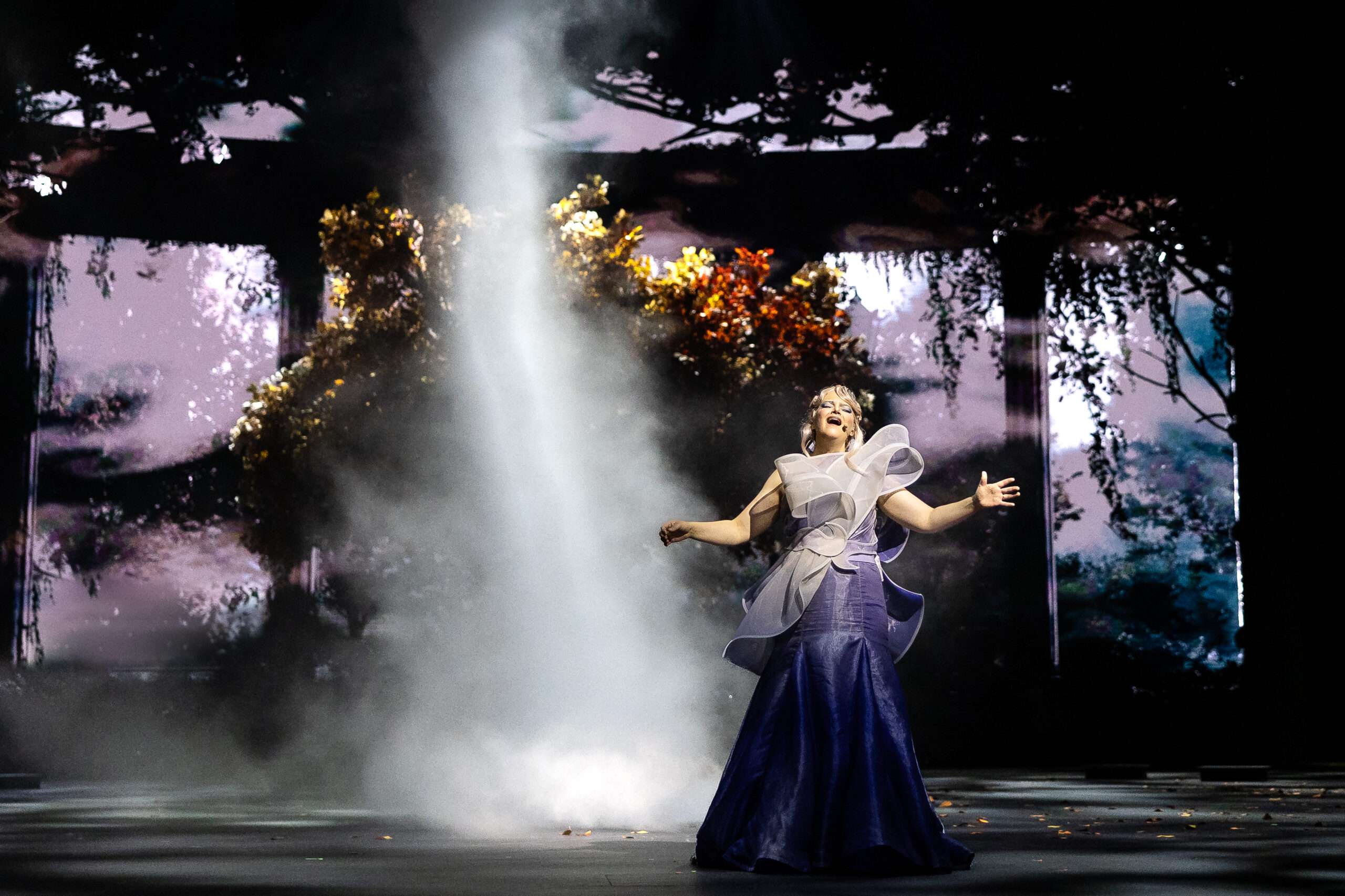
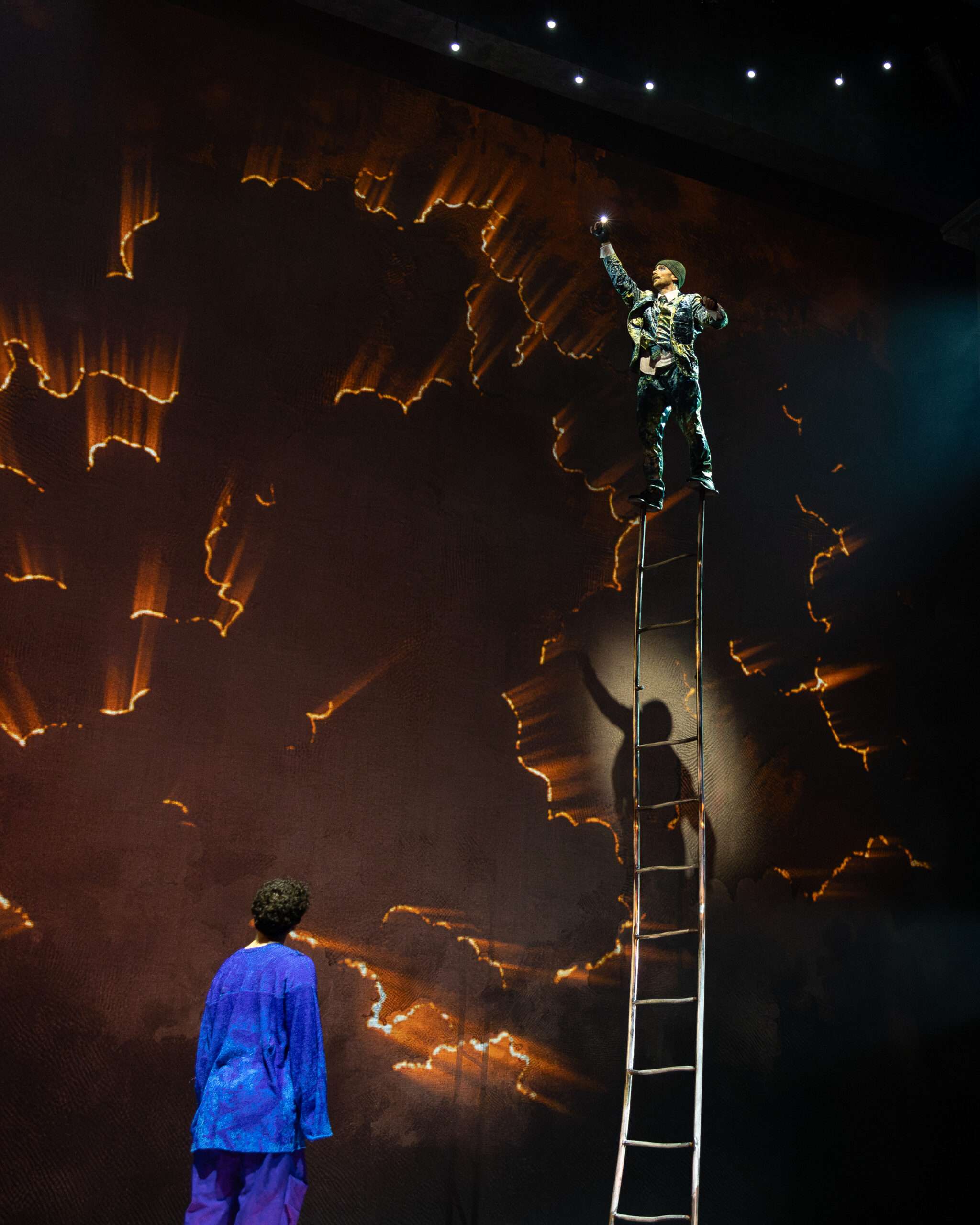
Projection mapping integrates with live effects in the tornado sequence, maintaining alignment and visual clarity even as lighting, haze, and movement intensify around the performer.
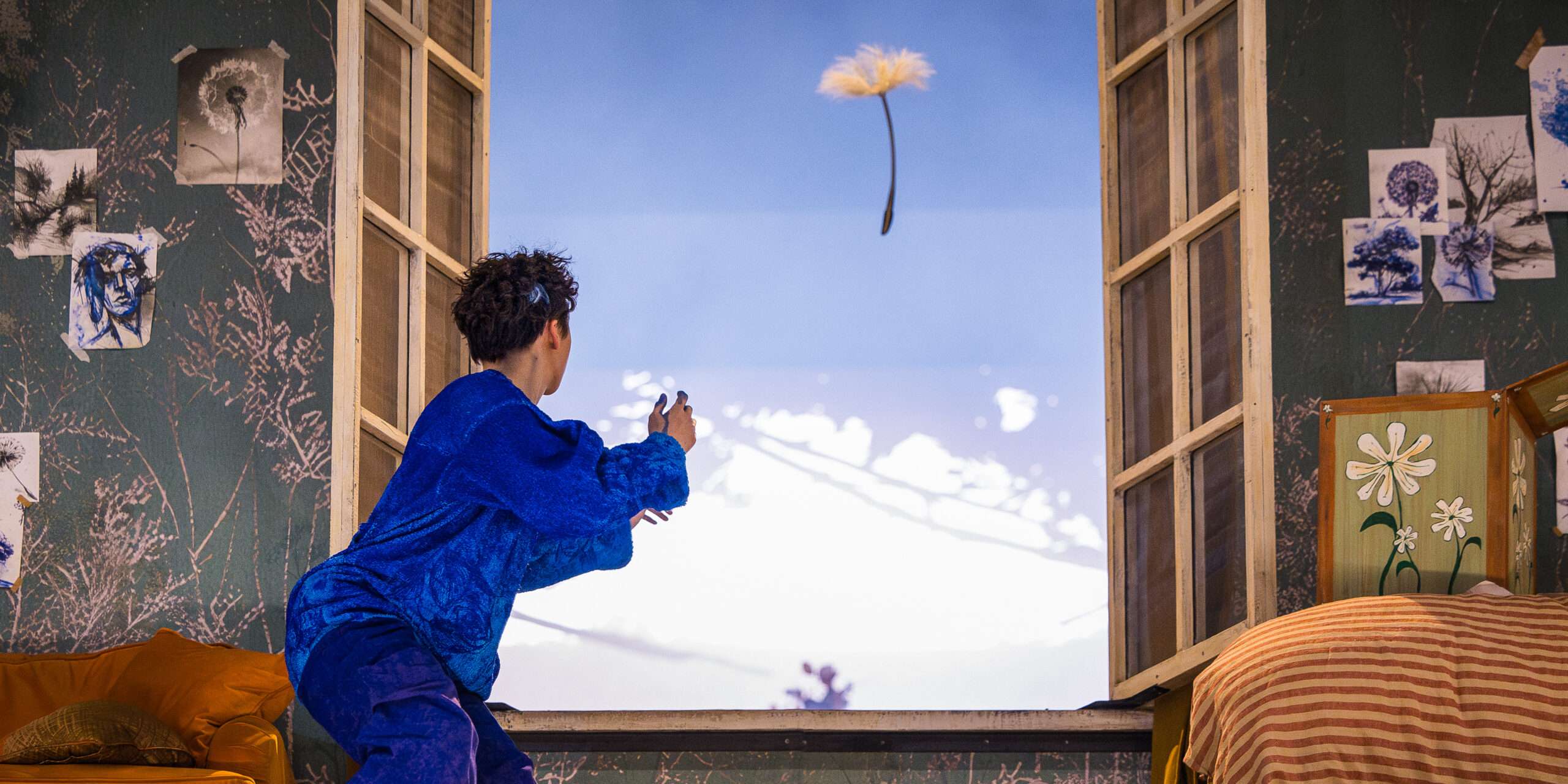
The bedroom sequence that sets the tone for ALIZÉ. What first appearsto be a projected animation gradually reveals a live performer within it, blurring the boundary between physical set and illusion through precisely mapped Epson projection.
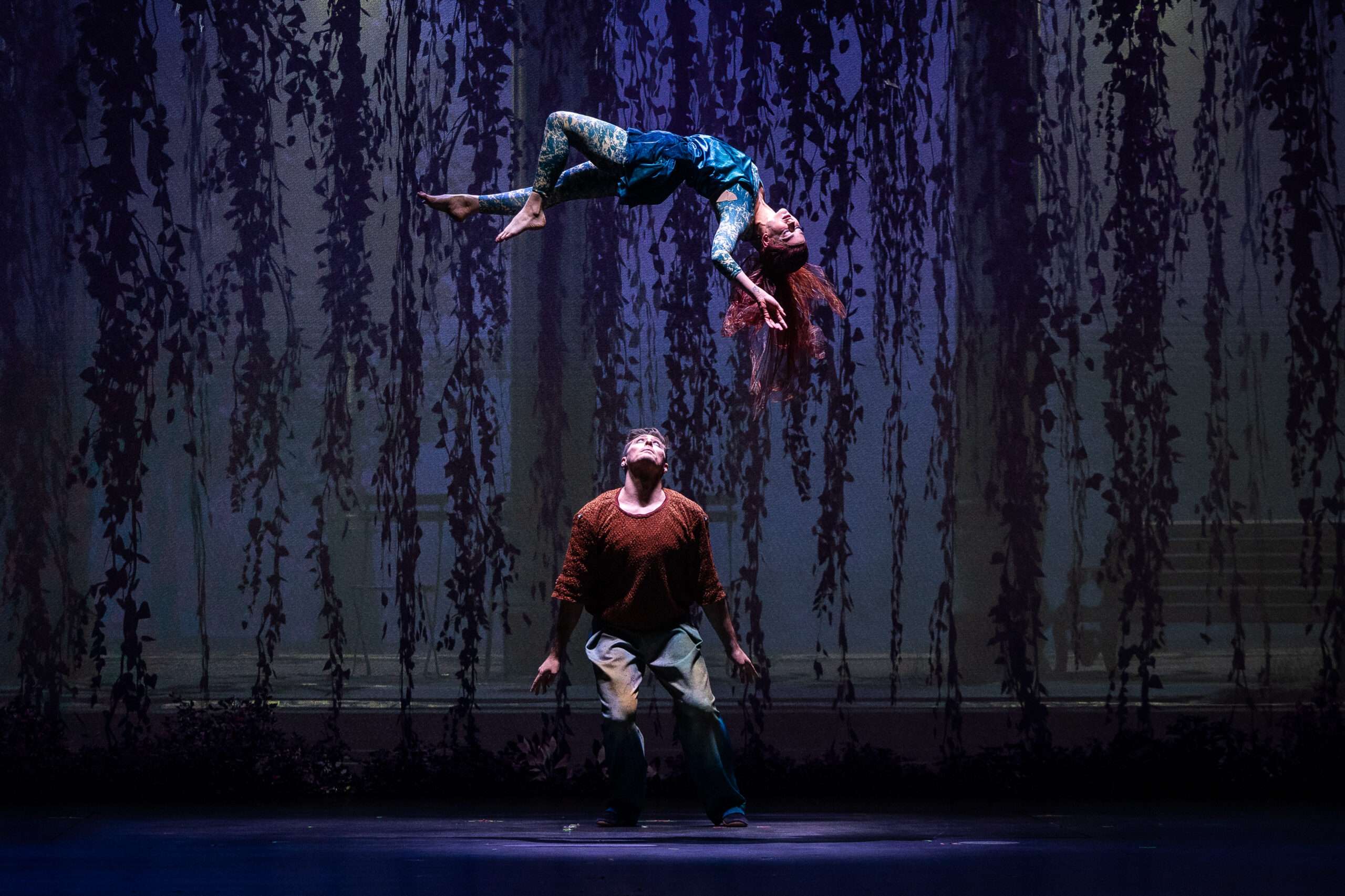
Hanging vines of projected light create a layered environment that feels spatially present around the performers. In ALIZÉ, projection enhances intimacy rather than spectacle.
During the contortion act, described by Lead System Manager John Thurston as the moment when audiences “sit forward in their seats,” projected volutes gather and expand around the performer, transforming quiet detail into immersive illusion.
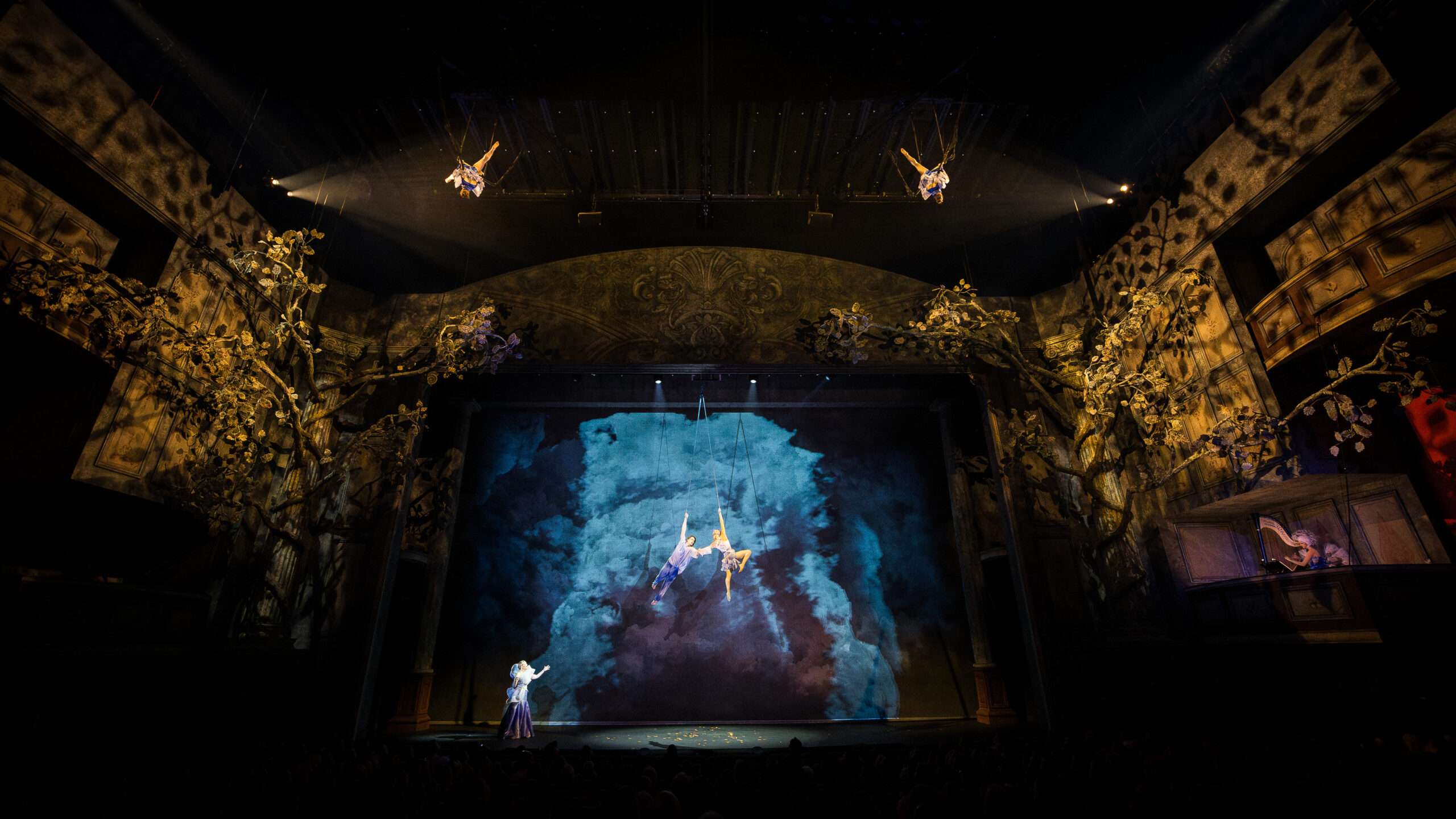
Projection and aerial choreography remain precisely aligned, creating the impression that performers are moving within the image itself rather than in front of it.
For example, in one sequence, a bedroom appears at height onstage, rendered in such a way that it initially looks like a 3D animation rather than a physical set. A figure lies motionless on a bed. Only when his arm drops does it become clear the performer is physically present. Even then, the distinction between projected environment and physical objects remains unclear. The bed, the surrounding furniture, and the space itself seem to exist somewhere between physical structure and projection. It becomes difficult to determine what is real and what is not.
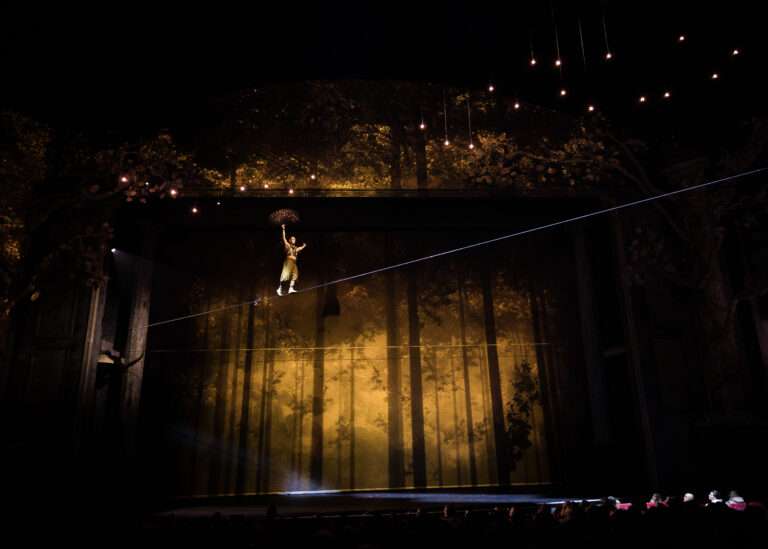
Elsewhere, suspended high above the audience, a high wire walker balances in stillness as fireflies drift around him, marking a path that seems to exist alongside his movement rather than on any visible surface. The effect is subtle but disorienting. Projection does not frame the act; it shapes the space the performer occupies, which again makes it difficult to separate the physical environment from the illusion. Moments such as these (and there are many) capture the essence of Acromagic, where projection and reality coexist without clear boundaries.
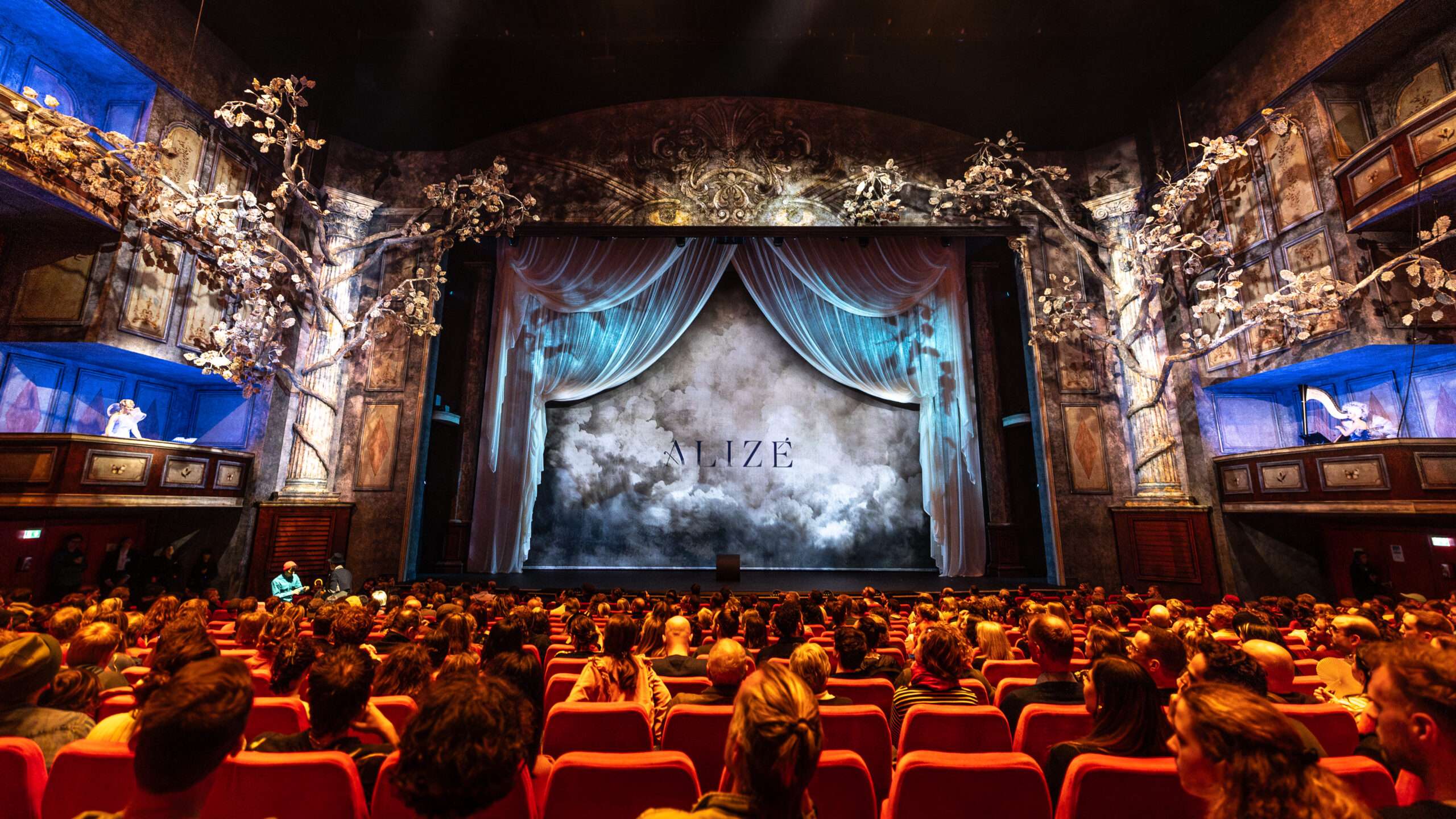
The auditorium itself feels animated long before the first acrobatic moment unfolds. Fireflies drift across the walls, the environment subtly breathes, and the boundary between stage and auditorium begins to soften. With a performer playing the harp on each balcony, stage right and stage left, there is an immediate sense that the venue has been tuned like an instrument. The walls, the architecture, and the space around the audience all feel active, as projection shifts across surfaces in ways that make the room feel alive rather than static.
To support that vision, Theater am Potsdamer Platz has been extensively redesigned and transformed to meet the unique requirements of a complex permanent production. Over the course of just three months, a team of 60 technicians reconfigured the space. The resident cast features 43 artists from 21 countries, supported by approximately 40 technicians operating systems above the audience, below the stage, and throughout the theater.
The Theater am Potsdamer Platz is relatively compact compared to Cirque du Soleil’s purpose-built residency venues, with seating rising steeply toward balconies and technical infrastructure integrated tightly into the architecture.
Scenic elements, automation systems, lighting, and projection equipment occupy nearly every available space, extending vertically into the grid and below the stage. Rather than relying on a single scenic focal point, the production uses projection to extend and transform physical set pieces, allowing environments to appear, dissolve, and reconfigure without visible mechanical change.
John Thurston, Cirque du SoleilJason Meyer, Epson America
Jason Meyer, Director of Product Management at Epson America, describes the project as something Cirque du Soleil had been moving toward for some time. “When Cirque du Soleil described their aspirations for storytelling, we knew projection was the only technology capable of bringing it to life.” The concept Cirque du Soleil brought to Epson wasn’t a general wish list. It was specific, visual, and ambitious. Meyer recalls sitting with the show’s technical leadership early in the process. “It was similar to a pitch, beautifully rendered technical concepts that simply blew us away in their scope and ambition. It was truly exciting.”
The show’s defining visual language is inseparable from projection, not as a scenic overlay, but as a core mechanism of the magic. That is where Epson enters the story: not as a supplier in the traditional sense, but as a technology partner providing the brightness, consistency, and creative flexibility required to make Cirque du Soleil ALIZÉ’s constant “is it real or not?” experience land.
When Meyer explains the technical concept behind Cirque du Soleil ALIZÉ, he does not present projection as just another production ingredient. Instead, he describes it as the core technology that helps everything come together. Eight overlapping Epson EB-PU2220B large venue laser projectors, each delivering 20,000 lumens, form the central visual canvas. In total, approximately 20 Epson laser projectors are deployed throughout the theater. These projectors are positioned within the grid, technical galleries, and front of house positions, covering scenic elements, architectural surfaces, and performance areas. Their output extends across stage floors, vertical scenic structures, and atmospheric effects, allowing projection to exist within the same spatial environment as performers and physical scenery.
Brightness, Meyer emphasizes, is not a technical indulgence. It is a creative requirement. “The role of projection is both hugely ambitious yet incredibly nuanced. Cirque du Soleil uses color to drive emotion, demanding hues that need to be incredibly precise, consistent, and bright. At the same time, ALIZÉ is a journey into the invisible. This is where projection becomes the perfect medium: it provides a level of subtlety and can disappear entirely, leaving the audience in awe.”
In an entertainment landscape increasingly dominated by LED, both Cirque du Soleil and Epson are clear about projection’s continuing relevance.
“LED is amazing. It can do incredible things,” Meyer says. “But it can’t do what projection does.” Specifically, projection allows light to exist across dimensional surfaces rather than within a defined screen. “You can’t bend light with LED screens around three-dimensional surfaces very easily, not with quality,” he explains. “And you can’t create a hologram in the middle of a stage, for example a tree blowing in the wind. There are things that only projection can do.”
Subtlety as strategy
One of Cirque du Soleil ALIZÉ’s most powerful creative choices is subtlety. Rather than foregrounding technology, the production allows projection to seep into the experience gradually. “The subtlety with which the projection is used in the beginning – you almost don’t notice it’s there,” says John Thurston, Lead System Manager for ALIZÉ.
High above the stage, illusion and safety operate in tandem; projection is meticulously aligned and rehearsed to preserve both visual impact and performer safety. Photo credit: Anne-Marie Forker
That understatement lays the groundwork for the show’s central tension: the constant uncertainty between what is real and what is not. This becomes especially apparent during the contortion sequence. From a mass of drifting projected clouds, the volutes emerge and appear to dissolve back into them as they move. Projection fragments their silhouettes and reshapes the surrounding space, creating the impression that their bodies exist somewhere between physical presence and illusion.
“There could be something real, which you question if it’s not real,” Thurston explains. “There could be something unreal that you question if it is real.” From the audience, that ambiguity becomes physical. Attention drifts from stage to ceiling, from walls back to performers, and then outward again. “That’s exactly the aim,” Thurston says. “I don’t think they use the same tactic twice. The idea is to keep you on your toes.”
A brush for a painter
Thurston, a veteran lighting and show designer, describes the creative goal in familiar terms. “When you’re using technology creatively,” he says, “you want to lose the fact that it’s a piece of technology. It just wants to become a brush for a painter. It’s a tool for an artist. And you want the tool to disappear and the art to come out.” That philosophy carries through into how the system is built. Projection systems remain permanently installed throughout the theater, positioned in the grid, front of house, and technical galleries.
Approximately 20 Epson laser projectors, including eight overlapping EB-PU2220B units, create a continuous visual canvas that spans stage, scenery, and architecture – turning Berlin’s Theater am Potsdamer Platz into an immersive Acromagic environment. Photo credit: Anne-Marie Forker
Performers and scenic elements move through precisely mapped projection zones while tracking and calibration systems ensure projected imagery remains correctly aligned. This allows projection to maintain spatial accuracy even as performers move through complex choreography, preserving both illusion and performer safety.
For example, the tightrope performer has learned the act in coordination with lighting and projection cues that define what he can see and how he moves through the space. Projection and lighting must remain perfectly aligned, night after night. Even small inconsistencies could disrupt his spatial reference points, affecting both the illusion and the safety of the performance. Maintaining that consistency requires projection systems capable of delivering stable brightness, color, and alignment across every performance.
Projection in Cirque du Soleil ALIZÉ does not exist in isolation. It is interlocked with lighting, audio, automation, scenic elements, and most critically, high level acrobatics where safety is non-negotiable. Thurston describes lighting and projection as “weapons of mass distraction” if mishandled. Used correctly, they support illusion without exposing its mechanisms.
Reliability as a creative requirement
As a permanent resident production, Cirque du Soleil ALIZÉ demands absolute consistency. Epson’s laser-based systems were selected specifically for live entertainment environments, designed to run at full brightness for thousands of hours. “The equipment we provided is built to run hard,” Meyer says. “That’s what these environments demand.”
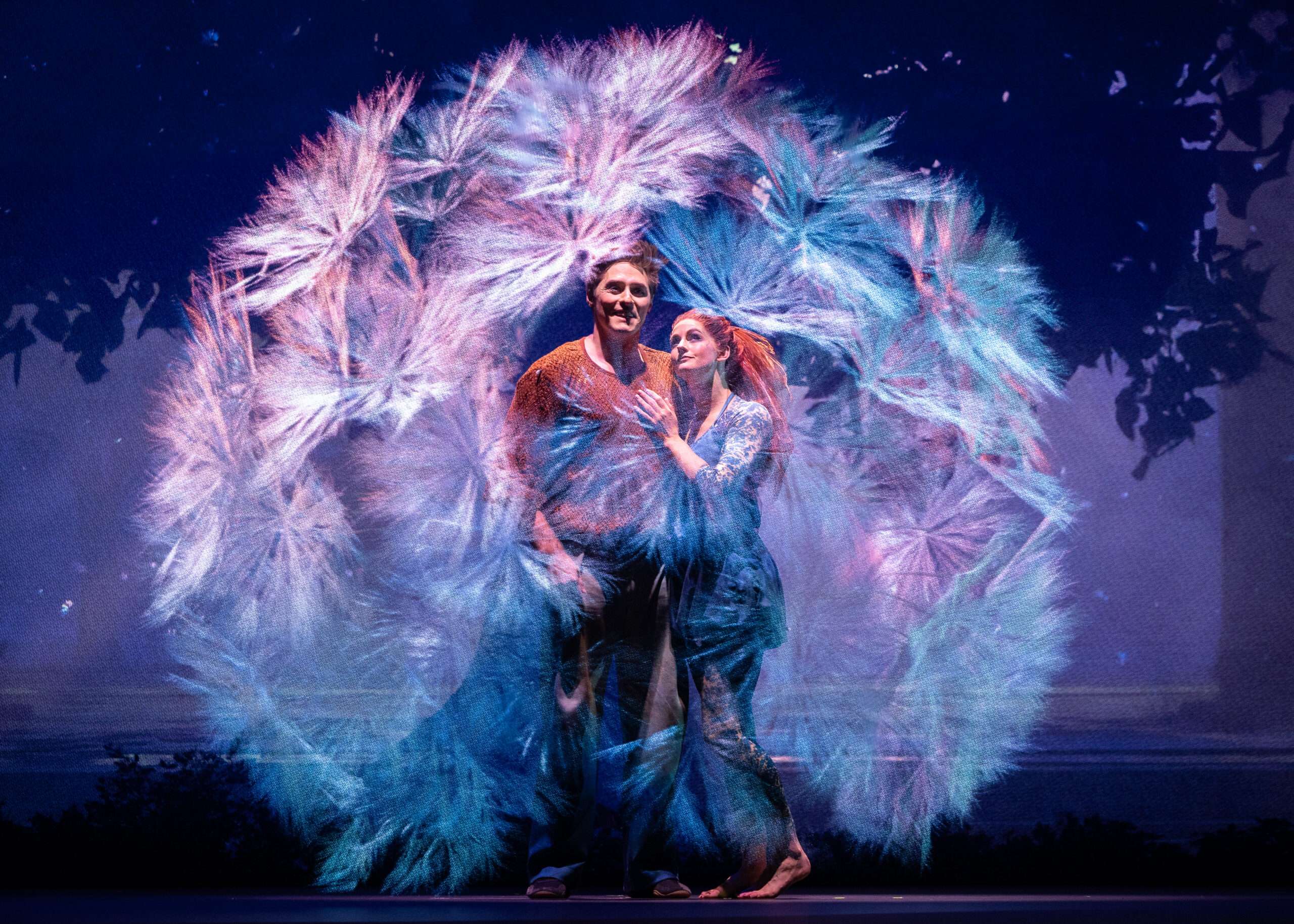
The dandelion moment exemplifies ALIZÉ’s approach to projection: subtle, layered, and integrated with live performance. Photo credit: Anne-Marie Forker
For Thurston, reliability directly affects the people who live with the show night after night. “If you spend less time on maintenance, that value goes back into the show,” he explains. “It goes back into the team.” Once a production transitions from creation to operation, stability becomes essential. “The operations team’s job is hard enough as it is,” Thurston says. “Anything they don’t have to worry about is worth its weight in gold.”
Perhaps the most telling aspect of the collaboration is how Thurston describes Epson’s role. “This is not a sponsorship between Cirque du Soleil and Epson,” he says. “It’s a partnership.” From the outset, Epson positioned itself as a creative ally.
“They came in saying, ‘We want to know what you’re trying to do. We want to understand the thought process behind it,’” Thurston recalls. “We weren’t just a client. It wasn’t just a project.” That proximity, he believes, shows in the result. “The quality of the show that was delivered is in no small part because of Epson and their care for us.”
Ultimately, Cirque du Soleil ALIZÉ does not ask audiences to admire technology. It asks them to doubt their senses. If you leave the theater thinking you have understood one or two moments, the show has done its job. If you try to assemble the whole puzzle, you quickly realize you cannot. “If you try and add them all up and figure out the total game plan,” Thurston says, “you just tie yourself in a knot.”
That knot, the lingering uncertainty between what was real and what was illusion, is the show’s visual signature.
And it is made possible by projection that is bright enough, subtle enough, and reliable enough to disappear entirely.
As the performance concludes, the illusion gives way to something more human. The technical crew emerge alongside performers for the final bow, acknowledging the coordination required to sustain the production. It is a rare moment where the invisible becomes visible, revealing the scale of collaboration behind the illusion. •
INPARK IS PARTNERING WITH BIG BREAK FOUNDATION TO BRING READERS A SERIES OF COLUMNS THIS YEAR ON ISSUES SURROUNDING DIVERSITY, EQUITY, INCLUSION AND ACCESSIBILITY. THIS IS THE FIRST OF THESE ARTICLES.
by Patrick Kling, Founder & Board Chair, Big Break Foundation
Patrick Kling
You might be asking yourself how a white, straight male ends up founding a nonprofit focused on inclusion, diversity, equity, and accessibility (IDEA).
That’s a fair question. Conversations around inclusion aren’t simple, and there are real disagreements about the role white men should play in this space. I’m not writing as an expert; but rather, as someone whose thinking changed, slowly and then all at once, through conversations inside the themed entertainment industry.
I grew up in Southern California believing in meritocracy. If you worked hard and treated people well, everything would work out. The idea of someone being denied a job simply because of their skin color or gender felt outdated to me. My family believed we didn’t see color. We were taught that everyone should be treated the same and that talent would rise on its own.
For a long time, I believed that was enough, and that belief followed me into my career.
The first crack in that thinking came in 2019. I was scrolling through Twitter when I saw a retweet of a project team’s photo. The user pointed out that the team was overwhelmingly white and male.
I responded asking what we could do about it. From my experience, the industry felt welcoming. No one I knew was actively trying to keep people out.
I received a blunt reply at first. But instead of ending the conversation, the person suggested I connect with a colleague who was trying to create change within the industry. I did, and we ended up having a long conversation that changed how I saw everything.
They were a person of color who recently landed a spot at one of our industry’s major companies. As they described their background, I was impressed. They were a writer and a musician, and they had a wide range of creative and technical skills. I remember saying how amazing it was that they could do so many things.
“No, Patrick,” they said. “I have to do all of these things. I HAVE to overperform. I have to do the work of five people.”
They explained that many of their white male peers could enter the industry with a single skill straight out of college. To compete, they needed to be exceptional across multiple disciplines just to be seen as viable.
That moment hit me hard. What made it even harder was realizing this wasn’t an isolated story. Study after study shows how people of color – especially Black, Latine and Indigenous applicants – are passed over in hiring decisions. In 2017, PNAS (Proceedings of the National Academy of Sciences) published research demonstrating that people of color receive fewer callbacks than white applicants even with identical qualifications.1 In 2024, researchers at NYU and Yale found employees of color receive fewer promotions.2 And a 2025 article in the Journal of Biomedical and Life Sciences found that even with higher levels of education and skills, Black employees continue to receive fewer economic benefits.3
As I kept learning, another moment stood out. I was watching a conference presentation when the speaker posed a scenario that felt uncomfortably familiar. You’re in a meeting and someone asks, “Does anyone know someone who could do this entry level job?”
The speaker explained that when a room is made up mostly of white people, the referrals that come out of it will usually reflect that makeup. Not because anyone is trying to exclude others, but because systems tend to reproduce themselves. Who we know, and who gets invited in often looks like what is already there.
One of the simplest solutions they offered was also one of the most eye opening. Open up the process. Create more than one door into the industry.
Then I came across a statistic that completely reframed how I understood hiring decisions. In 2016, the Harvard Business Review published research showing that when there’s only one woman or person of color in a final candidate pool, their chances of being hired are effectively ZERO. But, when there are at least two, their chances of landing a job are about 194 times greater, and their odds increase as the candidate pool diversifies.4
For me, the most pivotal point came during a virtual seminar called “The Listening” early in the pandemic. The two presenters pointed out that challenges faced by women and people of color are not problems they can solve alone. Change requires action from those who currently benefit from the system and are in the room.
They explained that many well-intentioned white men – myself included – move through systems that reward us in ways we may not even notice. Ignoring that reality doesn’t make things fair, but acknowledging it gives us a chance to fix what isn’t working.
That’s when I finally understood why saying “I don’t see color” isn’t neutral. It erases real experiences. It ignores the extra effort, pressure, and exhaustion that many people carry just to belong in the same rooms.
If we want people to actually succeed because of their character, talents, and knowledge, we have to create purposeful systems. That means taking responsibility for opening doors and changing how we hire.
IDEA is often oversimplified to just focus on skin color. But it’s more than that. IDEA addresses the real socioeconomic barriers in our industry. There are people who never had the right school, the connections, or the ability to move to the right city at the right time. And yes, there are many white men who are not benefiting from the system either, who are working just as hard and still struggling to break through.
Acknowledging inequity does not mean pretending everyone who looks like me has it easy. It means recognizing that the system itself is uneven, and that different people hit different obstacles along the way. If we want an industry where talent truly rises, then we have to care about all of those barriers, not just the ones that are easiest to see.
That is the work. Not blame. Not guilt. Just building something better, together. •
Patrick Kling is the Founder and Board Chair of Big Break Foundation, a 501(c)(3)nonprofit dedicated to making the location based entertainment industry more inclusive and welcoming to all. He has served as a creative leader on world class theme park and waterpark projects around the globe, with work spanning Nickelodeon, SeaWorld, Paramount, and other major brands.
THE ALLIANCE OF IAAPA, THEMED ENTERTAINMENT ASSOCIATION AND LICENSING INTERNATIONAL BODES WELL FOR THE LBE MARKET
by George Wade, Bay Laurel Advisors
George Wade
The International Association of Amusement Parks and Attractions(IAAPA), the Themed Entertainment Association (TEA), and Licensing International (LI) have formed a new working alliance aimed at advancing the rapidly growing world of branded location-based entertainment (LBE). By aligning brand owners, experience operators, and the creative professionals who design immersive environments, the three organizations are working together to develop shared education, best practices, and frameworks that elevate branded experiences worldwide.
Each May, the global brand licensing industry converges on Las Vegas for Licensing Expo, produced by Informa and Licensing International and long known as the marketplace where brands and consumers meet. This flagship event with over 12,000 attendees has increasingly become a bellwether for location-based entertainment. This year’s show provides a timely platform for the alliance to articulate its shared vision and begin rolling out collaborative initiatives.
This shift reflects a broader change in consumer behavior. Today’s audiences place as much value on memorable experiences as they do on physical products – often more. As a result, brands have become a powerful driver for experience operators. The most recent data from Licensing International shows that global sales of licensed merchandise and services reached $369.6 billion and the industry is only expected to continue to grow. Branded LBE offerings reported significant increases in 2024 (+5.5%), 2023 (+13.5%), and 2022 (+67.3%).
Whether it’s immersive attractions, themed destinations, live events, or branded environments, consumers are actively seeking experiences that allow them to engage emotionally with the stories, characters, and worlds they love.
For experience operators, this evolution represents a tremendous opportunity. At the same time, it introduces new challenges. Guest expectations continue to rise, driven by advances in technology, competition for leisure time, and the growing sophistication of experiential design. Delivering experiences that feel authentic, high-quality, and worthy of beloved brands has never been more complex.
One proven way to meet these expectations is by bringing popular entertainment brands to life through immersive experiences. However, success in this arena requires close coordination between three distinct but interdependent communities: brand owners, experience operators, and the designers and producers who create these environments.
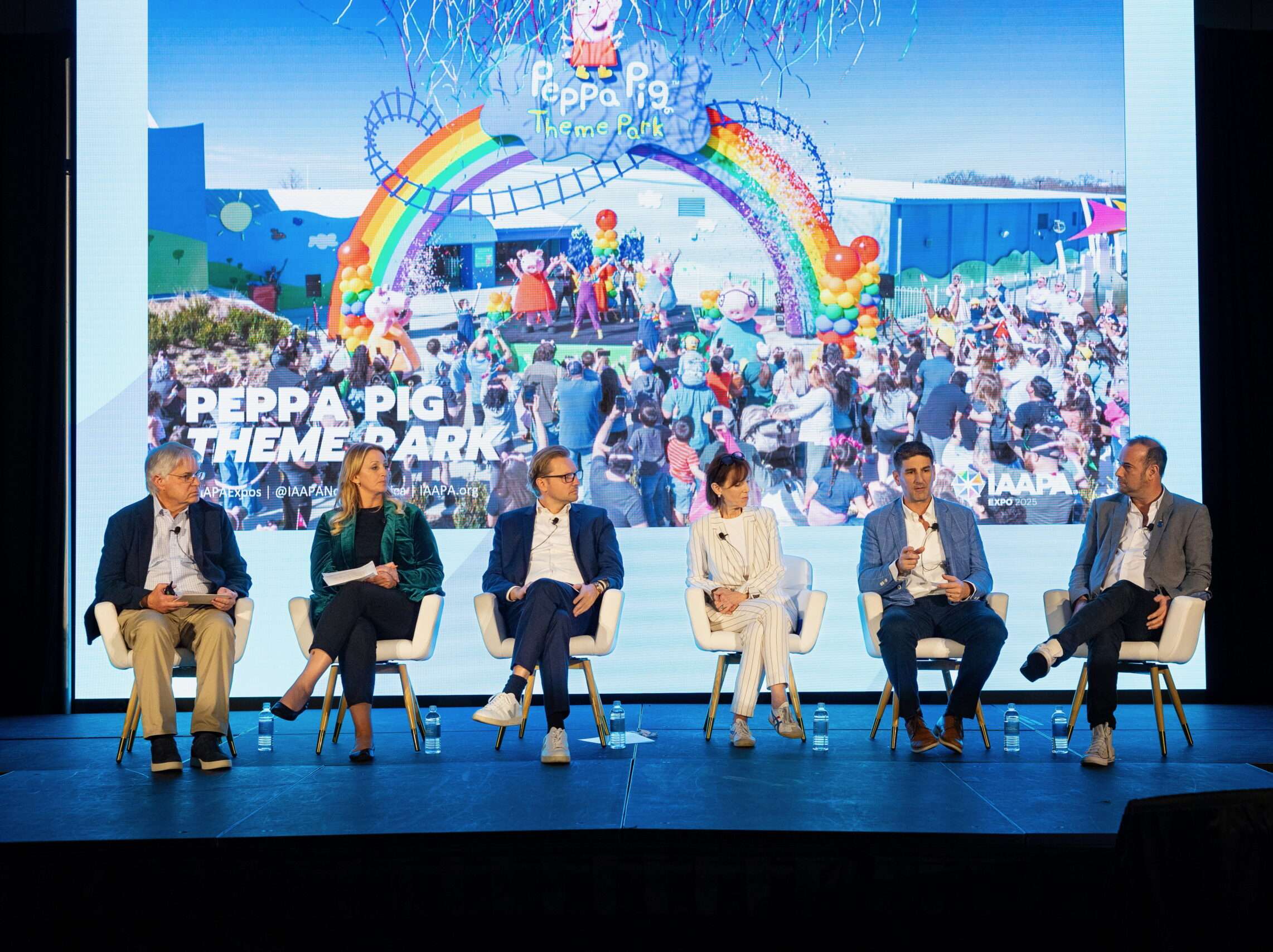
George Wade (Bay Laurel Advisors), Melissa Oviedo (TEA), Jakob Wahl (IAAPA), Maura Regan (LI), Matt Proulx (Hasbro) and Rob Smith (Merlin) share insights on branding and LBE at IAAPA Expo 2025 in Orlando. Photo courtesy of IAAPA.
Recognizing this reality, IAAPA, the TEA, and LI have come together to form a new working alliance. Each organization represents a critical piece of the experiential ecosystem: operators, creative and technical professionals, and brands. All three see clear benefits in aligning their efforts.
Formed in mid-2025, the alliance is focused on developing coordinated educational programs, sharing best practices, and establishing frameworks that help all stakeholders succeed. The goal is straightforward: to enable the creation of best-in-class branded experiences that delight consumers while protecting and enhancing the value of the underlying intellectual property.
“We are excited about our partnership with IAAPA and TEA. Now more than ever, consumers everywhere are seeking a 360-degree experience with their favorite brands. LI is a global organization at the forefront of connecting brands with business leaders globally. Our alliance with IAAPA and TEA provides the connections and tools needed – including insights and education – for operators and experience developers to create new business opportunities and accelerate their current businesses worldwide,” said Maura Regan, President of Licensing International.
As Licensing Expo approaches this May, and as location-based entertainment continues to gain prominence within the entertainment landscape, the alliance signals a clear commitment by all parties involved. By aligning brands, operators, and creators around shared standards and education, LI, IAAPA, and TEA are laying the groundwork for the next generation of immersive branded experiences.
The alliance in action
At its foundation, the alliance is dedicated to advancing education and providing meaningful support to the memberships of all three organizations. Through shared learning opportunities, practical tools, and the development of industry best practices, the partnership is designed to help members unlock new business opportunities while elevating the overall quality of guest experiences across the sector.
“Branded experiences succeed when brands, operators, and creators are aligned from day one,” shared Melissa Oviedo, CEO, Themed Entertainment Association. “Our alliance with IAAPA and Licensing International is about raising the bar across the industry – strengthening collaboration, protecting brand integrity, and delivering immersive experiences that truly resonate with today’s audiences.”
During a panel discussion at IAAPA Expo 2025, I had the privilege of moderating a conversation focused on the alliance’s potential benefits for the entire industry. The session convened the chief executives of the three partner organizations: Jakob Wahl, President and CEO of IAAPA; Melissa Oviedo, CEO of TEA; and Maura Regan, President of LI. It offered a leadership-level perspective on the motivations behind the collaboration and its long-term strategic importance, while emphasizing the increasing interdependence among all project stakeholders. All three underscored that as branded experiences become more sophisticated and more central to brand strategy, closer collaboration and shared standards are no longer optional.
The panel also featured an operator–brand case study with Matthew Proulx, SVP of Location-Based Entertainment at Hasbro, and Rob Smith, COO of Merlin Entertainments. Together, they shared insights from their highly successful licensed partnership built around PEPPA PIG, highlighting how alignment between brand stewardship and operational execution can result in experiences that resonate deeply with families while delivering strong commercial performance.
“The brands that truly last are the ones that make people feel something. As experiences play a bigger role in how audiences engage with IP, collaboration across the ecosystem becomes essential,” said Proulx. “Through our work with Merlin Entertainments on our U.S. PEPPA PIG attractions, we have seen how early alignment between brand teams, operators and creators leads to work that feels authentic and deeply meaningful for families. When everyone is building with the same care and intent, those moments become memories that stay with guests long after they leave.”
Location-Based Entertainment will have a visible presence at Licensing Expo, with LBE-focused educational offerings and networking opportunities planned during the event. The Themed Entertainment Association and Licensing International will co-host their second Licensing Expo networking mixer on the evening of Wednesday, May 20; final details regarding the time and venue are forthcoming. The inaugural mixer, sponsored by TEA and held in 2025 at JOHN WICK EXPERIENCE, attracted more than 100 industry professionals, underscoring the growing momentum behind experiential licensing.
As the experiential licensing sector continues to evolve, the alliance among IAAPA, the Themed Entertainment Association, and Licensing International represents a deliberate commitment to ensuring that industry growth is matched by excellence in execution. The collaboration ultimately benefits brands, operators, creators, and – most importantly – the guests they serve.
“Intellectual property is shaping many of today’s most exciting attractions. This alliance unites global experts to elevate collaboration, best practices, and the future of branded experiences. We are excited to see this also coming to life at our IAAPA Expos,” said Jakob Wahl, President and CEO of IAAPA.
Planning is already underway for joint initiatives at upcoming TEA, IAAPA, and LI events throughout the year, all with the objective of strengthening relationships across the Location-Based Entertainment and brand licensing communities and fostering a more connected, collaborative industry. •
With over 40years in the entertainment and leisure industry, George Wade has becomea leading innovator in the development of highly participatory immersive Location-Based Entertainment (LBE) projects including theme parks, themed attractions and interactiveentertainment venues. He is also a leading expert in utilization of high-powered entertainment brands within the LBE industry. In 2009,George established Bay Laurel Advisors, abroad-based consulting firm dedicated to the development of unique LBE projects. George also serves as a member of the Licensing International Board of Directors focusing on brand licensing’s ability to create memorable and profitable guest experiences in LBE.
In themed entertainment, the most important technology is often the least visible.
Guests do not come to a theme park to admire show control systems or audio playback hardware. They come for Spider-Man leaping across rooftops, for parades that pulse with perfectly timed music, for immersive worlds that feel seamless and alive. Yet behind those moments (synchronized to the millisecond) stands a company that has quietly shaped the modern theme park experience for four decades: Alcorn McBride.
As the Orlando-based firm celebrates its 40th anniversary, its influence on the industry is undeniable. From the groundbreaking V16 show controller to the now-legendary Binloop digital audio and video player, Alcorn McBride has become synonymous with reliability, precision and purpose-built technology. But the company’s true legacy is not in circuit boards and firmware. It is in the people who built it, sustained it and continue to define its future.
EPCOT origins
The story begins, fittingly, at EPCOT. In the spring of 1982, Steve Alcorn joined the massive effort to bring the ambitious new park to life. As Disney’s first systems engineer in the final months before opening, he was tasked with designing the complex control systems at The American Adventure show in World Showcase. To get it done on time the 10 people working on the attraction pulled 24-hour coverage, meaning Alcorn enjoyed 16-hour workdays, seven days a week. “We each had an eight-hour window to sleep, although many of us regularly slept in the building because it eliminated the 10-minute commute to our trailers,” he recalled.
In the chaos of construction, Alcorn had to compete for time and space to work with heavy equipment moving through, animators programming the show, and hydraulics getting worked on. All of it paused Alcorn’s own progress as the countdown to opening day loomed. “It was quite a nightmare of coordination,” he said.
What they were doing was big. Back then, nobody had computers on their desks. “Everybody was working on paper. There was a whole room full of draftsmen who were drawing out the drafts and any schematic,” Alcorn said. “It was all drawn in pencil by hand on big paper and then we went to blueprint machines, printing everything.”
In a moment that later helped spark the creation of Alcorn McBride, Alcorn realized no third-party companies existed to provide the systems Disney required. Imagineers were forced to design everything they needed, driving up the construction project’s cost.
“Our electronic engineering department had been developing new technologies to be able to do all of these things. But we couldn’t use PCs because they didn’t exist. So we were building our own computers from scratch in order to accomplish everything,” Alcorn said. “That meant designing circuit boards and writing operating systems and hand wiring things together.”
From home office to industry disruptor
By 1986, after leadership roles in the music technology sector, Alcorn launched his own company from home. “I had always had an entrepreneurial streak,” explained Alcorn. “I sold business cards and comic books in high school, had a college side hustle as a music producer, and even mailed out build-your-own computer kits.” He named the new company Alcorn McBride in honor of his wife, Linda McBride – herself a pioneering engineer and the first female engineer hired by Walt Disney Imagineering (WDI). McBride worked on ten pavilions for EPCOT’s opening and spent nearly four decades at WDI.
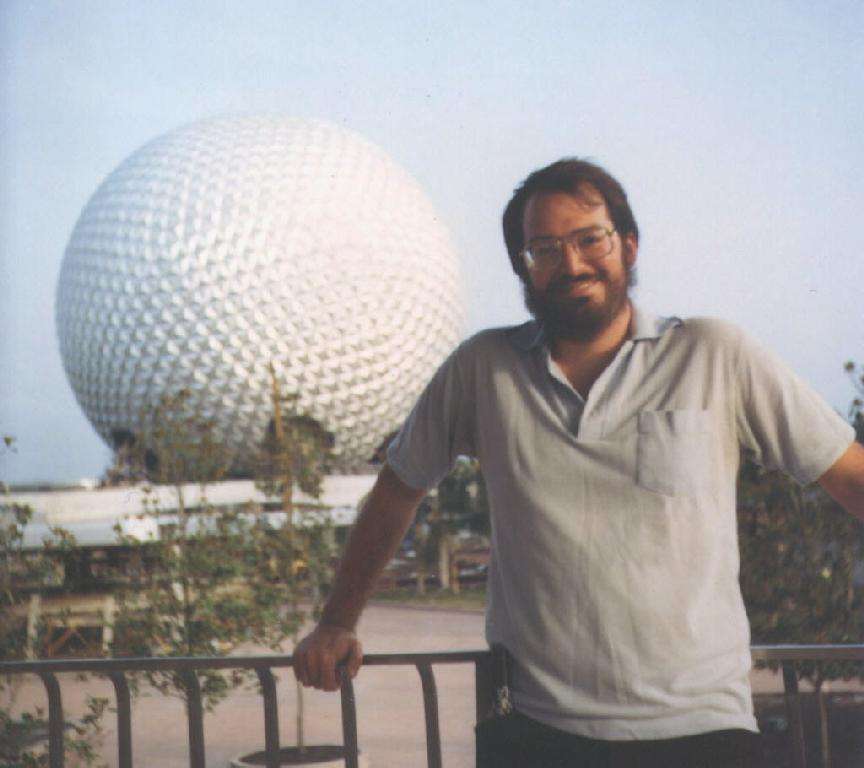
Steve Alcorn in 1982 helping prepare EPCOT for opening day.
The company initially designed products for other manufacturers, including musical instruments and playback systems. But themed entertainment kept popping up. An early interactive exhibit for the Los Angeles Zoo required custom laserdisc control to allow Betty White to appear (wearing a gas mask) in the skunk exhibit to give a lesson on the animal.
But soon Disney called with a question: Did Alcorn McBride sell a product with the capability of controlling 16 interactive screens simultaneously for the new Wonders of Life Pavilion at EPCOT?
“Of course,” Alcorn answered, thinking quickly on his feet. “It’s called the V16.”
At the time, it did not yet exist. But that didn’t stop Alcorn. Delivered under tight deadlines, the V16 show controller quickly became the company’s breakout product when it launched in 1989. It provided high-quality, synchronous show control in a rugged, purpose-built package that could handle the complex needs of attractions running nearly nonstop.
Top to bottom: Alcorn McBride’s V16X, BinloopX, and RidePlayerX products.
The introduction of the V16 coincided with a broader shift in the industry. As parks grew beyond simple ride systems into multimedia dark rides, large-format theaters and synchronized spectaculars, the technical support systems also had to mature. Reliability was no longer optional. Downtime meant lost revenue and damaged guest trust. The V16 did more than solve a problem. It helped professionalize show control across the industry.
“We are responsible for huge attractions operating day in and day out,” said Scott Harkless, Chief Innovation Officer. “So everything needs to be very dependable. We have an amazing team of engineers that are creating custom-designed, easily maintained electronics specifically for these demanding environments.”
The Binloop becomes a legend
If the V16 established the company, the Binloop made it iconic. In the early 1990s, Disney needed precise synchronization between parade floats and distributed speakers along the route for the Main Street Electrical Parade at Disneyland. The technical challenge was formidable for its time, requiring complex communication between moving and fixed systems with perfect timing.
Alcorn’s solution became the first Binloop. Like its analog predecessor (the looping tape decks once ubiquitous in parks) the Binloop was engineered for continuous duty. Alcorn McBride systems are intentionally not PC-based. Doing so means they avoided hard drives, operating system crashes and forced updates. Instead, the company designs from the chip level up, controlling both hardware and software.
That philosophy has allowed the company to weather multiple waves of technological change. As consumer electronics cycles accelerated and obsolescence became commonplace, Alcorn McBride focused on longevity. Many systems installed decades ago remain operational today.
Over time, the Binloop digital audio and video player would become so widely adopted that it entered industry vernacular. “I would even say the Binloop is now the ‘Kleenex’ of our industry, in terms of overall familiarity,” said Loren Barrows, Chief Executive Officer. In 2022, the City of Orlando renamed the street leading to the company’s headquarters Binloop Drive – a rare civic tribute to a piece of show hardware and the company behind it.
Even today, forty years later, the company remains focused on the precision of synchronization that Binloop pioneered.
“If a character leaps onto the front of your vehicle in a 3D film projected around you, and there are speakers behind your headrest and speakers in the set, if those are off by even a tiny fraction of a second, the effect is ruined,” Alcorn said. “The ability to seamlessly and easily do that is really what makes Alcorn McBride successful from a product standpoint. What makes us successful from a company standpoint is the people that make that happen.”
Small team, global impact
For all its influence, Alcorn McBride has never been a sprawling corporation. The company has remained intentionally lean, typically employing around 20 people. It does not operate massive warehouses or chase scale for its own sake. Instead, it builds trust.
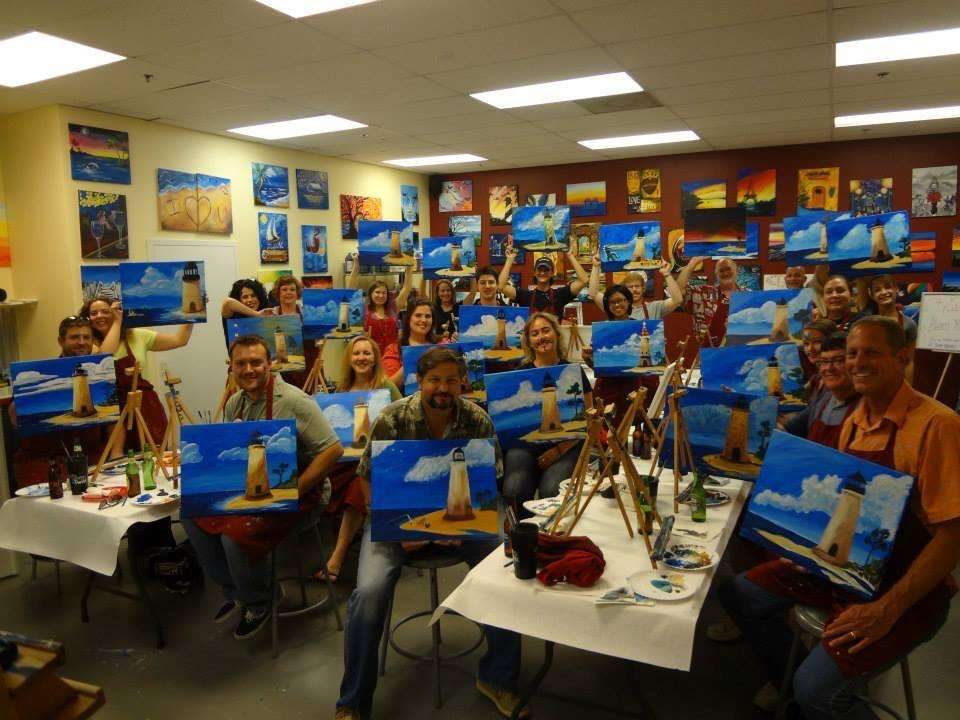
Alcorn McBride prides itself on its “Have fun, make money” philosophy, as evidenced by this paint-and-sip team activity.
The biggest players in the global theme park industry rely on Alcorn McBride for custom electrical products that cannot be replicated elsewhere. As international markets have expanded, so too has the company’s reach, including the addition of a Channel Partner and Reseller focused on the European Union and United Kingdom markets [See InPark Issue #107, “Frank-ophile”].
Its reputation has been cemented as much by service as by technology. On one occasion, the company dispatched an employee around the world with just eight hours’ notice to troubleshoot a client issue. In a business where opening dates are fixed and reputations are hard won, that responsiveness matters.
While the products are widely known, the personalities behind them are truly legendary within the industry. Jim Carstensen, one of Alcorn’s earliest hires, became the engineering backbone of the company for more than three decades. He oversaw development of flagship products and embodied the firm’s engineering philosophy.
“People looked up to him literally – because he’s 6’5” – and figuratively because he was just so important,” said product manager Mike Polder, himself a 30-year veteran of the company.
Carstensen combined deep technical mastery with practical ingenuity. He also cultivated a culture of creativity and humor, famously hiding green army men around the office and staging elaborate pranks. The message was clear: excellence and enjoyment are not mutually exclusive.
Mechanical engineer Martin Chaney, who passed away last year, designed virtually every piece of hardware for more than 30 years. Known for declaring challenges “impossible” only to deliver elegant solutions days later, Chaney’s brilliance and craftsmanship remain embedded in every chassis and enclosure the company produces.
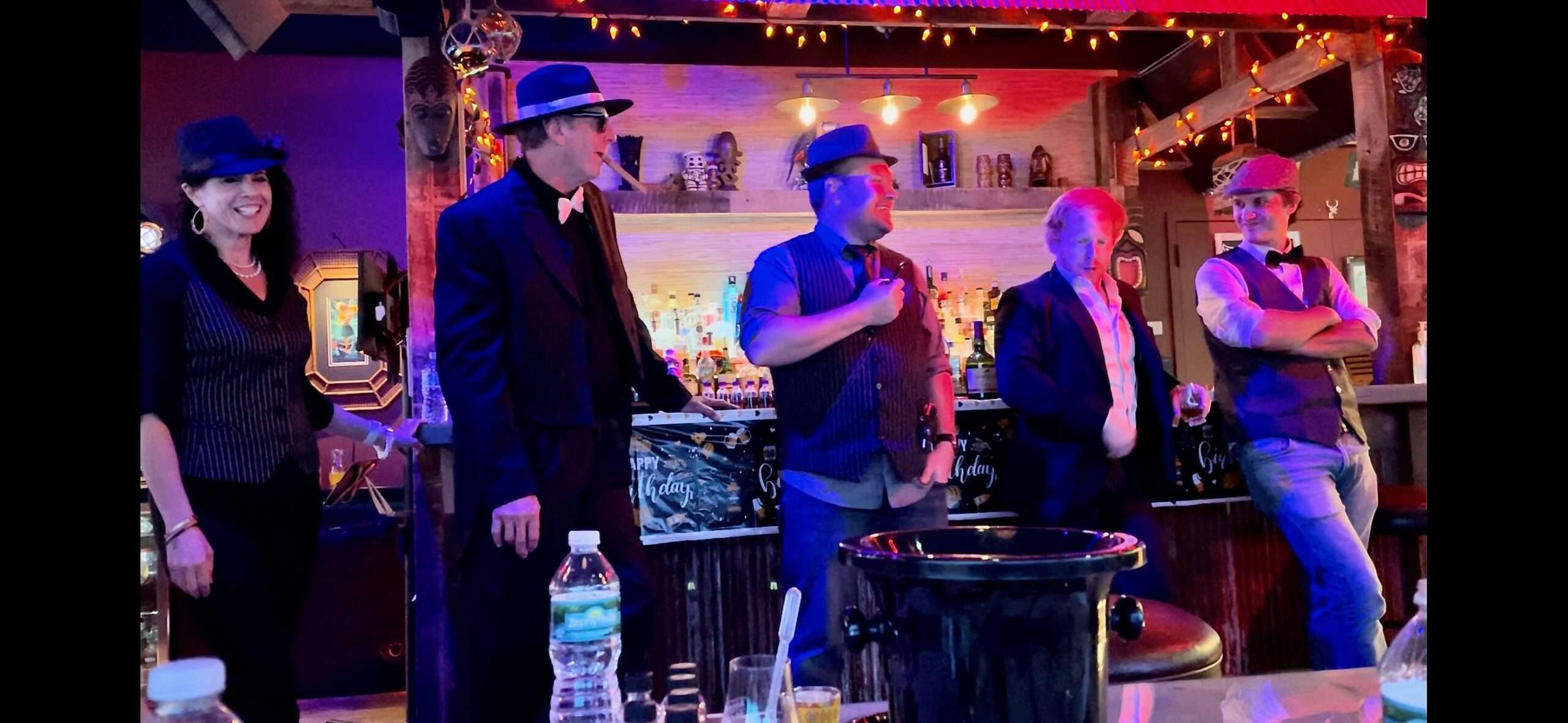
The Orlando headquarters reflects that spirit. A tiki bar anchors Friday afternoon gatherings beneath a simple motto: “Have fun, make money.” It is not a gimmick. It is a reminder that passion fuels performance.
A different kind of succession
When Steve Alcorn retired in 2024 at age 70, he made a decision that speaks volumes about the company he built. Rather than selling to a larger corporation or private equity firm, he transferred control of Alcorn McBride into a trust managed by a trustee selected by the company’s leadership team. The move shielded the company from external shareholder pressure and ensured continuity of culture and purpose.
The leadership team at Alcorn McBride during a company improv night event. L to R: Loren Barrows, Jim Carstensen, Scott Harkless, Alex Wasson and Hunter Olson.
“We are all here due to the unselfishness of Steve Alcorn,” Polder said. “He could have sold the company years ago and retired to an island, but that’s not what he wanted. He wanted this beautiful environment he created to continue.”
Today, Barrows oversees day-to-day operations. Hunter Olson leads engineering. Harkless drives innovation. Alex Wasson, Chief Financial Officer, positioned the company to purchase its MetroWest headquarters in 2018. A new generation of engineers is being mentored by veterans who understand not just the technology, but the philosophy behind it.
Alcorn still checks in, occasionally dropping a joke into the company Slack channel or attending meetings. But the company operates confidently without him – a testament to the foundation he laid.
The legacy continues
For 40 years, Alcorn McBride has helped define how themed entertainment sounds, moves and synchronizes. Its systems power attractions, parades, museums and experiences around the globe. In many cases, guests will never know the company’s name. They will simply feel the magic working flawlessly around them.
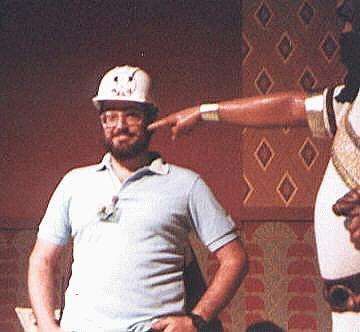
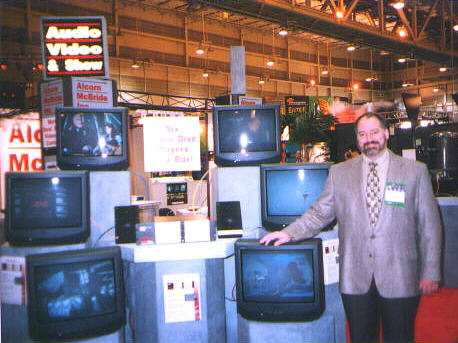
THEN & NOW: Steve Alcorn shows off the latest Alcorn McBride tech at the 1995 IAAPA Expo. The company’s 2025 IAAPA Expo booth still showcases cutting edge technology, but also features detailed theming, highlighted by Loren Barrows.
As the industry embraces immersive media, networked attractions and ever more complex storytelling environments, the demand for precision will only increase. The invisible backbone must become even more robust.
If the past four decades are any indication, Alcorn McBride will continue doing what it has always done: solving niche problems others overlook, supporting clients others cannot, and empowering engineers to build systems that make the impossible feel effortless.
What will theme park audio and visual technology look like in the next 40 years? It will be faster, smarter and more interconnected. And somewhere behind the scenes, on Binloop Drive, an impressive team of engineers will be creating it. •
EXPLORING THE PROS AND CONS OF USING INTELLECTUAL PROPERTY IN DESIGNING ATTRACTIONS FOR THEMED ENTERTAINMENT
by Benoit Cornet, BoldMove Nation
Benoit Cornet
In the attractions industry, intellectual property (IP) is often perceived as the ultimate accelerator. A recognizable brand promises emotional engagement, immediate awareness, and commercial appeal. But IP alone does not create a successful attraction. It is the way it is translated into space, movement, story, and interaction that determines whether it becomes timeless or forgettable.
At its best, an IP brings emotional equity from day one. Guests already know the characters. They understand their personalities, their conflicts, their humor, and their world.
However, recognition alone is not enough. Not every film, comic strip, or animated series lends itself to a physical attraction. Cinema operates through framed perspectives and controlled storytelling. Attractions are spatial and experiential. Guests move through them. They look around. They interact. The story unfolds in 360 degrees.
For an IP to succeed in this environment, it must offer more than popularity. It needs multidimensional characters, a universe, supporting roles, and narrative that can be translated into physical environments.
So choosing the right IP approach for a ride or attraction requires careful strategic consideration.
Power and complexity
Global IPs such as The Smurfs, Harry Potter or Avatar demonstrate the power of established storytelling. But they also introduce complexity.
Major licenses are often expensive and come with strict usage guidelines. IP owners may apply detailed rulebooks that limit creative flexibility, sometimes without fully understanding the operational dynamics of the theme park industry. What works in cinema does not automatically work in a ride system.
There is also the question of longevity, which depends on large production studios. Films may dominate the box office for a few years, but a dark ride typically has a lifespan of ten to fifteen years, often longer.
Interestingly, some attractions inspired and outlived their cinematic versions. Pirates of the Caribbean began as a ride before becoming a film franchise. Disney’s Haunted Mansion remains iconic despite its movie adaptations fading from memory.
The Belgian Tomorrowland is another example of a festival organizer that created an IP with an entire universe and storyline, which they recently lent to a rollercoaster and themed park area.
It is clear that when choosing a major IP, long-term emotional resonance matters more than temporary hype.
Emotional roots
Not all successful IPs are global blockbusters. Flåklypa in Norway is a powerful example of a regional IP based on the iconic characters designed by Aukrust. With multiple films, books, and a deep presence in national culture, its characters are part of childhood memory. Generations grow up with them, passing it on to the next generations.
“Flåklypa is part of Norwegian childhood. Families don’t just recognize the characters, they have emotions and memories connected to them. That makes it natural to bring them into a physical world where guests can interact with their heroes,” says Fredrik Kiøsterud, CEO of Qvisten Animation.
At Hunderfossen, Norway’s popular fairytale theme park, the Flåklypa IP is not limited to a single attraction. The dedicated themed area includes a rollercoaster, a 4D attraction and shops with themed merchandise – all built around the same narrative universe. This extends the emotional bond and strengthens long-term loyalty.
Therefore it makes total sense for the park to choose this IP for their new family attraction which opens this spring. A dark ride perfectly lends itself to more detailed storytelling with immersive experiences. This new ride will feature impressive and dynamic media animation by Qvisten Animation, aligned with Rogue Rides trackless ride system in a dark ride configuration designed by BoldMove Nation. The team is centering the guest experience around the latest movie storyline with digital and physical theming, lots of surprising interactions, and a breathtaking race.
As this IP is quite recognizable and universal, with a clear proof of concept, it will surely be successfully deployed across other countries.
Creative freedom
Proprietary dark ride IPs such as Popcorn, TooMush, and the most recent Voodoo Festival have been developed by me and my team. Instead of adapting characters from another medium, they are conceived from the beginning as spatial storytelling tools. TooMush has been successfully implemented by BoldMove in the multiple awarded interactive Champi’Folies dark ride in the French park Le PAL.
Media and gameplay from TooMush IP at Champi’Folies. Image courtesy of BoldMove Nation
When you develop your own characters, you can design them specifically for spatial storytelling. They are born for rides and experiences, not adapted afterward. The challenge, however, lies in building recognition and emotional attachment from scratch. Strong visual identity, consistent storytelling, and repeat engagement become essential.
The advantage is creative freedom. There are no external restrictions, no licensing limitations, and full flexibility across merchandising, F&B, and live entertainment. This integrated approach increases both emotional depth and commercial sustainability.
Many parks have the capacity and footfall to grow beyond a logo or mascot, becoming their own IP with a strong brand identity. The famous Efteling fairytale park in the Netherlands succeeds in creating a bespoke universe with fitting characters and stories in an immersive environment.
Cohesive experience
Interactive dark rides add another layer of complexity. Many rely on shooting or throwing mechanics, which are inherently fun but can clash with narrative logic.
If guests are asked to help or defend a superhero at the end of the ride, the hero’s invincibility becomes questionable and the character appears weak. The key is to respect the DNA of the IP while allowing meaningful guest participation.
Successful examples, such as Toy Story Mania, demonstrate how playful competition can align naturally with the story world. The interactivity feels organic rather than imposed.
In more advanced gaming rides, storytelling, media, vehicle choreography, and scoring systems merge into one cohesive experience. Achieving balance is critical. Too much focus on scoring can overshadow immersion. Too much narrative complexity can overwhelm guests. Scene transitions, vehicle motion, and the dialogue between physical décor and digital media all become part of the storytelling dynamics.
“IP in dark rides only works when story, media, space, and motion feel like one continuous world. Guests should not feel where the technology starts and stops,” says Anja D’Hondt, Co-Founder and Queen of Happy Hearts at BoldMove.
In BoldMove’s Smash & Reload, for example, interactivity evolves beyond shooting. Surprise moments, character-driven engagement, and unexpected twists create a dynamic rhythm. Sometimes guests influence the media. At other moments, the media challenges them. This interplay strengthens emotional involvement rather than reducing the ride to mechanical gameplay with plain shooting.
Storytelling engine
Ultimately, IP enhances and drives the experience. Whether it is a global franchise, a culturally rooted story like Flåklypa, or an original universe such as Voodoo or TooMush, success depends on thoughtful implementation in space. The narrative must work in 360 degrees. The characters must feel authentic. Gameplay and media must respect the story’s integrity. And the world should be able to extend beyond the ride itself.
IP is a storytelling engine. And when brought to life with creativity, strategic thinking, and immersive design, it creates something far more powerful than recognition. It creates emotions and memories in worlds guests want to return to! •
Benoit Cornet, CEO & Captain of Creative Minds at BoldMove, steers the team with a smart market vision to realize its mission in bringing unique rides and attractions to regional parks. Most recently he was awarded the title of ‘Industry Icon’ with a Park World Excellence Award.
ANIMAL REPAIR SHOP CREATES AN INTIMATE MIXED-REALITY WISH DISCOVERY ATTRACTION FOR MAKE-A-WISH® SOUTHERN FLORIDA
For almost forty-five years, the attractions and entertainment community has partnered with Make-A-Wish® to provide life-changing wishes to children diagnosed with critical illnesses – through things like theme park trips, sports idol meet-and-greets, and blockbuster concerts. The 2025 opening of WishWorks in Miami took that partnership to a new level, with the team at Animal Repair Shop helping craft a custom magical experience for kids beginning their Make-A-Wish Journey.
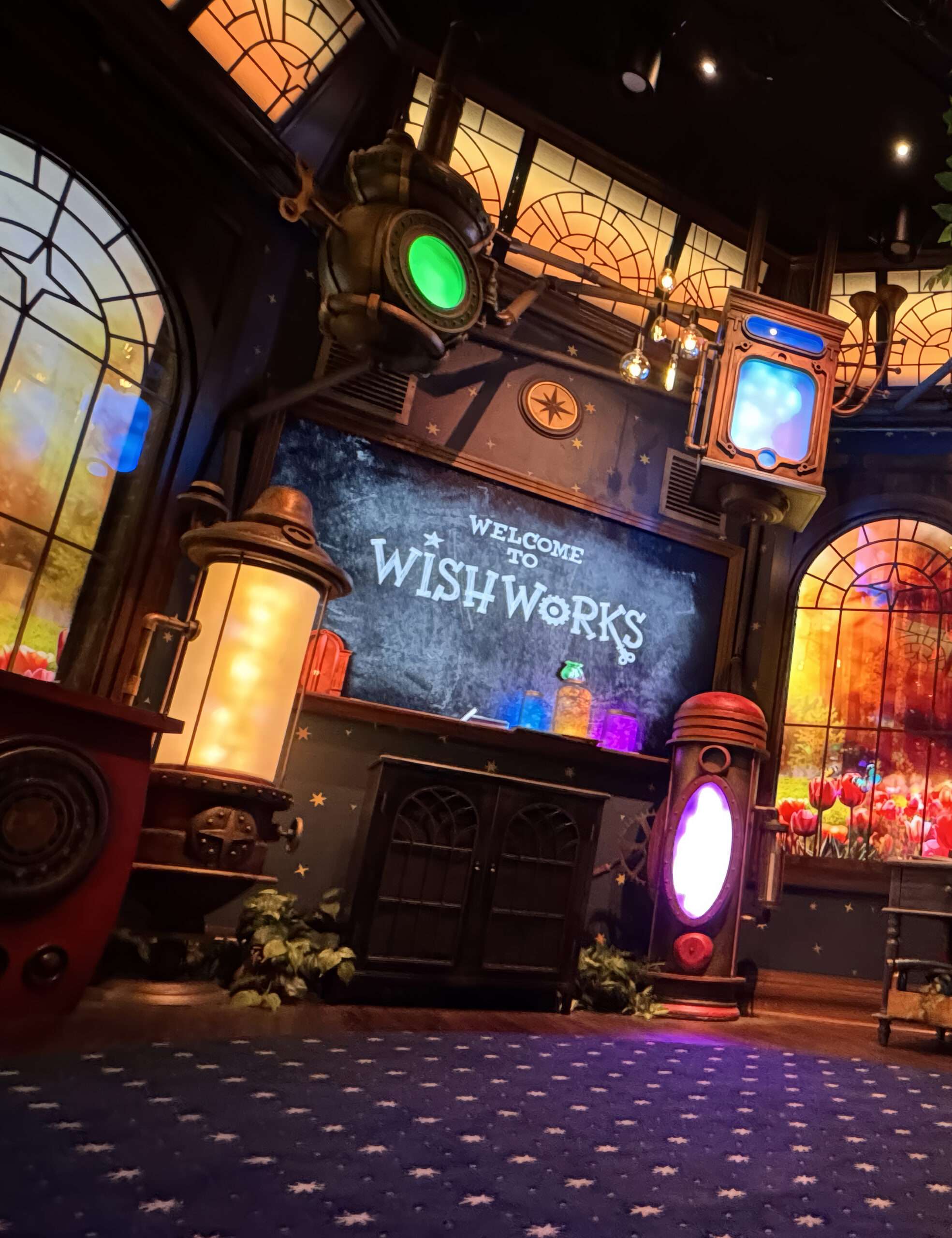
WishWorks was designed to create the journey of making a wish just as magical as the wish itself, combining themed entertainment magic, cutting edge technology and unforgettable storytelling to create a personalized mixed-reality experience re-imagined for the future. Animal Repair Shop’s refreshing approach helped earn WishWorks a TEA Thea Award, though perhaps the best rewards can be found on the faces of kids enjoying the new experience.
The Make-A-Wish process typically starts with a staff member visiting the child’s home or hospital to help determine what wish the child has that the organization can fulfill. But Miami-based Make-A-Wish Southern Florida (MAWSF) wanted to reinvent that process and create an imaginative experience where wish discernment is presented as pure entertainment, where creative exploration is encouraged, and where a fantastical environment inspires new ideas and restores the whole family. MAWSF turned to Animal Repair Shop, the themed entertainment design firm founded by Susan Bonds, to head up the team creating WishWorks.
Among the team’s contributors were lighting design firm Visual Terrain, led by Lisa Passamonte Green, AV show control programmer Joe Fox, fabricators Nassal and Ravenswood, special effects firm Technifex, and animation firm Roger.
“Projects like this don’t just happen in a bubble,” explains Bonds. “WishWorks began about a decade ago, when Shareef Malnik (MAWSF’s then Chairman of the Board) had this vision and reached out to us. Projects need an advocate to make them happen, and Shareef was that advocate for almost a decade.”
“WishWorks should be a magical adventure,” says Karen Mullins, MAWSF’s Chief Program Officer. “It should be more than just ‘tell me what you want.’”
“Some Make-A-Wish chapters were starting to experiment with themed environments,” shares Norman Wedderburn, President and CEO of MAWSF. “However, these were relatively static experiences that provided a themed environment for the traditional process. We wanted to take it to another level, so that the entire wish experience would be so magical that it would awaken the deep imagination of children.”
Wedderburn adds: “In doing that, the children from right out of the gate know that something truly special is happening to them, and that’s transformational.”
Wishing upon the stars
The experience actually starts at home, where the Wish Kid receives a special medallion that gives them access to a secret workshop, where the science of wishing stars is studied. Upon arrival at the Finker-Frenkel Wish House, Make-A-Wish Southern Florida’s new headquarters in Miami, the family finds a special parking space designated just for them. Once inside, the child’s image appears in a digital frame behind the reception desk, welcoming them.
The WishWorks experience lasts 60-90 minutes and is designed for only one child and their family at a time. “One of the greatest outcomes is that everyone gets to participate,” points out Bonds. “It becomes an experience for the whole family.”
Make-A-Wish staff welcome the family into an ordinary reception room with a beautiful custom mural depicting the wish discovery journey led by a Wish Granter.
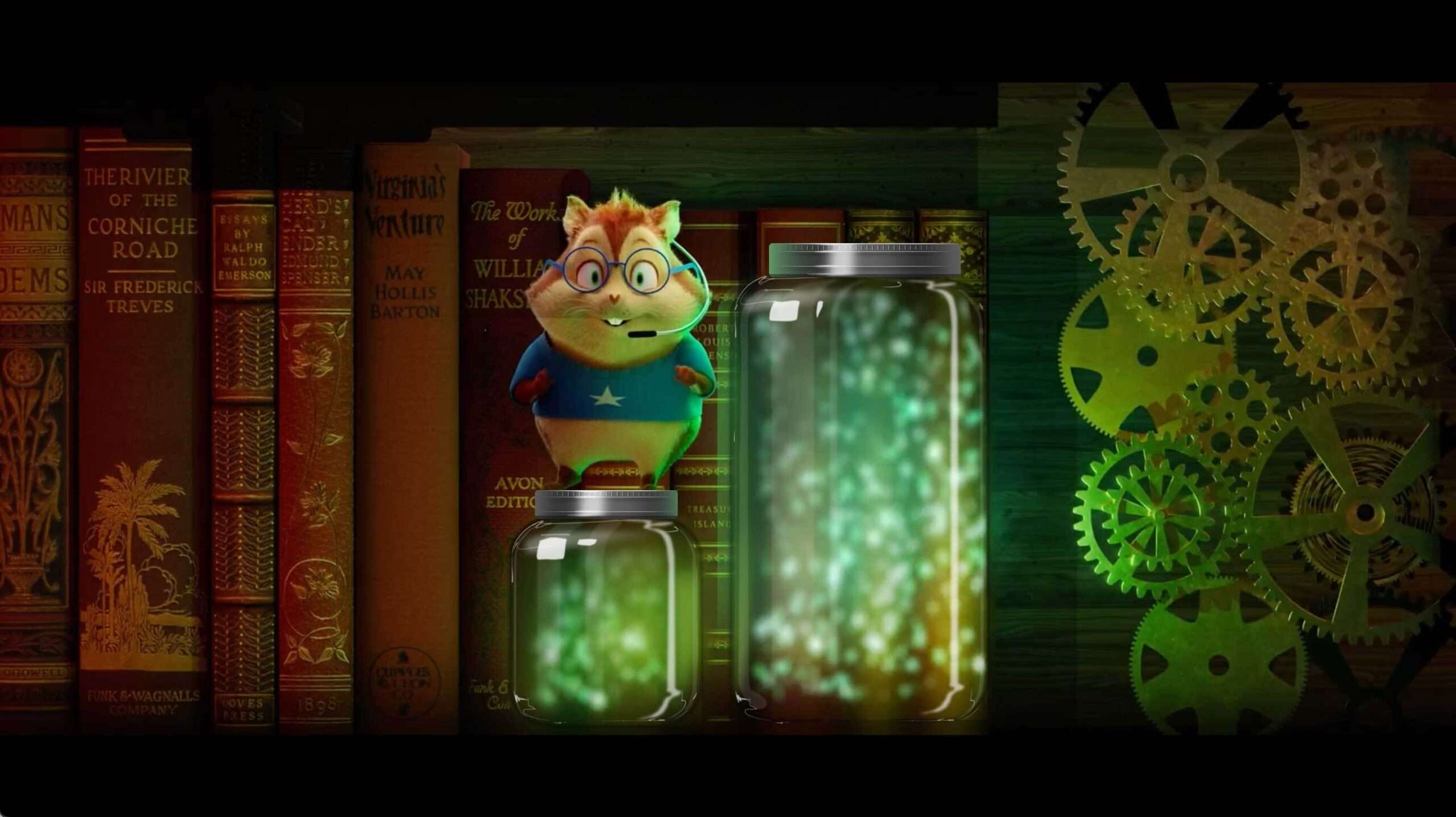
The animated Einstein hamster character helps guide the child on the process of wish making. Image courtesy of Make-A-Wish Southern Florida.
Magically gaining access to the Wish Workshop, the child is introduced to their guide, Einstein, an animated hamster who appears throughout the room in integrated media, special effects and upon physical props. Einstein addresses the child directly, making a personal connection and is voiced by Bob Bergen, the voice of Porky Pig and Tweety Bird. Through pipes adorning the walls, Einstein can be seen moving from one spot to another, encouraging the child to explore all aspects of the 360-degree physical space, with its variety of analog and digital interactives.
Einstein introduces the child to the four concepts of wishing – what they want to be, who they want to meet, where they want to go, and what they want to have – along with the idea that all things – animals, plants, and even inanimate objects – have wishes. Kids get to meet a cactus that wants to go on a shopping spree and a fish that wants to meet the Loch Ness Monster. Einstein also shares his own wish with the child (he wants to travel).
The child then enters the Starcatcher room, where they summon their wishing star to appear in the special Starcatcher machine. The child’s power proves too great and the star bounces around the room, ultimately breaking into parts strewn around the building. It’s now up to the child to help recover the star. This is where the power of XR shines as the Wish Kid is given a digital device to explore the building. Here, the reality of an office space is mixed with the fantastical elements of the wish decision process as the child uses an AR-enabled tablet to locate and collect stardust and pieces of the broken star.
“During this process, the child learns that The Wish House, the building itself, wishes to be a castle,” continues Wedderburn. “This is why, at the end of the hallway on the third floor, the child next discovers the Royal Hall of a castle.”
Within this grand hall, using media, physical sets, props and costumes, the child explores various examples of wishes to be made and begins to determine what wishes they want to pursue. The Make-A-Wish staff help collect the child’s top few choices for each of the four wish categories, so that the team has several options to work from. “It takes time to fulfill a wish, so WishWorks turns the standard wish selection process into an engaging and memorable experience while providing an immediate sense of gratification,” explains Wedderburn.
The Wish Kid returns to the StarCatcher room, where the Wish Discovery process is completed in a spectacular finale, with the child receiving a special momento to take home until their wish is fulfilled.
“They don’t yet know what that wish is going to be,” says Wedderburn. “There are some logistics on our part, but when they leave, the child knows that one of their wishes will be coming true.”
Wishing while you work
To create the immersive WishWorks experience, the team at Animal Repair Shop, led by Bonds and Chief Creative Officer Alex Lieu, was a natural choice. Bonds spent a large portion of her career at Walt Disney Imagineering, working on major attractions like Indiana Jones Adventure and Mission: Space before getting into gaming. Lieu came from the online gaming world and was one of the early hires at Disney Online. Together, they had been integrating physical and digital into award-winning storytelling experiences through emerging technology for decades.
“At Disney there was a lot of discussion about next-gen technology between Interactive and Imagineering – including taking technology, gaming and theme park design concepts to create experiences that give you agency and personalization,” explains Lieu. “We saw AR and mixed reality as natural extensions of storytelling and used that to bring WishWorks to life.”
“It’s important to note this is not gamification,” Bonds clarifies. “We created a responsive fantasy world surrounding the child, designed to enable them to accomplish a task in a way that they will always remember.”
WishWorks transforms the wish making process into a magical interactive journey for the Make-A-Wish child and their family. Photo courtesy of Make-A-Wish Southern Florida.
The team’s background helped solve challenges throughout the design process. For example, with Make-A-Wish recipients ranging from toddlers to teens, Animal Repair Shop was challenged with figuring out a proper age-appropriate approach that worked equally as well for 8-year-olds as 18-year-olds. They initially considered creating custom content for different ages but looked to classic storytelling combined with emerging technology to come up with a singular story that worked across age groups. “We knew if we created something cool, cute and emotional, we could target it for teenagers and the younger kids would still get it,” explains Lieu. “The really young kids may not capture all of the story, but they would still be able to enjoy the environment we created.”
The project allowed the team to break from traditional theme park design, which often focuses on precise and repeatable experiences. “Specialization and customization were important in designing the WishWorks experience,” adds Bonds. “The Wish Granter needs to consider the specific needs of each child. Some children may have sensory processing issues or attention issues, so we’ve designed it where the facilitator can adapt things easily through a tablet controller, altering the speed or order of events or the intensity of lighting or sound. There’s a lot of flexibility that a normal theme park operator would not have.”
Also unlike traditional theme park design, for the first five years of development, Animal Repair Shop created concepts for a property that MAWSF had yet to acquire. That meant once a location was secured, plans had to be modified as the office space was being developed.
“Pre-visualization became an important element in the parallel implementation of the office buildout and the experience,” explains Bonds. “Heidi Wigand, project manager for Cumming Group, stayed with us throughout the design process, even when they were in a completely different stage than we were. She was very open and embraced this idea that had never been done before.”
Behind the magic are 38 unique screens and projectors, hundreds of light fixtures, over 45 pieces of unique animation, original music played through 64 audio players and more than allow them to customize and pace the show for each wish kid.
Wishing for the future
Since opening, WishWorks has become the talk of the Make-A-Wish community, with many chapters paying a visit, including a recent one from Make-A-Wish Greece. Though the experience was designed to be changed as needed and potentially even adapted to become a home experience, Wedderburn sees the high level of satisfaction from kids visiting WishWorks as proof that it’s already a success. “Many of them tell us they never want to leave,” he adds.
“When a child walks into the Workshop, they are so inspired and able to see different things that we previously could not bring to them,” says Make-A-Wish’s Mullins. “The experience of WishWorks is really a wish come true – not only for the kids, but for the entire Make-A-Wish family.” •
HOW CREATIVE STUDIO BERLIN AND THE ROOM LABS BLENDED EDUCATION, HISTORIC STORY TELLING AND THEME PARK TECH INSIDE AN AUTHENTIC GERMAN CASTLE
by Martin Palicki
Some experiences are easy to label. Museum. Workshop. Escape room. Dark ride. Secret Laboratory is not.
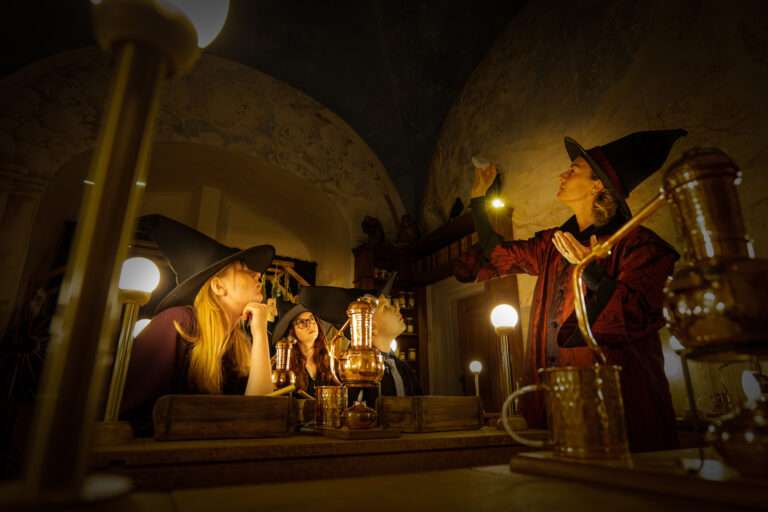
Inside the historic Schloss Augustusburg in Germany, guests dress in robes, pass through candlelit rooms and meet Renaissance-era figures who send them on historical missions. Along the way are practical puzzles, scent and sound cues, integrated media systems, theme park-style special effects and a descent into a mysterious basement.
Secret Laboratory is themed entertainment disguised as an educational workshop, providing participants with an interactive history lesson and a special souvenir to showcase their accomplishments. Guests pick from one of two experiences: Elixir of Life or Treasure of the Earth. Both take place in the same small three-room space, alternating throughout the day.
InPark spoke with Chris Lange (Chief Creative Officer/Owner, Creative Studio Berlin), Chris Lattner (Founder/Creative Director, The Room Labs) and Niels Reinhard (Creative Director, The Room Labs) about how the experience came together, why it defies categorization and what made it worthy of earning a coveted TEA Thea Award.
Chris Lange, Creative Studio BerlingChris Latner, The Room LabsNiels Reinhard, The Room Labs
How do you explain the experience?
Chris Lattner: It’s difficult to categorize because it has elements of different categories mixed together. In a very basic way, we refer to it as a hands-on workshop. A group of 24 people experience a 45- to 60-minute instructor-led workshop on one of two different topics.
What makes it special is that the workshop is fully themed. Guests are traveling back to the Renaissance, meeting people from that time, and enjoying a workshop in a completely different environment than a typical classroom. We incorporated detailed theming, special effects and interactive puzzles to make it feel as real as possible.
Niels Reinhard: It’s a show, it’s a workshop and it’s a little bit of an escape room, all under the roof of historical theming. It’s hard to put a label on it.
Chris Lange: That’s part of why it feels truly innovative. A lot of science centers and museums have traditional workshops. This is delivering education on an experience level.
Where did the idea originate?
Chris Lange: Creative Studio Berlin had a relationship with the client already, having designed experiences for some of their historic environments, including castles. They approached us with a desire for a workshop or “classroom” experience. They wanted something new and innovative that would help students, families and groups learn about the region. We did initial ideation and design before reaching out to The Room Labs.
Chris Lattner: I remember Chris calling me and saying, “Can we do something magical and wizard-inspired in that castle?” That was the core spark.
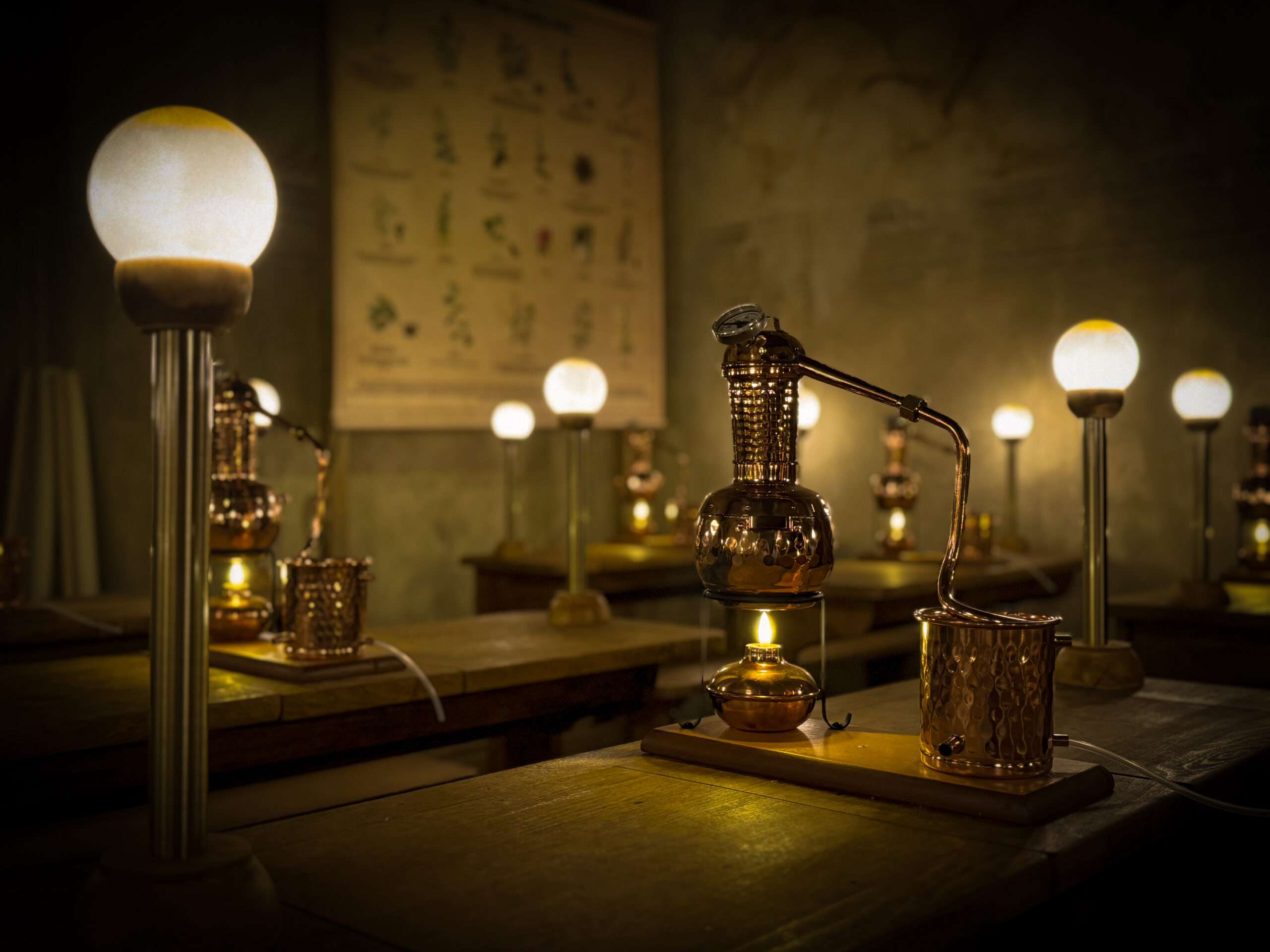
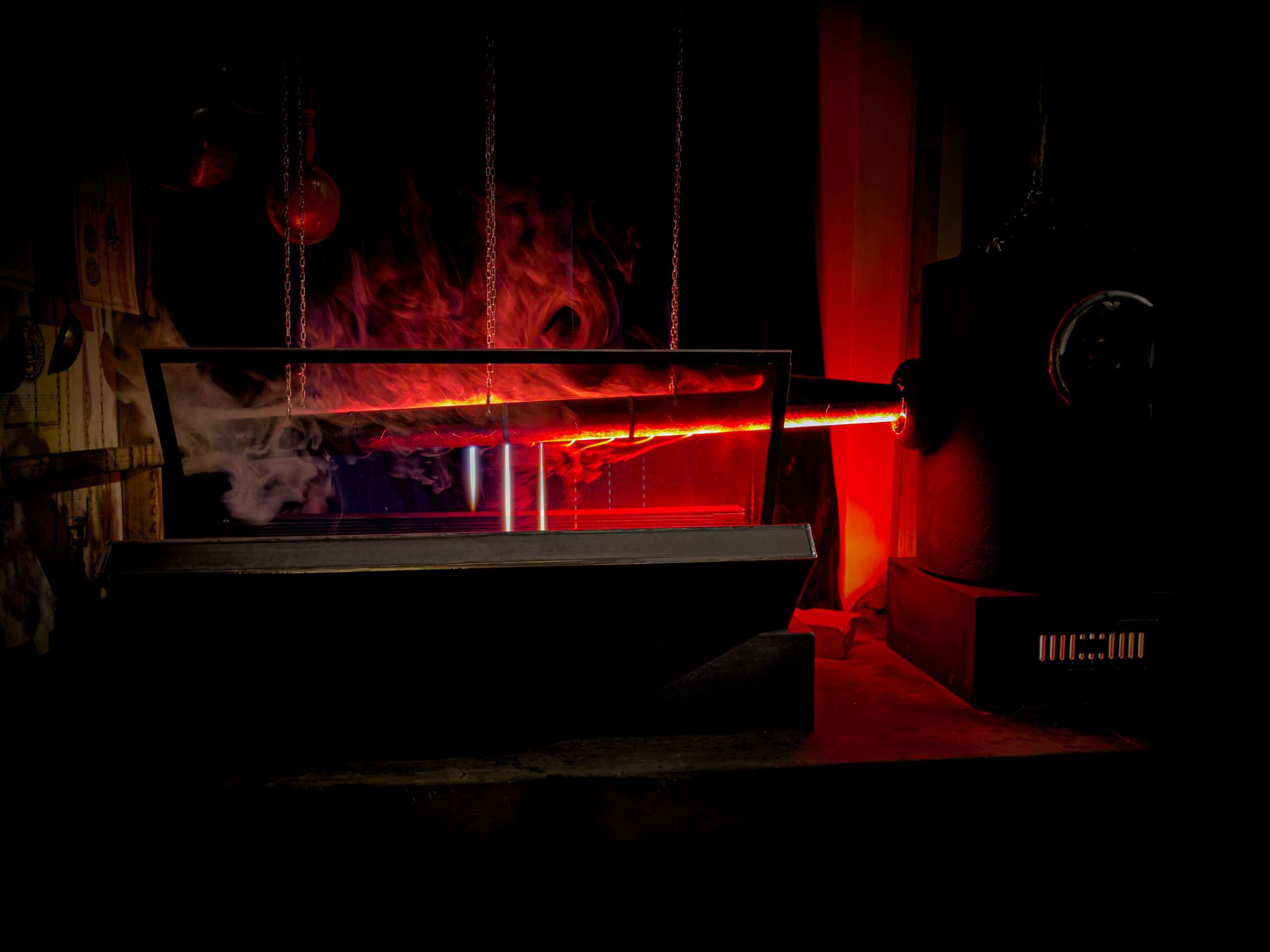
We knew, of course, that it couldn’t be fantasy. It needs to be “real” Renaissance to fit the period and place of the castle. So we asked: What would have felt like magic back then? Casting metal. Creating potions in the form of distilling herbal medicine. Those things could have felt like magic to people at the time. We took those ideas and then translated them into fun experiences that were also historically grounded.
Walk us through the spaces.
The preshow area gives guests background on Anna and Augustus through enchanted wardrobes, portraits and more. Photo courtesy of The Room Labs.
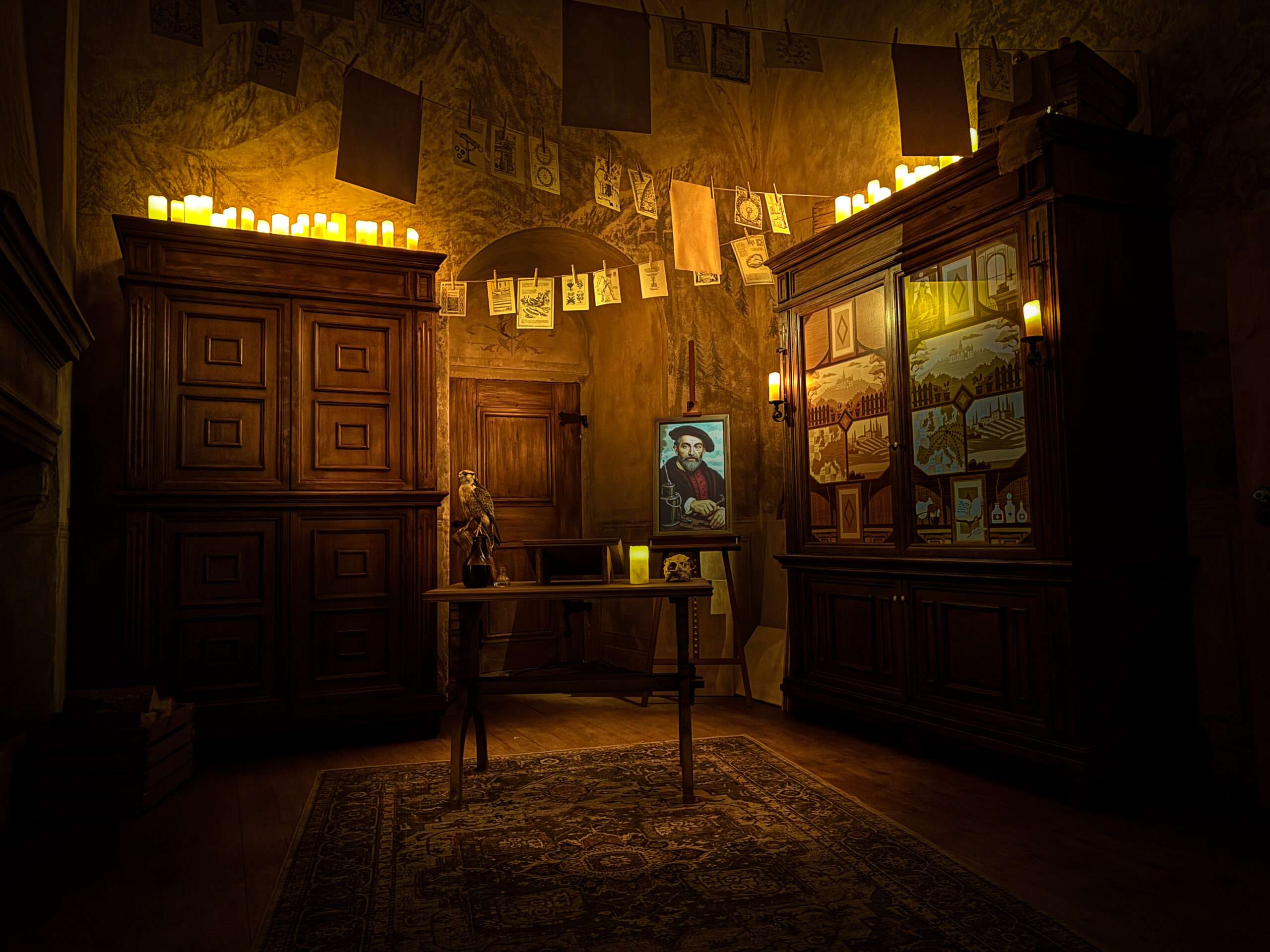
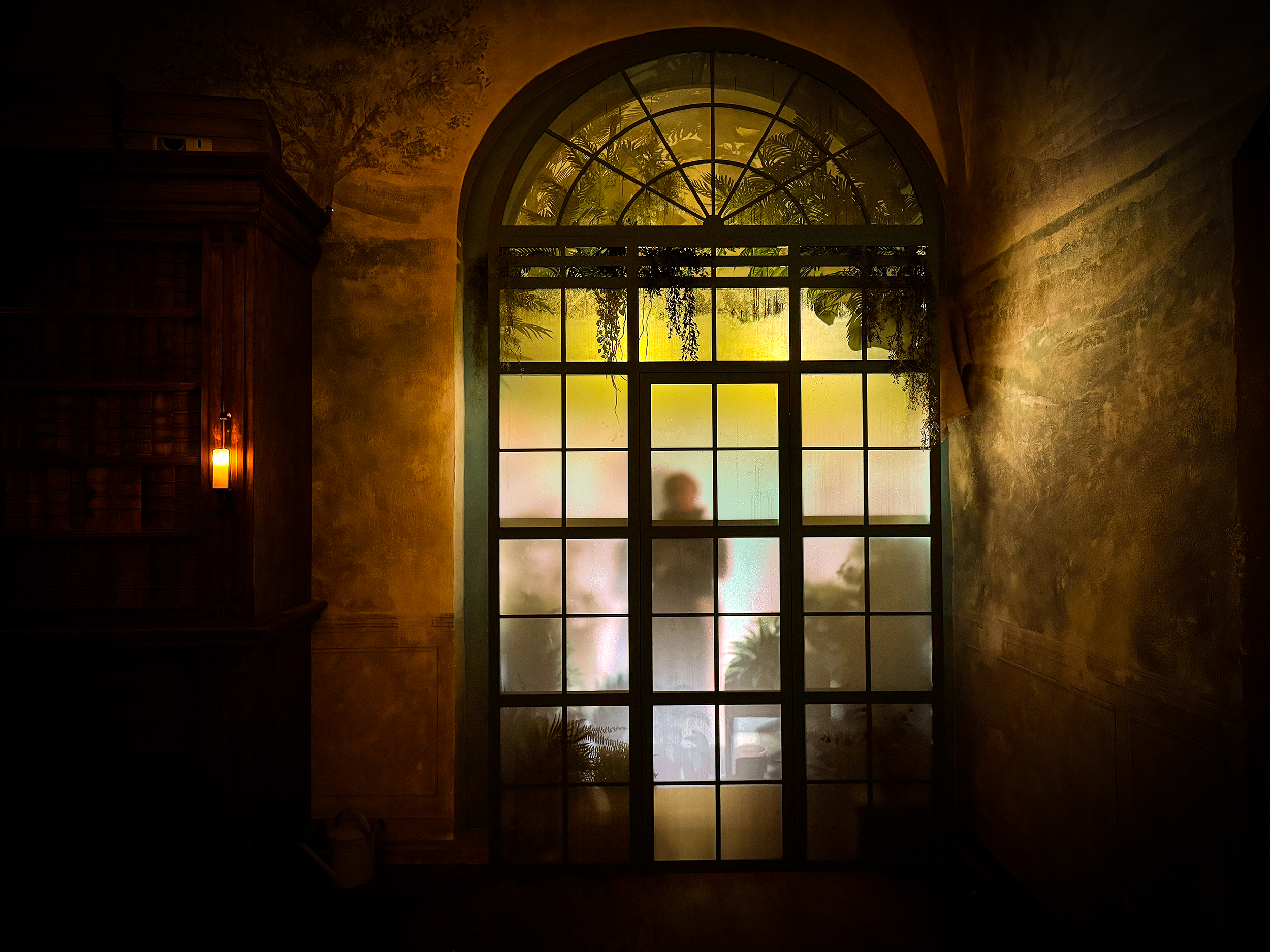
Chris Lattner: Guests are first greeted outside by a guide in period costume with a lantern. The guide leads them into the preshow room, which is set up as a candlelit study with bookshelves, cabinets and a fireplace. There’s also a conservatory with frosted glass on one end. This room introduces guests to one of the two historical figures they will be following in the footsteps of during their experience: Anna or Augustus. The two characters are based on the former Duke Augustus and his wife Anna of Denmark. Together, they ruled as Elector and Electress of Saxony during the mid-1500s.
From there guests enter the main classroom workshop with 12 shared workbenches, and a small basement area is accessed by a spiral staircase.
What happens in the Anna version?
Anna appears in silhouette form in the conservatory. Photo courtesy of The Room Labs.
Niels Reinhard: In the preshow, the guide introduces the story of Electress Anna. Woodwork in the wardrobe magically comes to life and helps set the scene. Moments later the silhouette of Anna appears in the conservatory and speaks directly to the group about her skills with herbs and plants. She provides a challenge to the group: help her create an elixir of life, or aquavit.
Once inside the classroom, guests decode a secret recipe, identify ingredients through the use of smell, prepare the mixture with a mortar and pestle, and finally assemble and use a small distillation apparatus at each table.
But there’s one key ingredient missing and the group must retrieve shimmering vials of “moonlight water” from the basement and add it to their potion to complete the effect. Achieving success, each guest gets to keep a small container of their elixir as they leave.
What happens in the Augustus version?.
Niels Reinhard: In this preshow, portraits of Augustus and Agricola begin talking to one another about Augustus’ skills with mining. At one point the wardrobe opens to reveal an infinite mine shaft illusion.
Back in the classroom, guests crack open a small rock to find ore. The guide collects it and loads it into the oven for melting. Guests must determine the correct wood to fire the oven and retrieve it from the basement. The guide then carries a pot of “molten silver” across the room and pours it into a casting machine. Guests see the liquid metal flow into the molds and then the guide retrieves the silver coins and distributes them among the guests to keep.
How did historical accuracy shape the design?
Each custom-built desk features period-appropriate lighting and a distilling apparatus for The Elixir of Life workshop. Photo courtesy of The Room Labs.
Chris Lattner: Prior to this project, we did not have deep knowledge of Anna and Augustus, and there is not a huge amount written about them. We had to research how they might have spoken, how they would react if 24 people arrived in their castle, and how to tie a learning objective to these historic characters.
We also had to learn about mining and pharmacy processes. In a way, our learning journey became the guest journey. We wanted guests to leave with the kinds of insights we developed ourselves while creating the project.
Once we started making decisions, we had a team of historians that reviewed everything. Frequently, the historians would see early drawings and say, “No, that’s from the wrong period,” or “That didn’t exist.” For example, the inclusion of the conservatory became a debate as they were not really in use at that time in Germany.
Chris Lange: We were able to convince the historians that it was worthwhile keeping the conservatory because it really helped to tell the story. Conservatories existed in Italy in that period and Anna had connections to Italy, so it wasn’t too much of a stretch. Many times in projects like these it’s about finding the right balance.
Niels Reinhard: As another example, we also had to balance what audiences visually expect from the Renaissance period. Many people think of Italian Renaissance cues, but not much is recognized from the German Renaissance. We needed visual storytelling that felt right immediately, without requiring heavy explanation, so we did take a few liberties with style in order to convey the period and mood intuitively.
What technology are you using in the show?
Lighting, audio, fog and a Pepper’s Ghost effect makes visitors think real molten silver is pouring out of the oven and into coin molds. Photo courtesy of The Room Labs.
Chris Lattner: The core show control runs on a system called COGS, originally built for escape rooms, and now used in large immersive experiences. We enhanced it for our needs, particularly for the added levels of media and audio in the experience.
A lot of the physical effects are custom built. Every school desk is essentially a prototype device: each one has sound, lighting cues and an internal mechanism that can dispense liquid. We even created custom “candle” lighting fixtures to reflect how light would have been created in the period.
Niels Reinhard: One of the most convincing elements is the coin-casting machine. We couldn’t use actual liquid metal to create coins, so we had to design a special illusion. We created a protective “glass” surface that also becomes the reflective plane for a Pepper’s Ghost image. Guests can stand very close, and it looks like real liquid metal falling from the tube into the molds below. Of course, timing, sound and smoke cues complete the illusion.
Chris Lattner: I also must mention the projection of Anna in the conservatory. It’s a mixture of projected plants and physical plants, and Anna appears quite realistic. To accomplish it, we studied what happens when someone moves behind frosted glass. Most silhouette effects are too crisp, so we created a more realistic blur level, including layers of shadows from multiple light sources. The result is that even when you know it’s a projection, it still feels real.
Have you had any feedback on the experience?
Chris Lattner: The client is very happy with the experience and has interest in a third story, potentially about witches and witchcraft, which will likely take place in a new space.
Chris Lange: The only “problem” they have now is capacity. They can only do a limited number of sessions per day and demand has grown. This is a good problem to have, of course. Because it means you’ve successfully created a new benchmark for what can happen when you combine education, storytelling and the themed entertainment toolkit in a beautiful, historical real-world location. •