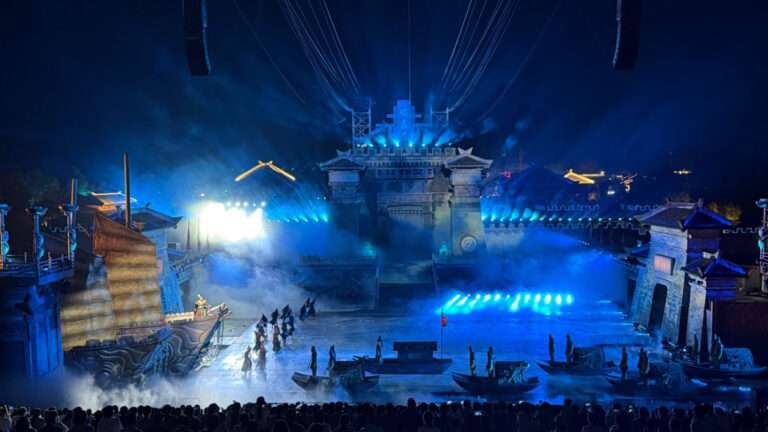
Christie announced that Jianye Display has deployed high-performance HS Series 1DLP laser projectors for a new immersive cultural performance at the Three Kingdoms Ancient Battlefield Scenic Area in Chibi Town, Xianning, Hubei Province. The installation brings fresh vitality to the epic tale of the Battle of Red Cliff.
Produced by Hubei Dingtu Culture and Tourism, and directed by multi-disciplinary artist Luo Kege, “Red Cliff: Borrowing the East Wind” combines live performance with advanced display technologies to recreate one of the most legendary battles in Chinese history. Seven Christie DWU19-HS laser projectors deliver visuals on the left citadel wall and the sails of a massive onstage warship, immersing audiences in a vivid reimagining of this pivotal Three Kingdoms conflict. Since its debut in April, the production has drawn large crowds, offering visitors a blend of history, artistry, and technology.
“The high brightness, rich color reproduction, and rock-solid reliability of the Christie DWU19-HS projectors enable ‘Red Cliff: Borrowing the East Wind’ to achieve a perfect fusion of light, shadow, and storytelling,” said a spokesperson from Jianye Display. “Iconic scenes and characters from the Battle of Red Cliff are brought to life with extraordinary realism, heightening immersion and offering a fresh cultural tourism experience at this historic site.”
Installation of the projection systems was completed in just one month, despite demanding conditions. With some projectors installed high above the performance area, Jianye Display’s technical team implemented strict safety protocols and used advanced 3D simulation to calculate projection angles and positioning, ensuring precise coverage and seamless image blending. To withstand dust, moisture, and unpredictable weather, all DWU19-HS projectors underwent rigorous testing to ensure reliable long-term performance in this outdoor venue.
The DWU19-HS delivers up to 20,050 lumens while weighing less than 41.6 kg (92 lbs). Equipped with Christie BoldColor+ technology, the projector provides natural, true-to-life colors with deeper blacks, while WUXGA resolution ensures sharp, detailed imagery. Built-in Christie Twist sets up and aligns irregular screens and multi-projector displays, while the optional Christie Mystique automated camera-based alignment and recalibration software quickly calibrates and maintains multi-projection systems.
Han Kim, vice president of Sales, Asia-Pacific, Christie, said, “We commend Jianye Display for their expertise and dedication in delivering ‘Red Cliff: Borrowing the East Wind.’ Through meticulous planning and flawless execution, they showcased the full potential of the DWU19-HS projectors, bringing history and artistry together in a compelling spectacle. This project is a shining example of how technology and creativity can work hand-in-hand to elevate cultural tourism.”
Six Flags Entertainment Corporation, North America’s largest regional amusement-resort operator, announced it has extended its licensing agreement with Peanuts Worldwide for another five years. The new agreement extends Six Flags’ position as the exclusive amusement park partner for PEANUTS in North America. The agreement also includes in-park entertainment and sports, food and beverage, retail operations, and exclusive PEANUTS merchandise to December 31, 2030, ensuring that millions of park guests at Knott’s Berry Farm, Carowinds, Cedar Point, Kings Island, Kings Dominion, Dorney Park, Canada’s Wonderland, Great America, Michigan Adventure, Valley Fair, and Worlds of Fun will continue to experience and connect with the iconic PEANUTS characters.
“We are proud to extend our long-standing partnership with PEANUTS, which has delivered so many fun and cherished memories to our guests,” said Christian Dieckmann, Six Flags chief commercial officer. “Both of our brands are built on bringing families together and creating one-of-a-kind experiences and emotional connections. The renewed relationship between Six Flags and Peanuts Worldwide will enable both companies to enhance and extend their brands through themed areas, live entertainment, merchandise and games.”
“It’s been exciting to see how the legacy Cedar Fair parks have introduced our beloved PEANUTS characters to new generations of kids over the years, and this renewed partnership with Six Flags will ensure we expand those connections in authentic and meaningful ways,” said Tim Erickson, executive vice president for Peanuts Worldwide.
The company’s collaboration with PEANUTS dates back to the early ‘80s when Knott’s Berry Farm in southern California opened the first Camp Snoopy. Since then, the legacy Cedar Fair parks have made significant investments to introduce Charlie Brown, Snoopy and the rest of the PEANUTS gang to guests of all ages.
Earlier this year Carowinds unveiled two new family friendly attractions in Camp Snoopy as part of the largest investment in family attractions in the park’s history: a new launch roller coaster and an interactive raft ride. These additions, alongside splash play zones and a meet-and-greet experience with PEANUTS costume characters, offer more spots for families to cool off and interact with Snoopy, Charlie Brown and the entire PEANUTS gang. In addition, the park introduced the Camp Snoopy Bird Watchers Club, featuring augmented reality (AR) based games for the whole family.
Last year, Kings Island expanded its award-winning kids’ area with the addition of a new adventure play space, Camp Snoopy, featuring the park’s newest roller coaster, Snoopy’s Soapbox Racers. Also debuting last year was Beagle Scout Acres, a shaded, nature-themed play area where kids and their families are able to explore and play on their own among turfed mounds and grassy areas filled with camping equipment.
The TEA Thea Awards honor the outstanding spaces, places, events and experiences created by the dedicated and passionate professionals in the global themed entertainment industry. The annual Thea Awards Gala brings together over 1,000 attendees to celebrate excellence from around the world.
Miziker Entertainment has partnered with the TEA on several past Thea Award Galas, including the very first ceremony. Miziker will once again serve as Executive Producer, the first time that the prestigious event will be held in Orlando, Florida.
“When we announced the Thea Awards Gala was moving to Florida from California, we knew we needed a forward-thinking creative partner who could beautifully create an event that celebrates and honors the 2026 Thea Award winners,” said Melissa Oviedo, CEO, TEA. “The Thea Awards are synonymous with storytelling and excellence in the global themed entertainment industry, and we are thrilled to partner with Miziker Entertainment to create and produce our most memorable Gala event ever.”
“We are honored to serve our partners and colleagues in the themed entertainment industry, and our team is excited to create this memorable event in Orlando, the gravitational center of this dynamic industry,” said Ryan Miziker, Chief Creative Officer, Miziker. “It’s a bit of a homecoming for me. While I am a Californian, I was born in Florida when my father was working on the opening events at Walt Disney World.”
Miziker previously served on TEA’s International Board and led the production of the Thea Awards Gala in 2018. “I’m thrilled that TEA has once again trusted us to carry on the tradition of executing a world-class event that celebrates talent, innovation and creativity,” he added. “We look forward to delivering a night unlike any other.”
As Executive Producer, Miziker will lead all services related to the 2026 Thea Awards Gala including theme, stage design, entertainment, multimedia elements, scripting, lighting and sound engineering, show production and everything in between.
“Miziker Entertainment has been a valued member of TEA for many years,” Oviedo continued. “Everyone on the team understands the personal connection our members have with the Thea Awards. We are excited to partner with Miziker as we continue to build global brand recognition and awareness for the Thea Awards and this industry’s international talent.”
The 2026 Thea Award winners will be announced at the TEA International Mixer at Universal Epic Universe on November 18, 2025. The honorees will be celebrated during the 2026 TEA INSPIRE program and 32nd Annual Thea Awards Gala, April 29 – May 2, 2026, in Orlando, Florida.
Alterface, provider of interactive attractions, is launching a new Interactive Concept Design service to help operators, designers, and suppliers develop attractions where interactivity is built in from day one. The attractions marketplace is increasingly competitive, with guests demanding immersive storytelling, personalization, and re-playability. To meet these expectations, interactivity must be woven into attractions from the earliest stages of design – not added as a technical layer after the fact. Alterface’s new service responds with a creative consultative approach that integrates interactivity seamlessly into the design process.
“We’ve seen a growing demand for early-stage support from clients who want to ensure their experiences attract and retain guests through dynamic interactive technology,” says Stéphane Battaile, CEO at Alterface. “They’re looking for concepts where gameplay and story seamlessly work together. With this service, we can share our expertise and creative tools to help shape attractions that are compelling, cohesive, and interactive by design.”
Alterface is uniquely positioned to offer this service, drawing on over 25 years of experience in interactivity, a portfolio of award-winning attractions recognized worldwide, and a team with deep expertise in guest behavior, interactivity mechanics and gameplay storytelling.
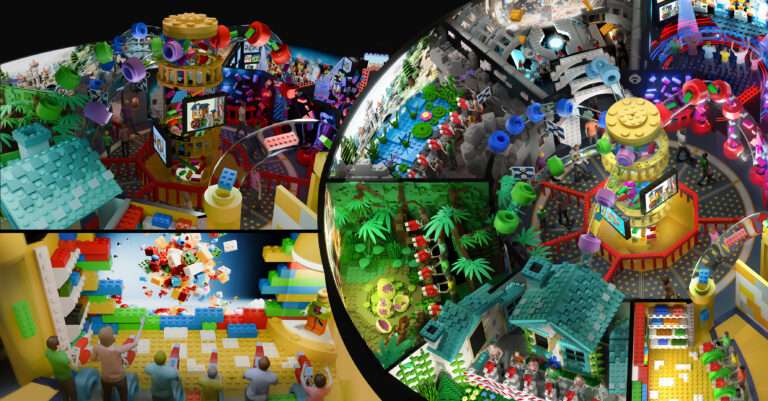
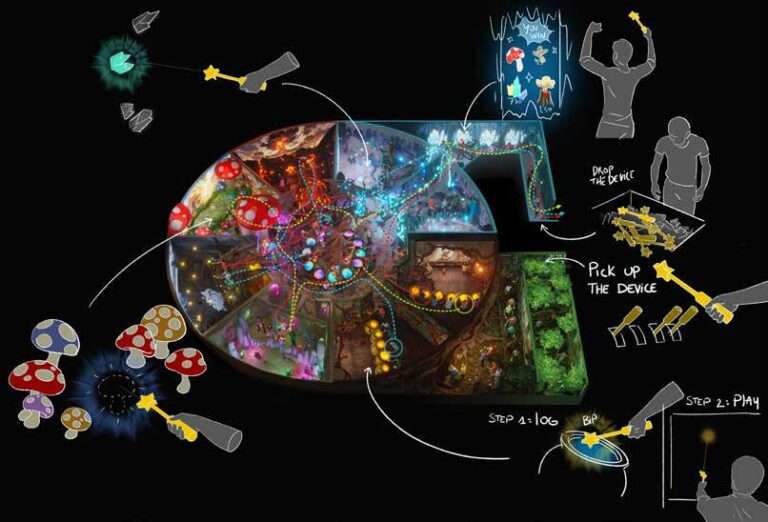
A birds-eye sketch of how interactivity might be integrated into an attraction.
A service built around interactivity
Alterface’s Interactive Concept Design approach ensures that interactivity isn’t an afterthought but at the core of the guest experience. Every aspect of a ride – from storytelling, media, and theming to devices, projections, special effects, lighting, and even ride systems – is examined to ensure they actively engage visitors and immerse them in the narrative.
The process also considers essential operational factors such as throughput, layout, budget, accessibility, and inclusivity, providing a clear vision for how interactivity fits seamlessly across all creative and technical layers. It helps operators and designers reduce risks during production, streamline integration, and deliver innovative, re-playable experiences that resonate with guests.
Core elements guiding the Interactive Concept Design service include:
Interactivity at the core: Interactivity is not an add-on but the heart of the experience, expertly integrated into storytelling, gameplay, and technical infrastructure.
User experience comes first: Technology is one of many tools used to craft great experiences, but it must always be implemented with the guest experience in mind.
Creativity as a driving force: Alterface contributes original ideas, stories, and interactive narratives, helping clients shape unique experiences that stand out creatively, not just technically.
Collaboration and co-creation: Alterface partners with designers to enhance their creative ideas without competing with their expertise.
Tailored Solutions: Each project is customized to fit the client’s needs, target audience, and operational capabilities.
Benefits for all
Interactive Concept Design is for anyone interested in developing an interactive and engaging attraction. Operators will benefit from reduced risks and smoother production workflows, resulting in an engaging and repeatable experience that fits within their budget. Master planners receive early clarity on how interactivity integrates into a park or attraction. Design-build vendors benefit from creative and technical guidance from an industry leader on the best ways to integrate interactive elements into storytelling and theming.
“Our Interactive Concept Design service enables everyone to gain an early-stage vision of the ride concept without requiring a full commitment to production, helping the team confidently move forward in their creative process,” says Battaille. “The result is a cohesive integration of interactivity into the attraction, improving the overall project quality and creating a unique, engaging experience for visitors.”
Alterface will showcase its Interactive Concept Design service at IAAPA Expo Europe in Barcelona, Spain (September 23-25,2025). Visitors can schedule a concept consultation by contacting [email protected] or experience real-world results firsthand at Alterface’s booth, #1-253.
At this year’s IAAPA Expo Europe in Barcelona, Maurer Rides will continue its championing innovative spirit for interactive roller coaster experiences. The Spike Racer is unveiled with new features that push the traditional roller coaster concept. For the first time, inversion elements are also possible – a technical innovation that opens the door to entirely new ride experiences.
Technical breakthrough: Inversions with the Spike system
The innovation of the Spike Racer lies in the first-ever ability to integrate rolls and inversions into the interactive ride experience. Thanks to the patented rack-and-pinion system with 100% traction, vehicles can now also be driven upside down, while riders still maintain full control over speed and acceleration. This technical innovation opens up new design possibilities for roller coaster engineers.
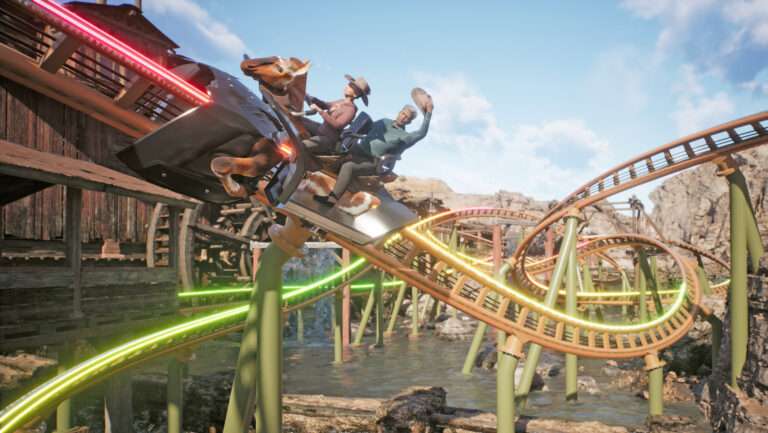
Rendering courtesy of Maurer Rides.
Add-ons: An arsenal of interactive possibilities
Magic Rings create interactive hotspots along the track that riders must pass with precise timing to collect boost energy or score bonus points.
Water Gates add an entirely new dimension: riders and passengers can activate or deactivate water gates and get thoroughly soaked.
Light Track equips the rails with up to six LED strips that not only generate lighting effects but also function as interactive game elements. Riders must react to light signals to achieve optimal ride times.
Starting Lights transform every launch into an authentic racing experience. False starts are automatically detected and penalized with time deductions.
The Co-Action System actively involves co-drivers for the first time. By reacting to light signals at the right moment, they can avoid penalties and contribute to team success.
Smoke Generator and Finish Flag create an authentic racing atmosphere, while leaderboard monitors at the exit keep the competitive spirit alive.
Five new layout concepts
Space Odyssey takes riders into a futuristic space station with a top speed of 65 km/h (40 mph) and a height of 18 meters (59 feet). On two parallel 350-meter tracks, up to 960 people per hour can race through Magic Rings and master reverse-flight maneuvers. The special highlight: pilot and co-pilot must work together perfectly to succeed in the “Velocity Clash” arena.
Wild West Ride brings the Wild West into the 21st century. Riders control their “mechanical horse” through canyons and mining towns, with the boost function activated via interactive reins. Reaching speeds of up to 70 km/h and enhanced with special color LED strips, every ride becomes an authentic Western adventure.
Flight Mission delivers an enjoyable experience in a compact indoor layout. On a footprint of just 40 x 15 meters, up to 450 people per hour experience high-intensity jet pilot training with perfectly synchronized team challenges.
Jetski Coaster combines water fun with roller coaster action. Riders navigate through wave channels and water fountains while simultaneously targeting objectives and activating power-ups. The track layout simulates an authentic jet ski feeling at speeds of up to 60 km/h.
Water Fight transforms a roller coaster tower into a wet battle arena. Visitors on platforms can shoot at passing riders, while riders fire back in an attempt to stay dry. With a height of 30 meters and variable configurations (including laser tag or dry slide options), this installation offers maximum flexibility.
Multimedia innovation
Every Spike Racer is equipped with a high-end multimedia PC, enabling VR and AR applications in cinematic quality. Integrated cameras automatically create personalized 4K ride videos, which can be downloaded and shared via the Spike app. Speed data, ride time, and ranking overlays make each video a unique keepsake.
The pre-programmed vehicle sounds range from deep motorcycle growls to futuristic spaceship effects and dynamically adapt to the ride’s speed. Dual 250-watt speakers deliver the audio experience.
Economic success through personalization
Spike technology enables dynamic pricing based on demand and selected difficulty level. The integrated app provides time-slot bookings, access control, and detailed ride data analysis. Operators can offer different ride modes for various target groups – from family-friendly daytime modes to adrenaline-pumping night versions.
The maintenance app system with online checklists and predictive maintenance minimizes downtime and optimizes operating costs. All vehicle data is monitored and analyzed in real time.
Hiccup’s Wing Gliders careens through How to Train Your Dragon – Isle of Berk at Universal Epic Universe. InPark’s coverage shares all the facts and feels for the new park.
Frank-ophileby Gabrielle Russon Alcorn McBride’s new distributor carries deep ties to themed entertainment
On the issue of tariffs…edited by Martin Palicki Industry leaders respond to Trump’s evolving and uncertain tariff situation
Ghost Boat reimaginedinterviews by Martin Palicki Moment Factory joined forces with Dells Boat Tours for a major multimedia transformation of the classic Wisconsin Dells fright attraction
Legacy in actionby Adora English, University of Central Florida Paying it forward to invest in our industry
The waterpark market interview by Martin Palicki WhiteWater’s Doug Smith shares info on the latest trends and issues facing the waterpark market in North America
Event Primer: AZA interview by Martin Palicki Melissa Howerton on the association’s annual conference in Tampa
The Las Vegas Convention and Visitors Authority reported a 11.3% decline in visitors to Las Vegas year-over-year for the month of June 2025. It continues a trend of negative numbers for every month in 2025, averaging out to a net loss of 7.3%.
Interestingly, gambling revenues were up 3.53% for the month, though year-to-date those numbers are still slightly down compared to 2024. Reasons for the decline depend on who you’re asking. Nevada’s Attorney General blames illegal online gaming for eating into gambling profits while others cite the city’s retreat from being a low-cost vacation spot. Some point to a decrease in Canadian tourists.
More importantly, is this a warning for the attractions industry of rough economic times to come? With the TEA Global Index report for 2025 still roughly a year from being published (2024 figures are due to be released by early October), we can only piece together what little data we have, including the Vegas visitor stats.
The second quarter report from Six Flags doesn’t offer much hope. Attendance was down 9% with a net loss of $100 million. It’s important to note the period ends in June, before the peak summer months. In fact, preliminary July numbers for Six Flags show a 1% increase in attendance, though a roughly 3% decrease in net revenues for the month compared to the same period in 2024.
In contrast, United Parks & Resorts, the owner of SeaWorld and Busch Gardens parks, reported a 0.8% increase in attendance for the second quarter, with a noted boost for their Orlando parks. However, revenue and net income decreased 1.5% and 12.1%, respectively, in Q2.
Both operators cite extreme weather as obstacles to growth, though perhaps there are larger issues at play, including reduced inbound international travel to the U.S. and general uncertainty about the economy. Whatever the reason, it is concerning to have major destinations like Vegas and Orlando – along with regional operator Six Flags – all reporting essentially flat or downward movement.
Whether these numbers represent a temporary dip or are in fact representative of a larger trend remains to be seen, and the effects might also be limited to North America. We won’t really know for certain until more reports are released and operators start to gather at the fall industry trade shows and start sharing anecdotes from the season.
What is more knowable at this point is that we are in a period of uncertainty, which can create changes in behavior for consumers, operators and suppliers. The good news is we’ve been in this position before – as recently as five years ago. If there’s one lesson we learned from the pandemic downturn, it’s that the facilities that continued to reinvest during the slower years rebounded the quickest – wise advice and a glimmer of hope for even the gloomiest of statistical reports.
Atlantis Dubai’s Sascha Triemer on the Middle East’s waterpark market
interview by Martin Palicki
Sascha Triemer is the General Manager & Vice President of Marine & Waterpark at Atlantis Dubai, overseeing Aquaventure World, the marine and waterpark destination at the top of Palm Jumeirah. Since taking on the role in 2020, Sascha has been at the forefront of the resort’s most ambitious expansions and innovations. In March 2021, Sascha led the successful launch of Trident Tower, making Aquaventure the largest waterpark in the world. His leadership has continued to push boundaries, ensuring seamless guest experiences through operational excellence and strategic innovation.
Before stepping into marine and entertainment operations, Sascha built a distinguished career in food & beverage, beginning as Executive Chef on the Atlantis pre-opening team. He was later promoted to Vice President of Culinary (2013) and then Vice President of Food & Beverage (2017), where he managed 31 outlets and a team of over 1,100 employees.
In his current role, Sascha leads a multidisciplinary team overseeing all marine and waterpark departments, delivering exceptional guest experiences that combine adventure, education, and world-class service. We asked Sascha for the latest on what has made Atlantis Dubai and Aquaventure so successful, as well as what’s to come.
How do you feel the overall waterpark market in Dubai/UAE is doing?
The waterpark scene here is in fantastic shape. Dubai has firmly established itself as a global leader in leisure and entertainment, and the constant drive to innovate keeps visitors coming back for more. Competition is strong, which is a good thing. It pushes all of us to deliver better experiences, higher safety standards, more creativity, and special events that keep the market vibrant all year-round.
Atlantis Dubai is very popular for many reasons, including its waterpark, Aquaventure. What do you attribute that popularity to?
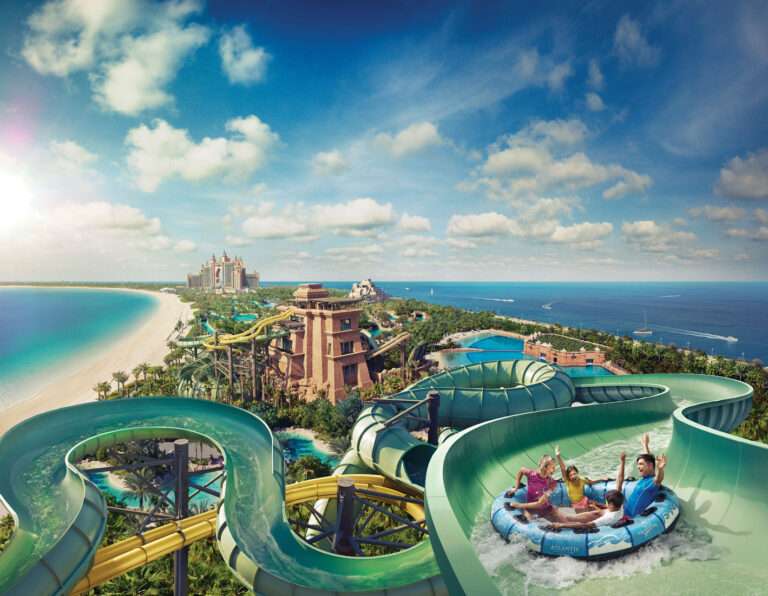
Aquaventure isn’t just a waterpark; it’s an aquatic theme park experience. We have more than 105 slides, attractions, and experiences, from record-breaking rides to marine animal encounters, plus a kilometer of private beach. Whether you’re here for adrenaline or relaxation, there’s something for everyone, and it’s all part of the iconic Atlantis resort.
Aquaventure holds the Guinness World Records™ title for the Most Slides in a Waterpark. We’re constantly introducing new experiences like Dolphin Paddle and Dolphin Kayak, as well as educational programs such as Dolphin and Shark Specialist encounters. Our annual passes have become hugely popular with residents and repeat visitors, giving them unlimited access to the park all year-round and making Aquaventure part of their lifestyle.
Events are also a big part of our calendar, such as extended hours with Sunset Saturdays, our annual Aquaventure After Dark party, and special one-off moments like last year’s Guinness World Records™ Tour, where we set a new title for the Most Nationalities on a Waterslide in One Hour, with 90 nationalities participating.
Does the waterpark drive stays at the hotel? Or does the hotel increase visitation to the waterpark?
It’s a two-way street. For many families, the waterpark is a deciding factor when booking a stay especially since in-house guests enjoy complimentary access throughout their visit. At the same time, the hotel’s reputation attracts guests who then discover Aquaventure as a world-class destination. Together, they create a combination that’s hard to beat, staying at one of the world’s most famous resorts while enjoying the world’s largest waterpark.
What are some current trends in waterpark operations?
Guests are looking for more than just a ride; they want a complete, personalized experience. We’ve seen growing demand for luxury options, which is why we introduced premium cabanas that offer privacy, comfort, and dedicated service. There’s also strong uptake for our AquaXpress fast-track passes, as guests want to maximize their time and enjoy more attractions.
Another clear trend is that visitors are combining multiple experiences into a single day, like riding our slides, meeting dolphins at Dolphin Bay, taking in the views from the Dubai Balloon, and then unwinding on the beach. It’s about curating a full-day adventure that blends thrills, relaxation, and memorable moments.
Why do you think the waterparks in Dubai have seen more success than the theme parks so far?
In many ways, theme parks and waterparks in Dubai are quite similar in terms of appeal, and it often comes down to the personal preference of the guest. The main distinction is that waterparks enjoy a slight advantage due to Dubai’s climate, which allows people to enjoy them almost year-round, even during the peak summer months when the cooling element of water makes the experience more comfortable.
Can you talk about any investments in the park that are coming soon?
Aquaventure World is part of a larger vision to deliver the ultimate aquatic theme park experience. One of our major upcoming projects is the relaunch of The Lost Chambers Aquarium. We’re transforming it into a world-class attraction that combines cutting-edge technology, interactive elements, and edutainment with our fascinating live animal exhibits.
Guests will experience redesigned spaces with greater visual impact, immersive features such as LED walls, holographic screens, and projection mapping, as well as interactive gamification and new hands-on encounters with marine life. We’re also introducing live mermaid shows, a magical addition for families, and enhancing storytelling to inspire both curiosity and conservation. With over 65,000 marine animals across 22 themed exhibits, this relaunch will offer a multi-sensory journey unlike anything else in the region, blending reality with fantasy. •
Alterface’s new Interactive Concept Design service blends creativity and technology to craft exceptional guest experiences
interview by Martin Palicki
With decades of experience creating interactive attractions, Alterface recently launched a new stand-alone service: Interactive Concept Design. Intended to be utilized by anyone with an idea for a new attraction (operator, designer, manufacturer, etc.), the service provides expert insight on how best to integrate interactivity into an immersive attraction, based on the parameters of the project. InPark spoke with Alterface CEO Stéphane Battaille and Creative Director Laurence Beckers for more information on current trends in interactivity and for more details on how the new service works.
Laurence BeckersStéphane Battaille
What trends you are seeing now in interactive attractions?
Stéphane Battaille: Two trends I see right now are an increased push for more throughput and a focus on personalization of the experience. Naturally, operators want more throughput to increase revenue, and personalization draws people into an experience and helps them feel that their own actions have a meaningful impact on the environment. These two things can often be at odds with one another. Personalization typically requires more time and resources – which often reduce throughput. It’s possible, of course, to create personalized group experiences. It requires more planning and being intentional in design.
Why are interactive attractions important for the themed entertainment industry?
SB: Interactivity engages the audience in the experience. It brings people into the world that is in front of them and engages them in the experience. Interactivity makes the experience more memorable for the guest while the operator benefits from more repeat visitation. As designers, it means we have to be experts at many kinds of interactivity, for many kinds of experiences.
How do you approach interactivity?
Laurence Beckers: I like to think of interactivity more as a medium and the different ways it can bring people into the story. It’s about how you involve the visitors in your story and how it can use all the senses and emotions of the visitors to engage with the attraction. We also think interactivity is best approached when it can be used to bring people together, rather than isolating guests. Interactivity paired with social connection is the best outcome.
SB: Traditionally, people often think of a device and target-based dark ride. At Alterface, we are continuously developing new interactive methods other than shooting. While that can work well in some situations, it typically does not allow for much variety in the experience. We have developed alternate tools such as a flashlight or paintbrush that breaks free from specific targets, enabling new types of gameplay and offering guests different ways to interact with the story and environment.
Does the concept of interactivity change if you are thinking of a walk-through attraction versus a ride?
SB: Walk-through attractions allow a whole new world of interactive experiences. Geolocation, for example, enables guests to create meaningful interactions with the environment without requiring them to take deliberate or active steps. Simply by moving through the space, they can influence elements around them. This allows for more natural and intuitive engagement. Additional technologies can allow guests to take and move objects to create different effects. It’s a completely different level of experience and immersion. We think this is a sweet spot for attractions in the future, particularly those mid-range LBE facilities that are larger than a FEC but smaller than a theme park.
LB: There is one big difference in addition to what Stéphane said. In a dark ride the vehicle puts the guest where we want them to be. In a walk-through we have to give the guest motivation to move where we want them. It really means we have to create and utilize a lot of tricks to encourage people to move, by giving them an understanding of their goal and where to be at the right time.
SB: It is important to remember that the same things don’t work for everyone. We are constantly thinking about ways to engage different types of people. That part takes a great deal of knowledge and specialization, which we at Alterface have spent years developing.
What role is there for performers to enhance interactivity in an attraction?
SB: Human interaction is perhaps the strongest link you can provide, and it can be further enhanced by technology. A performer can be given a digital tool – often hidden – that gives them information about each guest which they can then use to personalize their interaction with each guest. It can truly be magical and the guest starts to feel that the entire world around them is reacting to who they are and what they are doing.
LB: A great example of this is our Wander technology, which fully integrates ways for performers to interact directly with guests into the experience. The system essentially tracks what the guest has done or achieved in an experience, and that information can be transmitted to a performer to help them have an informed interaction with the guest. It’s an extremely high level of interactivity.
Tell me about your Interactive Concept Design service.
SB: Many of our clients come to us and ask how they can create the best experience possible for their guests. We’ve identified key parameters such as storyline, meaningfulness, capacity, group experience, type of ride/attraction and target audience that we work within to help develop a unique plan for each attraction. This is specialized knowledge we have acquired through decades of experience. We advise the client on how to create the best user experience within the identified constraints for the best outcome.
At the beginning we have so many variables and by adjusting all of them we are able to converge on a valuable concept that can be used and discussed with other designers or integrators to make sure the core of the experience is properly thought out. Then it can be detailed and given to other people who can do the décor and design. In essence, we help the owner craft the meaning of the experience itself.
Alterface’s Interactive Concept Design is a stand-alone service intended to be used at the very beginning of the creation of an attraction. All photos courtesy of Alterface
LB: Interactive Concept Design is a stand-alone service intended to be used at the very beginning of the creation of an attraction. All the technology and design of an attraction should be in the service of the story, meaning and goals of the attraction. Working through the parameters will help inform the owners, designers and integrators as they play their parts in creating the attraction. For example, understanding the target age group will likely impact the ideal technology used for interactivity. The process is user-centric and focused on the visitors and the experience we are building for them.
How much of it is technology consultation versus creative design?
LB: For me it is a blend of both, and it follows three steps:
We develop the creative core and ideas.
We define the experience of the guests.
We determine which technology supports the previous steps and works within the specified budget.
We then deliver the concept design with the information from all three steps. Alterface is not just about the technology or only the creative ideas; we are about bringing both together and making them work together.
SB: There is a huge advantage in having tech and creative in- house teams realize that both elements have to blend together. It’s important for engineers to understand that the goal is a user experience and for the creative team to understand we cannot create outside the boundaries of the technology. Ideas need to percolate between the two to help both teams understand what is possible and how they can work together more effectively.
Where does budget fit into the process?
SB: Both the guest experience and the budget are realities that constantly tug at one another and should be addressed from the very beginning of an attraction. This is especially important when new components or technologies are involved. Defining the core experience and the budget help to remove a lot of the natural tension between finance and creative teams. It’s much easier – and cheaper – to figure that out at the beginning than during the project itself.
LB: Ultimately, the customer can feel more confident in knowing what they are going to buy. It helps to clarify the end project and saves time and cost.
Does this replace the services of traditional attraction design firms?
SB: Absolutely not! I want to stress that this is a stand-alone service, and it does not replace the need for outside attraction design companies. We focus on what the experience goals are with the client and help develop the concept. They then take that concept to a design firm to build out the rest of the plan. It also does not mean they have to use Alterface for the technology. Of course, we hope that they do, but it is not a requirement.
Also, this service is available to anyone who is creating an experience. That means it might be not just operators, but also designers, integrators or maybe even manufacturers who would benefit from Interactive Concept Design. •
For more information on Alterface’s new Interactive Concept Design Service, visit alterface.com.
Alcorn McBride’s new distributor carries deep ties to themed entertainment
by Gabrielle Russon
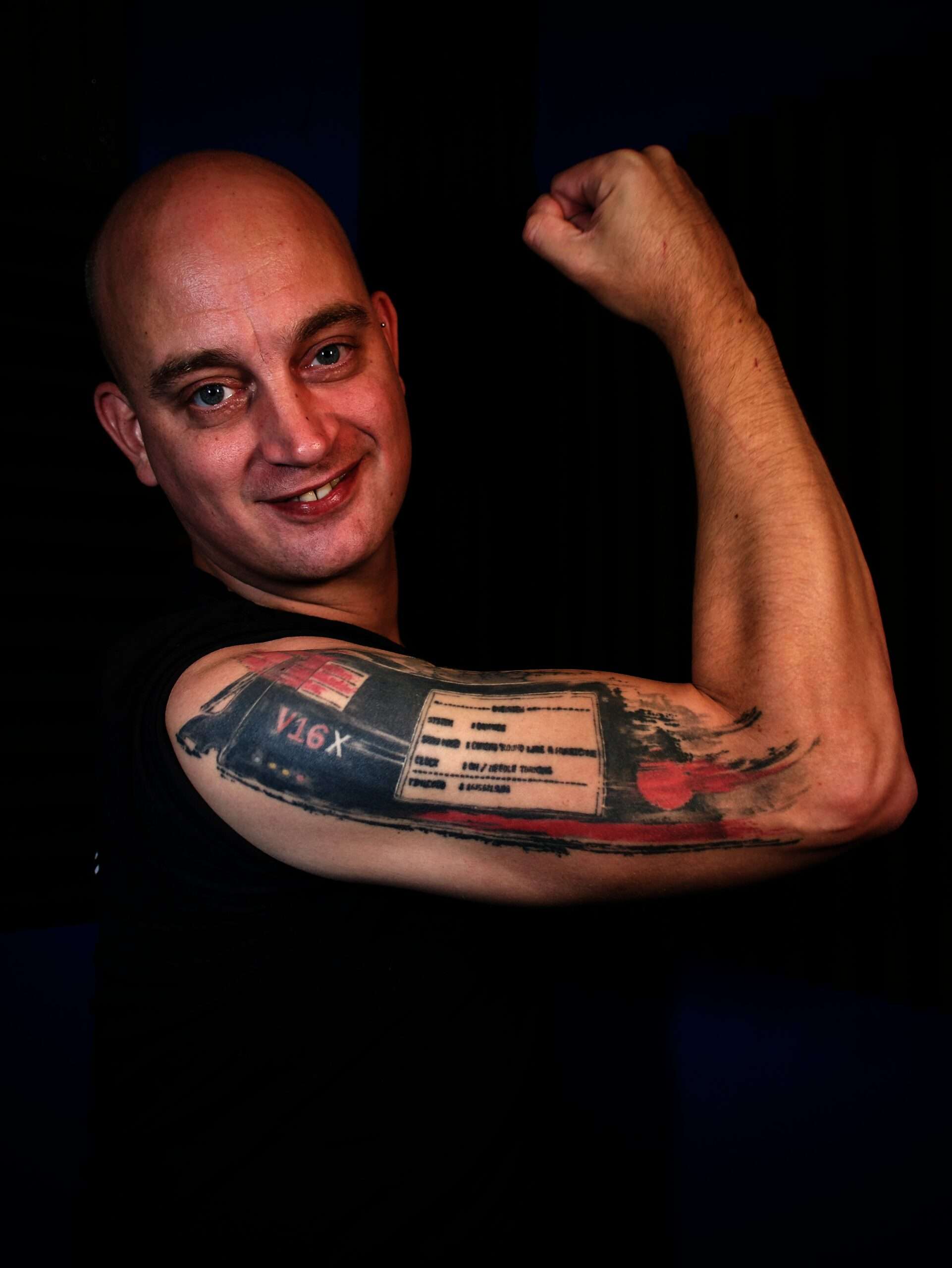
Frank Ruisch can roll up his sleeves to show off the tattoo of an Alcorn McBride V16X show controller on his upper arm. “See? The V16X show controller is really that good!” says Ruisch. Earlier in 2025, he became Alcorn McBride’s Channel Partner and Reseller in the European Union and the United Kingdom, distributing Alcorn’s technology across the themed entertainment industry.
Ruisch, in case you couldn’t tell, is all in on Alcorn McBride. He is the ultimate brand ambassador after discovering and using the products at theme parks for over 20 years. Growing up in The Netherlands, 17-year-old Ruisch’s first summer job was performing as Bugs Bunny at Six Flags Holland (now the Compagnie des Alpes park Walibi Holland). He dressed in the famous cartoon rabbit costume – ears included – working in the entertainment department, but even by that point, he was already a whiz in sound design.
Ruisch remembered tagging along with his dad who sold AV systems for discotheques in Europe during his childhood. “I knew how lights were supposed to look and how audio was supposed to sound at a very young age,” he says. “I took all that info in subconsciously.”
He also had a natural knack for precision and learned that timing was everything. Those were lessons he picked up when he started ballroom dancing at age 8 and then began playing drums at 12 (something he still does to this day in a rock band).
So when the Dutch theme park decided to expand their Halloween event in 2004 the 17-year-old began moonlighting as a sound designer and special effects assistant at the park’s haunted house. With a trusting manager, absolute freedom and a tiny budget, Ruisch was able to tinker, explore and learn. Still employed as Bugs Bunny, he squeezed in time at the end of his regular shift in the haunted house.
Ruisch was scrappy and self-driven. Though he picked up technical skills on the job, his curiosity pushed him further, so he turned to the internet to learn more. He became a whiz kid and quickly learned how to use sound to build emotional tension, crafting soundtracks with elements like a pulsing heartbeat that subtly raised a guest’s fear response – intense enough to thrill, but not so overpowering that it drowned out the screams of guests further ahead in the haunted maze.
At the time, Halloween was still a novelty in The Netherlands, an undeniably American holiday just starting to gain traction, so Ruisch’s work felt fresh and groundbreaking. The park’s haunted house, with its innovative sound design and programming, was cutting-edge and an instant hit. His reward? More responsibility. He soon traded in his Bugs Bunny ears for roles in larger entertainment productions, contributing to everything from fireworks finales and scare zones to park shows and, of course, more haunted houses. “There was no education or roadmap for any of this. I just figured it out as I went and kept at it until it worked,” Ruisch says. “That’s what I’m known for.”
Frank meets Alcorn McBride
Ruisch, who attended the Dutch college Sound & Vision, returned to the theme park for an internship in 2005. His task was to program a synchronized launch sequence for the Superman roller coaster. The effect had been broken for years, so the 18-year-old installed and programmed new LED lighting, along with new audio and show control systems. The project marked a career-changing moment for Ruisch as it was when he first discovered Alcorn McBride, the Orlando-based company that’s developed a niche in creating, engineering and manufacturing show control, audio and video equipment.
Unaware where Orlando even was, Ruisch researched “show control” and realized Alcorn McBride’s products were the answer. He bought a used Alcorn McBride DMX Machine on eBay and paired it with a well-worn Alcorn McBride MP3 Machine he found on a shelf at work. He pored over the show control course manual until everything worked reliably for the launch. It was magic. After years, the attraction effects were fully functional once again. The alarm rang out and strobe lights pulsed to build excitement as riders launched forward on the ride. From that moment on, Ruisch was hooked on Alcorn McBride: “That’s the point I knew this is what I want to do.”
Alcorn McBride’s technology worked seamlessly to help him elevate theme park experiences for guests. “At first I frequently tried to make ends meet with laptop computers,” he says. “But once I found Alcorn McBride, that was it for the laptops. Alcorn’s products always work. You don’t have to wonder if you have the latest system update.”
Frank makes moves
By 2011 Ruisch was ready to start out on his own. He left his job at the park and started his own company AV SyncWorks, dealing almost exclusively with Alcorn McBride products. As a freelancer, he still handled Walibi Holland’s AV projects and also gained the freedom to explore other arenas. He composed soundtracks, did show control, ride syncing, special effects and show programming for experiences across Europe.
One particularly complex project was the remastering and reprogramming of audio for Efteling’s iconic Carnaval Festival dark ride, in collaboration with the park’s Creative Engineer, Bram van Sprang. A key challenge was updating the system so that, in the event of an unexpected ride stop, the music would seamlessly transition to a short finale no matter where guests were in the ride or song. Once the ride resumed, a “conductor” cue (“1-2-3-4”) would bring the music back in right on beat.
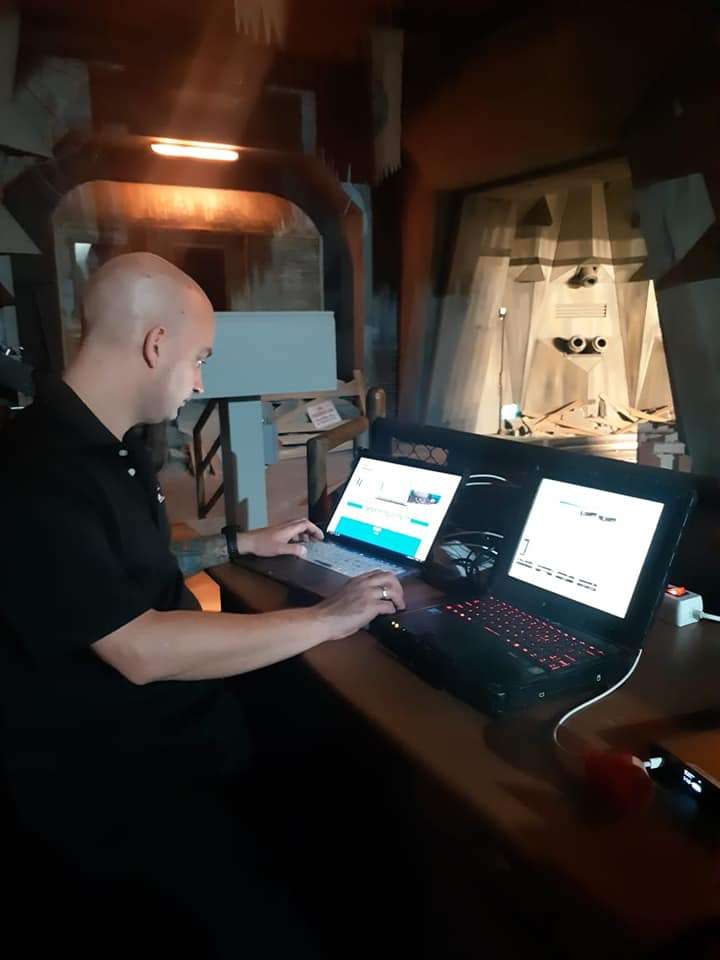
Frank Ruisch mixes the soundtrack for the “Us vs You” haunted attraction at Walibi Holland.
“That was a crazy thing to execute,” Ruisch says. “I had to map hundreds of cue points and produce matching audio files with multiple endings, each tailored to the ride’s various musical motifs. The programming tree was incredibly complex.”
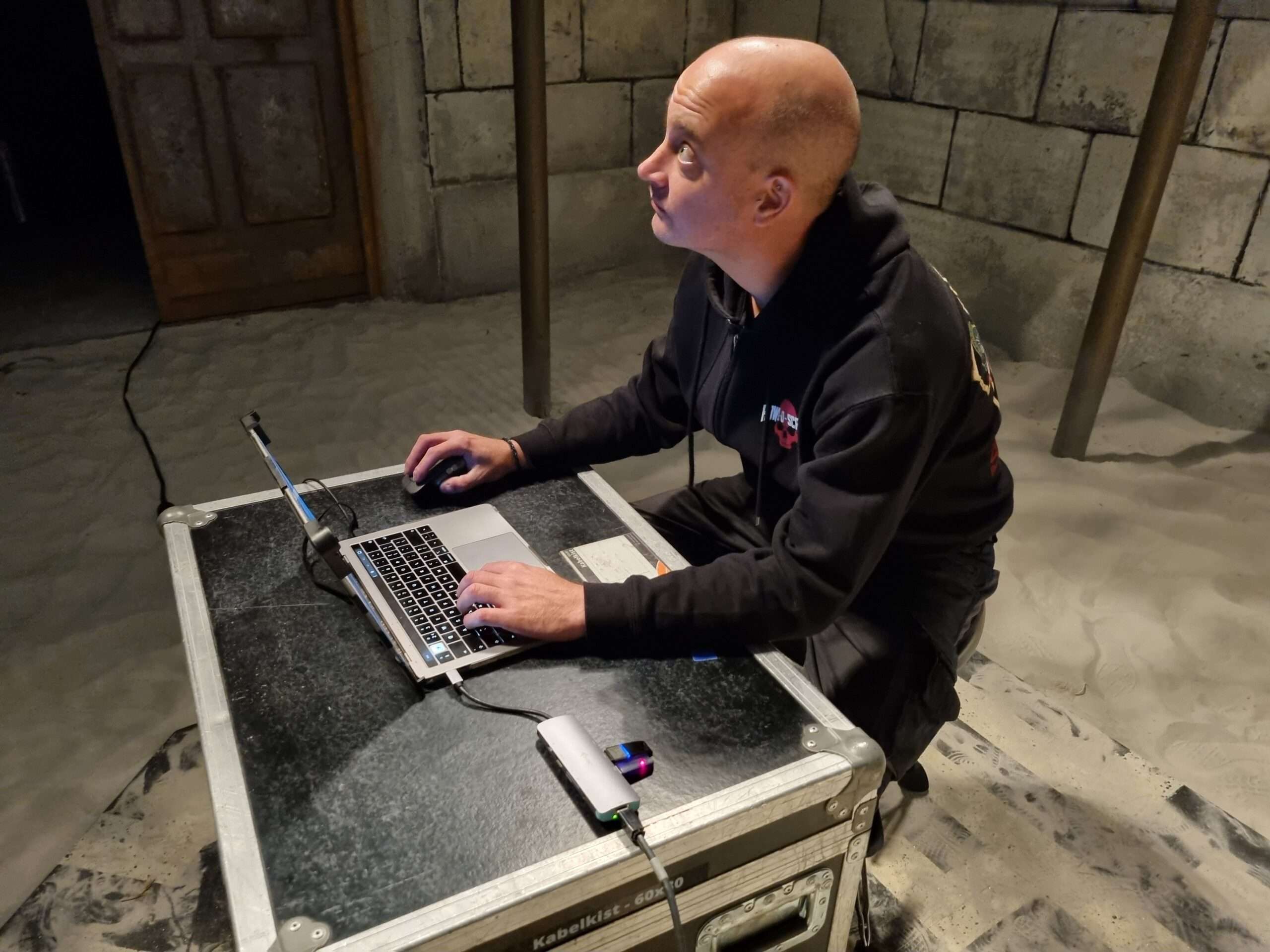
Over in North America, Ruisch composed the soundtracks and did full AV for SeaWorld Orlando’s haunted houses at Howl-o-Scream. Once again, Ruisch credits Alcorn McBride for helping save the day. SeaWorld’s large lighting controller at the park was too complex and overkill for the haunted houses, Ruisch said. He drove over to meet Mike Polder, Alcorn McBride’s longtime head of tech support, who is known for keeping stockpiles of old equipment on hand, Ruisch says. The two made a deal: a six-pack of Guinness in exchange for a trusted old DMX Machine. The agreement saved Ruisch three extra days of programming and learning a new lighting console.
Through his company Thematic Development, Frank has incorporated Alcorn’s products into projects around the world, including the Road Rage attraction at Trans Studio Bali.
All in with Alcorn
When the theme park industry was shut down during the pandemic and work dried up, Ruisch’s relationship with Alcorn McBride only strengthened. The company had connected him with Birket Engineering for work at Universal Studios Singapore in 2021. Ruisch did the control system retrofit and the reprogramming of Alcorn McBride systems on the Shrek 4-D Adventure show and Lights, Camera, Action! special effects show.
Having Alcorn McBride’s help during the financial crisis as the industry shut down moved Ruisch and forever impacted him. “It’s kind of my second family,” he says of his relationship with Alcorn McBride, and a big part of the reason he got the V16X show controller tattooed on his arm following the Singapore work.
Post-COVID, Ruisch’s business has continued to evolve. He rebranded his company Thematic Development, and more recently took on the new role with Alcorn. He is more than just a distributor for Alcorn McBride products in Europe and the United Kingdom. He provides training on the company’s latest X Series product line, including an AVIXA-certified class on WinScript Live 6 programming software. Additionally, Ruisch, who is opening an office in Wageningen in The Netherlands, will also be attending IAAPA Expo in Orlando to represent Alcorn McBride and reintroduce himself to the industry.
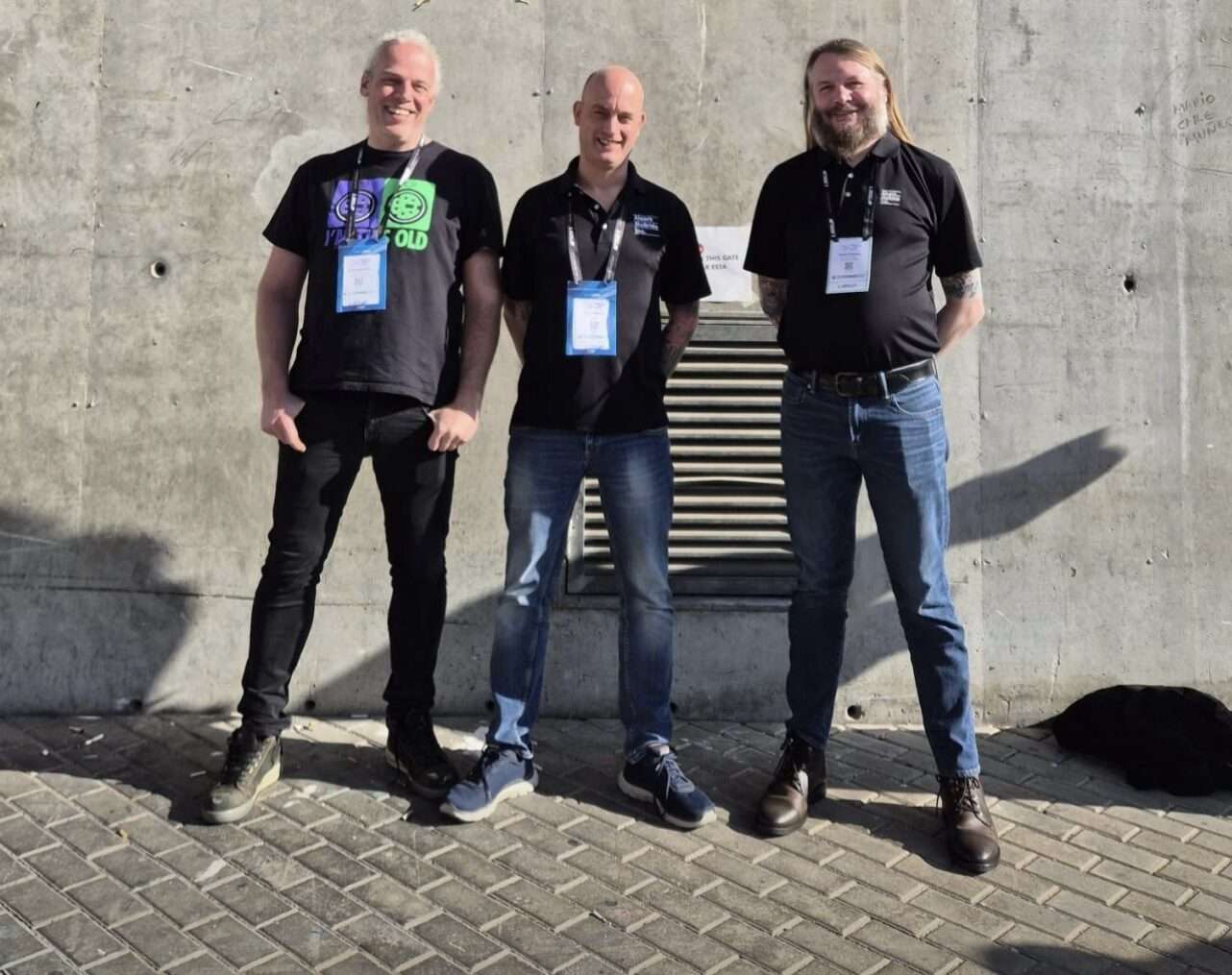
Rob Hoefakker (Immersive Systems Specialist, Thematic Development), Frank Ruisch and Devin Flannery outside ISE 2025.
For Alcorn McBride, bringing Ruisch’s company on as a Partner made sense. His years of experience with the product lines and immense knowledge of show control, media playback, and system integration were undeniable. “He knows it instantly – better than some of our employees,” says Devin Flannery, Alcorn McBride’s Solutions Architect. “He grew up in it.”
Clients easily connect with Ruisch, whose high energy and charisma are complemented by his experience in the field, Flannery says. Ruisch’s European roots also come into play. “He understands the market and the European players. The industry there is currently undergoing a renaissance of sorts, with more technically advanced projects that benefit from Alcorn McBride products. Having Ruisch on the team helps bridge the gaps between the client, the project and the products,” Flannery says.
“The vernacular is different, and the expectations aren’t always the same as they are here in America,” Flannery continues. “We couldn’t ask for a better Alcorn McBride ambassador. Frank understands the market, he swears by our products and he has an incredible amount of frontline knowledge. He is not only an asset for us, but also for our clients who can benefit from his years of experience.”